



Researchers at the State University of Campinas (UNICAMP) in São Paulo, Brazil, have pioneered an innovative process that transforms a common food industry byproduct into a valuable new product. By combining native bee honey with cocoa bean shells, a material typically discarded during chocolate manufacturing, they have created an edible ingredient with significant nutritional and cosmetic potential. This breakthrough, detailed in the latest issue of ACS Sustainable Chemistry & Engineering and featured on its cover, represents a significant step forward in valorizing agricultural waste and harnessing the unique properties of Brazilian biodiversity.
From Waste to Wellness: The Unicamp Innovation
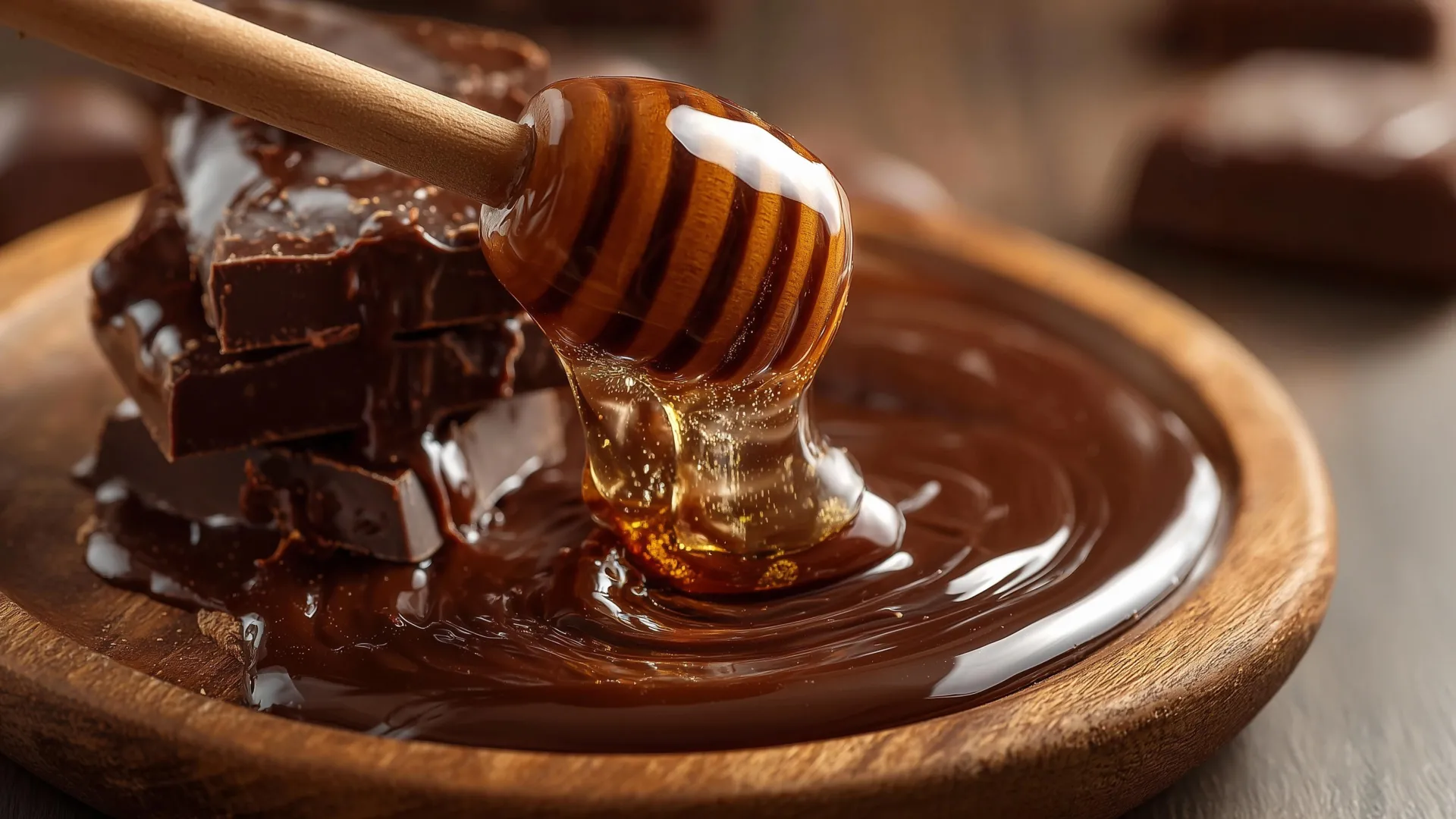
The core of this groundbreaking research lies in utilizing native bee honey not merely as a sweetener, but as a potent, edible solvent. This natural solvent is employed to extract beneficial compounds from cocoa shells, a rich source of bioactive molecules. Among the key compounds successfully extracted are theobromine and caffeine, both well-known for their potential cardiovascular benefits. The extraction process itself is enhanced by ultrasound technology, a method increasingly recognized for its efficiency and environmental friendliness in green chemistry applications. This advanced technique not only facilitates the extraction of desired compounds from the cocoa shells but also demonstrably boosts the antioxidant and anti-inflammatory properties of the honey itself by increasing its phenolic content.
The resulting product offers a pronounced chocolate flavor, with its intensity directly correlating to the ratio of honey to cocoa shells used in the blend. This inherent palatability makes it suitable for direct consumption or as an additive to a wide array of food products and cosmetic formulations. Early analyses suggest a promising profile for both internal and external applications, opening doors to diverse market opportunities.
The Science Behind the Blend: Ultrasound-Assisted Extraction
The sophisticated extraction method employed by the UNICAMP team involves the use of ultrasound technology. A specialized probe, resembling a metal pen, is submerged into a mixture of honey and cocoa shells. The probe emits high-frequency sound waves, creating microscopic cavitation bubbles within the liquid. As these bubbles rapidly collapse, they generate localized intense heat and pressure, effectively breaking down the cellular structure of the cocoa shells and facilitating the release of their valuable compounds into the honey. This process is significantly faster and more energy-efficient than many conventional extraction methods, aligning perfectly with the principles of green chemistry.
This methodology was rigorously assessed for its sustainability. Using Path2Green software, developed by Professor Mauricio Ariel Rostagno’s team at FCA-UNICAMP, the process was evaluated against 12 key principles of green chemistry. These principles encompass aspects such as waste prevention, atom economy, less hazardous chemical syntheses, designing safer chemicals, safer solvents and auxiliaries, design for energy efficiency, use of renewable feedstocks, reduction of derivatives, catalysis, design for degradation, real-time analysis for pollution prevention, and inherently safer chemistry for accident prevention. The UNICAMP study reported a positive sustainability score of +0.118 on a scale of -1 to +1, with a particular emphasis on the advantages of using a local, edible, and readily available solvent like native bee honey, which requires minimal post-treatment and purification.
Harnessing Biodiversity: The Role of Native Brazilian Bees
A crucial element of this innovation is the deliberate choice of native Brazilian bee honey. Unlike the more commonly used honey from European bees (Apis mellifera), honey from native Brazilian species generally possesses a higher water content and lower viscosity. These characteristics make it a more effective solvent for extracting compounds from plant materials. The research team meticulously tested honey from five distinct Brazilian species: borá (Tetragona clavipes), jataí (Tetragonisca angustula), mandassaia (Melipona quadrifasciata), mandaguari (Scaptotrigona postica), and moça-branca (Frieseomelitta varia).
The initial refinement of the extraction process was conducted using mandaguari honey, selected for its moderate water content and viscosity, providing a balanced starting point. Once the optimal conditions were established, the same protocol was successfully applied to the honey from the other native bee species. This highlights the adaptability of the process, allowing for customization based on locally available honey resources.
Felipe Sanchez Bragagnolo, the study’s lead author, emphasized the inherent variability of honey as a natural product. "Honey from native bees usually needs to be refrigerated, matured, dehumidified, or pasteurized, unlike honey from European bees, which can be stored at room temperature. We suspect that, simply by being exposed to ultrasound, the microorganisms contained in the honey are eliminated, increasing the stability and shelf life of the product," he explained. Bragagnolo, who conducted this research during his postdoctoral work at UNICAMP’s Faculty of Applied Sciences (FCA) in Limeira, supported by the São Paulo Research Foundation (FAPESP), further elaborated on the significance of adapting the process: "Bragagnolo notes that honey is sensitive to environmental factors such as climate, storage, and temperature. ‘Therefore, it’s possible to adapt the process to locally available honey, not necessarily mandaguari honey,’ he says." This flexibility ensures the technology can be implemented across diverse regions, promoting local economies and biodiversity.
Nutritional and Cosmetic Applications: A Dual-Purpose Product
The extracted compounds, including theobromine and caffeine, are of significant interest for their health benefits. Theobromine, often associated with dark chocolate, is a mild stimulant and vasodilator, potentially contributing to improved blood flow and reduced blood pressure. Caffeine, a well-known stimulant, can enhance alertness and cognitive function. The synergistic effect of these compounds, combined with the antioxidant and anti-inflammatory properties imparted by the enriched honey, positions the product as a valuable ingredient for both the food and cosmetic industries.
"Of course, the biggest appeal to the public is the flavor, but our analyses have shown that it has a number of bioactive compounds that make it quite interesting from a nutritional and cosmetic point of view," stated Bragagnolo. This dual appeal is a key driver for its potential market success. Beyond direct consumption, the product could be incorporated into functional foods, dietary supplements, and a range of cosmetic items, such as lotions, serums, and masks, leveraging its antioxidant and anti-inflammatory properties for skin health.
Towards Commercialization: Bridging Research and Industry
Recognizing the significant commercial potential of this innovation, the UNICAMP team is actively seeking partnerships to bring the product to market. In collaboration with INOVA UNICAMP, the university’s innovation agency, they are looking to license the patented method to interested companies. Professor Rostagno expressed optimism about the future, suggesting that "with a device like this, in a cooperative or small business that already works with both cocoa and native bee honey, it’d be possible to increase the portfolio with a value-added product, including for haute cuisine." This points towards a decentralized model of production, empowering local agricultural communities and small businesses.
The development and refinement of this process were supported by substantial funding from FAPESP, including postdoctoral fellowships and international research internships for Bragagnolo, through various grant numbers: 23/02064-8, 23/16744-0, 21/12264-9, 20/08421-9, 19/13496-0, and 18/14582-5. This sustained investment underscores the scientific and economic importance attributed to this research.
Future Horizons: Expanding the Scope of Green Extraction
The UNICAMP researchers are not stopping at cocoa. They are keenly interested in exploring the broader applicability of native bee honey as a solvent in ultrasound-assisted extraction for other plant residues. This could unlock a vast array of underutilized agricultural byproducts, transforming them into valuable ingredients and further contributing to a circular economy.
Furthermore, the team plans to investigate the impact of ultrasound on the microbiology of native bee honey. Preliminary hypotheses suggest that the ultrasound treatment may effectively eliminate or reduce the presence of microorganisms that can affect honey’s shelf life. This could potentially eliminate the need for additional preservation steps, such as refrigeration or pasteurization, for certain native bee honeys, thereby enhancing their stability and extending their usability. This aspect is particularly relevant given that native bee honeys often require more careful handling and storage compared to their European counterparts.
The successful development and potential commercialization of this blended product represent a triumph of sustainable innovation, demonstrating how scientific ingenuity can address environmental challenges while creating new economic opportunities and delivering tangible health and wellness benefits. The project not only valorizes Brazilian biodiversity and agricultural waste but also champions the principles of green chemistry, paving the way for a more sustainable and resource-efficient future.