



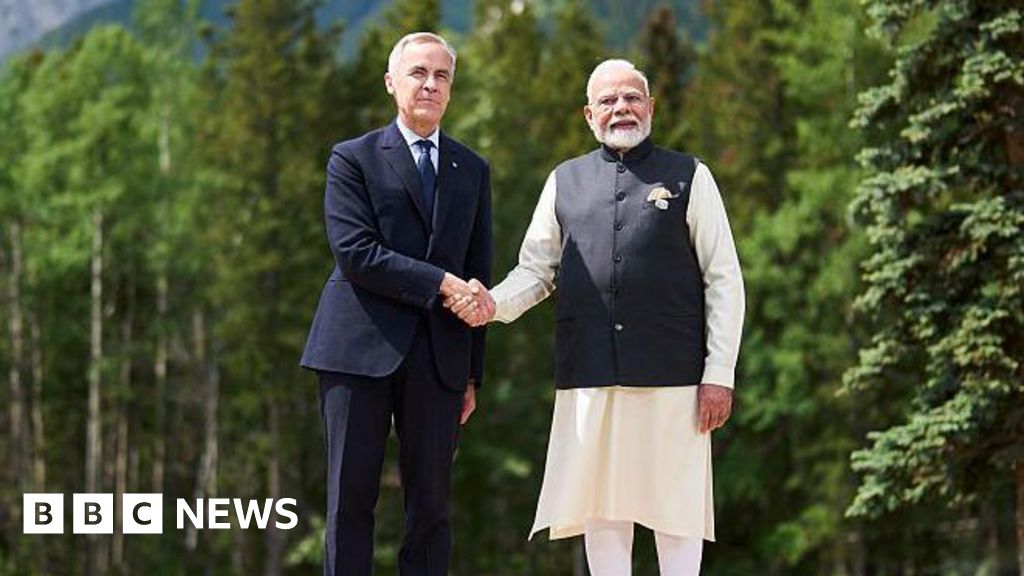
Canadian Prime Minister Mark Carney has commenced a critical visit to India, marking a significant diplomatic and economic reset between the two nations following a period of unprecedented strain. The trip, primarily focused on repairing bilateral ties and advancing trade diversification, underscores a shared strategic imperative to reduce economic reliance on traditional partners, particularly the United States, in an increasingly fragmented global landscape.
Carney’s itinerary began in Mumbai, India’s bustling financial capital, where he engaged with prominent business leaders to explore avenues for enhanced economic cooperation and investment. This initial phase is designed to lay the groundwork for substantial trade discussions before he proceeds to New Delhi for high-level talks with Indian Prime Minister Narendra Modi. The meeting between the two leaders is anticipated to be the cornerstone of the visit, aiming to chart a new course for a relationship that had plummeted to its lowest point in decades.
The Diplomatic Ice Melt: From Accusation to Amity
The very fact of Prime Minister Carney’s presence in India represents a remarkable turnaround in relations. The diplomatic crisis erupted in September 2023 when Canada’s former Prime Minister, Justin Trudeau, made a public accusation in the House of Commons, alleging the Indian government’s involvement in the extrajudicial killing of Hardeep Singh Nijjar, a prominent Canadian Sikh separatist leader, on Canadian soil. Nijjar was gunned down in June 2023 in Surrey, British Columbia. India vehemently denied these allegations, dismissing them as "absurd" and "motivated."
The fallout was swift and severe. Both nations engaged in tit-for-tat diplomatic expulsions, with Canada expelling an Indian diplomat and India reciprocating by expelling a Canadian diplomat. India also temporarily suspended visa services for Canadian citizens and issued a travel advisory for its nationals in Canada, citing safety concerns. The comprehensive free trade agreement (FTA) talks, which had been in various stages of discussion for over 15 years, were immediately derailed, and bilateral engagements largely froze. Canada and India also saw trade drop by approximately 15% in the months following the dispute, highlighting the economic cost of the diplomatic freeze.
However, in the months following the initial acrimony, a concerted effort has been made by both sides to de-escalate tensions and rebuild trust. This current visit by Prime Minister Carney, who assumed office last year, signals a more "pragmatic" approach from Ottawa, prioritizing economic interests and strategic realignment. While four individuals have since been charged in connection with Nijjar’s death, and their legal proceedings are ongoing in Canadian courts, both governments appear ready to compartmentalize the issue to some extent, allowing for the resumption of diplomatic and trade dialogue.
Canada’s Strategic Pivot: De-risking from the US
For Prime Minister Carney, this trip is fundamentally about business and Canada’s long-term economic resilience. His broader foreign policy objective has been to diversify Canada’s trade partners and reduce the country’s significant economic dependence on the United States. Canada’s economy is deeply integrated with that of its southern neighbor, with approximately 75% of Canadian goods exports destined for the U.S. market, amounting to over C$500 billion annually. This reliance has historically exposed Canada to vulnerabilities, particularly in times of protectionist trade policies from Washington.
The renewed specter of US tariffs, especially under a potential future administration led by former President Donald Trump, looms large. Trump’s previous presidency saw the imposition of tariffs on steel and aluminum imports, which significantly impacted Canadian industries and led to tense negotiations over the North American Free Trade Agreement (NAFTA) – now the USMCA. In 2018, the Trump administration imposed 25% tariffs on steel and 10% on aluminum imports from Canada, sparking retaliatory tariffs from Ottawa. The memory of these trade disputes reinforces Canada’s urgency to cultivate new, robust trade relationships with rapidly growing economies like India.
"The world is in the midst of a rupture, not a transition," Prime Minister Carney stated recently, emphasizing the precarious nature of the current global order. He added, "if you are not at the table, you are on the menu." This perspective underscores Canada’s proactive stance in forging new alliances and securing its economic future. India, with its massive market of over 1.4 billion people and projected to be the world’s third-largest economy by 2030, presents an unparalleled opportunity for Canadian businesses. Bilateral trade between Canada and India currently stands at around C$15 billion, a figure both nations believe can be substantially increased. Key sectors targeted for collaboration include energy, technology, artificial intelligence, and defence, alongside efforts to attract top Indian talent to Canada.
The Shadow of the Nijjar Allegations: A Delicate Balancing Act
Despite the clear economic motivations, the allegations surrounding Hardeep Singh Nijjar’s killing remain a sensitive point, particularly for Canada’s substantial Sikh diaspora. Canada is home to over 770,000 Sikhs, one of the largest Sikh populations outside India, and many community members have voiced concerns about ongoing transnational repression by foreign states, including India. Critics have accused the Carney government of prioritizing economic gain over the safety and security of its citizens and residents.
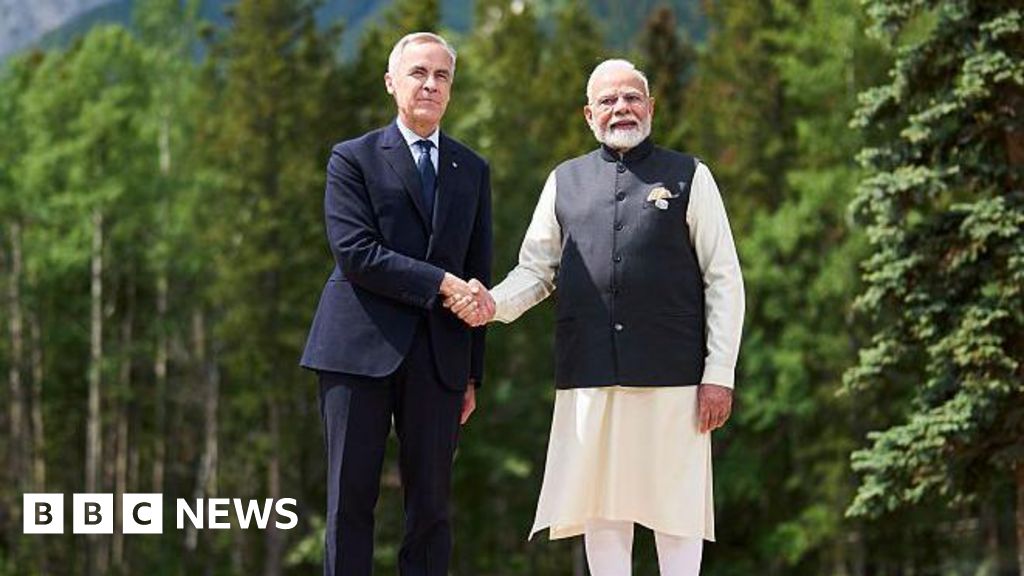
Vina Nadjibulla, Vice-President of the Asia Pacific Foundation of Canada, articulated the complexity of the situation, telling the BBC that the visit requires "delicate handling." She highlighted the challenge of balancing geopolitical realities with domestic community concerns, particularly the need to reassure the Sikh community while pursuing crucial economic objectives.
Canadian officials, addressing reporters ahead of Carney’s departure, reiterated that the two countries are engaged in "robust" discussions on national security and foreign interference. Crucially, they stated that Canada does not currently believe the Indian government is linked to any violent crimes or threats on Canadian soil. An official remarked that Canada "probably would not be taking this trip" if such links were perceived to exist, indicating a significant shift in official posture since the initial allegations.
However, not all Canadian politicians are convinced. Sukh Dhaliwal, a Liberal Member of Parliament from Carney’s own party and a prominent voice within the Sikh community, publicly countered the official narrative. He told Canadian media that the claim of India no longer being a threat is "disconnected from the reality," reflecting ongoing apprehension among some political and community figures. This internal dissent highlights the political tightrope the Carney administration is walking as it seeks to mend ties with India while addressing domestic concerns about sovereignty and the rule of law.
A Deliberate Itinerary: Trade Over Tourism
Prime Minister Carney’s itinerary in India offers stark insight into his administration’s priorities. Unlike previous Canadian prime ministerial visits, which often included stops at cultural landmarks or religiously significant sites, Carney’s trip is strictly business-focused. His only planned stops are Mumbai, India’s economic powerhouse, and New Delhi, the political capital.
Notably, there will be no visit to the Taj Mahal, a popular stop for international dignitaries, nor will he travel to Punjab, the ancestral home state of many of India’s Sikhs. Former Prime Minister Justin Trudeau’s 2018 visit, for instance, included a highly publicized stop in Punjab, as did a trip by former Prime Minister Stephen Harper. These cultural and regional visits were historically seen as diplomatic gestures acknowledging Canada’s large Indo-Canadian and Sikh communities. Their deliberate omission this time signals an unmistakable shift in focus, indicating that the Canadian government’s immediate objective is almost exclusively trade and strategic cooperation, rather than broader cultural diplomacy or community outreach. The message is clear: the current priority is economic and geopolitical pragmatism.
India’s Calculated Engagement: Energy Security and Global Standing
For Prime Minister Narendra Modi and India, a reset with Canada offers significant strategic advantages. Just a year ago, both countries were openly trading barbs, expelling diplomats, and suspending visa services. The speed of the rapprochement underscores India’s growing confidence on the global stage and its proactive approach to foreign policy, driven by both economic necessity and geopolitical ambition.
Domestically, the visit provides a boost to Modi’s image as a strong leader who navigated a diplomatic challenge without capitulating to external pressure. The Canadian government’s public statement that it does not currently link the Indian government to violent crimes on Canadian soil allows the Modi administration to present the reset as a vindication of its stance.
More broadly, India’s economic growth trajectory demands diversified partnerships. The Indian economy, the fifth largest globally, is a massive consumer of energy, with projections indicating a substantial increase in demand in the coming decades. India’s reliance on energy imports, particularly crude oil (around 85% of its needs), makes it vulnerable to global price fluctuations and geopolitical instabilities. Until recently, India, like Canada, also faced the threat of steep tariffs from the Trump administration, especially on certain exports to the US, further compelling it to seek new markets and suppliers.
India has also been under pressure from the US and its allies to reduce its oil imports from Russia, particularly in the wake of the Ukraine conflict. While India has largely resisted this pressure, citing national interests and the need for affordable energy, it remains keen to diversify its energy portfolio to ensure long-term security and stability of supply. India’s "Act East" policy, alongside its broader diversification efforts, seeks to strengthen ties with a wide array of partners.
Canada, with its vast natural resources, fits this definition perfectly. Discussions during Carney’s visit are expected to yield tangible outcomes in the energy sector. A key announcement anticipated is a 10-year uranium supply agreement. India’s civilian nuclear power program is ambitious, with plans to build more reactors (currently 23 operational, with more under construction), necessitating a steady and reliable supply of uranium. Canada, a major global producer of uranium (the world’s second-largest producer), is a natural partner. Furthermore, deals focusing on increasing the supply of crude oil and liquefied natural gas (LNG) from Canada are also reportedly on the agenda. Such agreements would provide India with crucial energy security and diversify its import sources, aligning with its strategic objectives.
Prospects for a Comprehensive Trade Agreement
The pursuit of a comprehensive free trade agreement (FTA) with India has been a consistent, albeit intermittent, goal for Canada for over 15 years. Negotiations have faced numerous hurdles, ranging from differing approaches to intellectual property rights and agricultural tariffs to the recent diplomatic crisis. Canada remains the only G7 country that has not yet secured a preferential trade agreement with India, a fact that Vina Nadjibulla notes "adds urgency" for Carney. "There is a window of opportunity, and it needs to be seized," she emphasized, highlighting the competitive landscape as other nations like the UK, Australia, and the UAE have already concluded FTAs with India in recent years.
An FTA could unlock significant economic potential for both countries. For Canada, it would provide enhanced access to India’s burgeoning consumer market and its rapidly expanding industrial base. For India, it would open doors to Canadian technology, energy resources, and investment, while also providing its goods preferential access to the Canadian market. Beyond traditional goods, discussions are expected to cover services, digital trade, and investment protection, reflecting the modern scope of such agreements. The complexity of these negotiations suggests that a full FTA might take considerable time, but progress on key sectors like energy could pave the way for a broader deal. Initial talks focused on areas like agriculture, auto parts, and services, and these are expected to be revisited.
A Timeline of Tensions and Re-engagement
- June 2023: Hardeep Singh Nijjar, a prominent Sikh leader and Canadian citizen, is shot dead outside a Sikh temple in Surrey, British Columbia.
- September 2023 (Early): Reports surface of escalating diplomatic tensions between India and Canada regarding alleged Indian interference.
- September 2023 (Mid): Former Canadian Prime Minister Justin Trudeau publicly accuses the Indian government of involvement in Nijjar’s killing in the House of Commons.
- September 2023 (Late): India vehemently denies the allegations, calling them "absurd" and "motivated." Both countries expel senior diplomats, and India temporarily suspends visa services for Canadians and issues a travel advisory. FTA talks are put on hold.
- Late 2023: Mark Carney assumes office as Prime Minister of Canada, signaling a more pragmatic foreign policy approach.
- Summer (Date TBC) 2024: Indian Prime Minister Narendra Modi is invited by Canada to attend the G7 summit in Kananaskis, Alberta, marking an early diplomatic overture by the new Canadian administration.
- Months Preceding Visit: A series of high-level meetings occur, including Canadian Foreign Minister Anita Anand meeting with her Indian counterpart S. Jaishankar, and India’s National Security Advisor Ajit Doval visiting Ottawa for discussions with Canadian officials.
- Current Visit (Date TBC): Prime Minister Mark Carney arrives in Mumbai, India, for meetings with business leaders, followed by talks with Prime Minister Narendra Modi in New Delhi.
Broader Geopolitical Implications
The rapid mending of fences between India and Canada is not merely a bilateral affair; it reflects a broader recalculation by middle powers in response to shifting global dynamics. President Donald Trump’s "America First" policies and his propensity for punitive tariffs have indeed shaken many global leaders out of their comfort zones, as Carney himself observed. The traditional rules-based international order, once taken for granted, is now perceived as less certain, prompting nations to diversify their alliances and economic partnerships.
This realignment highlights the growing importance of emerging economies like India, which are increasingly seen as pivotal players in a multipolar world. For Canada, deepening ties with India is part of a larger strategy to diversify beyond its traditional Anglosphere partners and the United States, seeking stability and growth in the Indo-Pacific region. For India, engaging with Canada provides access to advanced technologies, energy resources, and a stable G7 partner, while bolstering its image as a responsible global power capable of managing complex diplomatic challenges.
The two prime ministers’ willingness to move past a significant diplomatic rupture demonstrates a shared understanding of these contemporary global realities. Both leaders recognize that in an era of geopolitical volatility and economic nationalism, fostering mutual support among middle powers is crucial for sustaining national interests and promoting a more balanced international order. The success of Carney’s visit will therefore not only redefine the Canada-India relationship but also send a clear signal about the adaptability and strategic foresight of nations navigating a rapidly evolving world.
Expert Perspectives and Future Outlook
Experts like Vina Nadjibulla underscore that while the current visit is a crucial step, the path forward will require sustained effort. The complexities of finalizing a comprehensive free trade agreement, coupled with the lingering sensitivities around the Nijjar case within Canada, will demand continued diplomatic dexterity. The Canadian government’s assertion that it perceives no current threat from India regarding violent crimes on Canadian soil is a significant concession that has facilitated the visit, but public and political scrutiny will likely persist.
For India, securing a long-term, diversified energy supply from a stable democracy like Canada aligns perfectly with its strategic autonomy goals. The potential for agreements on uranium, crude oil, and natural gas would be a tangible win, reinforcing India’s energy security amidst global uncertainties. Furthermore, the collaboration in technology, AI, and defence sectors holds promise for India’s modernization drive and its ambition to become a global manufacturing and innovation hub. Indian officials, in statements preceding the visit, emphasized India’s readiness for "outcome-oriented" discussions, highlighting a desire for concrete deliverables.
Ultimately, Prime Minister Carney’s trip to India is more than just a series of meetings; it is a test of resilience, pragmatism, and strategic vision for both nations. Its outcome will not only shape their bilateral relationship but also offer insights into how middle powers are adapting to and influencing the emerging global order in an age defined by geopolitical competition and economic uncertainty. The "window of opportunity" is open, and both Delhi and Ottawa appear determined to seize it.