



When Marin Petrović arrived in Mali’s capital, Bamako, in early September of last year, a sense of elation accompanied him. The Bosnian national had meticulously pursued tourist visas to the West African nation for years, only to be met with repeated rejections, primarily citing pervasive security concerns. His long-cherished ambition to explore Mali’s rich cultural tapestry and dramatic landscapes was finally within reach. However, what began as a dream quickly devolved into a nightmare, underscoring a perilous and escalating trend of foreign national abductions in the increasingly volatile Sahel region.
Mali, a vast country straddling the Sahara and the Sahel, has been locked in a protracted crisis marked by civil conflict, recurrent foreign military interventions, and a burgeoning Islamist insurgency. These complex layers of instability have created a fertile ground for militant groups to operate, turning what was once a destination for intrepid travellers and aid workers into a high-risk zone. Petrović, whose online persona on Instagram identifies him as a "mountain rescue" expert and "guide" living by the motto "not to dream your life, but to live your dream," had meticulously planned his itinerary. He spent his initial days in Bamako immersing himself in the vibrant sights and sounds of its bustling markets, congested roads, active schools, and even partaking in local brews, as detailed in his subsequent online posts.
His journey was then set to continue towards Mopti, a historic city renowned for its iconic Grand Mosque. This architectural marvel, standing at 15 meters (49 feet) tall and constructed entirely from mud bricks, is a testament to centuries of West African craftsmanship. Petrović recounted his anticipation, stating, "The next day I set off for Mopti, known for its 100-year-old mud mosque." Yet, before he could reach this ancient treasure, his adventure took a chilling and abrupt turn.
The Ordeal of Marin Petrović: A Firsthand Account of Abduction
Petrović’s planned route between Bla and San became the stage for a terrifying ambush. In a stark Instagram post, he vividly described the harrowing moments: "An armed attack takes place on the road between Bla and San. Six motorbikes with two long-bearded terrorists, each armed with Kalashnikovs, surround the vehicle and drag me into the bushes, along non-existent paths through the undergrowth, through swamps, far from the main road… I was kidnapped by al-Qaeda jihadists!!!" This chilling account plunged Petrović into the grim reality faced by an increasing number of foreign nationals in the Sahel.
For 55 days and nights, Petrović endured unimaginable hardship as a prisoner of Jama’at Nusrat al-Islam wal-Muslimin (JNIM), an al-Qaeda affiliate. His subsequent posts painted a stark picture of survival: "I slept on the hard ground for 55 nights, 55 days boiling water from a pond where cattle defecate in order to survive, eating dry rice and nothing else. I woke up to the sounds of all kinds of animals, mostly wolves and hyenas, and every day I killed scorpions around the place where I slept." His mountain rescue expertise, he later reflected, played a crucial role in his survival, enabling him to "play the game’ persistently and convincingly from beginning to end."
Remarkably, despite the constant fear and discomfort, Petrović also perceived moments of humanity within his captors. "I realised that, as incredible as it may sound, there are nice people in al-Qaeda, bearded men who, no matter how cold they may be on the outside, open up their souls after a while," he wrote. "No matter how much they hide behind long beards and powerful guns, no matter how primitive and uneducated they may be, many of them have a heart." This nuanced perspective, born of extreme duress, offers a rare glimpse into the complex psychology of captivity.
A Growing Crisis: Kidnappings in the Sahel
Petrović’s abduction was not an isolated incident but rather a symptom of a disturbing surge in high-profile kidnappings targeting foreign travellers and expatriate workers across West Africa’s Sahel region in 2025. Data from Acled (Armed Conflict Location & Event Data Project), an independent global conflict monitor, paints a grim picture. The year 2025 witnessed a considerable increase in the kidnapping of foreigners in Mali and Niger compared to preceding years. By the end of November, there were 30 distinct kidnapping events affecting foreign nationals, with the final annual tally expected to be even higher. This trend signals an intensification of jihadist tactics and a deepening of regional insecurity.
The Sahel, a vast semi-arid belt stretching across Africa, has become a hotbed of extremist activity. Decades of underdevelopment, weak governance, climate change impacts, and ethnic tensions have created a vacuum exploited by various armed groups. The withdrawal of French counter-terrorism forces (Operation Barkhane) from Mali in 2022, following a series of military coups, further exacerbated the security vacuum and allowed militant groups like JNIM and the Islamic State in the Greater Sahara (ISGS) to expand their influence and operations. The Malian military government, which seized power in 2020 and again in 2021, has since pivoted towards closer security ties with Russia, allegedly employing private military contractors like the Wagner Group, a move that has further strained relations with traditional Western partners. This geopolitical realignment has had direct implications for the security landscape, inadvertently creating new vulnerabilities for foreign nationals.
Statistical Snapshot and Key Targets
While high-profile cases like Petrović’s, or the abduction of two citizens of the United Arab Emirates (UAE) in Mali in late September (one reportedly a member of the Emirati royal family, possibly involved in gold mining ventures), garnered significant international media attention, an analysis by BBC Monitoring reveals a different demographic bearing the brunt of these abductions. Out of a total of 89 foreigners kidnapped across the continent, 38 held Chinese passports, representing approximately 43% of all cases tracked. This figure is significantly higher than the next most common nationality, Indian, with 14 abductees.
Geographically, the vast majority of these incidents — approximately 70% of all tracked cases — occurred in the Sahelian nations of Mali and Niger. Other notable abductions included 73-year-old Austrian national Eva Gretzmacher and US civilian pilot Kevin Rideout, both involved in humanitarian work and kidnapped from their homes in Niger. Eva Gretzmacher, now 74, remains in captivity for over a year, highlighting the prolonged suffering endured by victims and their families.
JNIM’s Strategic Calculus: Ransom, Pressure, and Influence
The overwhelming perpetrator behind last year’s spike in abductions was JNIM, which stands for Jama’at Nusrat al-Islam wal-Muslimin, or Group for the Support of Islam and Muslims. This formidable al-Qaeda affiliate has been at the forefront of a relentless surge in jihadist attacks sweeping across several West African nations, particularly Burkina Faso, Mali, and Niger. Their motivations for targeting foreign nationals are multifaceted and deeply strategic.
Héni Nsaibia, Acled’s West Africa senior analyst, explains, "Ransom is an obvious incentive for the group." Foreign nationals, particularly those from wealthier nations or with higher profiles, are perceived to generate significantly higher ransoms compared to local abductees. These funds are crucial for financing JNIM’s extensive operations, including acquiring weapons, recruiting fighters, and maintaining their logistical networks across vast, ungoverned territories.
However, Nsaibia posits that the kidnappings fit into a broader strategy of "economic warfare." By targeting foreign workers and business interests, JNIM aims to disrupt economic activities, deter foreign investment, and ultimately put pressure on the Malian government. "I think it fits more into broader economic warfare, and it has had direct ramifications for bilateral relations," Nsaibia stated. This strategy extends beyond direct ransoms. Since September of last year, JNIM has systematically attacked fuel tankers en route to Bamako, effectively choking the capital of essential imports and bringing numerous activities to a standstill. Kidnapping, in this context, serves as another potent tool to destabilize the Malian economy, undermine the authority and legitimacy of the military government that seized power in 2020, and demonstrate the group’s pervasive reach and disruptive capacity.
The Chinese Factor: Economic Ties and Diplomatic Silence
Chinese workers, according to Nsaibia, are an "obvious target" for JNIM. China has significantly expanded its economic footprint across Africa, and Mali is no exception. "The Chinese are heavily involved in co-operation with Malian state. They run mining sites, industry, construction," Nsaibia told the BBC. This extensive involvement, particularly in critical sectors like mining (Mali is a major gold producer, with much of the activity unregulated), makes Chinese nationals a valuable target. Abducting them serves a dual purpose for JNIM: it deprives the Malian regime of vital resources and revenue generated through these partnerships, and it aims to undermine Mali’s increasingly important ties with China. The militants’ ultimate goal is to render the cost and danger of foreign investment in Mali prohibitively high, thereby isolating the government and weakening its economic base.
Despite the disproportionate number of Chinese nationals affected, China’s diplomatic response has historically been characterized by a policy of non-interference and a reluctance to publicly engage in high-profile negotiations or exert strong diplomatic pressure in cases of abduction. This stance, while consistent with China’s broader foreign policy doctrine, may inadvertently make Chinese nationals more appealing targets for groups like JNIM, who perceive less risk of severe international repercussions or concerted rescue efforts. However, Nsaibia notes that there have been "some recent signs of a shift in tone from the Chinese government," though the exact nature of this shift and its practical implications remain to be seen. The Chinese embassy in Mali has not responded to inquiries regarding this issue, maintaining its customary silence.

The Plight of Other Captives: Eva Gretzmacher and Beyond
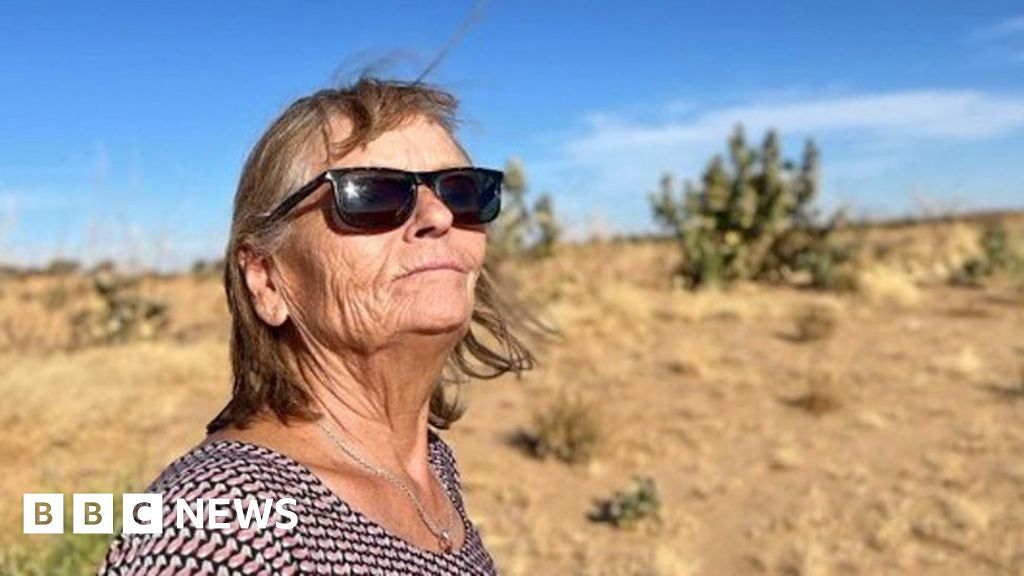
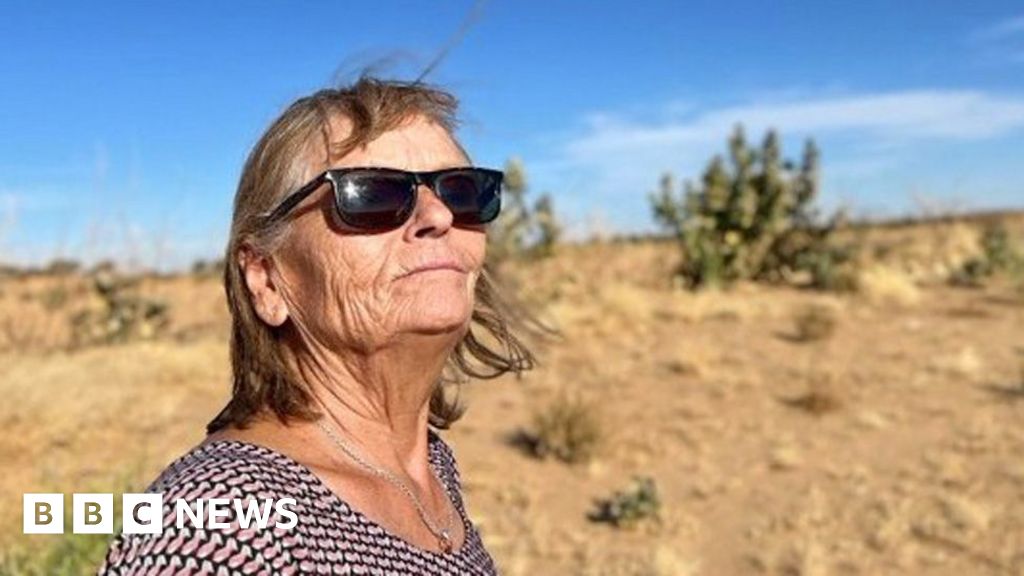
While Marin Petrović eventually secured his freedom, many others have not been so fortunate. The ongoing captivity of Eva Gretzmacher, the 74-year-old Austrian national kidnapped from her home in Niger, casts a long shadow over the region. Her son, Christoph Gretzmacher, expresses profound concern about his elderly mother’s ability to withstand the extreme conditions of the desert, where temperatures can swing wildly and access to essential resources is scarce.
Christoph has been actively engaged in media outreach to ensure his mother’s case "didn’t fade from public attention." He recently conveyed to the BBC his cautious approach following his latest efforts: "Right now, I need to wait and see how that pressure translates into concrete movement, while also gathering fresh information from the region and observing how the different key players are repositioning themselves." His commitment remains unwavering, driven by a deep sense of responsibility: "Ultimately, this is about one human life and the responsibility that comes with it. I remain committed to doing everything I can — carefully, responsibly and in co-ordination with those involved — to help bring my mother home safely." Her prolonged ordeal highlights the immense human cost of the Sahel’s escalating security crisis.
The Nuances of Release: JNIM’s "Charm Offensive"
Marin Petrović and another Bosnian national, Mario Kokoruš, were released in late October 2025 after 50 days in captivity, reportedly without a ransom being paid. This detail, confirmed by Nsaibia, an authority on kidnappings in the region, offers insight into JNIM’s evolving tactics. Nsaibia believes that JNIM’s decision to release the Bosnians without financial recompense stems from a calculated "charm offensive" directed towards Western nations. The group is reportedly making concerted efforts to avoid kidnapping or killing American or European citizens.
"They avoid it to build credibility among international stakeholders and for the international community," Nsaibia explained. This strategy suggests a desire by JNIM to be perceived as a more "rational" actor, potentially seeking a stronger footing for future negotiations with various conflict actors, including governments and international bodies. By demonstrating a degree of restraint towards certain nationalities, JNIM might aim to mitigate international condemnation or avoid triggering more aggressive counter-terrorism responses from Western powers, while still achieving their broader economic and political objectives through other means, such as targeting less diplomatically assertive nations like China.
Outlook and Implications

The escalating trend of foreign national kidnappings in the Sahel presents a complex and deeply concerning challenge. For individuals like Marin Petrović, the experience is a profound personal trauma, a stark reminder of the unpredictable dangers lurking in conflict zones. For families like the Gretzmachers, it is an agonizing wait, a testament to the enduring human cost of regional instability.
For governments, both in the Sahel and internationally, these abductions create difficult dilemmas. Malian authorities face pressure to secure the release of captives while battling a pervasive insurgency and maintaining fragile international relations. Western governments must balance their citizens’ safety with the imperative not to fund terrorist organizations through ransom payments. China, with its vast economic interests in the region, faces increasing pressure to re-evaluate its non-interference policy in the face of rising threats to its citizens.
The underlying factors fueling this crisis — poverty, climate change, ethnic grievances, weak governance, and the spread of extremist ideologies — remain largely unaddressed. Until these root causes are tackled comprehensively, the Sahel will likely continue to be a region where dreams of exploration can quickly turn into desperate struggles for survival, and where foreign nationals, whether aid workers, tourists, or investors, remain vulnerable pawns in a complex and brutal conflict. The narrative of Marin Petrović’s journey, from elation to captivity and eventual release, serves as a poignant microcosm of the broader humanitarian and security crisis unfolding across this strategically vital but deeply troubled region.