




The geopolitical landscape of the Middle East underwent a seismic shift on Saturday as Israel launched a series of pre-emptive military strikes against Iran, signaling a profound escalation in a long-simmering regional conflict. This military action was almost immediately followed by the commencement of a large-scale United States military operation, designated by the Pentagon as "Operation Epic Fury." The coordinated strikes have triggered an immediate and total closure of key airspace corridors across the region, effectively severing one of the world’s most critical aviation arteries. As Iran launched retaliatory strikes against U.S. air bases in the Gulf shortly after the initial wave of attacks, the global travel and logistics sectors have been thrust into a state of emergency, with the long-term implications for international stability and the global economy remaining deeply uncertain.
The Escalation: A Pre-emptive Strike and Operation Epic Fury
The military engagement began in the early hours of Saturday morning when the Israeli Defense Forces (IDF) confirmed they had targeted several high-priority military installations within Iranian territory. According to official statements from Jerusalem, the strikes were "pre-emptive" in nature, designed to neutralize imminent threats posed by Iranian-backed missile units and drone manufacturing facilities. Almost simultaneously, the United States Department of Defense announced the activation of Operation Epic Fury. This operation involves a multi-carrier strike group and advanced aerial assets aimed at degrading the command-and-control capabilities of the Iranian Revolutionary Guard Corps (IRGC) and securing international shipping lanes in the Strait of Hormuz.
The Pentagon’s spokesperson characterized Operation Epic Fury as a "defensive necessity" to protect American assets and allies in the region. However, the scale of the operation—utilizing precision-guided munitions and stealth technology—suggests a level of coordination and strategic depth that goes beyond traditional deterrent measures. In response, Tehran’s leadership condemned the attacks as a violation of national sovereignty and swiftly authorized retaliatory strikes. By mid-morning Saturday, reports surfaced of ballistic missile and drone attacks targeting U.S. air bases situated in the Gulf states, marking a direct confrontation between Washington and Tehran that many analysts have feared for decades.
Chronology of Events: Saturday’s Rapid Developments
The timeline of the escalation illustrates the speed at which the situation deteriorated from localized tension to a regional conflict:
- 02:00 UTC: Israel launches the first wave of air strikes targeting military infrastructure in western and central Iran.
- 02:45 UTC: The Pentagon officially announces the commencement of Operation Epic Fury, involving air assets from regional bases and naval platforms.
- 03:15 UTC: Civil aviation authorities in Iran, Iraq, and Jordan issue immediate Notices to Airmen (NOTAMs) closing their respective airspaces to all civilian traffic.
- 04:30 UTC: Iran’s Supreme National Security Council declares a "state of war" and orders retaliatory strikes.
- 05:00 UTC: Multiple explosions are reported near U.S. military installations in the Gulf region, including bases in Qatar and the UAE.
- 06:00 UTC: Major international carriers, including Emirates, Qatar Airways, and Etihad, announce the suspension of all flights into the Levant and the immediate rerouting of long-haul services.
- 08:00 UTC: The United Nations Security Council calls for an emergency session as global oil prices spike by more than 7% in early trading.
Immediate Impact on Global Aviation and Hub Logistics
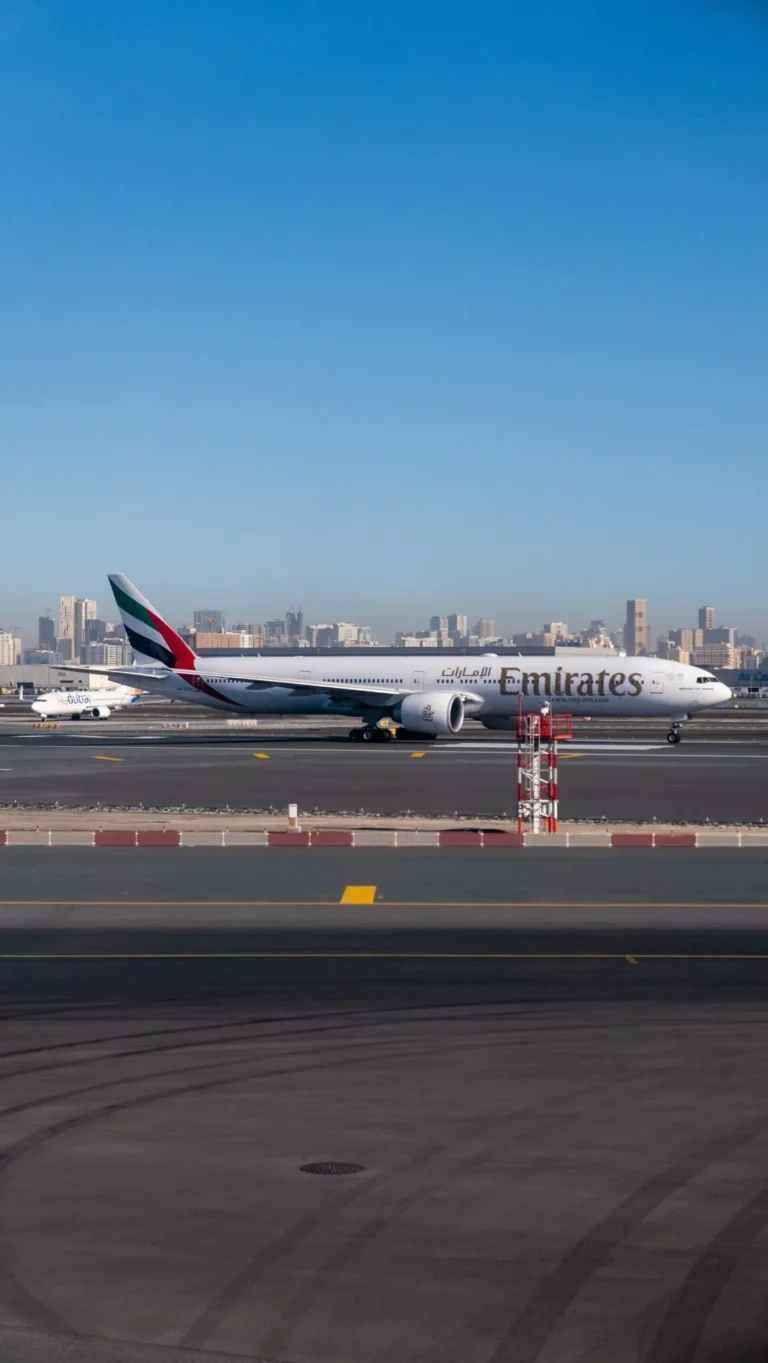
The closure of airspace over Iran and Iraq, combined with the volatility of the skies over the Gulf, has created a logistical nightmare for the global aviation industry. The Middle East serves as a vital bridge between Europe, Asia, and Africa. The United Arab Emirates, specifically Dubai International Airport (DXB), is one of the world’s most important aviation hubs. With the sudden closure of primary flight paths, thousands of passengers have been stranded, and airlines are facing the daunting task of rerouting hundreds of daily flights.
Airlines that typically utilize Iranian airspace to connect Europe with Southeast Asia are now forced to fly significantly longer routes, often diverted over Saudi Arabia, Egypt, or even as far north as Central Asia and the Caucasus. These diversions add between two to four hours of flight time per leg, dramatically increasing fuel consumption and operational costs. For an industry still recovering from the financial volatility of recent years, this sudden increase in overhead, combined with the potential for a sustained spike in jet fuel prices, poses a severe threat to profitability.
Data from flight tracking services indicated that within six hours of the initial strikes, more than 400 international flights were either diverted, returned to their point of origin, or cancelled entirely. The "ripple effect" is not limited to the Middle East; major hubs in London, Singapore, New York, and Hong Kong are reporting significant delays as the global schedule is recalibrated to account for the lost airspace.
The Role of the UAE and Gulf Hubs
The UAE’s position as a global transit point makes it uniquely vulnerable to regional instability. Dubai International Airport and Abu Dhabi International Airport rely on the seamless flow of traffic through Gulf corridors. The current escalation has not only halted local operations but has also raised questions about the safety of these hubs as transit points.
While the UAE government has maintained a stance of de-escalation and has called for diplomatic restraint, the reality of Iranian retaliatory strikes on regional bases has forced a reassessment of security protocols. Hospitality sectors in Dubai and Abu Dhabi, which were anticipating a strong "shoulder season" for tourism, are now bracing for a wave of cancellations. If the conflict persists, the perception of the Gulf as a safe haven for international business and leisure travel could be compromised, impacting hotel occupancy rates and the broader service economy.
Official Responses and Diplomatic Fallout
The international community has reacted with a mixture of alarm and calls for immediate de-escalation. The United Nations Secretary-General issued a statement urging all parties to "exercise maximum restraint to avoid a full-scale regional conflagration that would have catastrophic consequences for the entire world."
In Washington, congressional leaders are divided along traditional lines, with some offering full support for Operation Epic Fury as a necessary move against Iranian aggression, while others express concern over the lack of a clear exit strategy and the risk of a protracted war. Meanwhile, European capitals have expressed "grave concern" over the closure of airspace, emphasizing the need for humanitarian corridors and the protection of civilian infrastructure.
Russia and China have both issued statements criticizing the "unilateral military actions" of the United States and Israel, warning that such moves further destabilize a fragile region. These geopolitical divisions suggest that a diplomatic resolution will be difficult to achieve in the short term, as the major powers remain entrenched in their respective alliances.
Economic Implications and the Travel Industry
Beyond the immediate disruption to flight schedules, the economic implications of the Israel-Iran escalation are profound. The Middle East is home to some of the world’s most significant oil-producing nations. Any threat to the stability of the region—and specifically the Strait of Hormuz—invariably leads to volatility in energy markets.
For the travel industry, this translates into higher ticket prices due to fuel surcharges. Furthermore, the hospitality sector in neighboring countries such as Jordan, Egypt, and Turkey is likely to see a decline in bookings as travelers avoid the region. The "risk premium" associated with Middle Eastern travel has returned with a vengeance, potentially undoing years of progress made in marketing these regions as premier global destinations.
Market analysts suggest that if the airspace remains closed for more than a week, the global logistics chain could see delays comparable to the 2021 Suez Canal obstruction. Air cargo, which carries high-value electronics, pharmaceuticals, and perishable goods between Asia and Europe, is particularly sensitive to these disruptions.
Fact-Based Analysis of Future Implications
The current situation represents a "new normal" for regional security. The transition from a "shadow war" of proxy conflicts to direct, overt military engagement between Israel, the U.S., and Iran marks the end of a long period of strategic ambiguity. Several key factors will determine the trajectory of this conflict over the coming days:
- Duration of Airspace Closures: If the closure of Iranian and Iraqi airspace becomes semi-permanent, the global aviation industry will need to structurally redesign its East-West flight paths. This would involve significant investment in new refueling hubs and potentially the acquisition of longer-range aircraft.
- Intensity of Retaliation: The nature of Iran’s next steps will be critical. If Tehran limits its response to military targets, the conflict may remain contained. However, any targeting of civilian infrastructure or international shipping could trigger a much larger global response.
- Stability of Gulf Hubs: The ability of cities like Dubai and Doha to remain operational and "neutral" in the eyes of international travelers is paramount. If these hubs are perceived as being within the active combat zone, the economic model of the "mega-hub" could be fundamentally challenged.
- Oil Price Stability: A sustained price of oil above $100 per barrel would exert inflationary pressure on global economies, potentially triggering a slowdown in consumer spending and, by extension, a decrease in discretionary travel.
As the situation continues to evolve, the primary focus for the international community remains the safety of civilians and the restoration of secure corridors for global commerce. However, with "Operation Epic Fury" still in its initial phases and the full extent of the damage in Iran yet to be assessed, the road to de-escalation appears fraught with challenges. The events of this Saturday have not only reshaped the map of the Middle East but have also sent shockwaves through the systems that keep the modern world connected.