


Global financial markets and vital energy supply chains have been plunged into turmoil following a severe escalation of hostilities in the Middle East. Oil and natural gas prices surged dramatically on Monday, as Iran intensified its military actions across the region in direct response to a joint Israel-US military operation that targeted multiple locations within Iran in the early hours of February 28, 2026. The strategic Strait of Hormuz, a critical maritime chokepoint, now finds itself at the epicentre of this renewed conflict, with international shipping routes effectively paralyzed and global economic stability hanging precariously in the balance.
The immediate impact on energy markets was stark. Brent crude, the international benchmark for oil prices, witnessed a staggering 10% jump at the open of trading on Monday, briefly touching highs above $82 a barrel before paring some gains to settle around $79. Concurrently, US-traded West Texas Intermediate (WTI) crude also saw a significant increase, rising by approximately 7.6% to reach $72.20. The volatility was not confined to oil; natural gas prices experienced an even more precipitous surge, climbing by as much as 25% amidst fears of supply disruptions. These sharp movements underscore the market’s acute sensitivity to geopolitical risks, particularly those impacting the Middle East, a region indispensable to global energy security.
The Strait of Hormuz: A Geopolitical Chokepoint Under Threat
The escalating crisis revolves heavily around the Strait of Hormuz, a narrow waterway situated between the Persian Gulf and the Gulf of Oman. Measuring approximately 39 miles (63 km) at its narrowest point, this vital maritime artery is universally recognized as the world’s most important oil transit chokepoint. An astonishing 20% of the world’s total petroleum liquids consumption, equating to roughly 21 million barrels per day, and approximately one-third of all global liquefied natural gas (LNG) transits daily through this passage. Any disruption here sends immediate shockwaves through global energy markets.
Iran, whose coastline borders the northern flank of the Strait, issued stern warnings to international vessels, advising against passage through the waterway. This threat followed a weekend of intense military activity, during which at least three commercial ships were reportedly attacked in proximity to the Strait. The UK Maritime Trade Operations Centre (UKMTO), a British military organization that monitors maritime security, confirmed multiple security incidents. It reported that two vessels had been directly struck, and an "unknown projectile" was observed to have "exploded in very close proximity" to a third ship. Adding to the gravity of the situation, Iran’s Islamic Revolutionary Guards Corps (IRGC) on Sunday claimed responsibility for striking three tankers, reportedly from the UK and US, asserting they were "burning." Neither the UK nor the US governments have officially confirmed these specific claims, maintaining a cautious silence on the details of the alleged attacks on their flagged vessels. Regardless of the precise ownership or flag state, the incidents have unequivocally triggered a severe disruption to global shipping.
Paralysis in Shipping Lanes and Rerouting Dilemmas
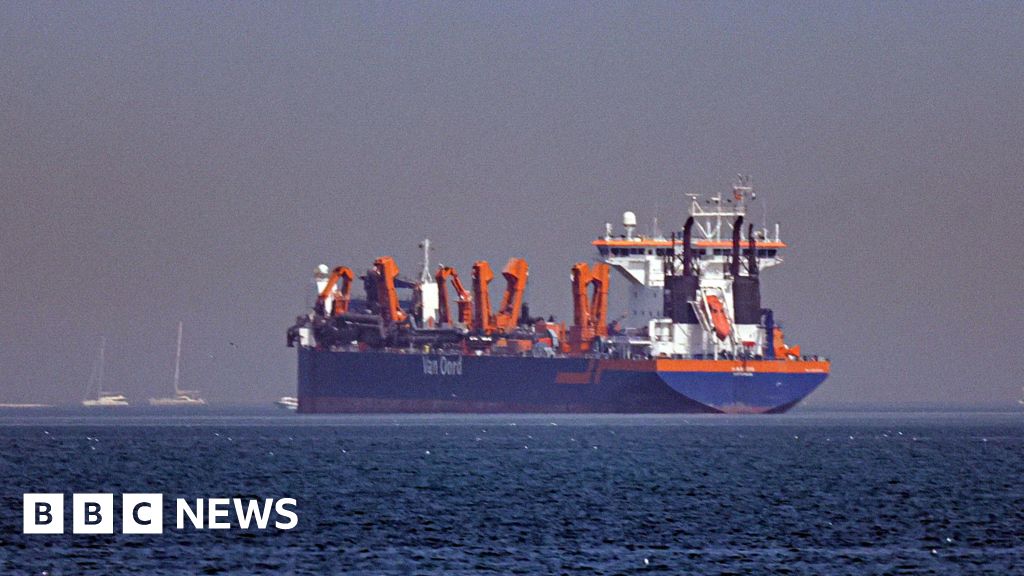
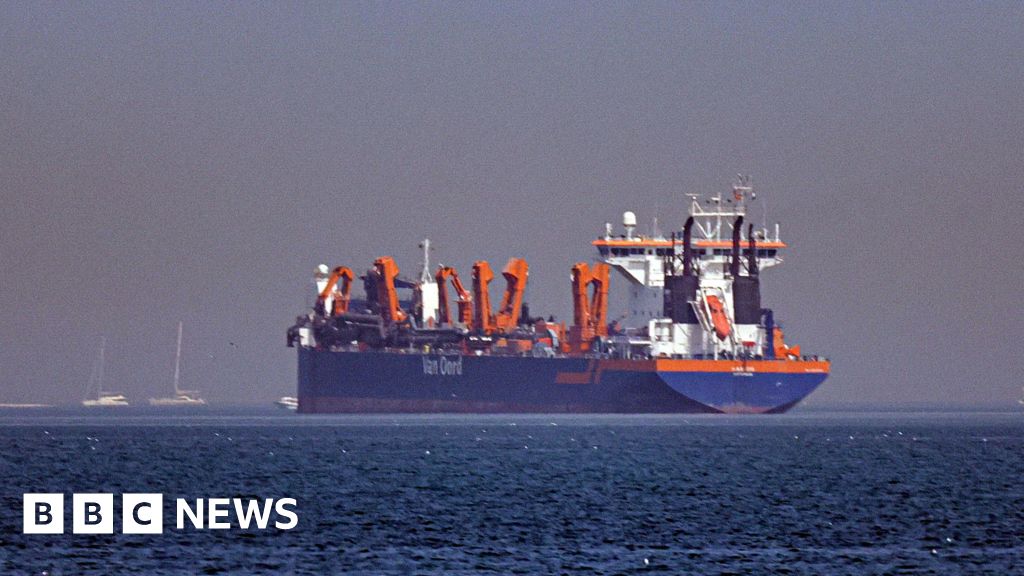
The ramifications for international maritime commerce were immediate and profound. Data from ship-tracking platforms such as Kpler revealed that international shipping has almost entirely ground to a halt at the entrance to the Strait of Hormuz. Over 150 tankers, laden with valuable crude oil and natural gas, have reportedly dropped anchor in the open waters of the Gulf, beyond the immediate danger zone of the Strait. Homayoun Falakshahi, an analyst with Kpler, stated to the BBC, "Because of Iran’s threats, the strait is effectively closed. The vessels have taken a precautionary measure not to enter as the risks are too high and their insurance costs have sky-rocketed." The prohibitive rise in insurance premiums, coupled with the existential threat of attack, has rendered passage through the Strait an untenable risk for most commercial operators.
The ripple effect extends far beyond the immediate vicinity of the Strait of Hormuz. Danish container shipping giant Maersk, a bellwether for global trade, announced on Sunday that it would pause all sailings through the Bab el-Mandeb Strait and the Suez Canal. This decision necessitates rerouting its vast fleet around the Cape of Good Hope at the southern tip of Africa. The Bab el-Mandeb Strait, located between Yemen and Djibouti, and the Suez Canal in Egypt, collectively form another vital maritime shortcut linking Asia and Europe. Disruptions in this Red Sea corridor, often attributed to Houthi attacks in recent times, had already strained global logistics. Maersk’s decision to now avoid both these routes and the Strait of Hormuz underscores the pervasive insecurity gripping key maritime arteries. This extensive detour adds thousands of nautical miles and weeks to transit times between Asia and Europe, significantly increasing fuel consumption, operational costs, and delivery delays, ultimately translating into higher consumer prices and potential product shortages.
Market Reactions: Stocks Dip, Gold Shines
The anxiety emanating from the Middle East quickly spread to global financial markets. In London, the FTSE 100 stock market index opened nearly 1% down, reflecting investor apprehension. Shares in major airlines were particularly hard hit, plummeting as various airspaces across the Middle East were closed or deemed unsafe, disrupting flight schedules and raising operational costs for carriers already navigating a challenging post-pandemic environment. European markets experienced even more significant declines, with France’s CAC-40 falling by 1.6% and Germany’s Dax index dropping by 1.7%. These broad-based declines underscore a wider flight from risk as investors seek safer havens amidst the heightened geopolitical uncertainty. Sectors heavily reliant on stable supply chains or discretionary consumer spending, such as automotive, retail, and hospitality, also showed significant downturns.
Conversely, the price of gold, traditionally considered a safe-haven asset during periods of economic or geopolitical instability, saw a notable increase. Gold prices added 2.3%, climbing to $5,395.99 an ounce, as investors sought refuge from the volatile equity and commodity markets. This inverse relationship—equities down, gold up—is a classic indicator of heightened global risk aversion, signaling a pervasive concern among investors about the near-term economic outlook.
Expert Analysis and the Outlook for Energy Prices
Despite the initial dramatic surge in prices, some analysts caution against immediate panic. Saul Kavonic, head of energy research at MST Marquee, told the BBC, "The market isn’t panicking. There is more clarity that so far, oil transport and production infrastructure hasn’t been a primary target by any side." Kavonic emphasized that market participants would be closely monitoring for signs of normalized traffic through the Strait of Hormuz, which could lead to a swift subsidence of oil prices. This perspective suggests that while the immediate threat is high, there’s an underlying belief that direct attacks on major production facilities or a sustained, complete closure of the Strait might still be avoided, preventing a worst-case scenario.
However, other experts offer a more sobering outlook. Analysts warn that a prolonged conflict, particularly one that maintains the effective closure of the Strait or directly impacts production capabilities in major Gulf states, could easily push global oil prices beyond the $100 a barrel mark. Such a scenario would have severe ripple effects across the global economy, exacerbating inflationary pressures and potentially prompting central banks to reconsider their monetary policies. Robin Mills, chief executive at Dubai-based consultancy Qamar Energy and a former executive at oil giant Shell, noted, "The jump in prices will feed through almost immediately because the oil traders are very much following the news too. At the moment, oil prices are not particularly high, they are still below where they were even two years ago so we’re not in full-blown oil crisis mode yet." This assessment provides a critical perspective: while the current situation is concerning, it has not yet reached the severity of past energy crises, though the potential for rapid escalation remains high.
Broader Economic Implications: Inflation and Interest Rates
The prospect of sustained high energy prices presents a significant challenge to global economic recovery and stability. Subitha Subramaniam, chief economist and head of investment strategy at Sarasin & Partners, articulated these concerns: "If oil prices remained high for a sustained period, it will start to cascade into other prices such as food, agriculture, industrial commodities and that’s just going to really bleed into inflation." This "cascade effect" is a critical concern for policymakers, as energy costs are embedded in nearly every sector of the economy, from transportation and manufacturing to food production and distribution. Rising fuel costs for shipping and logistics, for instance, directly increase the price of imported goods and agricultural products. Similarly, energy-intensive industries face higher operational costs, which are then passed on to consumers.
For economies like the UK, where the pace of inflation had recently shown signs of easing, this renewed upward pressure on commodity prices could derail progress. The Bank of England, which had recently signaled the possibility of further interest rate cuts after a period of aggressive tightening to combat inflation, might be forced to reconsider its trajectory. Subramaniam suggested that the Bank may choose to leave interest rates unchanged at 3.75% for the moment, despite earlier indications of impending cuts. This demonstrates how geopolitical events can swiftly alter the domestic economic landscape, forcing central banks to prioritize inflation control over stimulating growth, potentially prolonging periods of higher borrowing costs for businesses and consumers.
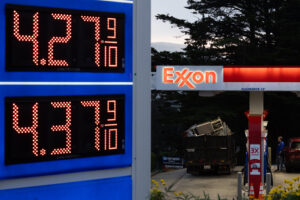
Consumers, already grappling with cost-of-living pressures, are also expected to feel the pinch directly. Edmund King, president of the AA, a leading UK motoring organization, warned, "The turmoil and bombing across the Middle East will surely be a catalyst to disrupt oil distribution globally, which will inevitably lead to price hikes." King emphasized that "the magnitude and duration of pump price increases depends on how long the conflict goes on." This direct impact on fuel prices at the pump will affect households and businesses worldwide, further squeezing discretionary spending and operational budgets, and potentially dampening consumer confidence.
International Responses and Supply Adjustments
In an attempt to stabilize the volatile oil market, the Opec+ group of oil-producing nations convened on Sunday. The alliance, comprising major oil exporters led by Saudi Arabia and Russia, agreed to increase their collective output by 206,000 barrels a day. This modest increase is intended to help cushion any price rises and demonstrate a commitment to market stability. However, some experts express skepticism about the efficacy of this measure. Given the sheer volume of oil that transits the Strait of Hormuz daily, an increase of 206,000 barrels per day might prove insufficient to offset a significant and sustained disruption to supply. The effectiveness of Opec+’s intervention will largely depend on the duration and intensity of the conflict and whether major production facilities in the Gulf region become direct targets. Historical precedents show that Opec+ decisions, while influential, often struggle to fully counteract major supply shocks or significant geopolitical risk premiums.
The United States, historically a guarantor of freedom of navigation in international waters, is also expected to play a crucial role. Homayoun Falakshahi from Kpler noted that the US would likely try to protect shipping routes. The success of such efforts would be paramount in preventing a prolonged oil price spike. However, he cautioned that if the Strait were to remain shut for an extended period, prices could go "much, much higher," indicating the limits of even a powerful naval presence against persistent, unconventional threats such as missile strikes or drone attacks on commercial shipping. The balance between maintaining regional stability and safeguarding global commerce will be a delicate and challenging act for international powers.
Chronology of Recent Escalation
The current crisis has unfolded rapidly:
- Early Hours of February 28, 2026: A joint military operation by Israel and the United States targets multiple locations across Iran, marking a significant escalation in regional tensions. This operation served as the immediate catalyst for Iran’s subsequent actions.
- Following Days/Weekend: Iran initiates a series of retaliatory strikes across the Middle East, signaling a direct response to the Israel-US operation.
- Weekend (prior to Monday): At least three commercial vessels are attacked near the Strait of Hormuz. UKMTO reports two vessels directly struck and an "unknown projectile" exploding in close proximity to a third. Iran’s IRGC claims to have struck three UK/US tankers, though these claims remain unconfirmed by Western governments.
- Sunday:
- The Opec+ group of oil-producing nations agrees to increase output by a modest 206,000 barrels a day, aiming to mitigate price increases.
- Danish shipping giant Maersk announces a halt to all sailings through the Bab el-Mandeb Strait and Suez Canal, rerouting vessels around the Cape of Good Hope, signifying a major disruption to global trade routes.
- Iran issues explicit warnings to international vessels not to pass through the Strait of Hormuz, effectively signaling its intent to disrupt traffic in the critical waterway.
- Monday: Global oil and natural gas prices surge dramatically at market open, reflecting heightened fears of supply disruption. Stock markets in London and major European capitals experience significant drops, while gold prices rise as a safe-haven asset. International shipping at the Strait of Hormuz effectively ceases, with over 150 tankers anchoring outside the danger zone, awaiting clarity on the security situation.
The confluence of military actions, direct threats to vital shipping lanes, and immediate, adverse market reactions paints a picture of profound geopolitical instability. The coming days and weeks will be critical in determining whether this latest escalation can be contained, or if it will cascade into a prolonged crisis with far-reaching consequences for the global economy and energy landscape. The world watches anxiously as diplomatic efforts, military posturing, and market forces collide in one of the planet’s most strategically sensitive regions. The long-term implications for inflation, economic growth, and the stability of international trade routes remain deeply uncertain.
Authors: Daniel Thomas, Ben Hatton, Peter Hoskins, and Dearbail Jordan.