



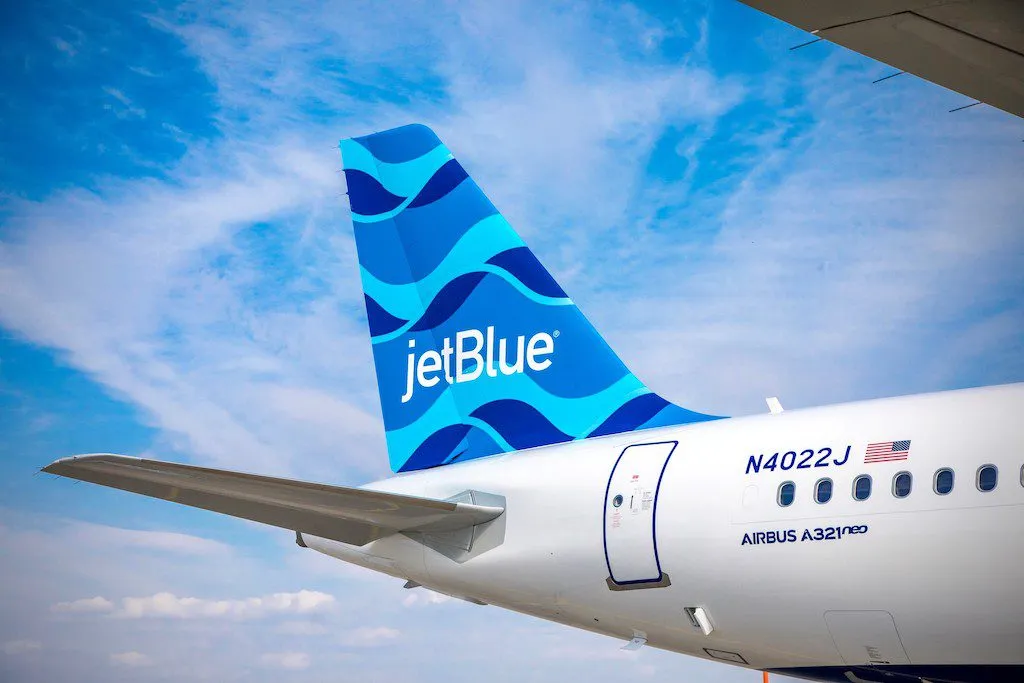
JetBlue Airways’ ambitious foray into the transatlantic market, once characterized by aggressive expansion and a disruptive pricing model, appears to be reaching a plateau as the carrier looks toward the summer of 2026. After four years of rapid growth that saw the New York-based airline challenge legacy carriers on some of the world’s most lucrative routes, a comprehensive analysis of upcoming schedules indicates a significant deceleration. According to data from Cirium Diio, JetBlue is projected to operate 13 transatlantic routes in the summer 2026 season, representing an increase of only one route compared to the 2025 schedule. This stabilization marks a departure from the carrier’s previous year-over-year growth trajectory and signals a new phase of operational consolidation driven by external pressures and internal strategic shifts.
The transition from a high-growth disruptor to a disciplined operator is not a voluntary pivot but rather a result of a complex interplay of structural limitations. Constraints in aircraft availability, particularly regarding the Airbus A321LR and the delayed A321XLR, coupled with the ongoing challenges of securing landing slots at congested European hubs like London Heathrow and Amsterdam Schiphol, have effectively placed a ceiling on JetBlue’s European ambitions. Furthermore, the airline is currently navigating a broader corporate turnaround strategy, dubbed "JetForward," which prioritizes a return to profitability and operational reliability over market share expansion.
The Evolution of JetBlue’s Transatlantic Experiment
JetBlue’s entry into the long-haul market in August 2021 was viewed as a high-stakes gamble. For decades, the transatlantic corridor had been the exclusive domain of widebody aircraft operated by massive legacy carriers and their joint-venture partners. JetBlue sought to break this hegemony by utilizing the Airbus A321LR (Long Range), a single-aisle aircraft equipped with the airline’s highly-regarded "Mint" business class suites. The goal was to offer a premium experience at a fraction of the cost charged by competitors like British Airways, Delta Air Lines, and United Airlines.
The timeline of JetBlue’s expansion reflects an initial period of rapid opportunistic growth:
- August 2021: JetBlue launches its inaugural transatlantic service between New York’s John F. Kennedy International Airport (JFK) and London Heathrow (LHR).
- September 2021: The airline adds service from JFK to London Gatwick (LGW), diversifying its London footprint.
- August 2022: Service expands to Boston Logan International Airport (BOS), connecting the Massachusetts hub to both London Heathrow and Gatwick.
- June 2023: JetBlue enters the European mainland with daily service between JFK and Paris Charles de Gaulle (CDG).
- August 2023: The airline launches flights to Amsterdam Schiphol (AMS) from JFK, followed shortly by a Boston-Amsterdam connection, despite significant regulatory hurdles regarding noise quotas at the Dutch hub.
- Summer 2024: The carrier introduces seasonal service to Dublin, Ireland, and Edinburgh, Scotland, from both JFK and Boston, marking its furthest reach into the European market.
While the expansion was swift, the 2026 outlook suggests that the "easy" growth has been exhausted. The airline’s current network covers the major "Blue Chip" gateways of Western Europe. To expand further, JetBlue would require either more slots at existing airports or the delivery of the A321XLR (Extra Long Range) to reach destinations deeper into Continental Europe, such as Rome, Milan, or Berlin, which are currently at the edge of or beyond the A321LR’s efficient operating range.
Fleet Availability and the Pratt & Whitney Constraint
The primary headwind facing JetBlue’s long-haul strategy is the availability of its specialized narrowbody fleet. The airline’s transatlantic model relies entirely on the Airbus A321LR. Unlike a standard A321neo, the LR variant features additional fuel tanks and a modified cabin configuration to accommodate the 24 Mint suites necessary for high-yield long-haul flying.
Compounding the scarcity of new airframes is the ongoing crisis involving the Pratt & Whitney Geared Turbofan (GTF) engines. A manufacturing defect in the high-pressure turbine disks has forced airlines globally to ground hundreds of A320neo-family aircraft for accelerated inspections. JetBlue has been disproportionately affected by these groundings, with several aircraft removed from service at any given time. This "engine-driven capacity constraint" has forced the airline to prioritize its most profitable domestic and Caribbean routes, leaving little surplus capacity to dedicate to new, unproven transatlantic ventures.
Furthermore, the delay of the Airbus A321XLR has stymied JetBlue’s ability to move into a second phase of European expansion. While the A321LR can comfortably reach London, Dublin, and Paris, it faces performance limitations when heading further east or when encountering strong winter headwinds on westbound returns. The XLR, which received EASA certification in mid-2024, is expected to provide the range necessary for JetBlue to look toward Central and Southern Europe. However, with delivery timelines pushed back and the airline focusing on stabilizing its current operations, these aircraft are unlikely to fuel significant growth before the late 2026 or 2027 window.
The Battle for European Airport Slots
Beyond aircraft, the scarcity of airport slots remains a formidable barrier to entry and expansion. In London, Heathrow remains one of the most difficult airports in the world for a new entrant to gain a foothold. JetBlue’s initial entry was facilitated by temporary slots made available during the pandemic-induced travel slump. Transitioning those into permanent, commercially viable slots has been a costly and legally complex endeavor.
The situation in Amsterdam is even more precarious. The Dutch government’s attempts to cap flight movements at Schiphol Airport to reduce noise and carbon emissions led to a protracted legal battle. JetBlue, as a relatively new entrant without "grandfathered" rights to many slots, faced the prospect of being forced out of the market entirely. While international pressure and legal rulings have temporarily paused the most drastic cuts, the environment remains one of "constrained stability" rather than growth. For JetBlue to add a 14th or 15th route in 2026, it would likely need to find a destination with an "open skies" environment and ample capacity, such as Lisbon or Madrid, but even these markets are heavily defended by incumbent carriers and their transatlantic joint ventures.
Strategic Shift: The JetForward Plan
The slowdown in transatlantic growth must also be viewed through the lens of JetBlue’s internal financial restructuring. Following the blocked merger with Spirit Airlines and a period of sustained losses, JetBlue’s leadership, headed by CEO Joanna Geraghty, has pivoted toward a strategy of "disciplined capital allocation."
The "JetForward" initiative, unveiled in 2024, focuses on four key pillars: reliability, restoring the East Coast "fortress" hubs, elevating the customer experience, and driving profitability. As part of this plan, the airline has already cut dozens of underperforming domestic routes and closed several stations. In the transatlantic sector, this means the airline is less likely to launch "prestige" routes that may take years to reach profitability.
Market analysts suggest that the 13-route ceiling for 2026 reflects a desire to optimize the current network rather than expand it. By maintaining a consistent schedule on existing routes to London, Paris, and Amsterdam, JetBlue can focus on increasing its load factors and "Mint" cabin capture rates. The airline has indicated that its goal is to reach $800 million to $900 million in incremental EBIT (Earnings Before Interest and Taxes) by 2027, a goal that requires a cautious approach to high-risk, long-haul expansion.
Competitive Response and Market Implications
The legacy carriers—Delta, United, and the American/British Airways alliance—have not stood idly by as JetBlue entered their turf. Since 2021, these carriers have increased their own narrowbody and widebody capacity on routes served by JetBlue. They have also refined their pricing strategies, occasionally matching JetBlue’s lower fares in the "Basic Economy" segment while leveraging their massive loyalty programs and corporate contracts to retain high-value business travelers.
Despite the slowdown in growth, JetBlue’s presence continues to have a "halo effect" on transatlantic pricing. Data suggests that on routes where JetBlue competes, average premium cabin fares have remained more competitive than on routes where legacy carriers maintain a monopoly. However, with JetBlue reaching a capacity ceiling, the pressure on legacy carriers to keep prices low may diminish. If JetBlue cannot continue to add frequency or new destinations, it risks becoming a "niche" player in the transatlantic market rather than a transformative force.
Future Outlook: Beyond 2026
While the 2026 schedule suggests a pause, it does not necessarily signal the end of JetBlue’s international ambitions. The airline’s management has consistently stated that the transatlantic market remains a core part of its long-term identity. The current "ceiling" is widely viewed by industry observers as a tactical pause to allow the fleet to recover from engine issues and for the first wave of A321XLRs to be integrated into the system.
For the remainder of the decade, JetBlue’s transatlantic success will depend on its ability to navigate three critical factors:
- Engine Reliability: The resolution of the Pratt & Whitney GTF issues is paramount to freeing up the aircraft needed for any future growth.
- Product Consistency: As legacy carriers upgrade their own narrowbody fleets with lie-flat seats, JetBlue must maintain its "Mint" product advantage.
- Slot Strategy: The airline may need to explore secondary European gateways where slot constraints are less severe, potentially looking at markets in Scandinavia or Southern Europe that fit the A321LR/XLR profile.
In conclusion, JetBlue’s transatlantic experiment is moving from a period of "disruption at all costs" to one of "strategic maturity." The 13 routes planned for summer 2026 represent a formidable footprint for a medium-sized U.S. carrier, but the lack of significant growth highlights the physical and economic boundaries of the narrowbody long-haul model. As the industry watches the 2026 season approach, the focus will shift from where JetBlue is flying next to how profitably it can fly the routes it already has.