



In a move signaling a crucial phase for its human spaceflight endeavors and the burgeoning commercial space sector, NASA announced on Thursday, February 26, the appointments of Joel Montalbano as acting Associate Administrator for the Space Operations Mission Directorate (SOMD) and Dana Hutcherson as acting Program Manager of the Commercial Crew Program, both effective immediately. These leadership changes arrive as the agency prepares for the retirement of the International Space Station (ISS) and intensifies its focus on fostering a robust low Earth orbit (LEO) economy, while also sustaining American preeminence in space exploration. The appointments follow the previously announced retirement of Kenneth Bowersox, who served as the Associate Administrator for SOMD and will officially conclude his tenure on Friday, March 6.
A Pivotal Moment for NASA’s Space Operations
The Space Operations Mission Directorate (SOMD) is a cornerstone of NASA’s mission, overseeing the vast array of programs and activities essential for maintaining human presence in space and enabling scientific discovery. Its extensive portfolio includes the Commercial Crew Program (CCP), the Commercial Low Earth Orbit Program, the Human Research Program, the International Space Station Program, the Launch Services Program, the Rocket Propulsion Test Program, the Space Communications and Navigation Program, Space Sustainability, and Human Spaceflight Capabilities. Each of these programs plays a vital role in NASA’s overarching strategy, from ensuring safe and reliable access to orbit to developing the foundational technologies for future deep-space missions, including the Artemis program to return humans to the Moon and eventually Mars.
The leadership transition within SOMD comes at a critical juncture. The agency is actively working towards the planned decommissioning of the ISS around 2030, a monumental undertaking that necessitates a seamless transition to commercially owned and operated LEO destinations. This strategic pivot underscores NASA’s commitment to shifting from being an owner and operator of LEO infrastructure to a customer, fostering innovation and reducing operational costs through private sector partnerships. The success of this transition hinges significantly on the visionary leadership within SOMD.
Strategic Leadership for a New Era
NASA Administrator Jared Isaacman emphasized the importance of these appointments, stating, "Strong leadership is essential to advancing NASA’s mission, and Joel Montalbano and Dana Hutcherson are exceptionally well-qualified to serve in these acting roles. Their experience and commitment will help ensure we deliver on the President’s National Space Policy, maintain American leadership in low Earth orbit, and build the capabilities required to achieve the near-impossible beyond it." This statement highlights the dual mandate facing the new leadership: consolidating American leadership in the immediate term within LEO and laying the groundwork for ambitious deep-space exploration.
The President’s National Space Policy, often updated to reflect evolving geopolitical and technological landscapes, typically prioritizes robust U.S. leadership in space, the expansion of commercial space capabilities, and international cooperation while safeguarding national security interests. Montalbano and Hutcherson’s roles are directly aligned with these objectives, particularly in championing commercialization and ensuring the operational readiness of space assets. Industry partners, who rely heavily on stable and experienced leadership within NASA, are expected to welcome these appointments as a sign of continuity and a firm commitment to ongoing partnerships. Representatives from leading aerospace firms, while not issuing direct statements on specific personnel changes, routinely express their appreciation for NASA’s consistent vision and collaborative approach, which these appointments are designed to reinforce.
Joel Montalbano: Charting the Future of LEO and Beyond
As the acting Associate Administrator for SOMD, Joel Montalbano steps into a role with expansive responsibilities and critical strategic priorities. Foremost among these will be establishing a viable low Earth orbit economy ahead of the International Space Station’s retirement and maintaining America’s superiority in space.
Focus on the Low Earth Orbit Economy
The vision for a LEO economy involves a paradigm shift where commercial entities develop, own, and operate space stations and other orbital platforms, with NASA serving as one of many customers for services such as crew transport, scientific research, and in-space manufacturing. This strategy is designed to free up NASA’s resources to focus on deeper space exploration missions, like Artemis, while ensuring continued U.S. access to and presence in LEO. Montalbano’s leadership will be crucial in guiding the Commercial LEO Development (CLD) program, which has already awarded agreements to companies like Axiom Space, Blue Origin, and Voyager Space (with Northrop Grumman and Lockheed Martin) to develop commercial space stations. These efforts are not merely about replacing the ISS; they aim to create a self-sustaining ecosystem where diverse businesses can thrive, fostering innovation and economic growth in space. The timeline for this transition is aggressive, with the ISS currently funded through 2030, making every year critical for the development and certification of commercial alternatives. Montalbano will oversee the crucial integration of these nascent commercial capabilities with NASA’s operational needs, ensuring a smooth handoff.
Maintaining Space Superiority
Beyond commercialization, Montalbano will be tasked with upholding America’s "superiority in space." This multifaceted objective encompasses technological leadership, operational resilience, and strategic advantage. It involves ensuring that U.S. launch capabilities remain robust and competitive, that space communications infrastructure is secure and advanced, and that human spaceflight capabilities continue to push boundaries. This priority is particularly salient in an increasingly competitive global space arena, where nations like China are rapidly advancing their own space programs and private companies worldwide are disrupting traditional models. Montalbano’s oversight of programs like Launch Services and Space Communications and Navigation will be pivotal in delivering on this mandate.
A Distinguished Career in Space Operations
Montalbano brings a wealth of experience to this challenging role, having served as deputy in his previous position. Prior to his tenure at headquarters, he held the esteemed position of program manager of the International Space Station at NASA’s Johnson Space Center in Houston. In this capacity, he was responsible for the overall management, development, integration, and operation of the orbiting laboratory – a complex undertaking involving international partners, thousands of scientific experiments, and continuous human presence in space. This experience provides him with an intimate understanding of the operational intricacies and international diplomacy inherent in large-scale space programs.
His career trajectory at NASA is marked by a series of increasingly responsible leadership roles. He served as deputy program manager for the International Space Station Program Office, gaining critical insight into the strategic planning and execution of ISS operations. Notably, Montalbano also served as director of NASA’s Human Space Flight Program in Russia, a role that required navigating complex international relationships and ensuring the continued collaboration with Roscosmos, particularly during periods when U.S. astronauts relied on Russian Soyuz spacecraft for transport to the ISS. Earlier in his career, he distinguished himself as a NASA flight director, a highly demanding position requiring instantaneous decision-making and comprehensive knowledge of spacecraft systems during critical mission phases. Montalbano began his journey in the aerospace industry at Rockwell in 1988, transitioning to a NASA civil servant position in the same year, marking over three decades of dedicated service to the agency.
Montalbano’s contributions have been recognized with numerous prestigious honors throughout his career. These include the NASA Distinguished Service Medal, the highest award NASA can bestow, signifying sustained performance and contributions representing a profound or major impact on the agency’s mission. He also received the Johnson Space Center Directors Commendation, the Rank of Meritorious Executive conferred by the President of the United States (a testament to sustained superior accomplishments in the federal service), the NASA Exceptional Service Medal (twice), the Superior Accomplishment Award, and the NASA Outstanding Leadership Medal. His professional excellence was further acknowledged with a Rotary Space Award Nomination. Academically, Montalbano holds a bachelor’s degree in aerospace, aeronautical, and astronautical engineering from Iowa State University, providing him with a strong technical foundation for his leadership roles.
Dana Hutcherson: Steering the Commercial Crew Program
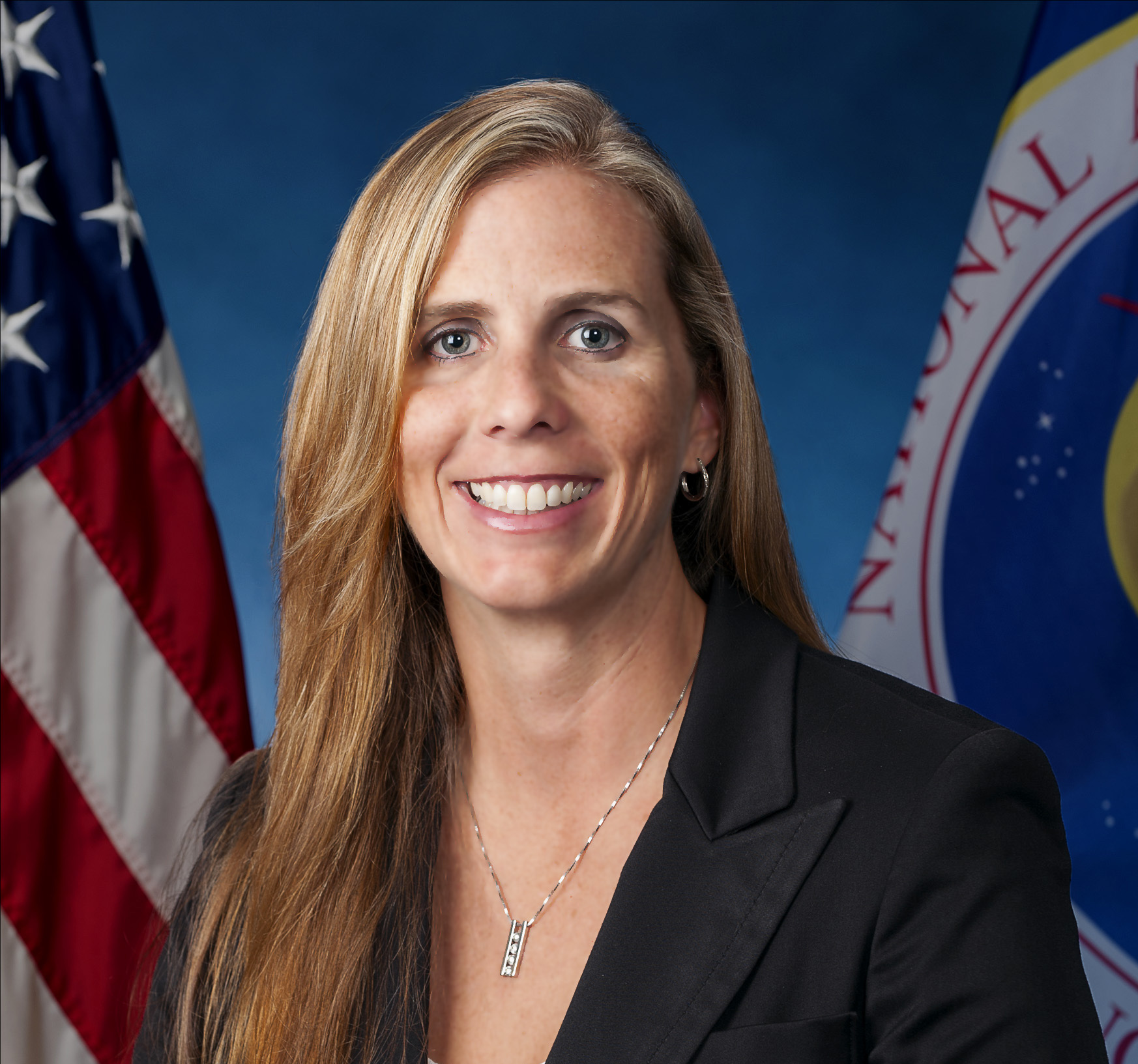
Dana Hutcherson’s appointment as acting Program Manager of the Commercial Crew Program (CCP) places her at the forefront of one of NASA’s most successful and transformative initiatives. Her mission through CCP will be to continue working closely with the American aerospace industry to develop safe, reliable, and cost-effective crew transportation systems for low Earth orbit destinations, most notably the International Space Station. She is specifically responsible for facilitating spacecraft development, certification, and operations to enable the safe transportation of NASA astronauts.
Ensuring Safe and Reliable Crew Transportation
The Commercial Crew Program stands as a testament to NASA’s strategic shift towards commercial partnerships. Initiated in response to the retirement of the Space Shuttle program in 2011 and the subsequent reliance on Russian Soyuz spacecraft for astronaut transport, CCP was designed to stimulate the development of private American capabilities for human spaceflight. This program has been immensely successful, culminating in the certification of SpaceX’s Crew Dragon spacecraft and its subsequent regular operational flights to the ISS, restoring U.S. independent human spaceflight launch capability from American soil. The program represents a multi-billion-dollar investment in the U.S. commercial space sector, fostering job creation and technological advancement.
Under Hutcherson’s leadership, the CCP will continue to oversee the ongoing certification process for Boeing’s Starliner spacecraft, which recently completed a crewed flight test, a crucial step toward becoming fully operational. Her role is vital in ensuring that these commercial partners adhere to NASA’s stringent safety and performance requirements, which are paramount when human lives are at stake. Beyond the current contracts, Hutcherson will likely play a key role in evolving CCP’s strategy to support the future commercial LEO destinations, ensuring a robust ecosystem of transportation providers for the post-ISS era. The program’s success is not just about ferrying astronauts; it’s about validating a new model of government-industry partnership that is expected to be replicated in future space endeavors, including lunar landers for the Artemis program.
A Career Dedicated to Launch and Crew Systems
Hutcherson’s extensive experience within the CCP and broader NASA operations makes her uniquely qualified for this role. She previously served as deputy manager of the CCP Systems Engineering and Integration Office, a position critical for ensuring that all components of the complex crew transportation systems work together seamlessly and meet performance specifications. She also held the role of deputy manager of the program’s Launch Vehicle Systems Office, providing her with deep technical expertise in the propulsion and structural integrity of the rockets that carry astronauts into space.
Her career at NASA also includes service as a NASA flow director within the Launch Vehicle Processing Directorate at Kennedy Space Center. This role involved managing the intricate processes of preparing rockets and spacecraft for launch, a demanding job that requires meticulous attention to detail and adherence to strict operational protocols. Prior to joining NASA, Hutcherson began her career with United Space Alliance as an airframe engineer. United Space Alliance was a joint venture between Boeing and Lockheed Martin, serving as the prime contractor for Space Shuttle operations, giving Hutcherson foundational experience in human spaceflight engineering and ground operations.
Hutcherson has been recognized for her significant contributions with numerous prestigious honors. These include the Meritorious Presidential Rank Award, a highly esteemed recognition for sustained superior accomplishment in the federal service. She has also received NASA’s Space Flight Awareness Leadership Award, which recognizes individuals who demonstrate exemplary leadership and contributions to human spaceflight safety and mission success, and the Outstanding Leadership Medal. Her academic background further strengthens her technical and managerial acumen, holding a bachelor of science in mechanical engineering from the Georgia Institute of Technology in Atlanta, and a master of science in industrial engineering of engineering management from the University of Central Florida in Orlando.
The Path Forward: Sustaining American Leadership in Space
The appointments of Joel Montalbano and Dana Hutcherson mark a pivotal moment for NASA, signaling continuity in its strategic objectives while injecting renewed leadership into critical areas. Their collective experience, spanning decades of dedication to human spaceflight and commercial partnerships, positions them to effectively navigate the complex challenges and capitalize on the immense opportunities that lie ahead.
The implications of these appointments extend beyond the immediate operational success of SOMD and CCP. They underscore NASA’s unwavering commitment to the President’s National Space Policy, which champions American leadership in space, fosters commercial innovation, and seeks to extend human presence deeper into the solar system. By focusing on a robust LEO economy, NASA aims to offload routine LEO operations to the private sector, thereby freeing up resources—both financial and human—to accelerate ambitious deep-space exploration initiatives like the Artemis program. The success of the Commercial Crew Program, under Hutcherson’s guidance, provides a proven model for these future partnerships, demonstrating that commercial entities can reliably and safely provide essential space services.
However, the path forward is not without its challenges. Developing multiple commercially viable LEO destinations to succeed the ISS, securing sustained funding for these initiatives, and adapting to a rapidly evolving geopolitical landscape in space will require agile and innovative leadership. Montalbano’s mandate to maintain "America’s superiority in space" will involve not only technological advancement but also strategic international cooperation and a proactive approach to space sustainability and debris mitigation.
The retirement of Kenneth Bowersox, a veteran astronaut and respected leader, closes a significant chapter in NASA’s space operations. His tenure saw critical advancements, particularly in the operational success of the ISS and the maturation of commercial partnerships. Montalbano and Hutcherson now stand ready to build upon this legacy, guiding NASA through a transformative era where commercialization, international collaboration, and ambitious exploration converge to redefine humanity’s presence in space. Their leadership will be instrumental in ensuring that the United States remains at the forefront of space exploration and innovation for decades to come.
Chronology of Key Events
- February 26: NASA announces the appointments of Joel Montalbano as acting Associate Administrator for SOMD and Dana Hutcherson as acting Program Manager for the Commercial Crew Program, effective immediately. This date also reflects an update to the initial release regarding the effective date of the leadership changes.
- March 6: Kenneth Bowersox’s retirement as Associate Administrator for SOMD officially takes effect, concluding his distinguished career with NASA.
- Present Day – 2030 (approx.): Critical period for the development and certification of commercial low Earth orbit (LEO) destinations, aiming to establish a robust LEO economy before the planned retirement of the International Space Station.
- 1988: Joel Montalbano begins his career at Rockwell and subsequently becomes a NASA civil servant, commencing over three decades of service.
- Early Career: Dana Hutcherson begins her career with United Space Alliance as an airframe engineer, gaining foundational experience in human spaceflight operations.
For more information about NASA’s ongoing missions and strategic initiatives, please visit www.nasa.gov.