



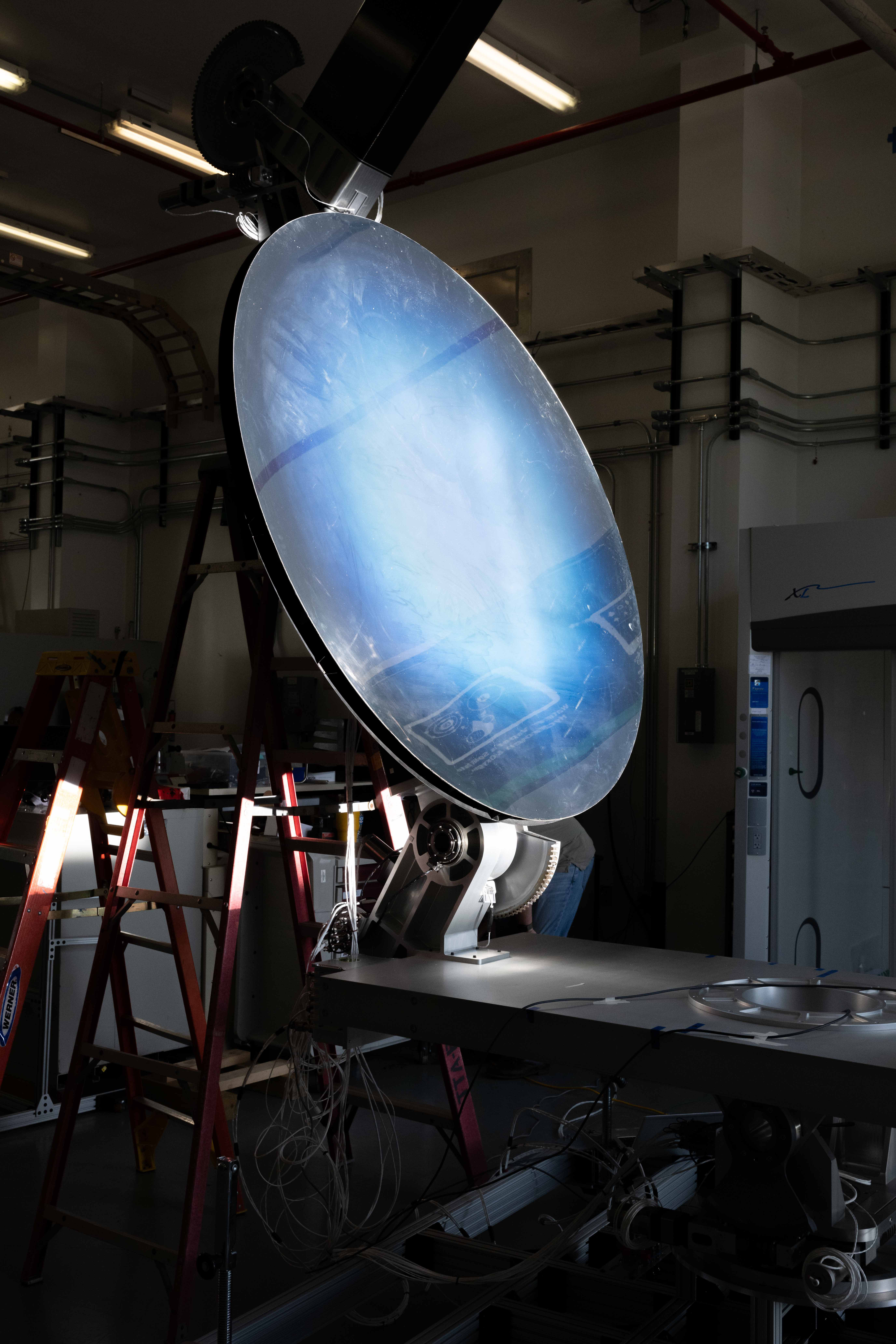
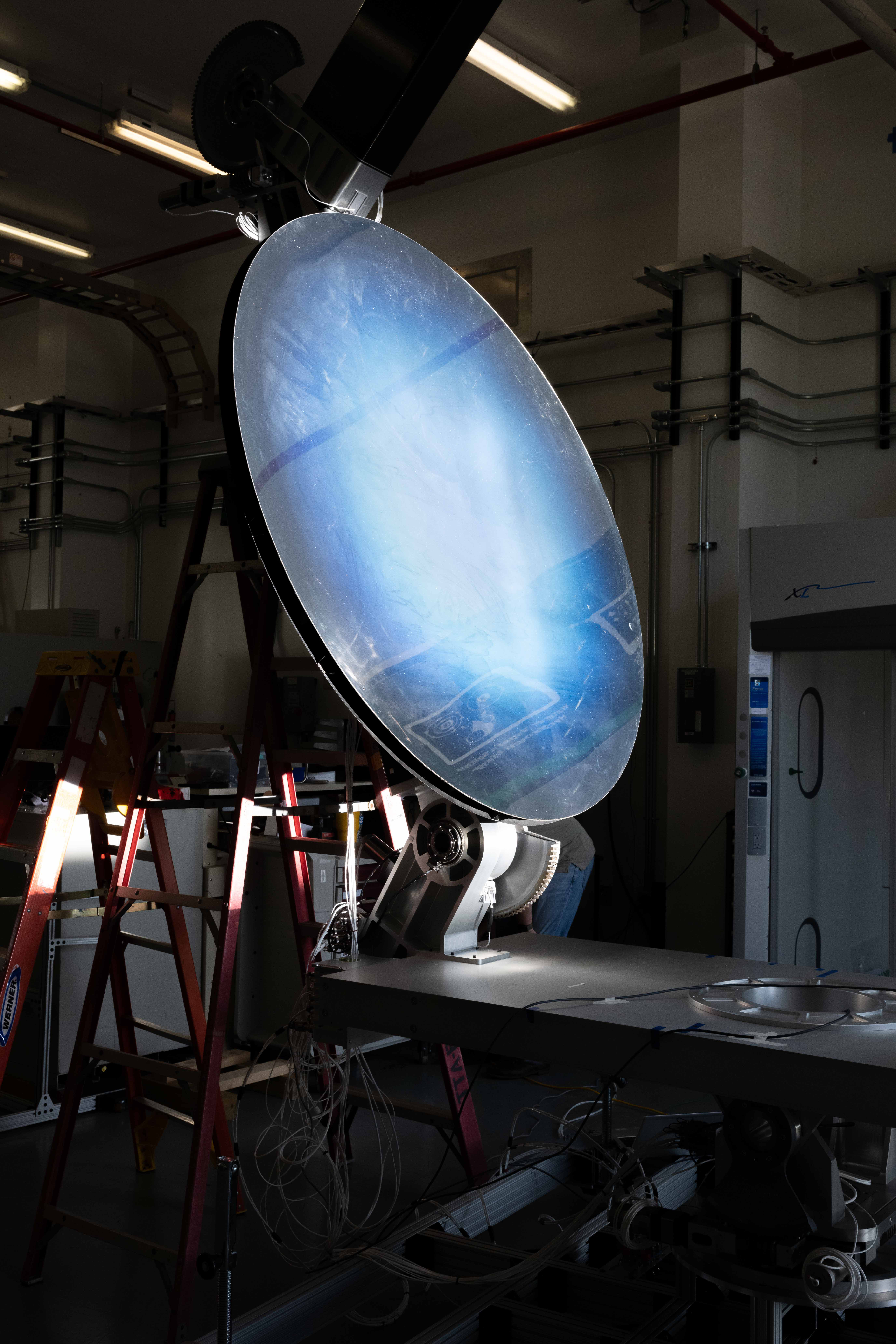
A pivotal step towards enabling long-term human presence beyond Earth was recently underscored by the successful test of NASA’s Carbothermal Reduction Demonstration (CaRD) project. On August 7, 2025, engineers achieved a significant milestone by integrating a solar concentrator, mirrors, and control software to successfully produce carbon monoxide from simulated lunar regolith. This achievement, announced on February 27, 2026, represents a critical advancement in In-Situ Resource Utilization (ISRU) technology, designed to extract vital resources directly from celestial bodies, thereby dramatically reducing the cost and complexity of future space missions. The CaRD project specifically targets the production of oxygen from lunar soil, a resource essential for both life support and propellant manufacturing at the Moon’s south pole.
The Imperative of In-Situ Resource Utilization (ISRU)
The aspiration for a sustainable, enduring human presence on the Moon and Mars hinges critically on the ability to "live off the land." Historically, every ounce of material required for space missions, from water and oxygen to rocket fuel and construction materials, has had to be launched from Earth. This method is exorbitantly expensive, with launch costs typically ranging from tens of thousands to hundreds of thousands of dollars per kilogram, depending on the destination and launch vehicle. Such prohibitive costs severely limit mission duration, crew size, and the scope of scientific and exploratory activities.
NASA’s Artemis program, which aims to return humans to the Moon and establish a sustained presence there, explicitly recognizes ISRU as a foundational pillar. The lunar south pole, identified as a prime location for future bases, is believed to harbor significant quantities of water ice in its permanently shadowed regions (PSRs). While water ice can be processed to yield hydrogen and oxygen – both critical for life support and propellant – the vast majority of lunar regolith, or lunar soil, is composed of metal oxides. These oxides, particularly ilmenite (FeTiO3), contain bound oxygen that, if liberated, could provide an alternative or supplementary source of this indispensable gas. The CaRD project directly addresses this need by demonstrating a method to extract oxygen from these pervasive lunar minerals.
Unpacking the Carbothermal Reduction Demonstration (CaRD) Project
The CaRD project is pioneering a carbothermal reduction process, a chemical method that uses heat and a carbon-based reductant to break down metal oxides and release oxygen. In the context of lunar regolith, which is rich in oxides of iron, titanium, silicon, and aluminum, the process involves heating the regolith to very high temperatures (typically exceeding 1,000 degrees Celsius) in the presence of a carbon source. This reaction converts the metal oxides into their metallic forms and produces carbon monoxide (CO). The carbon monoxide can then be further processed, for example, through a reverse water-gas shift reaction or other catalytic converters, to yield pure oxygen (O2) and regenerate the carbon source for continued use, making the process highly efficient and regenerative.
The successful test on August 7, 2025, was a critical validation of the integrated system. During this demonstration, a solar concentrator played a central role. Solar concentrators are designed to focus ambient sunlight onto a small area, generating the intense heat required for the carbothermal reaction. This eliminates the need for bulky and heavy electrical power sources, leveraging the abundant solar energy available on the Moon. The integration of mirrors precisely directed the concentrated sunlight onto the simulated lunar regolith within the reactor, while sophisticated software controlled the entire process, monitoring temperatures, pressures, and reaction byproducts. The confirmation of carbon monoxide production was the smoking gun, indicating that the carbothermal reduction process had successfully liberated oxygen from the simulated lunar material. This CO can then be easily converted into oxygen using established technologies.
A Historical Perspective on Lunar Resource Extraction
The concept of extracting resources from the Moon is not new; it dates back to the early days of the space age. Even during the Apollo missions, scientists pondered the potential of lunar resources. Early proposals in the 1970s and 80s explored methods like hydrogen reduction of ilmenite, where hydrogen gas (brought from Earth or sourced from lunar water ice) reacts with ilmenite to produce water, which can then be electrolyzed into hydrogen and oxygen. Another approach involved molten salt electrolysis, where regolith is dissolved in a molten salt bath, and an electric current is used to extract oxygen.
What sets carbothermal reduction, as demonstrated by CaRD, apart is its potential efficiency and adaptability. While hydrogen reduction relies on a supply of hydrogen, and molten salt electrolysis presents challenges with high temperatures and corrosive materials, carbothermal reduction can potentially use carbon sources that might be generated on the Moon (e.g., from human waste or other biological processes, or even from imported methane that can be recycled). Furthermore, the direct use of concentrated solar energy for heating offers a clean, renewable power source for the process, minimizing reliance on nuclear power or large battery arrays. The development of solar concentrators that are robust and efficient in the lunar environment has been a significant hurdle, and the CaRD project’s success in integrating these components represents a notable engineering achievement.
NASA’s Game Changing Development Program: Fostering Future Frontiers
The CaRD project received its funding from NASA’s Game Changing Development Program (GCDP). This program is specifically designed to advance technologies that are vital for the agency’s future space missions and to provide innovative solutions to significant national needs. GCDP invests in early-stage, high-risk, high-reward technologies that promise to revolutionize space exploration by making it safer, more affordable, and more capable. By nurturing projects like CaRD, the GCDP ensures that NASA has a robust pipeline of cutting-edge technologies ready for deployment when needed. These "game-changing" technologies are often too complex or too speculative for commercial investment in their nascent stages but hold immense potential to unlock new capabilities in space. The CaRD project exemplifies this philosophy, tackling a fundamental challenge of deep space exploration: self-sufficiency.
From Lunar South Pole to Martian Vistas: Broadening Horizons
The implications of the CaRD project extend far beyond the Moon. While its immediate focus is on producing oxygen for lunar operations, the underlying technology has profound relevance for future human missions to Mars.
On the Moon, oxygen produced from regolith is crucial for two primary reasons: life support for astronauts and, perhaps even more critically, as an oxidizer for rocket propellant. If hydrogen can be obtained from lunar water ice, combining it with oxygen from regolith forms liquid oxygen/liquid hydrogen (LOX/LH2) propellant, a highly efficient fuel used in many modern rockets. This would enable spacecraft to refuel on the Moon for journeys back to Earth or onward to Mars, transforming the Moon into a "gas station" for deep space exploration. This significantly reduces the mass that needs to be launched from Earth, freeing up payload capacity for scientific instruments, habitats, or other critical supplies.
For Mars, the adaptability of the CaRD technology is particularly exciting. The Martian atmosphere is vastly different from Earth’s, composed primarily of carbon dioxide (about 95%). The CaRD technology, which produces carbon monoxide, can be adapted to process carbon dioxide. Downstream systems used to convert carbon monoxide into oxygen can also be configured to convert carbon dioxide into oxygen and methane (CH4). This capability is a cornerstone for Mars exploration because methane and oxygen are the propellants of choice for many proposed Mars ascent vehicles and future human missions. For instance, the Sabatier reaction, a well-understood chemical process, can combine hydrogen (potentially sourced from Martian water ice or imported) with atmospheric CO2 to produce methane and water. The water can then be electrolyzed to produce oxygen and regenerate hydrogen. Developing systems that can directly convert atmospheric CO2 into oxygen and methane using solar power, as the CaRD project’s principles suggest, would be a monumental leap for Martian exploration, enabling return journeys and local power generation.
Implications for a Sustainable Space Economy
The successful demonstration of the CaRD project’s principles carries immense implications for the nascent space economy and the future of human expansion.
-
Economic Impact: The ability to produce oxygen, water, and propellant on the Moon or Mars would drastically reduce operational costs. Instead of shipping every kilogram of propellant from Earth, which could cost upwards of $200,000 per kilogram to reach lunar orbit, producing it locally could slash these expenses by orders of magnitude. This cost reduction frees up resources for more ambitious scientific endeavors, larger habitats, and broader commercial activities. It could stimulate the growth of a new space industry focused on resource extraction, processing, and distribution.
-
Logistical Freedom and Resilience: Reducing reliance on Earth-based supply chains makes lunar and Martian outposts more self-sufficient and resilient to unforeseen challenges or delays on Earth. A sustained presence requires redundancy and local production capabilities to mitigate risks. This also allows for longer missions and larger crews, transforming temporary visits into permanent settlements.
-
Enabling Permanent Bases: The availability of local resources is the fundamental prerequisite for establishing permanent human settlements. Oxygen for breathing, water for drinking and hygiene, and propellant for transport are non-negotiable. CaRD’s progress moves us closer to a future where lunar habitats are not just outposts but truly self-sustaining colonies.
-
Strategic Advantage and International Cooperation: Nations and commercial entities capable of extracting and utilizing off-world resources will gain a significant strategic advantage in the new space race. This capability could also foster international cooperation, as shared resource infrastructure could benefit all participants in lunar and Martian exploration, promoting peaceful and collaborative development of space.
The Road Ahead: Challenges and Future Development
While the CaRD project’s test is a significant triumph, considerable work remains before such a system can be deployed and operated reliably on the Moon or Mars.
- Scaling Up: The laboratory demonstration needs to be scaled up to a size capable of producing oxygen at rates sufficient for supporting human missions and propellant needs. This involves designing larger reactors, more powerful solar concentrators, and more robust processing equipment.
- Long-Duration Testing in Space-like Conditions: The lunar and Martian environments are extreme, characterized by vacuum, abrasive dust, extreme temperature swings, and radiation. The CaRD system will need rigorous testing in simulated space environments and eventually in actual flight tests to prove its long-term reliability and performance under these harsh conditions. Dust mitigation, in particular, is a pervasive challenge for lunar equipment, as fine, abrasive lunar dust can clog mechanisms, degrade optical surfaces, and interfere with electronics.
- Integration with Other ISRU Systems: A fully operational lunar base will require an ecosystem of ISRU technologies, including water ice extraction, regolith processing for construction materials, and potentially even agriculture. The CaRD system will need to be seamlessly integrated with these other systems to form a cohesive, self-sufficient infrastructure.
- Processing Actual Lunar Regolith: Simulated regolith, while useful for initial testing, cannot perfectly replicate the complex mineralogy and physical properties of actual lunar soil. Future tests will need to use samples of genuine lunar regolith, if available, or more advanced simulants, to validate the process under realistic conditions.
- Automation and Autonomy: For sustained operations with minimal human intervention, the system will need to be highly automated and capable of autonomous operation, including self-monitoring, fault detection, and repair capabilities.
According to Monika Luabeya, a key figure in the CaRD project, whose image is associated with this development, "This demonstration represents a critical step forward in our quest to make humanity a multi-planetary species. By proving we can extract vital resources from the lunar surface using sunlight and local materials, we are laying the groundwork for a future where sustainable off-world habitation is not just a dream, but a tangible reality." A NASA spokesperson, echoing this sentiment, added, "The ingenuity displayed by the CaRD team, supported by the Game Changing Development Program, highlights NASA’s commitment to pushing the boundaries of what’s possible. Technologies like CaRD are fundamental to our Artemis goals and our broader vision for human exploration of the solar system."
The success of NASA’s CaRD project marks a profound moment in the journey toward sustainable space exploration. By demonstrating the feasibility of extracting oxygen from lunar regolith using an integrated solar-powered system, it brings humanity significantly closer to establishing permanent outposts on the Moon and lays crucial groundwork for future missions to Mars. This innovative approach promises to unlock unprecedented opportunities for scientific discovery, economic development, and the ultimate expansion of human civilization beyond Earth.