



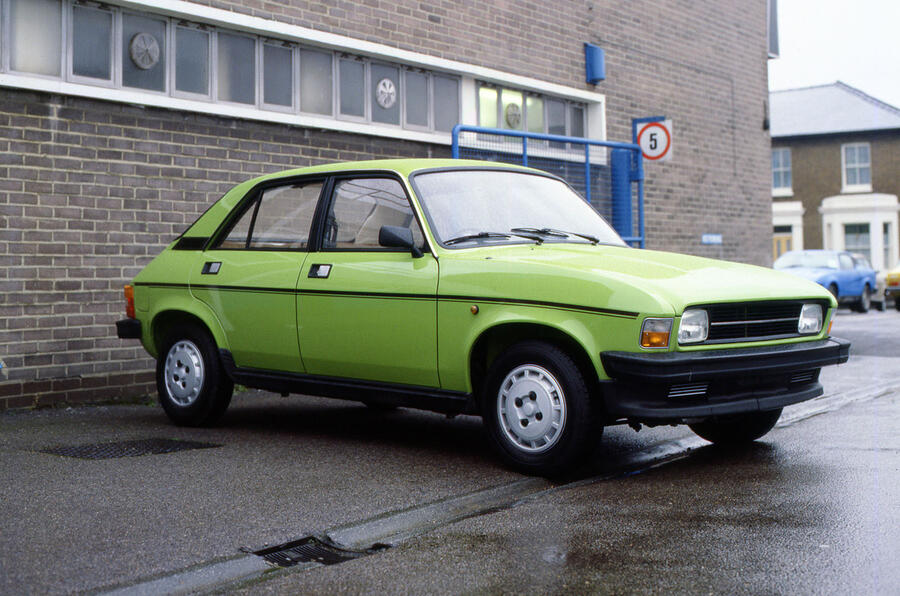
The Austin Allegro remains one of the most polarizing figures in the history of global automotive manufacturing, serving for decades as the primary case study for the perceived collapse of the British motor industry. Launched in 1973 by British Leyland (BL), the Allegro was intended to be a forward-looking, technologically advanced successor to the immensely popular Austin 1100 and 1300 series. However, its reputation was quickly tarnished by a confluence of design compromises, industrial unrest, and quality control failures that have, in the eyes of many historians and enthusiasts, overshadowed its genuine engineering merits. To understand the Allegro is to understand the "malaise era" of 1970s Britain—a period characterized by economic instability, shifting consumer expectations, and a domestic manufacturing sector struggling to modernize in the face of burgeoning international competition.
The Genesis of Project ADO67
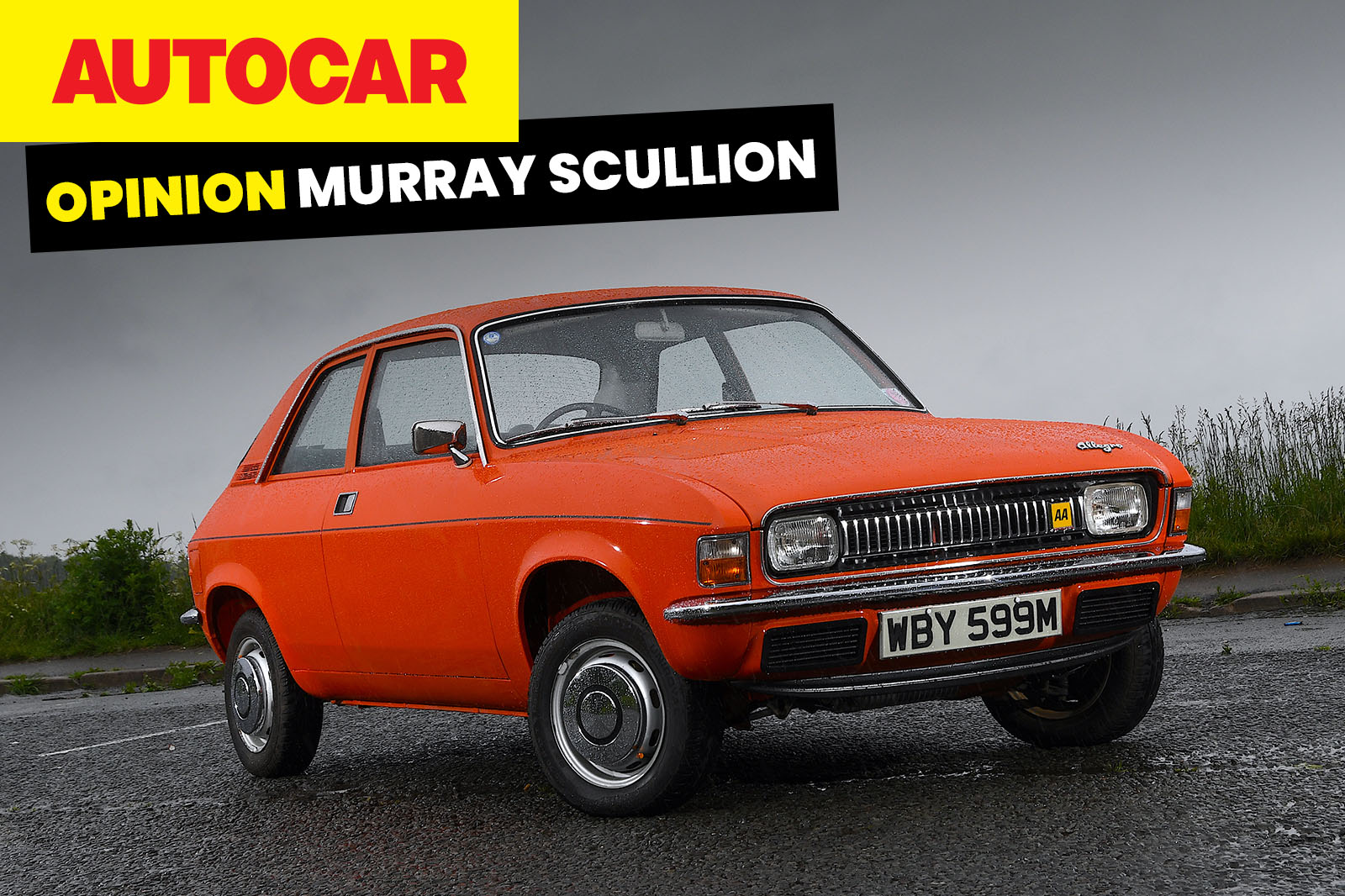
The development of the Austin Allegro, internally designated as Project ADO67, began in the late 1960s following the formation of British Leyland. The corporation was a sprawling, often disorganized conglomerate of various British marques, and management felt an urgent need for a new "world car" that could compete with the likes of the Volkswagen Golf and the Ford Escort. The design was entrusted to Harris Mann, who initially envisioned a sleek, wedge-shaped car that captured the futuristic aesthetic of the era.
However, the transition from concept to production was fraught with compromise. British Leyland’s decision to utilize existing engine components, specifically the tall E-Series engine and the bulky heater units from the Morris Marina, forced engineers to raise the waistline and bonnet of the car. This resulted in a "bulbous" appearance that departed significantly from Mann’s original sketches. Furthermore, the introduction of the "Quartic" steering wheel—a rectangular-shaped wheel intended to provide more thigh room and a better view of the dashboard—was met with immediate ridicule by the motoring press, eventually becoming a symbol of the car’s perceived eccentricity.
A Chronology of the Austin Allegro (1973–1982)
The production lifecycle of the Allegro spanned nearly a decade, during which British Leyland attempted several iterations to address public criticism and mechanical shortcomings.
- 1973: The Austin Allegro is officially launched in the spring. Initial reviews are surprisingly positive, with journalists praising its ride quality and standard equipment levels compared to its predecessors.
- 1974: Reports of significant quality control issues begin to surface. Most notably, instances of the rear window "popping out" when the vehicle was jacked up incorrectly highlighted a lack of torsional rigidity in the chassis.
- 1975: The Series 2 (Allegro 2) is introduced. This update featured revised suspension settings to improve handling and the replacement of the controversial Quartic steering wheel with a traditional round one in most models.
- 1977–1978: British Leyland undergoes significant restructuring following the Ryder Report and government intervention. Production continues amidst frequent labor strikes and supply chain disruptions.
- 1979: The Allegro 3 is released, featuring more modern plastic bumpers, a new interior, and improved fuel efficiency to compete with the latest hatchbacks from Europe and Japan.
- 1982: Production of the Allegro finally ceases, with approximately 642,350 units built. It is replaced by the Austin Maestro.
Technical Innovations and Engineering Realities
Despite its negative reputation, the Allegro featured several sophisticated engineering choices that were ahead of their time. Central to its design was the Hydragas suspension system, an evolution of the Hydrolastic system used in earlier BMC cars. Developed by Dr. Alex Moulton, Hydragas utilized nitrogen-filled spheres and fluid to provide a level of ride comfort and vibration damping that was often superior to the more expensive executive sedans of the period.
The vehicle was offered with a variety of powerplants, ranging from the 1.0-liter A-Series engine to the 1.7-liter E-Series. In its "1300 Super" configuration, the Allegro was marketed as a high-value family car, offering a comprehensive list of standard features that many competitors only provided as optional extras. Contemporary testing by Autocar in 1973 noted that the car represented a "big step forward in all respects" compared to the aging Austin 1300, particularly regarding cabin quietness and highway stability.
However, these innovations were often undermined by catastrophic failures in quality assurance. The most severe allegations involved the structural integrity of the car. Due to a design flaw in the rear subframe and body mounting, the chassis could flex significantly under stress. Furthermore, there were documented cases of wheels detaching while the vehicle was in motion, a defect later attributed to improper hub design and assembly errors. These incidents, while not universal across the entire production run, created a lasting narrative of the Allegro as a "dangerous" vehicle.
Industrial Relations and the Three-Day Week
The failure of the Allegro cannot be analyzed in a vacuum; it was deeply intertwined with the socio-political landscape of 1970s Britain. During this era, British Leyland was a hotbed of industrial action. Frequent strikes at the Longbridge and Cowley plants frequently halted production, leading to inconsistent build quality as semi-finished cars were often left on assembly lines for weeks.
Management at British Leyland frequently blamed external factors for the car’s poor performance in the market. They cited the "Three-Day Week"—a measure introduced by the UK government in 1974 to conserve electricity during a coal miners’ strike—as a primary reason for production delays and component shortages. Conversely, the workforce and trade unions argued that the car’s failures were the result of management’s obsession with cost-cutting. They claimed that engineers were forced to optimize for money-saving and manufacturing efficiency at the expense of material quality and long-term reliability.
This internal friction meant that the Allegro never received the iterative refinement necessary to compete with the rapidly improving offerings from Volkswagen, Renault, and the emerging Japanese manufacturers like Datsun and Toyota. While the Allegro remained a relatively common sight on British roads throughout the 70s, it failed to capture the export markets that British Leyland desperately needed for survival.
Reevaluating Performance: The 600-Mile Test
Modern retrospectives often paint a more nuanced picture of the Allegro when the car is judged as a classic vehicle rather than a new consumer product. Enthusiasts who maintain surviving examples often report that the car performs capably within the context of its era. In one notable long-distance evaluation, an Allegro 3 was driven over 600 miles from Peterborough, England, to the Seneffe plant in Belgium—where some European-market Allegros were assembled—and back.
The findings from such trials suggest that the "All-aggro" moniker may be somewhat hyperbolic. The car demonstrated a capacity to maintain a steady 60 mph on modern motorways, provided ample visibility due to its slim pillars and large glass area, and remained remarkably comfortable over long distances thanks to the Hydragas suspension. The breakdown rate of surviving models, when properly maintained, is comparable to other vehicles of the early 1980s. This suggests that while the Allegro was certainly flawed, its status as "the worst car ever made" is a title largely fueled by its role as a convenient scapegoat for the wider systemic failures of the British manufacturing sector.
Broader Impact and Implications for the Automotive Industry
The Austin Allegro serves as a cautionary tale in industrial design and corporate management. Its legacy contributed to a fundamental shift in how the British public viewed domestic products, leading to a massive increase in the market share of imported vehicles. By the time the Allegro was discontinued in 1982, the British motor industry had been transformed from a global leader into a struggling ward of the state, eventually leading to the sell-off and eventual disappearance of many historic brands.
The implications of the Allegro’s tenure include:
- The Rise of Quality Control Standards: The public outcry over Allegro’s reliability forced subsequent manufacturers to adopt more rigorous testing protocols, such as those later championed by Japanese firms.
- The Death of the "Half-Way" Design: The Allegro proved that compromising a designer’s vision to fit existing, outdated mechanical components is a recipe for aesthetic and functional failure.
- The Shift to Hatchbacks: While the Allegro was a "two-box" design, it lacked a true rear hatchback in its early years (instead having a fixed rear window and boot lid), a mistake that allowed the VW Golf to dominate the European market.
In conclusion, the Austin Allegro was a car caught between two worlds: the traditional, labor-intensive manufacturing processes of the past and the high-tech, efficiency-driven future of the automotive industry. While it was plagued by genuine mechanical and structural issues, it was also a victim of timing and a toxic industrial environment. Today, it stands not just as a maligned vehicle, but as a fascinating artifact of a transformative period in British history, reminding us that even the most ambitious engineering projects can be undone by a failure to align design, management, and labor toward a single standard of excellence.