




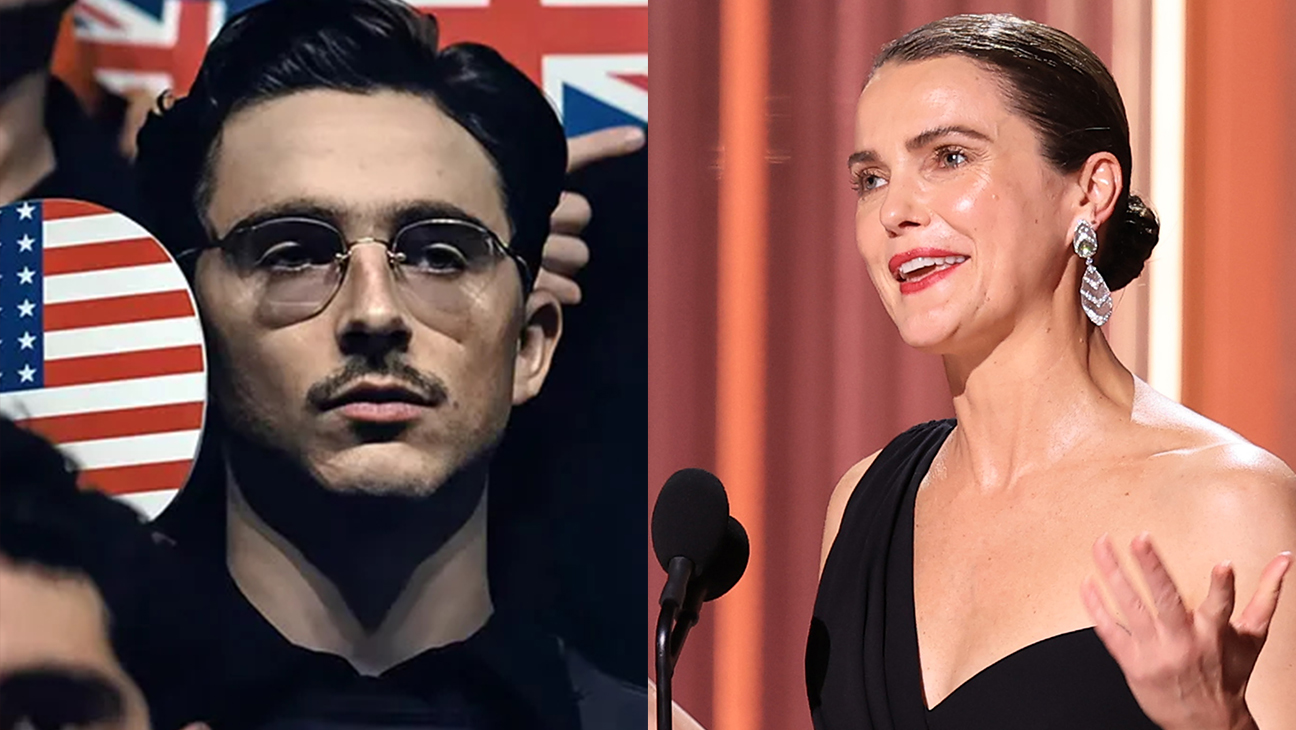
Despite a wave of critical acclaim and early awards buzz for his transformative performance in "Marty Supreme," Timothée Chalamet has faced a significant setback in his quest for major acting accolades, experiencing his second notable loss at a prominent Oscar precursor award show within a single week. The highly anticipated Actor Awards saw Chalamet’s bid for Best Actor thwarted by Michael B. Jordan’s powerful portrayal in "Sinners." This follows a similar disappointment at the BAFTA Awards, where Chalamet was unexpectedly bested by Robert Aramayo for his role in "I Swear," signaling a potentially complex and unpredictable trajectory for the coveted Best Actor Oscar.
The Actor Awards, a significant barometer for Academy Award sentiment, proved to be a challenging night for "Marty Supreme" overall. The film, which had garnered considerable attention and appeared to resonate strongly with SAG-AFTRA voters during the nomination announcement phase earlier this year, walked away with no major wins. Its three nominations, including a coveted nod for Best Cast, had positioned it as a potential frontrunner. Even Odessa A’zion’s nomination for Best Supporting Actress had highlighted the film’s perceived strength within the acting branch of the academy. The collective shutout for "Marty Supreme" at the Actor Awards raises questions about its sustained momentum as the Oscar voting period draws nearer.
The Actor Awards: A Night of Surprises and Shifting Fortunes
The Actor Awards ceremony, streamed live on Netflix, is widely regarded as one of the most influential events in the pre-Oscar calendar, often mirroring the preferences of the Academy’s acting branches. This year’s iteration was marked by a series of unexpected outcomes, challenging established narratives and creating a more fluid competitive landscape.
"Marty Supreme" Faces a Shutout
The initial optimism surrounding "Marty Supreme" and Chalamet’s performance, fueled by early critical praise and other awards, began to wane as the Actor Awards unfolded. While Chalamet’s performance has been widely lauded for its nuance and emotional depth, the results suggest that other contenders have gained significant traction with this particular voting body. The film’s absence from the winner’s circle, despite nominations for its ensemble cast and supporting actress, points to a broader challenge in translating critical acclaim into competitive wins at this crucial stage of the awards season.
The film’s presence in the Best Cast category had indicated strong support for its collective performances, a category that often reflects the breadth of appreciation for a film’s acting ensemble. The shutout in this category, alongside Chalamet’s individual loss, suggests that the film, as a whole, did not capture the imagination of the Actor Awards voters in the way some had anticipated.
"Frankenstein" Also Leaves Empty-Handed
Adding to the night’s surprises, "Frankenstein," another film that had garnered three nominations at the Actor Awards, also failed to secure any wins. Guillermo del Toro’s ambitious project, distributed by Netflix, had been recognized in several key categories, including for its lead actors. Its complete absence from the winner’s circle further underscores the unpredictable nature of this year’s awards season and the challenges faced by films that had been considered strong contenders. The film’s performance at the Actor Awards contrasts with its potential for critical appreciation, leaving its Oscar prospects in a more uncertain light.
"One Battle After Another" Secures a Solitary Win Amidst High Hopes
Despite entering the Actor Awards with a leading seven nominations, "One Battle After Another" ultimately managed to secure only a single award. The film’s sole victory came in the Best Supporting Actor category, awarded to Sean Penn. Notably, Penn was not present to accept the prestigious trophy, a detail that might be interpreted in various ways, from logistical challenges to a subtle commentary on the awards circuit itself. The film’s extensive nominations spanned across Best Actor, Best Actress, Best Supporting Actress, Best Cast, and even a nod for its Stunt Ensemble, highlighting the breadth of its recognition. However, the failure to convert these numerous nominations into multiple wins suggests that while the film’s overall quality was acknowledged, its individual performances may not have resonated as strongly with the Actor Awards electorate as anticipated. The impact of this solitary win on its broader Oscar campaign remains to be seen, but it certainly shifts the narrative from a dominant sweep to a more modest success.
Supporting Data and Context: The Landscape of Precursor Awards
The Actor Awards are not an isolated event in the awards season. They follow closely on the heels of other significant precursor ceremonies, each with its own unique voting body and influence.
-
The BAFTA Awards: Held prior to the Actor Awards, the British Academy Film Awards saw Robert Aramayo’s surprise win for Best Actor over Timothée Chalamet. This BAFTA victory for Aramayo’s performance in "I Swear" had already set a tone of unpredictability in the Best Actor race. The BAFTA Awards, with their significant international voting membership, often provide a different perspective than their American counterparts. Aramayo’s win, in particular, was seen by many as an upset, signaling that the established favorites might face stiffer competition than initially presumed.
-
The Critics Choice Awards: This awards ceremony, which typically takes place earlier in the season, also offered insights into the evolving dynamics. Amy Madigan’s win for Best Supporting Actress at the Critics Choice Awards for her role in "Weapons" is noteworthy. She triumphed over a competitive field that included Wunmi Mosaku, who subsequently won the BAFTA Award for Best Supporting Actress, and Teyana Taylor, who secured the Golden Globe. This divergence in wins across major precursor awards highlights the fragmented nature of the current awards season and the difficulty in predicting a clear frontrunner in many categories. The fact that Madigan’s win at the Critics Choice Awards was considered "somewhat surprise" further emphasizes the unpredictable currents within the industry.
-
The Golden Globe Awards: While not directly mentioned in the original text as a recent precursor, the Golden Globes, held earlier in the year, also contribute to the overall awards narrative. Michelle Williams’ win at the Golden Globes for her lead role in "Dying for Sex" serves as a point of comparison, especially given her subsequent win at the Actor Awards, where she was present to accept the prize. Her previous losses at the Emmy, Critics Choice, and Film Independent Spirit Awards for the same role underscore the varied preferences of different voting bodies and the strategic importance of each win.
Viral Moments and Unexpected Triumphs
Beyond the competitive wins and losses, the Actor Awards ceremony also produced memorable moments that captured public attention.
Kristen Bell’s Table Tennis Tournament
The host of the Actor Awards, Kristen Bell, generated a viral marketing moment with her star-studded table tennis tournament. The winner of this playful competition received a trophy humorously designed to resemble Timothée Chalamet. While this offered a lighthearted diversion and a memorable highlight for the evening, it also served as a subtle reminder of Chalamet’s prominent, yet ultimately unsuccessful, presence at the event. Such moments, while entertaining, can sometimes overshadow the more serious competitive aspects of the awards.
TV Categories: Surprises Dominate
On the television side of the Actor Awards, the narrative was largely one of surprise rather than outright snubs, with a few exceptions.
-
Keri Russell’s Dramatic Win: Keri Russell’s victory for Best Drama Actress for her role in the third season of "The Diplomat" was described as "much-deserved but surprising." She triumphed over established Emmy winner Britt Lower from "Severance" and Rhea Seehorn from "Pluribus," who had won the Golden Globe for her performance. This win for Russell signifies a significant endorsement from the Actor Awards voters, potentially signaling a shift in favor for her performance on the critically acclaimed series.
-
Michelle Williams’ Second Chance: Michelle Williams’ win for Best Actress in a Limited Series marked a significant moment. After having lost out on the Emmy, Critics Choice Award, and Film Independent Spirit Award for her role in "Dying for Sex," and despite winning the Golden Globe but not attending that ceremony, her win at the Actor Awards, where she was present to accept, offered a triumphant culmination to her awards season journey. This victory underscores the impact of her performance and the strategic advantage of being present to receive accolades.
-
"The White Lotus" Shutout: In a notable television snub, "The White Lotus," a show that had garnered four nominations for its third season, failed to secure a single Actor Award. This complete shutout for a series that has been a consistent critical and awards darling presents a stark contrast to its previous successes and raises questions about its reception by the Actor Awards’ voting body this year.
Analysis and Implications: A Fluid Oscar Race
The results of the Actor Awards, coupled with those of other precursor ceremonies, paint a picture of a highly fluid and unpredictable Oscar race, particularly in the Best Actor category.
-
Chalamet’s Momentum: Timothée Chalamet’s back-to-back losses at high-profile events like the BAFTA Awards and the Actor Awards, despite his critically lauded performance in "Marty Supreme," indicate that the narrative of his inevitable Oscar win is far from settled. While his talent is undeniable, the voting patterns of these precursor awards suggest that other actors and performances have captured the imagination of different segments of the industry. This could force a recalibration of campaign strategies and a renewed focus on highlighting the unique strengths of his performance.
-
The Rise of Competitors: Michael B. Jordan’s win at the Actor Awards for "Sinners" and Robert Aramayo’s BAFTA win for "I Swear" position them as significant contenders. Their victories demonstrate the power of compelling performances that resonate with specific voting demographics. The awards season often sees a gradual build of momentum, and these wins could signal a growing support base for Jordan and Aramayo, potentially challenging the perceived frontrunners.
-
The Importance of Voter Engagement: The varying results across different awards shows highlight the importance of engaging diverse voting bodies. The BAFTA Awards, with their international contingent, the Actor Awards, with their focus on the acting branch, and the Academy Awards, with their broader membership, all have distinct preferences. The success of a film or performance often depends on its ability to appeal across these different constituencies.
-
"Marty Supreme"’s Broader Challenges: The shutout for "Marty Supreme" in its entirety at the Actor Awards, beyond Chalamet’s individual loss, suggests that the film may be facing challenges in broader industry appeal. While its critical reception was strong, translating that into competitive wins at major guild and industry awards is crucial for Oscar momentum. The film’s ensemble nominations and its lead actor’s critical acclaim had positioned it for greater success, making its overall performance at the Actor Awards a significant point of discussion.
-
The Impact of Surprises: The numerous surprises in the television categories, particularly Keri Russell’s win and "The White Lotus’" shutout, demonstrate that the Actor Awards are not afraid to deviate from established narratives. This unpredictability can inject excitement into the awards season but also makes forecasting the Oscar outcomes more complex.
As the Academy Awards draw closer, the shifting tides evident at the Actor Awards and other precursor ceremonies suggest that the race for the top acting honors is far from decided. The performances that continue to resonate, the campaign strategies employed, and the evolving sentiments within the Academy will all play a crucial role in determining the ultimate winners. The coming weeks will likely see intensified efforts from all contenders to solidify their positions and capture the attention of Oscar voters.