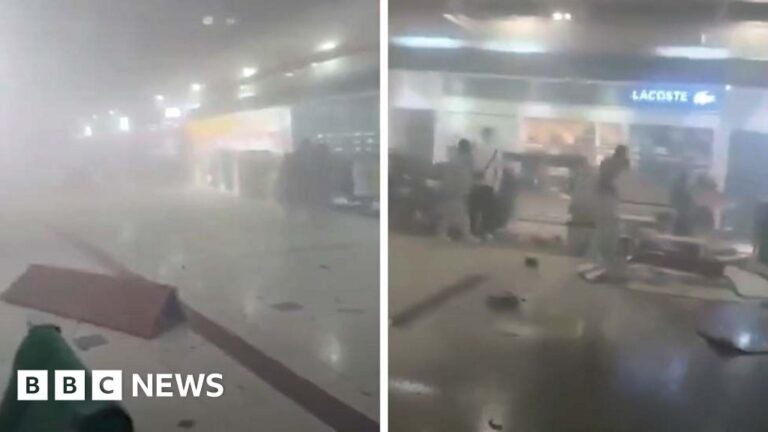




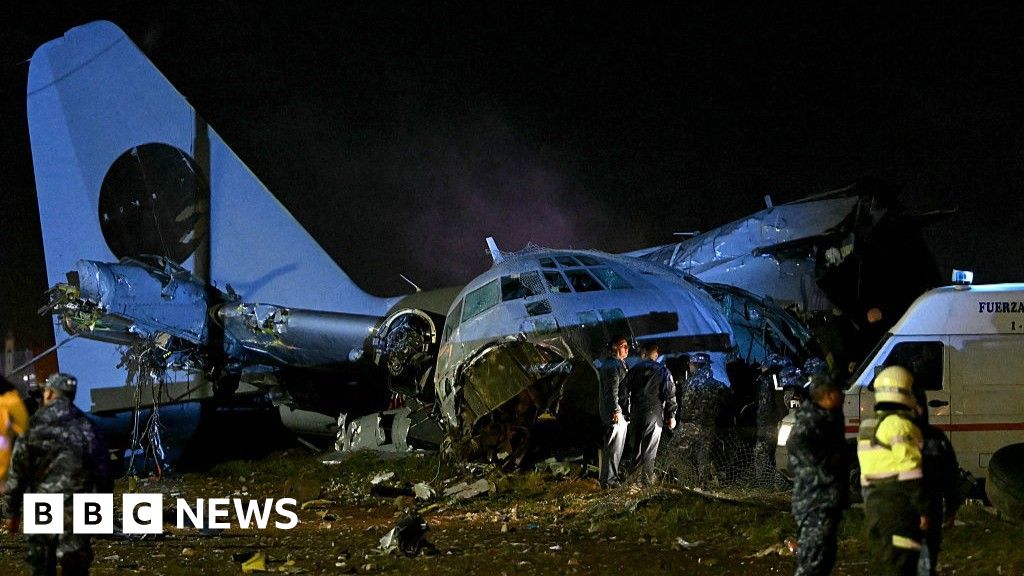
A Bolivian Air Force C-130 Hercules cargo plane, laden with banknotes for the Central Bank, crashed during landing at El Alto International Airport on Friday evening, resulting in the deaths of at least 15 individuals and injuring 31 others. The catastrophic incident, which saw the aircraft skid off the runway and collide with nearby vehicles, quickly devolved into a scene of pandemonium as crowds converged on the wreckage, allegedly attempting to seize scattered currency, leading to violent confrontations with police and attacks on journalists covering the unfolding tragedy.
The Catastrophic Event: Details of the Crash
The harrowing incident occurred at approximately 18:15 local time (22:15 GMT) on Friday, casting a grim shadow over the western city of El Alto, a sprawling urban center adjacent to the capital La Paz. The Bolivian Air Force cargo plane, identified as a C-130 Hercules, was completing a routine flight from the eastern city of Santa Cruz, a major economic hub, to El Alto. Aviation officials reported that the aircraft experienced severe difficulties upon arrival, ultimately skidding off the runway. The uncontrolled trajectory led to a devastating impact with several vehicles positioned in the vicinity of the airport perimeter, exacerbating the initial damage from the crash itself.
The immediate aftermath was one of utter devastation. Eyewitness accounts painted a grim picture of the scene, with the robust military transport aircraft lying heavily damaged on the ground, surrounded by mangled vehicle wreckage. Rescue teams, emergency services, and military personnel were rapidly deployed to the site, confronting a complex and dangerous situation. The confirmed death toll of 15 people includes both those on the ground and potentially individuals from the aircraft, though specific details regarding the identities of the deceased were not immediately released. An additional 31 individuals sustained injuries of varying severity, prompting an urgent appeal for blood donations from the Bolivian health ministry, underscoring the critical nature of the casualties.
A Haunting Aftermath: The Scene and Civilian Response
As news of the crash spread rapidly, a crowd began to gather near the crash site. The grim reality of the disaster was compounded by an unexpected and deeply concerning turn of events: the discovery of a significant quantity of banknotes scattered among the debris. The Ministry of Defence later confirmed that the C-130 Hercules had been undertaking a critical mission, transporting newly printed banknotes destined for the Central Bank of Bolivia. This revelation transformed the tragic crash site into an arena of chaotic opportunism.
Video footage, quickly circulated across national and international platforms, depicted the badly damaged aircraft and the wreckage of civilian vehicles. More disturbingly, other videos captured the escalating tension as individuals, reportedly attempting to pilfer the scattered currency, clashed with arriving law enforcement. The scene became a desperate scramble, with some individuals seen attempting to gather the loose bills amidst the smoking wreckage and the initial confusion. This rapid descent into disorder highlighted the profound challenges faced by authorities in securing a complex disaster zone, especially one involving high-value cargo.
Confrontation and Chaos: Law Enforcement Intervenes
The situation quickly escalated beyond a mere accident response. As more individuals converged on the site, the police were forced to intervene decisively to disperse the growing crowds. Officers, some equipped with shields, formed lines and deployed tear gas in an effort to regain control and prevent further looting. The response was met with resistance from elements within the crowd, who were seen throwing rocks at police and emergency personnel. This dangerous standoff created an additional layer of risk for first responders and further complicated rescue and recovery efforts.
The government-run Bolivian News Agency later reported that at least a dozen people were arrested for their involvement in attempting to steal the banknotes. These arrests underscore the gravity with which authorities viewed the acts of vandalism and theft amidst a national tragedy. The clashes not only hindered the crucial work of emergency services but also presented a stark illustration of the breakdown of order in the immediate aftermath of a major disaster, raising serious questions about security protocols for such sensitive cargo.
Assault on the Press: Journalists Under Attack
Adding another distressing dimension to the chaos, journalists covering the unfolding events became targets of violence. The National Association of Journalists of Bolivia issued a scathing statement condemning the attacks, revealing that "individuals attempting to steal the transported money attacked the press with unusual violence." A mobile television unit was "directly targeted," and other journalists "were attacked with stones, suffering serious injuries while carrying out their work."
These assaults on media personnel are a grave concern, highlighting the inherent dangers faced by journalists reporting from volatile situations. Their role in informing the public about critical events is paramount, yet they often find themselves caught in the crossfire or deliberately targeted. The attacks on journalists at the El Alto crash site not only represent a violation of press freedom but also an alarming disregard for the vital function of independent reporting during a crisis. It further complicated the narrative of the event, as the focus momentarily shifted from the tragedy itself to the ensuing societal breakdown and disrespect for those performing essential public services.
The Invalidation of Currency: Official Warning and Economic Context
In a swift and unequivocal response, Bolivia’s Minister of Defence, Marcelo Salinas, addressed the issue of the scattered banknotes. He issued a stern warning to those attempting to seize the money: "I want to make it clear to those who are trying to take money from the plane involved in this tragedy that this money has no legal value since it has not been issued by the Central Bank and does not have a serial number, and that attempting to use this money is a crime." Minister Salinas further appealed for calm, urging those involved in vandalism to "refrain from doing so and to respect the mourning and grief we are experiencing at this difficult time."
This official declaration aimed to mitigate the potential for the illegally acquired banknotes to enter circulation and to deter further theft. The Central Bank of Bolivia, as the sole issuer of legal tender, maintains stringent protocols for the distribution of new currency. Banknotes are typically transported in secure, sealed consignments and only acquire legal tender status once officially registered and distributed through the banking system. Any currency not yet processed through these channels, particularly those lacking serial numbers or proper authentication, is effectively worthless in legal transactions and attempting to use it constitutes a criminal offense, potentially punishable by law.
The necessity of transporting physical banknotes by air highlights a key aspect of Bolivia’s economic and logistical landscape. Despite advancements in digital banking, cash remains a predominant medium of exchange, particularly in remote or rural areas where electronic infrastructure may be limited. The Central Bank routinely moves large quantities of currency to ensure adequate liquidity across the nation’s diverse geography, supporting daily commerce and financial stability. Such transports are usually conducted under strict security protocols, making this incident a significant breach and a cause for deep concern regarding future logistics for the national currency supply.
The Aircraft and its Mission: A C-130 Hercules’ Last Flight
The ill-fated aircraft was a C-130 Hercules, a venerable and widely recognized military transport plane known for its robustness, versatility, and long-standing service across numerous air forces globally. Designed by Lockheed Martin, the C-130 has been in continuous production for decades, renowned for its ability to operate from austere airfields and carry substantial payloads. Its typical uses range from troop and cargo transport to aerial refueling and special operations. The Bolivian Air Force, like many others in Latin America, relies on these workhorse aircraft for various logistical and operational needs.
Bolivia’s Air Force Commander, Sergio Lora, confirmed that there were eight crew members on board the plane, comprising "cargo personnel and flight crew." Their mission, to transport a high-value consignment of currency, underscores the trust placed in these aircraft and their crews for sensitive operations. The loss of the aircraft itself, a strategic asset, coupled with the tragic loss of life among its crew, represents a significant blow to the Bolivian Air Force. Investigations will undoubtedly scrutinize the aircraft’s maintenance records, flight history, and the experience of its crew as part of the broader inquiry into the crash’s cause.
Emergency Response and Public Appeal: Health and Aviation Impact
The immediate aftermath of the crash saw a rapid deployment of emergency services. Paramedics, firefighters, and military personnel worked tirelessly to extract victims from the wreckage and provide urgent medical care. The health ministry’s announcement of 31 injured individuals and its urgent appeal for blood donations highlighted the scale of the medical emergency. Hospitals in El Alto and neighboring La Paz were put on high alert to receive and treat the influx of casualties.
The crash also had immediate and significant implications for air travel. El Alto International Airport, a vital gateway to Bolivia and one of the highest-altitude international airports in the world (situated over 4,000 meters above sea level), was temporarily closed following the incident. This closure led to significant disruptions in domestic and international flight schedules, impacting thousands of travelers. Airport authorities initiated contingency plans to manage the rerouting of flights and assist stranded passengers, while also securing the crash site for ongoing investigation and recovery operations.
Witness accounts further illuminated the terrifying moments leading up to the crash. One man recounted his sister’s harrowing experience: "My sister told me that she was in the car when the plane crashed. The plane’s tire fell on the car, and my sister was injured because the impact of the tire hit her on the head, so we rushed her to the hospital." Another woman, whose car was struck by debris, described treacherous weather conditions at the time, stating that "a heavy hailstorm" was falling and "there was lightning" when the plane went down. These accounts provide crucial context for the ongoing investigation into the potential contributing factors.
Unraveling the Mystery: The Ongoing Investigation
The precise cause of the C-130 Hercules crash remains undetermined, forming the central focus of an intensive investigation. While some witnesses have pointed to severe weather conditions—specifically a heavy hailstorm and lightning—as potential contributing factors, aviation authorities are conducting a comprehensive inquiry. Such investigations typically involve multiple agencies, including the Bolivian Air Force’s accident investigation board, civil aviation authorities, and potentially international experts if deemed necessary.
Investigators will meticulously examine various aspects:
- Flight Data Recorders (Black Boxes): These crucial devices, comprising the cockpit voice recorder and flight data recorder, will provide invaluable information on the aircraft’s performance, crew communications, and environmental conditions leading up to the crash.
- Aircraft Maintenance Records: A thorough review of the C-130’s maintenance history, including recent inspections, repairs, and service bulletins, will be conducted to ascertain its airworthiness.
- Pilot and Crew Information: The training, experience, and fitness for duty of the eight crew members will be assessed.
- Air Traffic Control Communications: Transcripts and recordings of communications between the aircraft and El Alto air traffic control will be analyzed for any anomalies or critical instructions.
- Weather Conditions: Detailed meteorological data for the time of the crash will be reviewed to determine the exact severity and impact of the reported hailstorm and lightning. Operating at high-altitude airports like El Alto presents unique challenges, as thinner air affects aircraft performance, and adverse weather can significantly complicate landings.
- Runway and Airport Infrastructure: The condition of the runway and surrounding airport infrastructure will also be part of the examination.
The investigation is expected to be a complex and lengthy process, with preliminary findings potentially taking weeks or months to be released, and a final report often requiring over a year. The goal is not only to ascertain the direct cause of this tragedy but also to identify any systemic issues or procedural shortcomings that could prevent similar incidents in the future.
Broader Implications: Security, Logistics, and Social Order
The El Alto plane crash and its chaotic aftermath carry significant broader implications for Bolivia. From a security perspective, the incident highlights vulnerabilities in the transport of high-value cargo, even within military operations. The ease with which crowds could access the crash site and attempt to pilfer currency raises questions about perimeter security and rapid response protocols for securing sensitive materials during emergencies. This may lead to a re-evaluation of security measures for future currency transports and disaster site management.
Logistically, the temporary closure of El Alto International Airport underscored its critical role in Bolivia’s air transport network. Any prolonged disruption would have substantial economic repercussions, affecting trade, tourism, and essential services. Furthermore, the incident will likely prompt a review of emergency response capabilities at high-altitude airports, particularly concerning coordination between various agencies and managing public access during crises.
On a social level, the scenes of looting and the attacks on journalists reveal underlying societal pressures and a breakdown of civic order in the face of perceived opportunity, even amidst a tragedy. The Minister of Defence’s stark warning about the invalidity of the banknotes was crucial in attempting to contain this aspect of the crisis, but the initial response of the crowd reflects a complex interplay of desperation, opportunism, and potentially a lack of understanding regarding the legal implications of the currency. The incident serves as a sobering reminder of the challenges in maintaining public order during major disasters and the importance of clear, authoritative communication from government officials.
The El Alto plane crash is a multi-layered tragedy that has shaken Bolivia, bringing into sharp focus issues of aviation safety, emergency preparedness, security protocols for sensitive cargo, and the complex dynamics of public response during moments of crisis. As investigations continue and the nation mourns its dead, the lessons learned from this devastating event will undoubtedly shape future policies and practices across several critical sectors.