




Bengaluru-based wearable technology innovator Ultrahuman announced on Friday the launch of its new smart ring, the Ring Pro, featuring significantly extended battery life and a reimagined form factor. This strategic introduction marks a pivotal moment for the company, as it seeks to rejuvenate its crucial U.S. market presence, which was severely impacted last year by a contentious patent dispute with rival Oura. The unveiling also included "Jade," a groundbreaking real-time biointelligence system designed to offer highly personalized health insights and recommendations across Ultrahuman’s ecosystem of devices and services. This dual launch underscores Ultrahuman’s commitment to innovation and its resilience in a highly competitive and legally complex wearables landscape.
A Deeper Dive into the Ring Pro: Enhanced Design and Performance
The Ring Pro, Ultrahuman’s third-generation smart ring, represents a substantial leap forward in wearable technology, particularly concerning user experience and data integrity. Priced at $479, it boasts an impressive battery life of up to 15 days, a significant upgrade from the four to six days offered by its predecessor, the Ring Air, which was launched in July 2023 at a price point of $349. This extended power longevity addresses a common pain point for users of smart wearables, minimizing the need for frequent charging and enhancing continuous health monitoring.
Beyond battery life, the Ring Pro features a meticulously redesigned heart-rate sensing architecture, engineered to deliver superior signal quality, especially crucial for accurate data capture during sleep. This improvement is complemented by a new dual-core processor, which not only enhances overall data accuracy but also boosts on-device computing capabilities, allowing for more sophisticated real-time analysis. The device is also equipped to store an extensive 250 days of health data locally, providing users with a comprehensive long-term view of their physiological metrics. While these technological advancements result in the Ring Pro being approximately 5% to 6% heavier than the Ring Air, the added weight is a minor trade-off for enhanced functionality and durability.
The Ring Pro will initially be available for pre-orders globally, with the notable exception of the U.S. market, as the company navigates ongoing regulatory clearances. Shipments are slated to commence in March, indicating a rapid rollout strategy to capitalize on market demand outside the United States.
Introducing Jade: The Future of Real-Time Biointelligence
Alongside the hardware innovation, Ultrahuman unveiled Jade, an ambitious real-time "biointelligence" system. This sophisticated platform is designed to transcend traditional retrospective health summaries, instead focusing on providing dynamic, actionable guidance. According to Mohit Kumar, co-founder and CEO of Ultrahuman, Jade’s core philosophy is to move beyond merely presenting data, aiming to interpret it and offer immediate, personalized recommendations based on a user’s current physiological state.
"Most AI tools today look backward at your data," Kumar explained. "Jade is built to react to your health in real time and surface actions users can take." This distinction is critical in the evolving landscape of health technology, where preventative and proactive health management is gaining prominence. By analyzing health data across all of Ultrahuman’s devices and services, Jade can identify patterns, detect anomalies, and suggest interventions ranging from sleep optimization techniques to exercise adjustments and nutritional advice. Significantly, Jade will be accessible to all Ultrahuman users, including those with the older Ring Air, and, at launch, will not require a subscription, democratizing access to this advanced AI-driven health guidance.
Navigating the Legal Labyrinth: The Oura Patent Dispute
The launch of the Ring Pro and Jade comes at a critical juncture for Ultrahuman, as the company continues to grapple with the fallout from a significant patent dispute with Finnish rival Oura. In October 2025, Ultrahuman’s U.S. business was severely disrupted after the U.S. International Trade Commission (ITC), a federal agency responsible for adjudicating trade disputes, ruled in Oura’s favor. This ruling effectively barred Ultrahuman from importing new smart ring inventory into the United States, although existing retail stock could still be sold.

The impact of this decision was substantial, as the U.S. market represented approximately 45% of Ultrahuman’s global user base, which stood at roughly 700,000 daily active users worldwide at the time of the ruling, as confirmed by CEO Mohit Kumar. The ITC’s determination highlighted the increasing legal complexities and intellectual property battles within the burgeoning wearable technology sector, where patented designs and functionalities often become points of contention.
In a proactive response to the ITC ruling and to work around Oura’s asserted patents, Ultrahuman meticulously developed the Ring Pro with an entirely new design. This redesign was not merely cosmetic but a fundamental re-engineering aimed at circumventing the patented elements while simultaneously enhancing performance. Kumar revealed that the redesigned device has been submitted to the U.S. Customs and Border Protection for clearance, a crucial step to confirm its legal importability into the country. The outcome of this clearance process will be instrumental in determining Ultrahuman’s ability to fully re-engage with the U.S. market for its new product.
The legal battle is not confined to the U.S. In a counter-move, Ultrahuman filed its own patent infringement case against Oura in the Delhi High Court in August 2025. This legal action, which remains pending, underscores the global nature of intellectual property disputes in the tech industry and Ultrahuman’s determination to defend its innovations and market position. The dual legal fronts illustrate the high stakes involved in the smart ring market, where companies are not only competing for market share but also for the right to innovate and operate freely.
Financial Resilience and Strategic Growth Amidst Challenges
Despite the significant setback in the U.S. market, Ultrahuman has demonstrated remarkable financial resilience. Mohit Kumar stated that the company is currently operating at an annualized revenue run rate of approximately $150 million. This figure is particularly impressive when juxtaposed with its reported $64 million in operating revenue for the financial year ending March 2025. The rapid increase in the revenue run rate suggests strong growth in other markets and a robust underlying business model.
Ultrahuman has also managed to maintain profitability after tax, a testament to its efficient operations and strategic investments. However, Kumar acknowledged that profit margins are expected to narrow in the short to medium term due to the cumulative costs associated with the ongoing litigation, potential tariffs, and the substantial investment in the redesign effort for the Ring Pro. These expenses highlight the financial burden that intellectual property disputes can place on even successful startups.
The company’s business model is diversified, with subscription-based services contributing about 16% of its overall revenue. These services span a broader health platform, including "PowerPlugs," a coaching and recovery program; "Blood Vision," a metabolic panel offering deep insights into physiological markers; "Ultrahuman Home," a comprehensive wellness ecosystem; and a continuous glucose monitoring (CGM) offering. The Blood Vision service alone accounts for roughly 5% to 6% of the business, indicating a strong interest in detailed metabolic health insights among its user base.
Ultrahuman’s key growth markets include the UK, Canada, Australia, and India. India, in particular, has emerged as a significant contributor, accounting for approximately 8% to 9% of overall revenue following recent strategic investments in local customer support infrastructure. This geographical diversification is a critical strategy for mitigating risks associated with market-specific challenges, such as the U.S. patent dispute. The strong adoption of Ultrahuman’s women’s health features has also contributed to its growth, with women now accounting for approximately 68% of its user base, an increase from roughly 65% a year prior. This demographic trend underscores the importance of tailored health solutions for specific user segments.
The Broader Smart Ring Market and Competitive Landscape
The smart ring market is experiencing a period of rapid expansion and intense innovation. According to Anshika Jain, a senior analyst at Counterpoint Research, global smart ring shipments surged by nearly 80% year-over-year in 2025. This remarkable growth is primarily driven by increasing consumer demand for compact, unobtrusive wearables that offer advanced health tracking capabilities, particularly for sleep analysis, coupled with longer battery life.

Within this burgeoning market, Oura currently holds a dominant position, commanding more than two-thirds of the market share. Ultrahuman, despite its recent challenges, has solidified its position as the second-largest player. Jain further noted that the future leaders in the smart ring category will be defined not just by hardware specifications but by superior sensor accuracy, sophisticated AI-driven insights, and seamless integration within a broader health ecosystem.
Complementary data from IDC also paints a picture of robust market expansion. Navkendar Singh, associate vice president at IDC India, reported that global smart ring shipments rose by approximately 30% year-over-year in Q3 2025, nearing 1 million units. This growth is partly attributed to the increasing demand for screenless fitness trackers, which offer a discreet and convenient alternative to smartwatches. IDC data indicates that Ultrahuman captured roughly 25% of the market during this period, reinforcing its strong second-place standing. These analyst insights highlight the dynamic nature of the market and the intense competition for innovation and user adoption.
Innovation Beyond the Ring: The Pro Charger
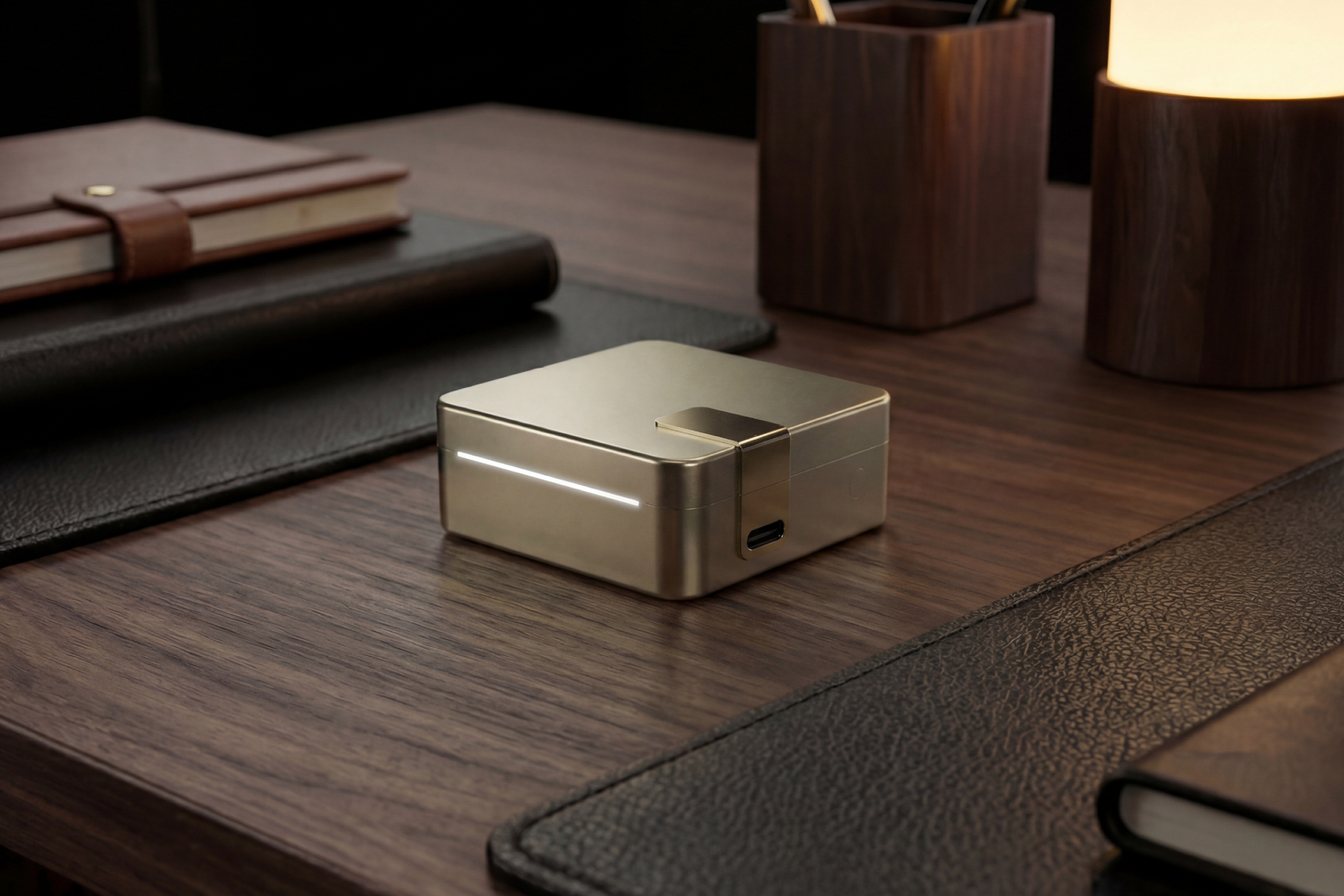
Ultrahuman’s commitment to enhancing the user experience extends beyond the ring itself. The company also introduced a new Pro Charger, designed to complement the Ring Pro. This innovative charging case boasts an impressive battery life of up to 45 days, providing unparalleled convenience for users who are frequently on the go. The Pro Charger facilitates faster updates and diagnostics through direct case connectivity, streamlining device maintenance. Furthermore, it supports wireless charging via the Qi standard, ensuring compatibility with most modern smartphones and enhancing its versatility. This attention to ancillary products demonstrates Ultrahuman’s holistic approach to building a robust and user-friendly health monitoring ecosystem.
Strategic Outlook and Future Prospects
Founded in 2019, Ultrahuman has rapidly ascended in the wearable tech space, securing approximately $55 million in funding to date from notable investors including Alpha Wave Incubation, Blume Ventures, Steadview Capital, and Nexus Venture Partners. This substantial investment underscores investor confidence in the company’s vision, technological capabilities, and long-term growth potential.
Looking ahead, Mohit Kumar affirmed Ultrahuman’s proactive approach to meeting anticipated demand for the Ring Pro. The company is actively investing in and building additional production capacity to ensure a smooth supply chain and widespread availability of its new flagship device over the coming months. This strategic foresight is crucial for capitalizing on the global pre-order success and for preparing for a potential re-entry into the U.S. market once regulatory hurdles are cleared.
The dual launch of the Ring Pro and the Jade AI system signifies Ultrahuman’s resolve to innovate and expand, even while navigating complex legal challenges. By focusing on enhanced hardware performance, real-time AI-driven insights, and strategic global market penetration, Ultrahuman is positioning itself not just as a competitor, but as a key driver of future developments in the personal health and wellness technology sector. The success of these new offerings, particularly their ability to differentiate in a crowded market and overcome patent-related obstacles, will be closely watched by industry observers and consumers alike.