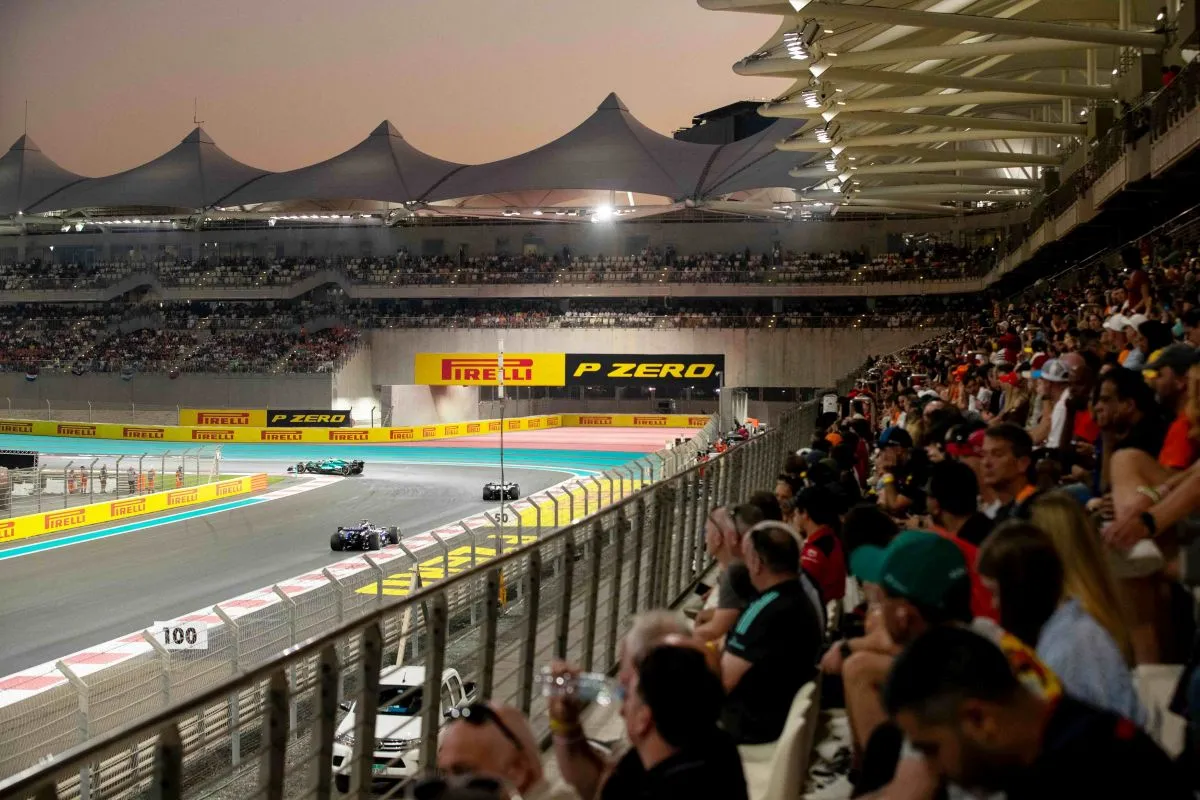
Formula One management has officially confirmed that the Abu Dhabi Grand Prix will proceed as the concluding event of the 2026 world championship, ending months of speculation regarding the viability of the Gulf-based finale amid ongoing regional instability. The decision, announced by Formula One Group CEO Stefano Domenicali, signals a significant stabilization for the sport’s commercial interests in the Middle East, even as other major races in the region remain sidelined or relocated. While the geopolitical landscape had previously cast a shadow over the event, the confirmation ensures that the Yas Marina Circuit will host the season’s "cherry on the cake," maintaining its status as one of the most lucrative and high-profile fixtures in international motor racing.
The 2026 season has been defined by unprecedented logistical and safety challenges. Earlier this year, the sport was forced to navigate the complexities of a regional conflict involving the United States and Iran, which led to the suspension of several key races. In March 2026, Formula One officially called off the Bahrain and Saudi Arabian Grands Prix, citing security concerns and the inability to guarantee the safety of teams and spectators. The race originally scheduled for Bahrain was subsequently moved to Malaysia, where it will be held at the Sepang International Circuit from October 2 to 4. This shift marked the first time in years that the Gulf’s dominance over the F1 calendar appeared vulnerable, creating a "two-tier" system where some regional hosts remained viable while others were deemed too high-risk.
The Road to Confirmation: A Timeline of Uncertainty
The path to the 2026 finale has been marked by a series of high-stakes deadlines and contingency plans. Following the cancellation of the Bahrain and Saudi Arabian rounds, the focus shifted to the remaining Gulf races in Qatar and Abu Dhabi. On July 29, 2026, Stefano Domenicali addressed the media regarding the precarious nature of the season’s end. He established a mid-September deadline for a final decision, stating that if the regional situation did not clarify to a satisfactory degree, the season would likely conclude at a European venue.
"If the situation will not be cleared the way that we believe it should be, before the middle of September, we will take the decision," Domenicali remarked during a July call. "If this will not be possible, the end of the season will be in Europe, because we cannot go in other places."
However, as the September deadline approached, a combination of improved security assessments and logistical preparations allowed the organization to move forward. On Sunday, Domenicali confirmed to Formula One’s official website that the calendar remains unchanged. He emphasized that preparations for the Abu Dhabi finale are nearing completion and that ticket sales are progressing well, reinforcing the sport’s commitment to the promised schedule. This confirmation provides much-needed certainty for sponsors, teams, and the global travel industry, which had been bracing for a potential last-minute shift to Europe.
Economic Impact and the $200 Million Void
The disruption of the Middle Eastern leg of the F1 calendar has had profound economic consequences. The deferral and relocation of the Bahrain and Saudi Arabian races represented a massive loss for the local hospitality and tourism sectors. Gloria Guevara, president and CEO of the World Travel & Tourism Council (WTTC), estimated the total commercial cost of these cancellations to exceed $200 million. This figure encompasses lost hotel occupancy, international flight bookings, and local hospitality spending, as well as the broader "halo effect" that F1 races provide to host nations.
In contrast, Abu Dhabi’s ability to retain its race preserves a vital economic engine for the emirate. The Abu Dhabi Grand Prix is not merely a sporting event; it is a cornerstone of the city’s tourism strategy. Saood Abdulaziz Al Hosani, undersecretary of the Department of Culture and Tourism (DCT) Abu Dhabi, highlighted that the event creates "meaningful opportunities" across the hospitality, events, and retail sectors.
Data from STR and CoStar underscores the financial magnitude of the race week. In 2022, Abu Dhabi hotels reached 93% occupancy during the Grand Prix. While that occupancy level was matched in 2025, the revenue generated saw a staggering increase. The Average Daily Rate (ADR) during the race week jumped approximately 80% over that period, rising from roughly $500 in 2022 to nearly $900 in 2025. This stands in sharp contrast to the market’s standard ADR, which typically runs closer to $200 outside of major event windows. The ability to command such premiums, even in a volatile regional climate, demonstrates the enduring demand for the F1 experience in the UAE.
Strategic Resilience: Abu Dhabi vs. Regional Competitors
Abu Dhabi’s resilience in the face of regional tension can be attributed to its unique market position and strategic focus on domestic and regional demand. According to a report from CBRE, Abu Dhabi has benefited from a more stable demand profile compared to neighboring Dubai. While both markets saw declines in the first half of 2026, Abu Dhabi’s occupancy fell by 13.5 percentage points (to 66.8%), whereas Dubai’s decline was nearly double that figure.
The capital’s strategy relies heavily on a calendar of fixed, high-value events that attract both local residents and regional visitors who may be less deterred by geopolitical headlines than long-haul international travelers. Beyond Formula One, this calendar includes the Mubadala Abu Dhabi Open tennis tournament, Abu Dhabi Sustainability Week, and the World Future Energy Summit. By anchoring its tourism economy to these recurring, high-profile milestones, Abu Dhabi has created a "sticky" tourism model that is less susceptible to the sudden ebbs and flows of global travel sentiment.
Furthermore, Abu Dhabi is aggressively expanding its infrastructure to ensure long-term growth. The DCT Abu Dhabi has recently announced several landmark projects designed to diversify the city’s appeal. These include "The Sphere" on Yas Island—a massive entertainment venue modeled after the successful Las Vegas landmark—and the long-awaited Guggenheim Abu Dhabi museum, which is scheduled to open in December 2026. Additionally, the Frank Gehry-designed Dar Al Funoon performing arts center is slated for 2030, and Disney remains "fully committed" to its theme park project in the emirate, according to CFO Hugh Johnston.
Diversification and New Market Targets
To mitigate the impact of reduced travel from traditional Western markets, Abu Dhabi is pivoting toward emerging source markets. One of the most significant moves in this regard is the announcement of free visas for Indian visitors who book a holiday of at least three nights. India remains one of the top international source markets for the UAE, and this incentive is designed to maintain visitor volumes even as other international segments fluctuate.
The emirate is also diversifying its sports portfolio beyond motorsports. On Monday, the DCT announced that Abu Dhabi would host the Euroleague Basketball SuperCup on September 18 and 19. This new competition will serve as the season opener for European club basketball, further cementing Abu Dhabi’s reputation as a global hub for diverse sporting disciplines. By hosting a variety of events—ranging from basketball to tennis to sustainability summits—the city reduces its reliance on any single event, though the F1 finale remains the crown jewel of its annual calendar.
Analysis of the Broader Implications
The decision to keep the Abu Dhabi Grand Prix on the calendar, while moving other regional races, suggests a nuanced approach by Formula One’s leadership toward geopolitical risk. It indicates that the sport is willing to maintain its presence in the Middle East provided that specific venues can meet rigorous safety and logistical standards. The "two-tier" calendar that has emerged in 2026 may serve as a blueprint for how international sporting bodies handle regional conflicts in the future: prioritizing stability in certain hubs while being prepared to relocate events in more volatile zones.
For Abu Dhabi, the 2026 race is more than just a championship finale; it is a statement of stability. In a year where its neighbors lost their premier racing events, the UAE capital has managed to maintain its position on the global stage. This success is likely to bolster investor confidence in the region’s long-term tourism projects, such as the Saadiyat Cultural District and the expansion of Yas Island.
However, the lack of released visitor data from the DCT since the beginning of the year suggests that while the "big events" are proceeding, the broader tourism sector may still be navigating headwinds. The true test of Abu Dhabi’s strategy will be seen in the final quarter of 2026, as the city balances the high-octane influx of the Grand Prix with the opening of the Guggenheim and the ongoing challenges of the regional geopolitical environment.
As the F1 circus prepares to descend upon Yas Marina this December, the focus will undoubtedly be on the track. Yet, behind the scenes, the successful staging of the 2026 Abu Dhabi Grand Prix will be remembered as a significant victory for the emirate’s diplomatic and commercial strategy, proving that even in a year of extreme uncertainty, the "show must go on" in the UAE’s capital.