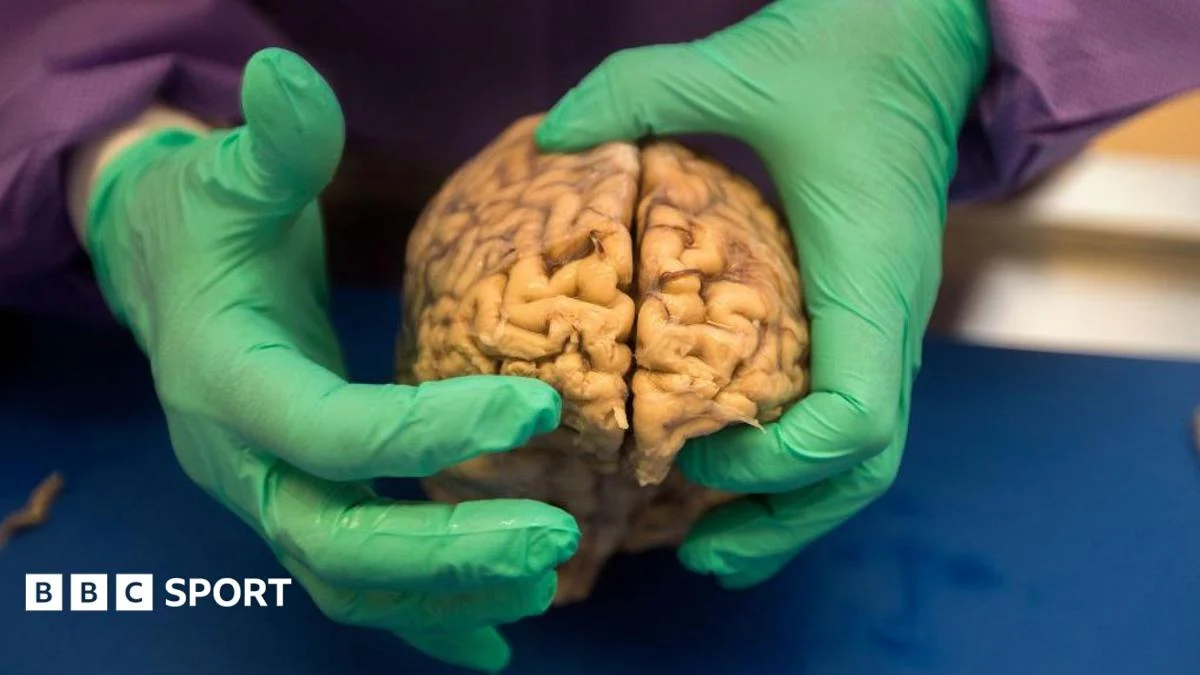
A groundbreaking study published in the prestigious British Medical Journal has revealed a staggering potential prevalence of chronic traumatic encephalopathy (CTE) among National Football League (NFL) players who died between 2016 and 2021. Researchers analyzing brain donations from former players found that up to 97.7% of those studied exhibited signs of the degenerative brain disease, a condition directly linked to repeated head trauma sustained during their careers.
The comprehensive research, led by associate professor Daniel Daneshvar of Harvard Medical School, examined the post-mortem brains of 235 former NFL players who had voluntarily donated their tissue for scientific study. These players were part of a larger cohort of 878 former NFL athletes who passed away during the six-year period under review. Of the 235 brains examined, an overwhelming 215 showed definitive evidence of CTE.
This figure represents a significant and concerning escalation in the estimated prevalence of CTE within the NFL community compared to previous research. While the study acknowledges the inherent limitations of relying solely on brain donations—a group likely to have a higher awareness of and concern for neurological conditions—the findings provide the most robust data to date on the devastating impact of head trauma in professional football.
"We and others have shown that in NFL players, specifically, there is about a four times higher rate of death from neurodegenerative disease than the general population," stated Dr. Daneshvar in the study’s findings. He further elaborated, "These findings indicate that NFL players have a higher prevalence of CTE at death than has been previously shown in multiple community based studies."
The study meticulously calculated a "conservative minimum" CTE prevalence rate of 24.5% among the studied brain donors, while the upper "maximum" estimate reached the alarming 97.7% mark. This wide range underscores the challenges in definitively quantifying CTE prevalence due to the voluntary nature of brain donation. However, even the lower bound of the estimate is substantially higher than findings from earlier, less comprehensive studies.
Understanding Chronic Traumatic Encephalopathy (CTE)
Chronic traumatic encephalopathy (CTE) is a progressive and fatal neurodegenerative disease associated with repeated head injuries, including concussions and subconcussive blows. The hallmark of CTE is the accumulation of abnormal tau protein in the brain, which can lead to widespread neuronal damage. Symptoms typically manifest years or even decades after the onset of head trauma and can include memory loss, confusion, impaired judgment, impulse control problems, aggression, depression, and eventually, dementia.
Crucially, CTE can only be definitively diagnosed through post-mortem examination of brain tissue. This diagnostic limitation has historically complicated efforts to understand its true prevalence and impact on athletes. The current study, by analyzing a significant number of donated brains from a specific timeframe, offers a critical advancement in this understanding.
Historical Context: A Growing Concern
The link between American football and brain injury has been a growing concern for decades. As the sport evolved with increased athleticism and physicality, so too did the intensity of collisions. Early awareness of the problem was often dismissed or downplayed by the league and some medical professionals, who attributed behavioral issues in former players to character flaws or other causes.
However, by the early 2000s, mounting anecdotal evidence and early scientific research began to paint a more disturbing picture. Pathologists like Dr. Bennet Omalu, whose work was famously depicted in the film "Concussion," began identifying CTE in the brains of deceased former NFL players, including stars like Mike Webster. These findings spurred increased scientific investigation and growing public pressure on the NFL to address the issue.
In response to mounting evidence and litigation, the NFL has, over the years, implemented rule changes aimed at reducing head impacts, such as restricting helmet-to-helmet hits and improving equipment technology. The league also established its own research funding initiatives to study brain injuries. However, critics have often argued that these measures have been insufficient or too slow to address the systemic risks inherent in the sport.
Supporting Data and Methodological Considerations
The study published in the British Medical Journal is notable for its rigorous methodology and the scale of its data collection. The researchers carefully categorized the brains based on diagnostic criteria for CTE, distinguishing between different stages and severities of the disease. They also noted the prevalence of other neurodegenerative conditions, including dementia, which was found to be common among the brain donors.
The study’s authors acknowledge that the sample population of brain donors is not representative of the entire NFL population. Players who choose to donate their brains are likely to have had more severe symptoms or a greater awareness of potential neurological issues related to their playing careers. This self-selection bias means the reported prevalence rates are likely an overestimation for the general population of former NFL players.
However, even with this acknowledged bias, the extremely high percentages observed in this study provide compelling evidence of a pervasive problem. The study’s calculation of a "conservative minimum" of 24.5% suggests that a significant portion of former NFL players who die are affected by CTE, regardless of whether they donated their brains.
Timeline of Key Developments
- Early 2000s: Pathologists like Dr. Bennet Omalu begin identifying CTE in the brains of deceased former NFL players, challenging the prevailing narrative.
- 2007: The NFL acknowledges a link between football and brain disease for the first time.
- 2011: The NFL announces new rules aimed at protecting players from head injuries.
- 2012: The NFL settles a class-action lawsuit with thousands of former players over brain injuries for $765 million.
- Ongoing: Continued research into CTE, rule changes in the NFL, and increased awareness of the long-term consequences of head trauma.
- 2024: Publication of the British Medical Journal study, presenting the latest alarming statistics on CTE prevalence.
Official Responses and Reactions
While the NFL has not yet issued a formal statement directly addressing the specific findings of this latest study, the league has historically acknowledged the seriousness of brain injuries in football. In the past, NFL officials have emphasized their commitment to player safety and their ongoing efforts to research and mitigate the risks associated with head trauma.
It is plausible that the league will reiterate its commitment to player safety, highlight existing safety initiatives, and potentially pledge further support for research into CTE. However, the magnitude of the findings in this study is likely to reignite calls from advocacy groups, former players, and medical professionals for more robust and immediate action.
Organizations such as the Concussion Legacy Foundation, which supports brain donation and advocates for athlete safety, are expected to use these findings to amplify their message. They will likely call for greater transparency from the NFL, more stringent safety regulations across all levels of football, and increased resources for understanding and treating neurodegenerative diseases in athletes.
Broader Impact and Implications
The implications of this study extend far beyond the realm of professional football. The findings serve as a stark warning about the potential long-term health consequences of repetitive head trauma in contact sports and other activities. This research underscores the urgent need for:
- Enhanced Prevention Strategies: A critical reassessment of current prevention measures in football, from youth leagues to the professional level, is necessary. This could involve further rule modifications, improved coaching techniques focused on safe tackling, and the development of even more protective equipment, though the limitations of equipment alone in preventing CTE are well-documented.
- Increased Public Awareness: The study’s findings will undoubtedly contribute to greater public awareness of the risks associated with head injuries in sports. This heightened awareness can empower parents, athletes, and coaches to make more informed decisions about participation and safety.
- Further Scientific Research: While this study provides significant data, further research is crucial to understand the complex interplay of genetics, lifestyle, and head trauma in the development of CTE. Developing a reliable ante-mortem diagnostic tool for CTE remains a high priority for the scientific community.
- Support for Affected Individuals: The long-term care and support for former athletes suffering from CTE and other neurodegenerative diseases are paramount. This includes access to medical care, financial assistance, and emotional support for both players and their families.
The study’s authors are unequivocal in their call to action. They have urged the NFL to implement more effective prevention measures aimed at reducing repetitive head impacts across all levels of the sport. This includes not only professional football but also collegiate and youth leagues, where the foundational habits and risks are established. The future of football, and indeed other contact sports, may depend on the ability of governing bodies and stakeholders to confront these findings with decisive and meaningful change. The human cost of the sport, as illuminated by this study, demands nothing less.