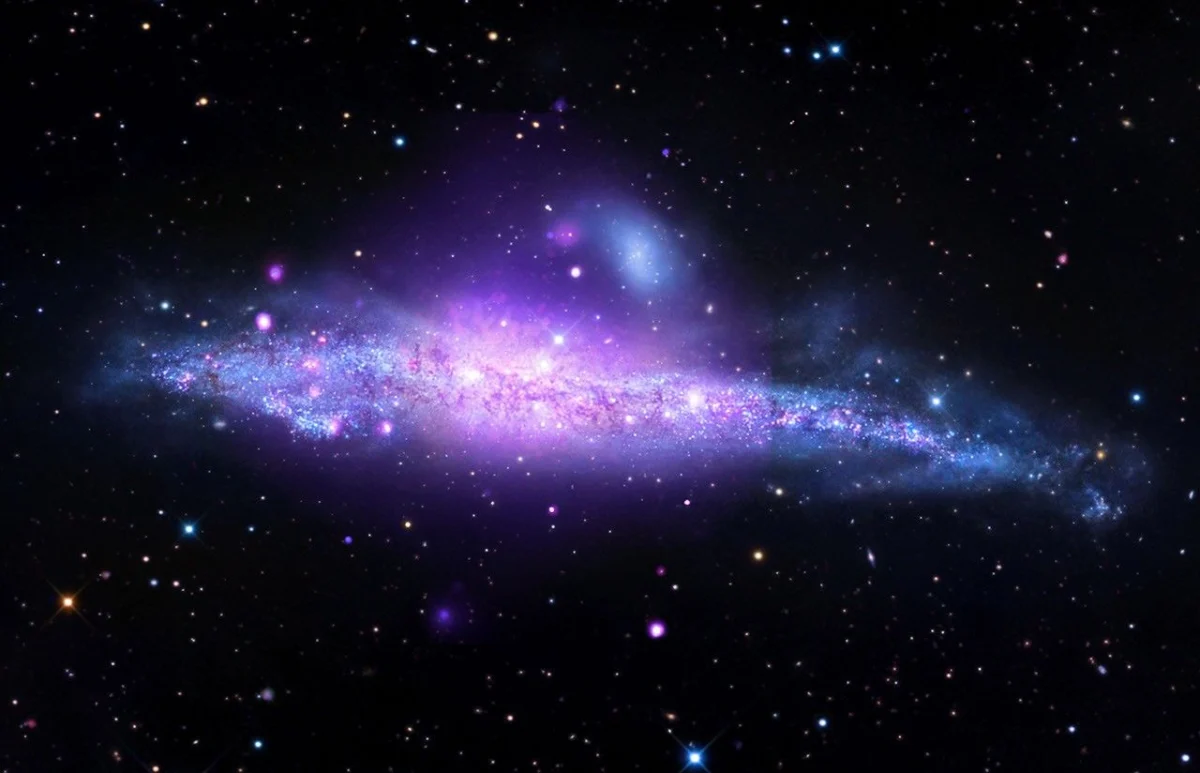
A breathtaking new gallery, titled ‘Galactic Gems,’ has been released by NASA’s Chandra X-ray Observatory and other prominent telescopes, offering an unprecedented look at the diverse characteristics of galaxies across the universe. This collection of 16 meticulously crafted images showcases the profound variety in galactic size, shape, and activity, each a unique cosmic entity revealing clues about its formation and evolution. Combining decades of high-energy X-ray data from Chandra with observations from instruments spanning the electromagnetic spectrum—including NASA’s James Webb and Hubble Space Telescopes, IXPE (Imaging X-ray Polarimetry Explorer), Neil Gehrels Swift Observatory, and NuSTAR (Nuclear Spectroscopic Telescope Array), alongside ground-based observatories—the gallery provides a holistic understanding of these fundamental building blocks of the cosmos.
The Chandra X-ray Observatory: A Window into the Energetic Universe
The Chandra X-ray Observatory, a flagship mission launched by NASA aboard the Space Shuttle Columbia in July 1999, has revolutionized our understanding of the high-energy universe. Designed to detect X-ray emissions from extremely hot regions of the universe, Chandra’s unparalleled angular resolution allows astronomers to peer into violent cosmic phenomena such as exploding stars, vast galaxy clusters, and matter spiraling into black holes. Operating in an elliptical orbit that takes it nearly one-third of the way to the Moon, Chandra spends most of its time outside the Earth’s radiation belts, providing uninterrupted, high-quality observations.
X-rays are crucial for studying galaxies because they expose gas heated to millions of degrees Celsius by powerful stellar winds from massive stars, the outflows from supermassive black holes residing at galactic centers, and the expanding debris from supernova explosions. These energetic processes are not only fundamental drivers of galactic evolution but are also responsible for synthesizing and distributing the heavy elements—such as carbon, oxygen, and iron—essential for the formation of planets, life, and everything we perceive around us. Without X-ray astronomy, much of the universe’s most dynamic and energetic activity would remain hidden, as these phenomena emit predominantly in high-energy wavelengths.
The Power of Multi-Wavelength Astronomy
The ‘Galactic Gems’ gallery underscores the indispensable value of multi-wavelength astronomy. While Chandra excels at capturing the universe’s most energetic events, other telescopes provide complementary views, each revealing different facets of cosmic objects. The Hubble Space Telescope, observing primarily in optical and ultraviolet light, reveals the distribution of stars, intricate dust lanes, and the visible structures that define a galaxy’s morphology. The James Webb Space Telescope, operating in infrared, penetrates thick dust clouds to uncover nascent stars, molecular gas, and distant galaxies, providing insights into star formation and early universe evolution. Instruments like IXPE provide polarization data for X-rays, offering crucial insights into magnetic fields and particle acceleration in extreme environments, such as those found in jets emanating from black holes. By integrating data from these diverse observational platforms, scientists construct a far more complete and nuanced picture of how galaxies live, interact, and evolve than any single telescope could provide. This synergistic approach allows astronomers to correlate different physical processes—like star formation seen in optical light with supernova remnants detected in X-rays, or galactic mergers observed in infrared with active black holes glowing in X-rays—leading to a more comprehensive understanding of the cosmic tapestry.
Galactic Categories and Their Stories
Astronomers broadly categorize galaxies into three main types: spirals, ellipticals, and irregulars. Each category, represented vividly in this new gallery, tells a distinct story of cosmic processes, stellar populations, and evolutionary pathways. Spiral galaxies, like our own Milky Way, are characterized by their flattened disks, prominent spiral arms emanating from a central bulge, and ongoing star formation. Elliptical galaxies, often older and more massive, typically lack distinct features, possess a more spheroidal shape, and are thought to be the remnants of violent galactic mergers, with little new star formation. Irregular galaxies, as their name suggests, exhibit a wide range of chaotic forms, often resulting from intense gravitational interactions, rapid internal activity, or early evolutionary stages. The ‘Galactic Gems’ collection provides exquisite examples from each of these categories, illuminated by Chandra’s unique X-ray vision.
Detailed Examples from the Gallery: Unveiling Galactic Dynamics
The gallery’s 16 images offer a rich tapestry of galactic phenomena, each providing specific insights into the life and death of cosmic islands.
Spiral Galaxies: Stellar Dynamics and Energetic Phenomena
The gallery features several captivating spiral galaxies, offering diverse perspectives on their internal workings and interactions. Face-on spirals such as Messier 33 (also known as the Triangulum Galaxy) and NGC 3938 provide astronomers with unobstructed views of their stellar disks. Chandra’s X-ray data in these images highlights regions of intense X-ray emission, pinpointing locations of energetic binary star systems—where a compact object like a neutron star or black hole siphons material from a companion star—and the remnants of recent supernova explosions. These observations are vital for understanding the distribution and lifecycle of massive stars, the formation of stellar black holes, and the feedback mechanisms they exert on their host galaxies, enriching them with heavy elements.
Barred spiral galaxies like NGC 1672 and NGC 1385 showcase a distinctive feature: a central, bar-shaped structure of stars, gas, and dust. X-ray observations are critical here as they reveal how these bars act as cosmic conveyor belts, efficiently funneling gas and dust inwards towards the galactic core. This influx of material can ignite prodigious bursts of star formation in the central regions and feed the supermassive black hole, potentially triggering an active galactic nucleus (AGN). Studying these processes helps scientists understand how the morphology of a galaxy influences its internal dynamics and evolution, and how the supply of fuel regulates the activity of its central black hole.
NGC 4725 presents another fascinating aspect of spiral galaxy evolution, demonstrating how star formation can be triggered not just by internal processes but also by past gravitational encounters. The X-ray data helps to trace the distribution of hot gas that might have been compressed or shocked during such an interaction, providing evidence for the collision’s lasting impact on the galaxy’s star-forming activity, even long after the initial encounter.
Perhaps most striking are the edge-on views, exemplified by NGC 4631, famously known as the Whale Galaxy, and the starburst galaxy Messier 82, or the Cigar Galaxy. These orientations offer unparalleled perspectives on material located above or below the galactic disk. Chandra’s observations are particularly illuminating here, revealing gigantic halos of superheated gas and colossal ‘superwinds’ driven thousands of light-years into intergalactic space. These powerful outflows, fueled by intense bursts of star formation and numerous supernova explosions within the disk, are crucial for understanding how galaxies enrich their surrounding intergalactic medium with vital heavy elements synthesized within stars. This process is fundamental to the cosmic chemical evolution that underpins the formation of new stars, planets, and ultimately, life, by distributing the building blocks throughout the universe.
Active Galactic Nuclei: The Powerhouses at Galactic Cores
The gallery also delves into the formidable influence of active galactic nuclei (AGN), powered by supermassive black holes (SMBHs) residing at the centers of many galaxies. When these SMBHs actively accrete matter, they can unleash enormous amounts of energy in the form of powerful outflows and jets of high-energy particles, profoundly impacting their host galaxies. In Centaurus A, a prominent elliptical galaxy and one of the closest active galaxies to Earth, the combined X-ray data from Chandra and IXPE vividly exposes a high-energy particle jet extending tens of thousands of light-years into space. The polarization data from IXPE provides unique information about the magnetic fields and particle acceleration mechanisms within this jet, offering unprecedented insights into how these colossal engines operate and channel their energy.
Messier 106, another spiral galaxy, presents a unique scenario where jets from its supermassive black hole heat the surrounding gas. This interaction is so powerful that it creates distinct spiral arms, often referred to as ‘anomalous arms,’ which differ significantly from the typical star-forming spiral arms found in other galaxies. Chandra’s X-ray observations are key to mapping these heated gas structures and understanding their interplay with the galaxy’s overall morphology and star formation rates.
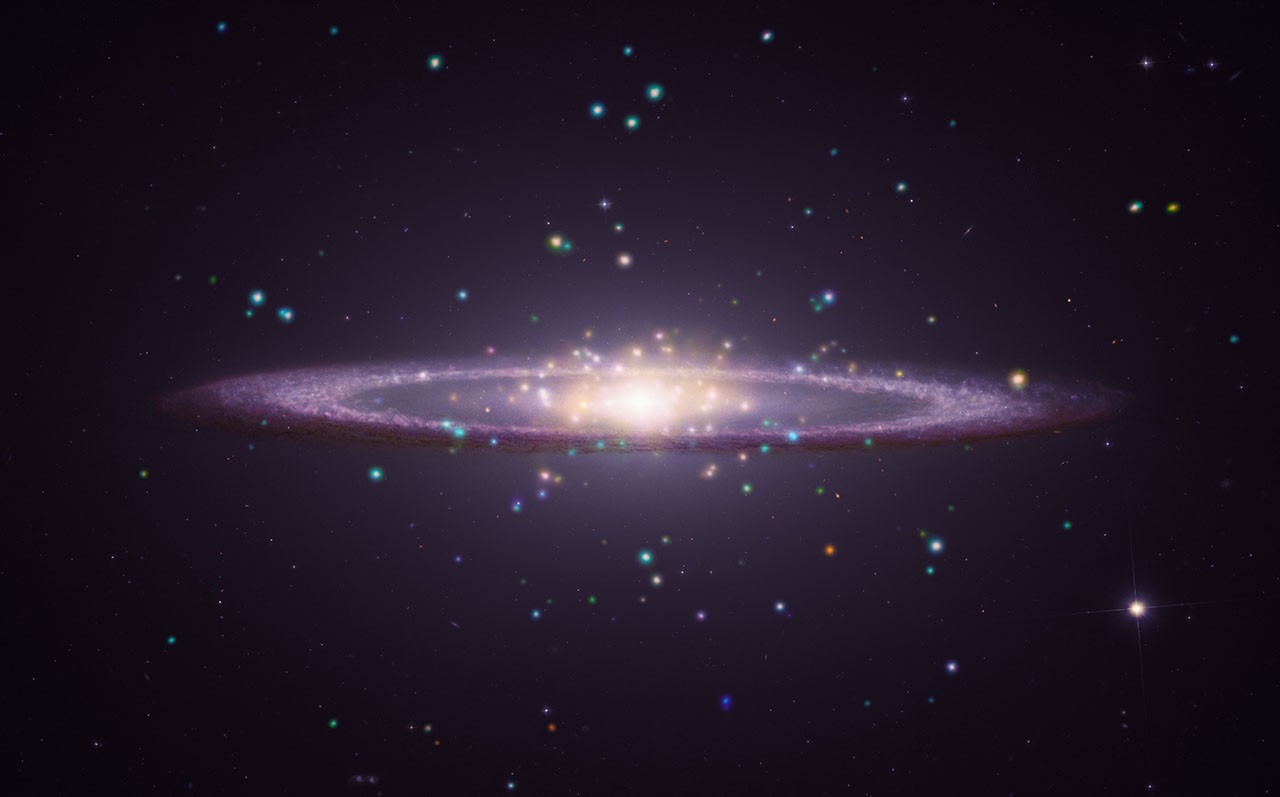
The iconic Sombrero Galaxy (Messier 104) is also featured, highlighting a supermassive black hole deeply embedded within a colossal stellar bulge and a prominent dust lane. Chandra’s X-rays in this composite image map a diffuse halo of million-degree gas and hot stellar remnants surrounding its majestic dust lanes. This hot gas, often overlooked in optical views, is a crucial component of galactic halos, providing clues about the galaxy’s past interactions, the distribution of dark matter, and the ongoing processes of stellar evolution and death within its vast expanse.
Galactic Transformations: Collisions, Mergers, and Evolution
Galaxies are not static entities; they are constantly evolving, often through dramatic gravitational interactions and mergers that reshape their structure and dictate their future. The ‘Galactic Gems’ gallery captures several galaxies undergoing such extreme transformations. Arp 143, for instance, showcases the aftermath of a direct galactic impact, resembling a cosmic bullseye. This collision has triggered an expanding ring galaxy and ignited intense waves of star birth across its structure. Chandra’s X-ray data helps to identify the hot gas associated with these starburst regions and the shockwaves generated by the collision, providing insights into how gravitational violence can lead to stellar nurseries.
Violent mergers, such as NGC 3256 and the dust-shrouded starburst II Zw 096, offer a glimpse into the chaotic processes that dominated the early universe. These collisions, often leading to intense bursts of star formation and the eventual formation of elliptical galaxies, also provide a compelling preview of our own Milky Way’s distant future merger with the neighboring Andromeda galaxy, projected to occur in several billion years. X-ray observations are vital for detecting the superheated gas produced during these cataclysmic events, which can be heated to tens of millions of degrees by the shockwaves of colliding gas clouds and friction between gas components.
The gallery also presents more unusual galactic phenomena. NGC 1569 acts as a local laboratory for studying early universe starbursts, providing astronomers with a nearby example of the intense star formation activity that was common in the younger cosmos, allowing for detailed observations that might be impossible for more distant analogs. NGC 660 is a rare ‘polar ring’ galaxy, where a prominent ring of stars, gas, and dust orbits perpendicular to its main stellar disk. This unusual configuration is believed to be the result of a past galactic accretion event, where a smaller galaxy was tidally disrupted and its material settled into this unique orbital plane. Chandra’s X-rays can help probe the hot gas associated with this ring and the central galaxy, shedding light on the mechanics of such rare cosmic acquisitions.
Finally, Messier 90 illustrates the phenomenon of ‘ram-pressure stripping.’ This spiral galaxy is observed plowing through the dense intergalactic medium of the Virgo Cluster, a massive collection of galaxies. As it moves at high speeds, the cluster’s hot gas exerts pressure, violently stripping away the galaxy’s own star-forming gas. Chandra’s X-ray observations are instrumental in mapping this stripped gas and understanding how environmental factors can profoundly impact a galaxy’s ability to form new stars and evolve, ultimately transforming spirals into more quiescent, gas-poor galaxies.
The Significance of Decades of Data and Chronology
The release of this gallery is a testament to the longevity and enduring scientific productivity of the Chandra X-ray Observatory. Launched in 1999, Chandra has now provided over two decades of invaluable data, allowing astronomers to track long-term changes in galactic phenomena and build extensive archives that can be combined with observations from newer telescopes like Webb. This sustained data collection is crucial for understanding dynamic processes that unfold over millions of years, far exceeding human timescales. The consistency and precision of Chandra’s measurements have allowed scientists to identify subtle X-ray emissions that provide unique insights into the physics of extreme environments, from the immediate vicinity of black holes to the expansive halos of galaxies. The ability to revisit targets over years or even decades allows for the study of variability in X-ray sources, providing critical information about phenomena such as accretion disk instabilities around black holes or the long-term evolution of supernova remnants.
Official Statements and Future Implications
Speaking on the significance of the new gallery, Dr. Belinda Wilkes, Director of the Chandra X-ray Center, emphasized, "These ‘Galactic Gems’ are far more than just aesthetically stunning images. They represent the culmination of decades of dedicated observation and the power of international scientific collaboration. By combining Chandra’s unparalleled X-ray vision with the capabilities of other leading telescopes, we are meticulously piecing together the intricate puzzle of galactic evolution, from the birth of stars to the violent mergers that shape the cosmic landscape." She added, "Each galaxy tells a unique story, and together they help us understand our place in the universe, providing vital clues about the past and future of our own Milky Way. This work deepens our appreciation for the dynamic, interconnected nature of the cosmos."
The implications of these studies extend beyond theoretical astrophysics. The understanding of elemental enrichment through supernovae and stellar winds directly connects to the cosmic origins of elements found in our own solar system and on Earth. The ‘Galactic Gems’ gallery not only serves as a powerful tool for scientific discovery but also as an accessible public outreach initiative, inspiring future generations of scientists and fostering a deeper appreciation for the wonders of the universe. The insights gained from studying these diverse galaxies will continue to inform future mission designs, guiding the development of even more powerful telescopes and observational techniques to push the boundaries of our cosmic understanding, potentially leading to new discoveries about dark matter, dark energy, and the fundamental laws of physics.
Conclusion
Managed by NASA’s Marshall Space Flight Center, with science operations controlled by the Smithsonian Astrophysical Observatory’s Chandra X-ray Center in Cambridge, Massachusetts, the Chandra program continues to be a cornerstone of astrophysics. This new ‘Galactic Gems’ gallery vividly demonstrates its ongoing legacy, showcasing the universe’s incredible diversity and the profound insights gained by observing it across the full spectrum of light. As we continue to gaze outward, each shimmering galactic gem brings us closer to unraveling the grand tapestry of cosmic evolution, reinforcing the idea that our own galaxy is part of a much larger, endlessly fascinating, and dynamic universe.