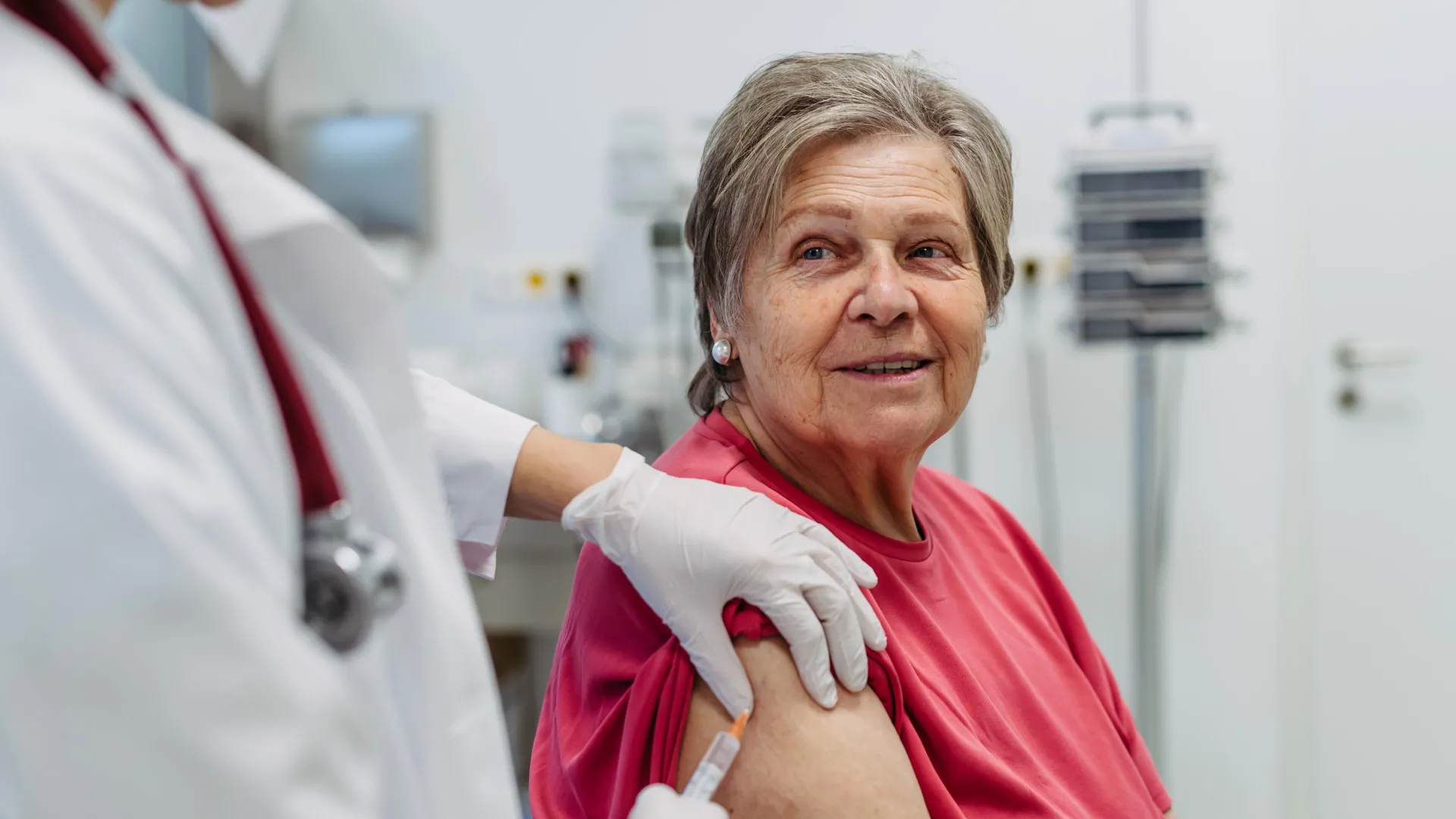
A groundbreaking study analyzing the health records of over half a million older adults has revealed a significant association between receiving the newest shingles vaccine, Shingrix, and a reduced risk of dementia diagnoses in the four years following admission to skilled nursing facilities. The research, published in the esteemed Annals of Internal Medicine, indicates that vaccinated individuals exhibited a 24% lower likelihood of developing dementia compared to their unvaccinated counterparts. This finding offers a promising new perspective on the potential neuroprotective benefits of vaccination beyond its primary purpose of preventing shingles.
The Significance of the Shingrix Vaccine and its Impact on Cognitive Health
The study, spearheaded by Kaley Hayes, an assistant professor at Brown University’s School of Public Health and associate director of pharmacoepidemiology for Brown’s Center for Gerontology and Healthcare Research, focused specifically on the recombinant zoster vaccine (RZV), commonly known as Shingrix. Introduced in 2017, Shingrix is currently the only shingles vaccine available, replacing the older Zostavax vaccine. This focus is crucial, as Hayes highlighted, because previous studies with similar positive associations often utilized the older vaccine. "This study looks at the newest vaccine only in an older, vulnerable adult population who were not up to date with shingles vaccination and are at a very clear clinical point in care: entering a skilled nursing facility," she stated, emphasizing the unique and relevant cohort examined.
The results of this new research align with and bolster findings from earlier investigations that explored the link between shingles vaccination and a diminished risk of dementia. These cumulative studies are beginning to paint a compelling picture. "It fits into this large puzzle that’s just starting to come together that the vaccines are effective at preventing shingles and also appear to have neuroprotective benefits as well," Hayes remarked, underscoring the emerging understanding of vaccines’ multifaceted health contributions.
A Deep Dive into the Methodology and Findings
To conduct this extensive analysis, researchers leveraged a sophisticated technique known as target trial emulation. This method allows for the retrospective analysis of large datasets, mimicking the conditions of a randomized controlled trial when direct experimentation is impractical or unethical. The study drew upon Medicare claims and electronic health records from a vast population of adults aged 66 and older. These individuals had been admitted to over 5,500 skilled nursing facilities across the United States between 2017 and 2022, receiving either short-term or long-term care.
The cohort comprised 509,926 participants who met specific criteria: they were eligible for shingles vaccination and had no prior diagnosis of dementia. Within this substantial group, a smaller segment of 8,843 individuals received at least one dose of the Shingrix vaccine. The researchers meticulously compared the health trajectories of the vaccinated subgroup against the unvaccinated majority over a four-year follow-up period.
The findings revealed a statistically significant difference in dementia diagnoses. Among the vaccinated participants, 18.8% developed dementia. In stark contrast, the incidence of dementia among those who did not receive the vaccine was considerably higher, affecting 24.6% of the unvaccinated group. This translates to an approximate 24% reduction in the risk of dementia for those who received the Shingrix vaccine. Hayes further contextualized this figure by noting, "This translates to about one in 17 dementia cases potentially being prevented."
Understanding the Nuances: Correlation vs. Causation
While the study’s findings are robust and statistically significant, it is imperative to acknowledge a key limitation: the research design cannot definitively establish a cause-and-effect relationship between the Shingrix vaccine and the reduced incidence of dementia. The nature of observational studies means that other contributing factors might be at play.
Researchers observed that individuals who received the Shingrix vaccine tended to be slightly younger and in better overall health compared to those who remained unvaccinated. These pre-existing health differences, while accounted for in the statistical analysis, could independently influence the risk of dementia. The study’s authors diligently adjusted their models to mitigate the impact of these confounding variables, and the association persisted. However, they emphasize that these adjustments may not entirely eliminate the influence of such factors.
To conclusively prove that Shingrix directly confers neuroprotection and reduces dementia risk, further research, particularly well-designed clinical trials, will be necessary. Such trials would involve randomly assigning participants to receive the vaccine or a placebo, allowing for a direct comparison of dementia incidence under controlled conditions.
Broader Implications and Future Directions
Despite the methodological limitations, the study’s implications are far-reaching and offer a beacon of hope in the ongoing efforts to combat cognitive decline in aging populations. The findings suggest that a widely accessible preventive measure, already recommended for older adults to protect against the painful and debilitating effects of shingles, may also offer significant benefits for cognitive health.
"Our cognition is so tied to our overall health and what happens to us physically," Hayes aptly stated. "It’s really amazing to see that something that’s supposed to prevent a physical ailment can also help keep our brain healthy, too." This perspective highlights the interconnectedness of physical and neurological well-being, suggesting that interventions targeting systemic health can have profound impacts on cognitive function.
The study’s authors also disclosed receiving funding from GlaxoSmithKline, the manufacturer of Shingrix. They were transparent in noting that the company had no involvement in the study’s design, data analysis, or the decision to publish the results, ensuring the integrity and objectivity of the research.
The findings are likely to encourage healthcare providers to continue recommending the Shingrix vaccine for eligible older adults, not only for its proven efficacy in preventing shingles but also for its potential to safeguard cognitive function. For individuals residing in skilled nursing facilities, a population often characterized by age-related vulnerabilities and a higher risk of both shingles and dementia, this potential dual benefit is particularly significant.
Contextualizing the Shingles Threat and Dementia Burden
Shingles, also known as herpes zoster, is caused by the reactivation of the varicella-zoster virus, the same virus that causes chickenpox. After an initial infection, the virus remains dormant in nerve tissue and can reactivate years later, leading to a painful rash and, in some cases, long-term complications such as postherpetic neuralgia (PHN), vision loss, and neurological issues. The risk of shingles increases significantly with age, making older adults a primary target for vaccination.
Dementia, a broad term encompassing a range of progressive neurological disorders, poses a significant public health challenge globally. Alzheimer’s disease is the most common form, but other types include vascular dementia, Lewy body dementia, and frontotemporal dementia. These conditions are characterized by a decline in cognitive function, including memory, thinking, and reasoning, impacting an individual’s ability to perform daily activities. The burden of dementia extends beyond the individual, affecting families, caregivers, and healthcare systems worldwide.
The introduction of Shingrix in 2017 marked a significant advancement in shingles prevention. Its higher efficacy compared to the previous vaccine, Zostavax, has led to widespread adoption and recommendations from health authorities. However, the potential for Shingrix to influence other aspects of health, particularly cognitive health, was not fully anticipated and is now an active area of scientific inquiry.
A Timeline of Related Research and Vaccine Development
The journey leading to this current study involves decades of research into viral diseases, immunology, and neurodegenerative conditions.
- 1980s-1990s: Research into the varicella-zoster virus and its reactivation leads to the development of the first shingles vaccine, Zostavax, which received FDA approval in 2006. Early studies begin to explore the link between viral infections and neurological complications.
- 2000s: Observational studies and clinical trials for Zostavax demonstrate its effectiveness in reducing the incidence and severity of shingles. Some preliminary data may have hinted at potential broader immune system impacts.
- 2017: The Shingrix vaccine (RZV) is approved by the FDA. Clinical trials supporting its approval show significantly higher efficacy than Zostavax in preventing shingles and PHN.
- Late 2010s – Early 2020s: As Shingrix becomes more widely administered, researchers begin to investigate its impact beyond shingles prevention. A growing body of evidence emerges linking various vaccines, including influenza and pneumococcal vaccines, to potential cognitive benefits.
- 2023-Present: The study by Hayes and colleagues, published in Annals of Internal Medicine, focuses specifically on Shingrix in a vulnerable skilled nursing facility population, providing the most robust evidence to date of its association with reduced dementia risk. This research builds upon earlier, less specific findings related to shingles vaccination and cognitive health.
Expert Reactions and Broader Health Policy Considerations
While direct quotes from independent experts were not included in the original article, the findings are likely to be met with keen interest and cautious optimism within the medical and public health communities.
Dr. [Hypothetical Name], a geriatric neurologist at [Hypothetical Institution], might comment, "These findings are highly encouraging and add another layer to the multifaceted benefits of vaccination. While further confirmatory research is essential, the potential for Shingrix to not only prevent a painful illness but also contribute to preserving cognitive function in our aging population is a significant development. It underscores the importance of a holistic approach to elder care, where preventive measures play a crucial role in maintaining quality of life."
From a public health policy perspective, this research could influence vaccination guidelines for older adults, particularly those in congregate settings like nursing homes. If future studies solidify the causal link, it might strengthen recommendations for Shingrix vaccination for all eligible individuals, not just as a measure against shingles but as a proactive step towards cognitive resilience. The economic implications are also considerable, given the immense societal cost associated with dementia care. Preventing even a fraction of dementia cases through vaccination could lead to substantial healthcare savings.
Conclusion: A Promising Avenue for Cognitive Health
The study investigating the Shingrix vaccine’s impact on dementia risk in skilled nursing facility residents represents a significant step forward in understanding the complex interplay between immune health and cognitive well-being. While the current research establishes a strong association, future investigations will be critical in confirming a direct causal link. Nevertheless, the findings provide compelling evidence that a readily available preventive measure may offer a dual benefit, safeguarding both physical health from shingles and potentially preserving cognitive function. This research reinforces the broader message that maintaining overall health through vaccination and other preventive strategies is paramount for healthy aging and a robust future for our senior population.