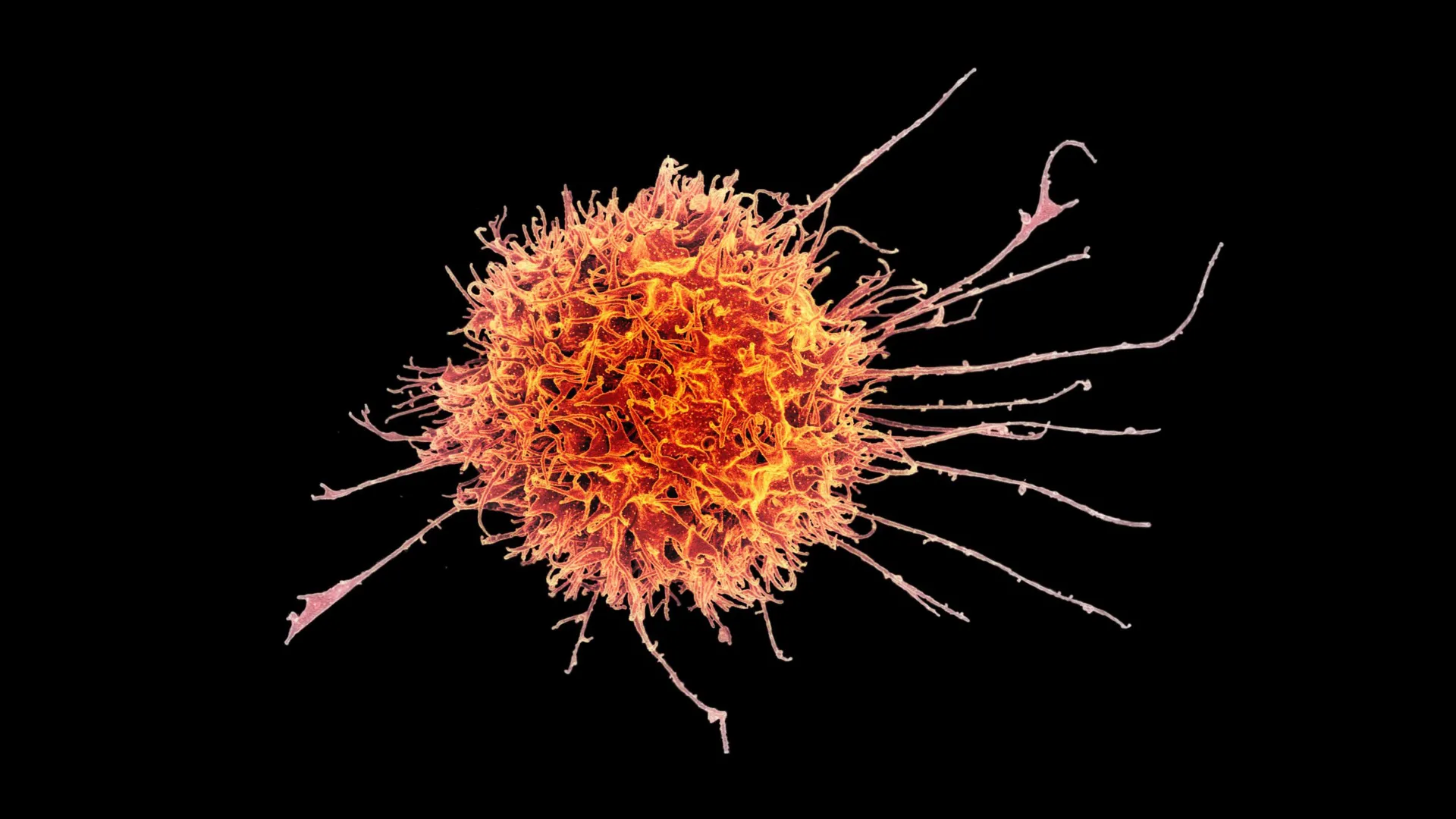
The quest to harness the power of the human immune system to fight cancer has achieved a significant breakthrough, with researchers at Stanford Medicine and collaborating institutions developing a novel strategy to empower natural killer (NK) cells, a crucial component of innate immunity, to effectively target and destroy solid tumors. This pioneering approach transforms these readily available immune cells into a specialized, tissue-resident form capable of infiltrating and eradicating cancerous growths, offering a promising new avenue for treating cancers that have long resisted conventional immunotherapies.
For years, the remarkable success of cell therapies in treating hematological malignancies – cancers of the blood and lymphatic system – has been tempered by their limited efficacy against solid tumors. The complex architecture of solid tumors presents a formidable barrier, impeding the infiltration of immune cells and creating an immunosuppressive microenvironment that actively dampens anti-cancer responses. This persistent challenge has spurred a global race to develop innovative solutions, and the work emerging from Stanford Medicine represents a significant leap forward in this critical endeavor.
The newly developed strategy focuses on modifying natural killer cells, which are naturally equipped to identify and eliminate abnormal cells without prior sensitization, unlike T cells. The research team, led by Dr. John Sunwoo, the Edward C. and Amy H. Sewall Professor in the School of Medicine, has successfully engineered these cells to become "tissue-resident" NK cells. This specialized form is designed to navigate the challenging terrain of solid tumors and exert potent cytotoxic activity.
"We show that these tissue-resident natural killer cells infiltrate into the solid tumors much better than conventional natural killer cells," stated Dr. Sunwoo, the senior author of the study published last month in Science Translational Medicine. "It was very reproducible, very striking and very clear." This observational clarity underscores the robust nature of the findings and the potential of this engineered cell therapy.
The study’s co-lead authors, Nina Horowitz, PhD, a former doctoral student in otolaryngology; Imran Mohammad, PhD, a postdoctoral fellow in the Sunwoo lab; and June Ho Shin, PhD, a senior scientist in the Sunwoo lab, played pivotal roles in this groundbreaking research. Their collective expertise and dedication were instrumental in unraveling the complex mechanisms behind NK cell behavior and engineering them for enhanced anti-tumor efficacy.
Natural Killer Cells: A Renewed Hope Against Solid Tumors
The experimental therapy was rigorously tested in preclinical models, specifically in mice bearing various types of solid tumors. The results were compelling: the modified NK cells demonstrated a significant ability to slow tumor growth. This effect was further amplified when the engineered NK cells were administered in conjunction with an antibody treatment. This antibody therapy acts as a molecular beacon, guiding the NK cells more precisely towards cancer cells, thereby enhancing their targeting capabilities and overall effectiveness.
Beyond their enhanced anti-tumor activity, these modified NK cells offer a significant practical advantage that could revolutionize cancer treatment accessibility. Unlike many current cell therapies that require the extraction, genetic modification, and reinfusion of a patient’s own cells – a process that is time-consuming, costly, and not universally feasible – NK cells have a unique characteristic: they generally do not elicit a strong immune rejection when transferred between individuals. This inherent compatibility opens the door to developing an "off-the-shelf" therapy.
"It would be almost an off-the-shelf drug," Dr. Sunwoo explained, envisioning a future where treatments are readily available. "It could make cell therapy much more accessible to a wider variety of patients." This potential for mass production and storage could drastically reduce treatment waiting times and broaden the reach of advanced immunotherapies to a larger patient population, particularly those in underserved regions or with limited access to specialized treatment centers.
The Crucial Role of Tissue Resident Immune Cells
Natural killer cells, first identified in the 1970s, have long been recognized for their rapid response to abnormal cells. Their name aptly reflects their inherent ability to recognize and eliminate targets – including cancer cells and virus-infected cells – without the need for prior priming or specific antigen recognition, a characteristic that distinguishes them from T cells. This innate capacity for immediate action makes them a powerful first line of defense in the immune system.
Historically, immunological research predominantly focused on immune cells circulating in the bloodstream, such as B cells, T cells, and NK cells, which constantly patrol the body for threats. However, a growing body of evidence has highlighted the critical importance of immune cells that reside within tissues. These "tissue-resident" immune cells are strategically positioned to monitor and respond to local challenges, adapting their functions to the specific microenvironment they inhabit.
"For a long time, the study of immunology and disease in humans was concentrated on the blood immune cells," Dr. Sunwoo observed. "With the advancement of tools and bioinformatics, we are now starting to look more at what’s going on in tissue. For most immune cells, the tissue is where the action is." This paradigm shift in understanding underscores the significance of studying and harnessing the potential of these tissue-localized immune guardians.
Tissue-resident NK cells are found in various tissues, including the skin, mucous membranes, lungs, and liver. Their precise roles have been a subject of ongoing scientific debate, with some studies suggesting they possess immunosuppressive properties while others indicate potent tumor-killing capabilities. This variability has led researchers to hypothesize that these cells may adopt different functional phenotypes depending on cues from their local microenvironment.
Indeed, in certain physiological contexts, immunosuppressive tissue-resident NK cells play a vital role. For instance, during early pregnancy, NK cells in the uterine lining are crucial for preventing the maternal immune system from rejecting the developing fetus and for supporting placental development. However, for cancer treatment, the aggressive, cytotoxic form of these cells is required.
Unlocking the Cellular Recipe for Potent Killers
The Stanford team’s research delved into understanding the mechanisms that differentiate the functional roles of tissue-resident NK cells. Previous evidence suggested the existence of two distinct populations, but the precise developmental pathways and functional distinctions remained elusive.
To address this, Dr. Sunwoo’s team embarked on a series of experiments involving human peripheral blood NK cells obtained from healthy donors. These cells were exposed to various combinations of signaling molecules, simulating conditions that might promote tissue residency. A key factor identified in this process was Transforming Growth Factor Beta (TGF-β), a signaling protein produced by numerous cell types, including tumor cells. TGF-β plays a critical role in cell development and differentiation.
The researchers discovered that the amount and duration of TGF-β signaling were paramount in determining the functional outcome. "It’s a Goldilocks kind of thing where if you give just enough of a TGF-b signal, then the natural killer cells become tissue resident with strong toxic activity against malignant cells," Dr. Sunwoo elaborated. "If you give too much TGF-b, they’re still tissue resident, but they’re inhibited and dysfunctional, and they don’t kill. You need it to be presented to the natural killer cells in just the right amount and in just the right manner." This meticulous control over signaling is critical for inducing the desired anti-cancer phenotype.
While TGF-β was essential for inducing tissue residency, prolonged exposure led to NK cells with diminished killing capacity. A more effective approach involved a brief, transient exposure to active TGF-β. This was achieved by co-culturing NK cells with short-lived human epithelial tumor cells, which provided a temporary burst of the signaling protein. This short-lived, high-intensity signal successfully generated tissue-resident NK cells with potent tumor-killing activity.
Crucially, direct physical contact between the NK cells and the tumor cells was also found to be essential. Simply placing the cells in close proximity was insufficient, indicating that direct cell-to-cell interactions and associated activating signals were necessary to fully reprogram the NK cells into their aggressive, tissue-resident form. "These two tissue-resident natural killer cell populations look very similar, and they have some of the same requirements, but their function seems to be on opposite ends of the spectrum," Dr. Sunwoo noted, emphasizing the subtle yet critical differences in their development.
Differentiating the Most Potent Cancer-Killing Cells
To further elucidate the distinctions between the two types of tissue-resident NK cells, the researchers conducted a detailed comparative analysis. Both populations expressed specific surface proteins, CD49a and CD103, which are characteristic of tissue-resident cells. However, only the highly effective cancer-killing cells exhibited expression of CD39, a marker that appears to distinguish the more potent subset.
Further molecular investigations revealed that the more aggressive NK cells possessed a richer complement of the cellular machinery required for target cell destruction. This included higher levels of perforin, a protein that forms pores in the membranes of target cells, and granzyme A, a cytotoxic molecule delivered through these pores to induce apoptosis (programmed cell death). This molecular signature provides a biochemical basis for their enhanced tumor-killing efficacy.
Demonstrating Tumor Growth Suppression in Preclinical Models
With a reliable method established for generating the more potent, cytotoxic tissue-resident NK cells, the researchers proceeded to evaluate their ability to infiltrate solid tumors and exert anti-tumor effects in vivo. In laboratory experiments using tumor organoids grown in culture, the modified NK cells demonstrated successful infiltration. When subsequently injected into mice bearing human melanoma and head and neck squamous cell carcinoma tumors, these engineered cells significantly slowed tumor progression over periods of days and weeks.
The most dramatic improvements in tumor control were observed when the modified NK cells were administered in combination with cetuximab, a monoclonal antibody that targets specific cancer cell surface proteins, marking them for immune attack. Cetuximab is an FDA-approved treatment for metastatic colorectal cancer and advanced head and neck squamous cell carcinoma, although its efficacy as a standalone therapy for solid tumors has been limited.
The combination therapy, involving a single dose of the engineered NK cells alongside cetuximab, demonstrated a markedly superior ability to suppress tumor growth over a one-month period compared to either treatment administered alone. Importantly, this combination therapy was well-tolerated by the mice, with no apparent adverse effects observed.
"Even at day 30, when the other mice were sick, the mice that received the combination seemed very healthy," Dr. Sunwoo reported, offering a cautiously optimistic outlook. He emphasized that these findings represent a crucial "proof of concept" and that further validation is needed before extrapolating these results to human patients.
Paving the Way for an Accessible Off-the-Shelf Cell Therapy
Building on these promising preclinical findings, Dr. Sunwoo and his colleagues are actively preparing for a Phase I clinical trial. This trial aims to evaluate the safety and efficacy of the combination therapy in human patients diagnosed with advanced squamous cell carcinoma. Pending regulatory approval from the Food and Drug Administration (FDA), the trial is anticipated to commence by the end of the year, marking a critical step towards translating this innovative research from the laboratory to the clinic.
Dr. Sunwoo has also taken steps to secure intellectual property for the production and expansion of these modified cells, now technically referred to as cytotoxic tissue-resident natural killer cells. His patented method is designed to enable the large-scale manufacturing of these therapeutic cells.
According to the research team, NK cells harvested from a single donor can yield approximately 20 treatment doses within a two-week period. This efficient production process is central to the vision of an "off-the-shelf" therapy. "They’ll be cryopreserved, so we can make a bunch of doses and give it to different patients," Dr. Sunwoo explained. "There would be no delay." This ability to store and readily deploy therapeutic doses could significantly expedite treatment initiation for patients in urgent need, overcoming a major hurdle in current cell therapy logistics.
The development of this innovative cell therapy involved contributions from researchers at Ohio State University and Washington University School of Medicine, highlighting the collaborative nature of modern scientific discovery. Funding for this pivotal research was provided by grants from the National Institutes of Health (R35DE020054, K22CA282364, and R25DC020174), the Tai Tsun Wu Research Fund for Natural Killer Cell Immunotherapy, and the Stanford Bio-X Fellowship, underscoring the significant investment in advancing cancer immunotherapy. This work represents a beacon of hope for millions of patients battling solid tumors, promising a future where powerful immune-based therapies are not only effective but also widely accessible.