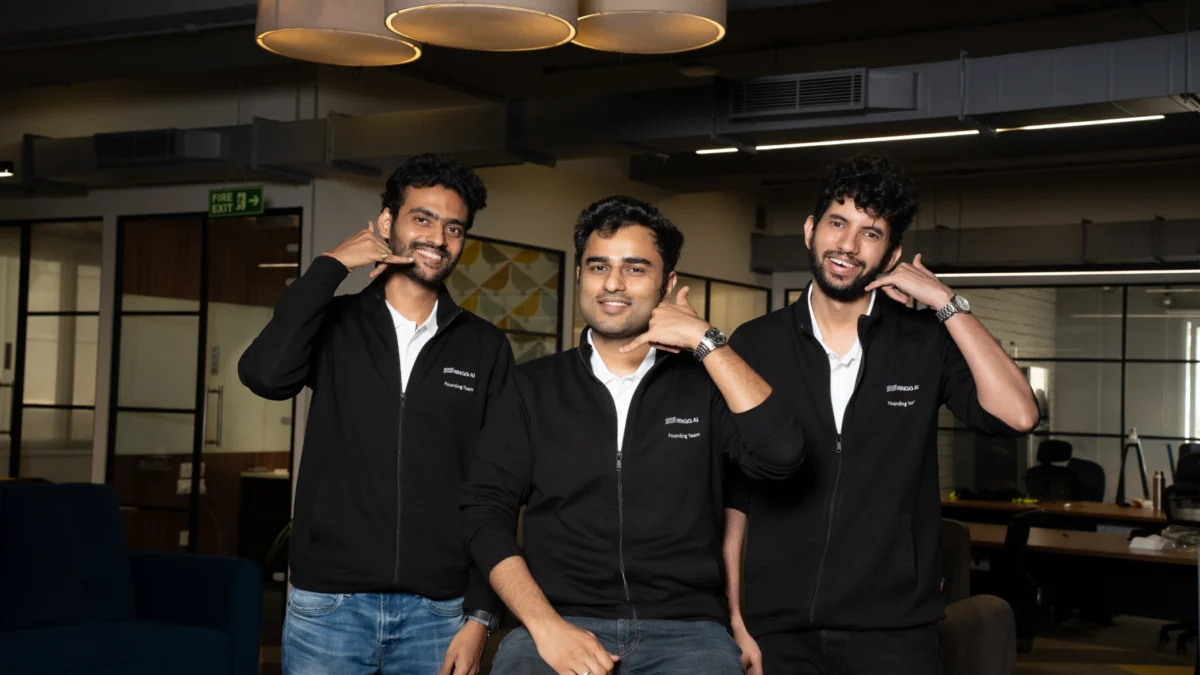
In a significant development for India’s burgeoning artificial intelligence landscape, Ringg, a leading voice AI startup, has successfully secured an additional $10 million in funding from Peak XV Partners. This extension of its Series A round brings the total Series A funding to an impressive $15.5 million, underscoring investor confidence in the company’s vision and the immense potential of voice AI in the Indian market. The investment arrives at a pivotal time when data from a recent Truecaller study highlights that over 76% of Indian consumers unequivocally prefer interacting with businesses via phone calls, signaling a vast, untapped opportunity for intelligent automation in customer support and outreach.
The Strategic Investment and Market Context
The $10 million capital injection from Peak XV Partners, a venture capital firm formerly known as Sequoia India & SEA and a powerhouse in the South Asian startup ecosystem, is not merely a financial boost but a strategic endorsement of Ringg’s technology and market approach. Earlier this year, Ringg had initially raised $5.5 million in its Series A round, and this latest infusion elevates its total Series A funding to $15.5 million. This substantial capital will enable Ringg to accelerate its product development, expand its market reach, and solidify its position as a frontrunner in India’s competitive voice AI sector. The funding reflects a broader trend of increasing investment in AI companies, particularly those addressing unique market demands in fast-growing economies like India.
India’s digital economy is expanding at an unprecedented pace, yet the foundational preference for human-like voice interaction remains stubbornly high. The Truecaller "State of Business Calling Report 2026" starkly illustrates this paradox: despite the proliferation of digital communication channels, the majority of Indian consumers still find phone calls to be the most effective and reassuring method for engaging with businesses. This preference is deeply rooted in several factors, including the country’s diverse linguistic landscape, varying levels of digital literacy across demographics, and a cultural inclination towards direct, personalized communication. For businesses, this presents a significant challenge in scaling customer support while maintaining quality and efficiency. Voice AI, with its ability to automate conversations, understand nuances, and provide immediate responses, emerges as a critical solution to bridge this gap, offering a scalable yet personalized customer experience.
From Text-to-Speech to Enterprise Voice AI Powerhouse: Ringg’s Evolution
Ringg’s journey to becoming a prominent voice AI platform is a testament to adaptive innovation. The company initially began its operations under the name DesiVocal, focusing on text-to-speech technology. This foundational work involved deep research into speech models, an endeavor that proved to be both technically challenging and capital-intensive. The founders quickly identified that while building proprietary speech models was crucial for technological depth, the more immediate and scalable business opportunity lay higher up the technology stack: creating intelligent voice AI agents directly for enterprises. This strategic pivot marked a significant turning point, transforming DesiVocal into Ringg and redirecting its efforts towards developing end-to-end voice AI solutions designed to handle complex business interactions.
This evolution saw Ringg securing Indian fintech giant Cred as its inaugural customer, a significant validation of its early capabilities. Since then, the company has expanded its impressive client roster to include some of India’s most prominent startups, such as e-commerce leader Flipkart, healthcare platform Practo, investment platform Groww, and insurance marketplace PolicyBazaar. These early partnerships allowed Ringg to refine its offerings and demonstrate its value proposition across diverse industries.
Initially, Ringg’s voice AI agents were deployed for what co-founder Siddharth Tripathi described to TechCrunch as "high-volume, low-complexity use cases." These included tasks like outbound calling for marketing campaigns, lead qualification, and loan collection reminders. While these applications provided immediate efficiency gains for businesses, Tripathi recognized a critical limitation. "We quickly realized these are not sticky use cases, and so it’s always going to be a price game," he explained. This insight spurred another strategic shift, prompting Ringg to move beyond mere automation to delivering tangible "outcomes" for its clients.
Embracing Complexity: Driving Real Business Outcomes
The realization that true value and defensibility lie in tackling more intricate workflows led Ringg to pivot towards higher-value, more complex applications. While still supporting simpler use cases where appropriate, the company has increasingly focused its efforts on developing sophisticated voice AI agents capable of handling nuanced interactions that traditionally required human intervention.
For instance, in the healthcare sector, Ringg’s AI agents are now automating critical tasks like appointment booking for clinics and post-visit follow-ups with patients. A prime example of this success is its deployment across 1,200 clinics for healthcare app Practo, where the voice agents efficiently manage patient scheduling and ensure continuity of care. This not only enhances patient experience by providing immediate and convenient service but also frees up human staff to focus on more complex medical tasks.
Beyond healthcare, Ringg is making significant inroads into other complex domains. In e-commerce, its voice AI agents are deployed for abandoned-cart recovery, proactively reaching out to customers who have left items in their online shopping carts to encourage completion of purchases. For fintech apps, Ringg is automating crucial onboarding processes and Know Your Customer (KYC) checks, streamlining compliance procedures and accelerating customer acquisition while maintaining regulatory standards. These applications demonstrate a shift from transactional interactions to more strategic, outcome-oriented engagements, where the AI agent actively contributes to revenue generation and operational efficiency.
While voice calls continue to constitute over 70% of Ringg’s business, the startup is strategically diversifying its channel offerings. Recognizing the multi-modal nature of modern customer engagement, Ringg has begun integrating its AI capabilities into other communication channels, including chat and WhatsApp. For select clients, such as energy giant Shell, it also automates browser-based support requests, further broadening its reach and utility. This multi-channel approach aligns with Ringg’s broader strategic vision, as articulated by Tripathi: "We are trying to position ourselves as a platform for agents that bring outcomes or get things done rather than voice agents for enterprises." This redefinition emphasizes solution delivery over mere technological provision, focusing on tangible business results.
Technological Prowess and Future Vision
At the core of Ringg’s capabilities lies its commitment to building proprietary technology. The company develops its own speech recognition and generation models, a resource-intensive endeavor that provides it with a distinct competitive advantage. This in-house development ensures greater control over the AI’s performance, customization capabilities, and long-term innovation roadmap. Ringg’s ambition is to eventually own the entire voice stack, encompassing infrastructure and deployment, which would provide unparalleled efficiency and flexibility. However, given the current high costs associated with such a comprehensive vertical integration, the product currently functions as an intelligent orchestration layer, adeptly routing tasks to different models based on the specific use case and complexity required.
Rishen Kapoor, a principal at Peak XV, highlighted this technical depth as a key factor in their investment decision. "Because Ringg started as a research lab building its own models, that technical depth shows up in the complex use cases it’s now tackling," Kapoor noted. He further elaborated, "Because of the technical capabilities, they can actually do these hard-won enterprise workflows end to end. They can complete these higher-value tasks like merchant onboarding, like L1 and L2 support, with quality and with consistency." This perspective from a leading investor underscores the importance of foundational AI research in enabling practical, high-impact enterprise solutions.
Strategic Global Expansion through Global Capability Centers
While the majority of Ringg’s current customer base is concentrated in India, with a nascent presence in the Middle East and the U.S., the company’s strategy for international expansion, particularly into the lucrative U.S. market, is notably astute. Instead of directly competing with established players in the U.S., Ringg aims to partner with Global Capability Centers (GCCs) located in India. GCCs are offshore hubs established by multinational corporations in India to handle various back-office, IT, and support functions.
This strategy allows Ringg to leverage the existing infrastructure, talent pool, and established relationships of these GCCs. By offering automation capacity alongside human support, Ringg can provide a hybrid solution that is both cost-effective and scalable for global enterprises. This approach not only sidesteps the complexities of direct market entry in a highly competitive environment but also capitalizes on India’s strength as a global outsourcing hub. It enables multinational corporations to enhance their operational efficiency and customer service capabilities globally by integrating Ringg’s advanced voice AI within their existing Indian operations, thereby optimizing their global service delivery models.
Navigating a Crowded but Layered Competitive Landscape
The voice AI market in India, and globally, is undeniably a crowded and rapidly evolving space. Ringg operates within a multi-layered ecosystem of competitors, each vying for a share of the burgeoning market. This landscape can broadly be categorized into several segments:
- Model Makers: These companies specialize in building foundational speech recognition and generation models. Global players like Deepgram, ElevenLabs, and Cartesia, alongside Indian unicorns such as Sarvam and emerging startups like Smallest.ai, are constantly pushing the boundaries of speech technology, focusing on accuracy, naturalness, and efficiency.
- Orchestration-Focused Startups: This is the layer where Ringg primarily operates, alongside competitors like Bolna and Blue Machines. These companies focus on integrating various models, managing complex conversational flows, and ensuring seamless deployment of AI agents across different channels and use cases. Their value proposition lies in their ability to build comprehensive, outcome-driven solutions on top of foundational AI models.
- Application-Layer and Sector-Focused Players: Some companies concentrate on developing highly specialized AI solutions for specific industries or functions. For example, Gnani and Arrowhead have carved out niches with a heavy focus on the finance sector, offering tailored voice AI solutions for banking, insurance, and wealth management.
The strategic insight emerging from this layered stack is crucial: while foundational model innovation is vital, the ultimate "money and defensibility increasingly sit with whoever owns the customer relationship and the outcome." This highlights Ringg’s strategic positioning, as it aims to be the platform that not only provides AI agents but ensures they "get things done," thereby owning the end-to-end customer journey and delivering measurable business results. This focus on outcomes, rather than just technology, is what differentiates Ringg in a competitive market.
Team Expansion and Future Outlook
Ringg’s growth trajectory is also reflected in its expanding team. The company currently employs 40 individuals, with a significant surge of over 15 new hires in the last three months alone. This rapid team expansion is critical for scaling operations and driving innovation. The startup is actively recruiting for specialized roles, particularly "forward-deployed engineer" positions. These roles demand a unique blend of technical expertise and product management skills, crucial for deploying complex AI solutions directly with enterprise clients and ensuring their successful integration and performance. Additionally, Ringg is investing in research talent, specifically focusing on researchers dedicated to optimizing its models and bringing down the operational cost of running its sophisticated AI infrastructure. This dual focus on deployment and cost efficiency positions Ringg for sustainable growth and continued technological leadership.
In conclusion, Ringg’s latest funding round is more than just an investment in a startup; it is a profound affirmation of India’s unique market dynamics and its burgeoning potential as a global hub for AI innovation. By effectively addressing the strong consumer preference for voice interactions through advanced AI, Ringg is not only transforming customer experience but also setting a precedent for how businesses can leverage technology to scale personalized engagement in a diverse and digitally evolving nation. The company’s strategic evolution, technological depth, and astute market penetration strategy underscore its potential to significantly impact the future of customer service and business automation, both within India and on the global stage.