Gunmen, reportedly dressed in military-style clothing, launched coordinated and brutal assaults on the villages of Dekara, Gidan Zana, Sabon Gida, and Masaka in Niger State, resulting in the deaths of over 40 people and the abduction of an unconfirmed number of residents. The attacks, which saw assailants plant improvised explosive devices (IEDs) and lead captives into dense forests, represent a stark escalation of the security crisis plaguing Nigeria’s North-West region, particularly the volatile Borgu area bordering Kebbi and Kwara states, as well as the Republic of Benin. The incident has sent shockwaves through already traumatized communities, prompting widespread displacement and drawing strong condemnation from the Nigerian presidency, which vowed to bring the perpetrators to justice.
A Night of Terror and Unconfirmed Casualties
The devastating raids unfolded with chilling precision, targeting multiple communities simultaneously and leaving a trail of destruction and despair. While police spokesman Wasiu Abiodun confirmed to the BBC that more than 40 individuals were killed, he stressed that the precise death toll remained unconfirmed amidst ongoing assessments and the chaotic aftermath. The attackers, described by witnesses as heavily armed and clad in military-style fatigues, moved through the villages, firing indiscriminately, looting properties, and rounding up residents.
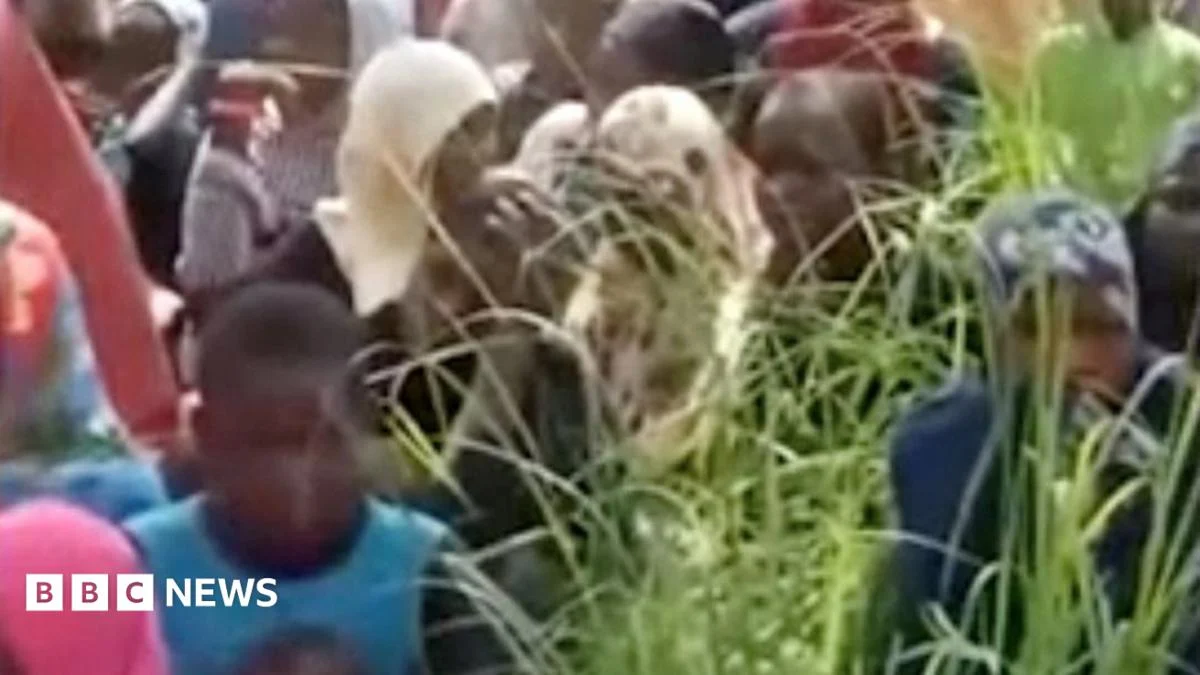
Eyewitness accounts paint a harrowing picture of the attacks. A local youth leader, who requested anonymity for safety reasons, described the profound distress and faint hope experienced by his community after footage of the abducted individuals began circulating on social media. "I was able to identify many people," he recounted, "There is an elderly man in the video who is like a grandfather to us. He lives in Gidan Zana village." For families who spotted their loved ones in the grainy footage, a sense of grim relief mingled with terror. "At least they know where their loved ones are and hope they may be rescued, unlike those who still have no information about missing relatives," the youth leader added, underscoring the profound psychological toll on communities grappling with uncertainty.
The scale of the abductions remains unclear, but the attackers’ methods indicate a calculated strategy to sow fear and maintain control. As they herded their captives into the surrounding forests, the gunmen reportedly planted improvised explosive devices in parts of the affected communities. This insidious tactic, designed to deter pursuit or cause further casualties, tragically claimed the life of a teenage boy who was killed when one of the explosives detonated as he attempted to escape the clutches of his captors. This particular detail highlights the extreme brutality and disregard for human life exhibited by the assailants.
Survivors of the onslaught are currently receiving medical attention, with many suffering from serious injuries, a testament to the indiscriminate violence unleashed during the attacks. Hospitals and local clinics are reportedly stretched, struggling to cope with the influx of trauma victims and requiring urgent support for medical supplies and personnel.
Mass Displacement and Humanitarian Crisis
The immediate aftermath of the attacks has triggered a significant humanitarian crisis. A local blogger familiar with the area reported that countless residents have abandoned their homes, fleeing in terror to seek refuge in neighboring states within Nigeria or, in many cases, across the international border into the Republic of Benin. This mass exodus underscores the profound sense of insecurity and the breakdown of trust in the ability of state authorities to protect vulnerable populations. Displaced persons often arrive in host communities with little more than the clothes on their backs, facing dire challenges related to shelter, food, clean water, and sanitation. The influx of refugees into Benin also presents a growing regional concern, placing pressure on the limited resources of border communities and international aid organizations.
The displacement is not merely a temporary inconvenience but a long-term threat to the region’s stability and development. Farmers, who constitute the backbone of the local economy, are unable to access their farmlands, jeopardizing food security and exacerbating poverty. Children are out of school, their education interrupted, further dimming future prospects for these already marginalized communities.
Presidential Condemnation and Vow for Justice
In response to the horrific events, President Bola Ahmed Tinubu issued a strong condemnation of the killings and abductions. In a statement released by presidential spokesman Bayo Onanuga, Tinubu described the perpetrators as "enemies of peace and enemies of humanity" and vowed that "those who carried out this cowardly attack on defenceless Nigerians… will not go scot-free." The President also extended his heartfelt condolences to the families of those who lost their lives in the attacks, emphasizing the government’s commitment to ensuring justice and bringing the culprits to account.
While presidential condemnations are standard, the effectiveness of the government’s response will be measured by its ability to translate these words into tangible security improvements on the ground. The statement reiterates a common pledge by Nigerian authorities to tackle insecurity, a challenge that has proven persistently difficult to overcome despite various military operations and policy initiatives.
Escalating Insecurity in the Borgu Area: A Deepening Crisis
The attacks in Dekara, Gidan Zana, Sabon Gida, and Masaka are not isolated incidents but rather the latest and most brutal manifestation of a rapidly deteriorating security situation in the Borgu area and, more broadly, across Nigeria’s North-West. The Borgu region, strategically located at the nexus of Niger, Kebbi, and Kwara states, and sharing a porous border with Benin, has become a hotbed of criminal activity. Its dense forests and rugged terrain provide ideal hideouts for armed groups, facilitating their cross-border movements and making it challenging for security forces to track and neutralize them.
Earlier this month, the police reported a significant operation in the area where 145 people were rescued after being abducted from four other villages. This rescue, while a positive development, highlighted the alarming frequency and scale of abductions plaguing the region. The prevalence of such incidents suggests that these criminal networks operate with a degree of impunity, continuously replenishing their ranks and resources through ransom payments and illicit activities.
The Nexus of Banditry and Jihadist Infiltration
Local officials and security analysts have increasingly voiced grave concerns about the growing presence and influence of jihadist groups operating in parts of North-Western Nigeria and along the border region. While the primary perpetrators of mass abductions and village raids are often referred to as "bandits" – heavily armed criminal gangs motivated by financial gain through kidnapping for ransom, cattle rustling, and extortion – there is mounting evidence of an insidious convergence with extremist ideologies.
Officials have reported that some fighters, suspected of having links to groups such as Ansaru (a Boko Haram splinter group) or elements sympathetic to the Islamic State West Africa Province (ISWAP), have recently infiltrated communities. These groups are not merely engaging in criminal acts but are actively seeking to impose religious restrictions on residents, signaling a deeper, ideological agenda. This shift is particularly alarming, as it suggests that what began as localized criminal banditry is evolving into a more complex insurgency with socio-religious and political dimensions. The imposition of Sharia law, prohibition of Western education, and forced recruitment could further destabilize the region, creating fertile ground for radicalization and entrenching extremist control.
Chronology of Escalation in North-West Nigeria
The current crisis in Borgu is part of a broader, long-standing pattern of insecurity in North-West Nigeria, which has seen a dramatic escalation in recent years.
- 2018-2019: The emergence of large-scale "banditry" operations, particularly in Zamfara, Katsina, and Kaduna states, characterized by mass abductions of schoolchildren and villagers. These initial attacks often targeted vulnerable rural communities.
- 2020: The crisis deepens, with thousands displaced and hundreds killed. Major incidents include the Kankara schoolboys’ abduction in Katsina State (over 300 students) and numerous attacks on farming communities. The modus operandi of the bandits becomes more sophisticated, using motorcycles for rapid attacks and retreats.
- 2021: Mass abductions continue unabated, with several schools and universities targeted. States like Niger, Kebbi, and Sokoto become increasingly affected. The military launches various operations, but success is often limited by the bandits’ agility and knowledge of the terrain. Reports of bandits collaborating with or selling arms to jihadist groups begin to surface.
- 2022: The humanitarian crisis deepens, with millions displaced across the North-West. Local vigilante groups emerge, sometimes leading to clashes with bandits and further complicating the security landscape. The government declares bandits as terrorists, a move intended to enable harsher military action.
- Early 2023: Despite government efforts, attacks persist. The run-up to the general elections sees a brief lull in some areas, but violence quickly resurfaces. Communities in Niger State, including the Borgu axis, experience a surge in kidnappings and village raids.
- Mid-2023: The Tinubu administration inherits a formidable security challenge. While initial efforts focused on restructuring security architecture, the recent Borgu attacks demonstrate the persistent and evolving nature of the threat. The rescue of 145 abductees in Borgu earlier this month highlights both the scale of the problem and the ongoing efforts, albeit often reactive, by security forces.
Broader Implications and the Path Forward
The implications of the escalating violence in North-West Nigeria are profound and far-reaching.
- Humanitarian Catastrophe: The sustained insecurity continues to fuel one of Africa’s most severe displacement crises, with millions in urgent need of humanitarian assistance. Food insecurity is exacerbated as farming activities are disrupted, and access to basic services like healthcare and education is severely curtailed.
- Economic Devastation: The agrarian economy of the North-West is being systematically dismantled. Farmers cannot cultivate their lands, trade routes are unsafe, and investments are deterred. The reliance on ransom payments as a source of income for criminal groups creates a self-perpetuating cycle of violence and impoverishment.
- Regional Instability: The cross-border nature of the attacks and the flow of refugees into Benin underscore the regional dimension of the crisis. If not contained, the instability could spill over, creating broader security challenges for ECOWAS member states and potentially attracting more international extremist elements.
- Governance and Trust: The inability of the state to consistently protect its citizens erodes public trust in government institutions. This can lead to communities taking matters into their own hands, forming armed vigilante groups, which sometimes leads to extrajudicial killings and further spirals of violence.
- National Security Threat: The potential for banditry to fully merge with or be subsumed by jihadist ideologies presents a significant national security threat. A well-established jihadist presence in the North-West could open a new front in Nigeria’s battle against terrorism, diverting resources and attention from the ongoing fight against Boko Haram and ISWAP in the North-East.
Addressing this multi-faceted crisis requires a comprehensive and coordinated approach that goes beyond military operations. While robust security interventions are necessary to degrade the capabilities of armed groups and rescue captives, sustainable solutions must also encompass:
- Strengthening Governance: Enhancing the presence and effectiveness of state institutions in rural areas, improving law enforcement, and fostering trust between communities and authorities.
- Socio-Economic Development: Investing in education, job creation, and poverty alleviation programs to address the root causes of disaffection and make recruitment by criminal elements less attractive.
- Community Engagement: Empowering local communities, traditional rulers, and religious leaders to play a proactive role in peacebuilding, intelligence gathering, and conflict resolution.
- Justice and Accountability: Ensuring that perpetrators of violence are swiftly apprehended and brought to justice to deter future attacks and restore confidence in the rule of law.
- Regional Cooperation: Working closely with neighboring countries, particularly Benin, to address cross-border crime, intelligence sharing, and coordinated security operations.
The attacks in Borgu serve as a stark reminder of the urgent need for a more effective and holistic strategy to secure Nigeria’s North-West. The human cost is immeasurable, and the implications for national stability and regional security are growing more severe with each passing day. The challenge for the Tinubu administration is immense, but the imperative to protect its citizens and restore peace to these embattled communities has never been greater.
Additional reporting by Makuochi Okafor contributed to earlier reports on this developing story.