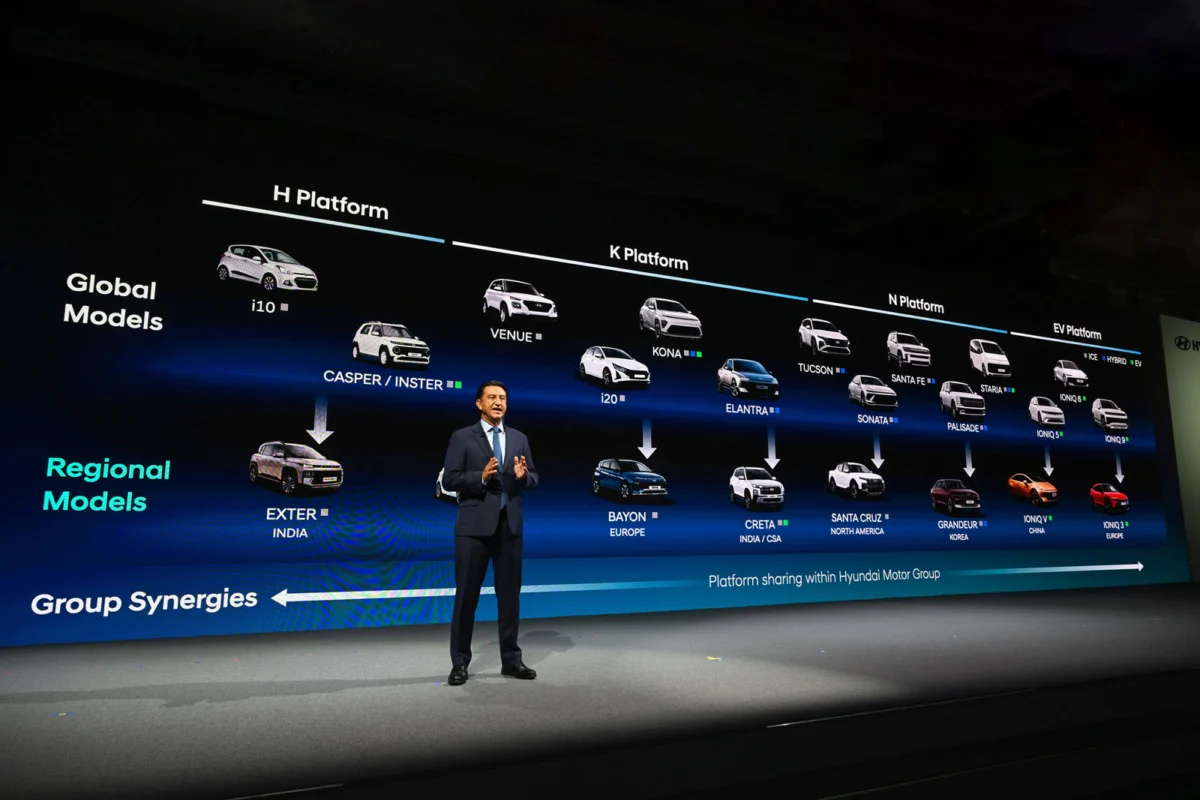
Hyundai Motor Company, encompassing its namesake brand and its luxury subsidiary Genesis, has unveiled a comprehensive strategic roadmap for the European market, committing to the launch of 41 new or refreshed models by the end of the decade. This ambitious announcement, delivered during the company’s 2024 CEO Investor Day on August 26, signals a definitive commitment to a region that several other Asian automotive manufacturers have begun to deprioritize. As the European automotive landscape faces an influx of cost-competitive Chinese electric vehicles (EVs), Hyundai is doubling down on localized production, technological innovation, and a diversified powertrain strategy to secure its long-term viability.
The South Korean conglomerate’s strategy stands in stark contrast to the tactical retreats observed by Japanese rivals such as Nissan and Honda, which have recently shifted significant investment away from Europe to focus on more profitable or less regulated global markets. Hyundai’s leadership, however, views the European market as a critical battleground for technological leadership and brand prestige. By 2030, the company aims to sell more than 420,000 electric vehicles annually in Europe—a nearly fourfold increase from the 116,000 units projected for 2025.
A Strategic Diversification of the Product Portfolio
Central to Hyundai’s European offensive is a product lineup tailored specifically to local consumer preferences and regulatory requirements. The 41-model blitz includes a mix of battery electric vehicles (BEVs), internal combustion engine (ICE) models, and hybrids. A primary focus of this expansion is the entry-level and mid-sized segments, which are currently the most contested areas of the European market.
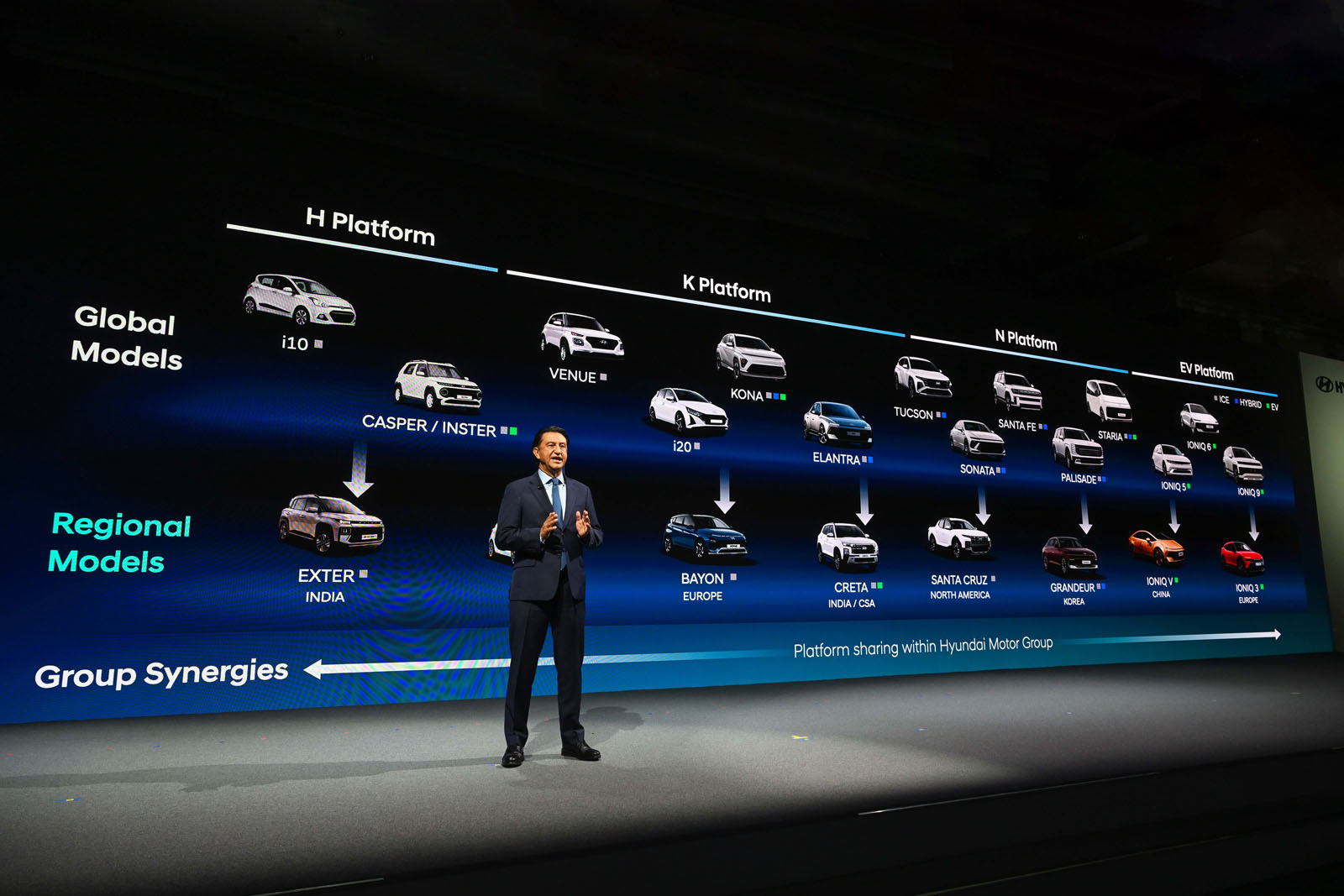
Key upcoming launches include the Ioniq 3, a European-built electric vehicle scheduled for release later this year. This model is expected to play a pivotal role in democratizing Hyundai’s EV technology. Following the Ioniq 3, the company will introduce a region-specific small electric SUV and a mid-sized electric SUV, both designed to cater to the urban and suburban driving patterns prevalent across the continent.
Furthermore, Hyundai is not abandoning the internal combustion engine. Recognizing that the transition to full electrification is occurring at varying speeds across different European nations, the company will launch a new iteration of the i20 hatchback. This model will be based on a recently revealed platform designed for the Brazilian market, optimized for European safety and emissions standards. Additionally, a larger, modernized successor to the Tucson compact SUV—Hyundai’s current best-seller in Europe—is slated for a 2027 debut.
The Role of Extended-Range Electric Vehicles (EREV)
One of the most significant technological pivots announced during the investor day was the introduction of Extended-Range Electric Vehicles (EREV). Hyundai plans to bridge the gap between traditional hybrids and full BEVs with this technology, particularly for consumers who remain concerned about charging infrastructure and range anxiety.
The company is considering importing a newly announced EREV version of the Santa Fe SUV to Europe. While manufactured in the United States, the Santa Fe EREV is designed to provide the driving dynamics and acceleration of a pure electric vehicle while utilizing a small internal combustion engine solely as a generator to charge the battery. This system allows for significantly higher range than traditional plug-in hybrids. Globally, Hyundai aims to achieve a range of over 640 miles (approx. 1,030 km) on a single charge/tank for its next-generation EREVs, a figure that could redefine expectations for electrified touring vehicles in Europe.
Genesis and the Premium Segment Challenge
Despite a challenging start since its European launch in 2021, the Genesis luxury brand remains a core pillar of Hyundai’s regional strategy. Sales for the premium marque have remained subdued, with year-to-date figures trailing even niche luxury brands like Bentley. However, Hyundai executives expressed continued confidence in the brand’s potential to disrupt the dominance of established German luxury manufacturers.
To revitalize Genesis in Europe, the company will introduce the GV90, a flagship luxury electric SUV, and a new hybrid version of the popular GV80. The 2027 Genesis roadmap also includes a high-performance EV model featuring a new high-density battery pack. By integrating advanced software-defined vehicle (SDV) capabilities and superior range, Genesis aims to position itself as a high-tech alternative to traditional luxury incumbents.
Countering the Chinese Influx and Japanese Retreat
The European market is currently undergoing a period of intense volatility. The European Automobile Manufacturers’ Association (ACEA) has noted a significant rise in the market share of Chinese manufacturers such as BYD, MG (SAIC), and Geely. These brands often benefit from vertically integrated supply chains and lower production costs, allowing them to undercut European and traditional Asian manufacturers on price.
Hyundai’s response to this pressure is twofold: cost optimization and localized production. The company revealed that it has successfully reduced the battery costs of its next-generation EVs by approximately 30%. This was achieved through a combination of chemistry improvements, such as the increased use of Lithium Iron Phosphate (LFP) batteries for entry-level models, and more efficient manufacturing processes.
"Europe is one of the most competitive regions on the planet," stated José Muñoz, Hyundai’s Global Chief Operating Officer and CEO of Hyundai Motor North America, during the investor presentation. Muñoz emphasized that Hyundai’s ability to maintain a strong presence in the internal combustion market is actually a catalyst for its EV transition. "Every EV credit we earn protects the ICE and hybrid business alongside it," he explained, referring to the EU’s stringent fleet emissions targets. By selling more EVs, Hyundai avoids heavy fines, thereby allowing it to continue selling profitable hybrid and ICE models that fund further R&D.
Chronology of Hyundai’s European Strategy (2021–2030)
- 2021: Genesis officially launches in Europe, focusing on the UK, Germany, and Switzerland.
- 2022–2023: Hyundai secures its position as a top-three manufacturer in several European markets, led by the success of the Tucson and the Ioniq 5.
- 2024 (August): CEO Investor Day outlines the "Hyundai Way" strategy, committing to 41 new models for Europe.
- Late 2024: Production and launch of the Ioniq 3 (European-built).
- 2025: Target for EV sales in Europe set at 116,000 units; launch of the region-specific small electric SUV.
- 2026–2027: Introduction of the Santa Fe EREV and the new-generation Tucson; Genesis GV90 and GV80 Hybrid arrive.
- 2030: Goal of 420,000 annual EV sales in Europe and the completion of the 41-model rollout.
Financial and Operational Implications
The financial commitment required for this expansion is substantial. Hyundai Motor Group has previously announced a global investment of roughly $80 billion (KRW 109 trillion) through 2033 to accelerate its transition to a smart mobility provider. A significant portion of this capital is earmarked for European operations, specifically for the upgrading of manufacturing facilities in the Czech Republic and Turkey.
By localizing the production of key models like the Ioniq 3, Hyundai minimizes logistics costs and mitigates risks associated with potential trade tariffs on imported vehicles—a move that provides a strategic advantage over brands that rely solely on importing vehicles from China or Japan.
Analysts suggest that Hyundai’s strategy is a calculated gamble on the "middle ground." While some manufacturers are pivoting exclusively to EVs and others are stalling, Hyundai is maintaining a "flexible production" approach. This allows the company to ramp up or down the production of specific powertrains based on real-time market demand and changes in government subsidies across the various European Union member states.
Broader Market Impact and Outlook
Hyundai’s aggressive stance is likely to pressure European domestic manufacturers like Volkswagen Group and Stellantis to accelerate their own cost-cutting measures. As Hyundai closes the gap on technology and range while maintaining a competitive price point, the "value-for-money" proposition that once defined South Korean brands is evolving into a "technology-leader" proposition.
The success of this 2030 vision will depend heavily on the company’s ability to navigate the complex regulatory environment of the European Green Deal and the upcoming Euro 7 emissions standards. However, with a diversified portfolio that addresses the needs of both the budget-conscious commuter and the luxury-seeking executive, Hyundai Motor Group is positioning itself not just to survive the "Chinese wave" in Europe, but to emerge as a dominant force in the post-combustion era.
In conclusion, the commitment to 41 new models represents more than just a volume play; it is a clear signal of Hyundai’s intent to remain a permanent fixture of the European industrial landscape. While other Asian brands look toward easier growth in emerging markets, Hyundai is choosing to fight for its share in the world’s most demanding automotive arena.