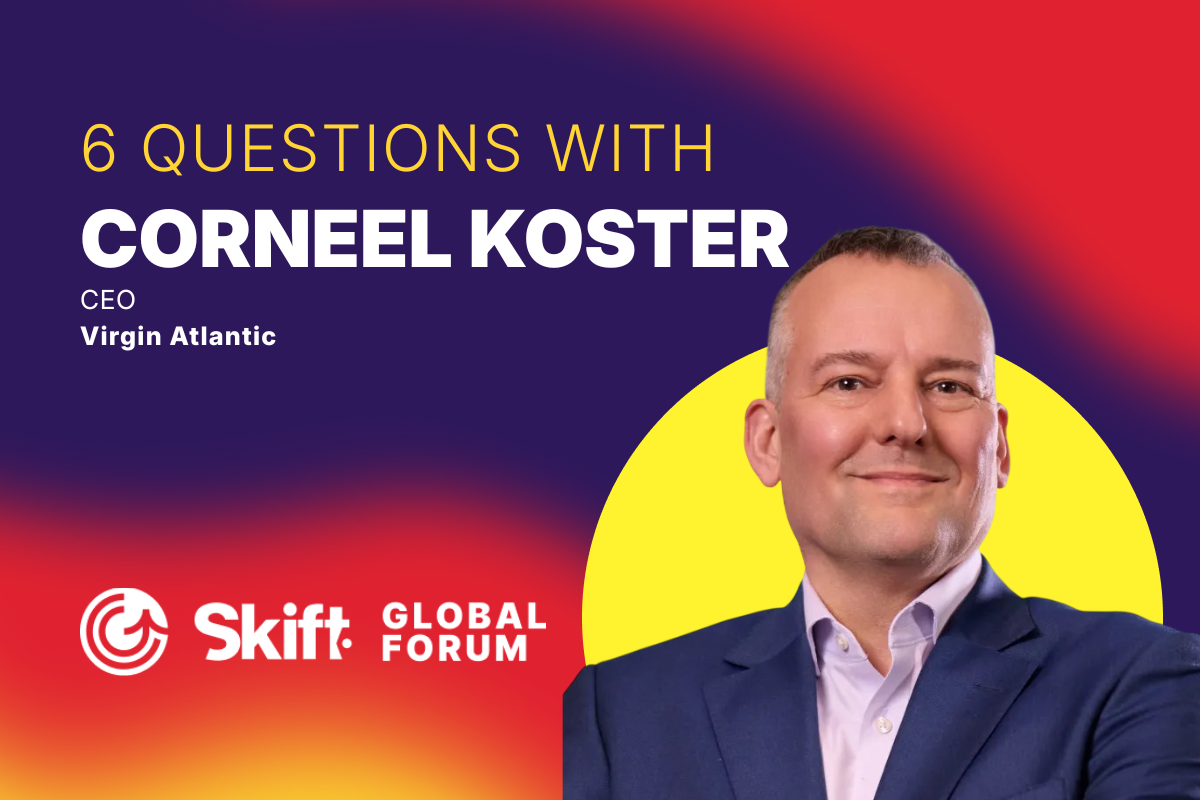
The aviation industry is currently navigating one of the most transformative eras in its century-long history, marked by the rapid integration of artificial intelligence and a post-pandemic shift in traveler priorities. At the center of this evolution is Virgin Atlantic, a carrier that has spent four decades positioning itself as a high-touch, "challenger" alternative to larger legacy airlines. As the company prepares for its participation in the Skift Global Forum in New York City from September 22–24, 2026, Chief Executive Officer Corneel Koster has articulated a strategic vision that prioritizes human interaction and premium service as the primary defenses against the commoditization of air travel.
Koster’s strategy is built on the premise that while technology can streamline the logistics of travel, it cannot replicate the emotional resonance of high-quality service. This "human sparkle," as Koster describes it, is being positioned as the airline’s durable competitive advantage. In an era where AI-driven algorithms increasingly mediate how travelers search for and book flights, Virgin Atlantic is betting that a sense of belonging and personalized care will drive long-term customer advocacy and brand resilience.
The Strategic Pivot Toward Premium Capacity
A significant component of Virgin Atlantic’s current growth strategy involves a substantial investment in its hardware and cabin configurations. The airline has observed a sustained increase in demand for premium experiences, a trend that began in the immediate aftermath of the COVID-19 pandemic and has shown no signs of abating. To capitalize on this, Virgin Atlantic is implementing a 30% increase in Upper Class and Premium seating across its fleet.
This expansion is being driven by the arrival of the Airbus A330neo, which began joining the fleet in late 2022 and will continue through the end of 2026. These aircraft feature the "Retreat Suite," the airline’s most spacious suite to date, and a redesigned "Loft" social space. Following the integration of the A330neo, the airline will embark on a comprehensive cabin refit of its Boeing 787-9 Dreamliner fleet. This project aims to bring the older wide-body aircraft in line with the modern, premium-heavy configuration of the newer Airbus models.
The move to increase premium density is backed by industry data suggesting that "premium leisure" travelers—individuals willing to pay for higher-tier cabins for personal trips—are now a permanent fixture of the market. By shifting its inventory toward these higher-margin seats, Virgin Atlantic is insulating itself against the volatility of the basic economy market, where competition is fiercer and margins are thinner.
Technological Integration and the Starlink Advantage
While Koster emphasizes the human element, the airline is not ignoring the technological requirements of the modern traveler. A key pillar of the company’s recent operational success is the accelerated rollout of Starlink’s satellite internet service. In a notable feat of engineering and logistics, Virgin Atlantic completed the installation of Starlink on 12 Airbus A350 aircraft in just over a month—finishing the project five months ahead of schedule.
The implementation of Starlink provides passengers with high-speed, low-latency Wi-Fi that rivals ground-based connections, allowing for seamless streaming and video conferencing. This technological leap is intended to remove one of the primary friction points of long-haul travel. The airline plans to extend this service to its Boeing 787 fleet, with a goal of achieving fleet-wide implementation by early 2027.
Beyond the passenger experience, Virgin Atlantic is leveraging AI to manage the complexities of modern airline operations. Koster noted that the airline uses AI-driven tools to optimize inventory management and pricing. This is particularly critical in a "VUCA" (Volatility, Uncertainty, Complexity, and Ambiguity) world, where traditional historical data patterns are often rendered obsolete by sudden geopolitical shifts or economic fluctuations.
Navigating Geopolitical Volatility and Scenario Planning
The global aviation landscape has been significantly impacted by geopolitical instability, including conflicts in Eastern Europe and the Middle East, which have forced airlines to reroute flights and adjust to fluctuating fuel prices. Koster highlights that Virgin Atlantic’s agility—a hallmark of its smaller scale compared to giants like Delta or United—allows it to respond more rapidly to these disruptions.
The airline utilizes rigorous scenario planning and sensitivity analysis to prepare for various eventualities. This disciplined approach to "rolling with the punches" was tested earlier this year when unexpected regional tensions required immediate network adjustments. By using AI to support these shifts, the airline was able to re-optimize its schedule and pricing in real-time, mitigating potential losses and ensuring operational stability.
This adaptability is a core part of the "challenger spirit" that has defined the airline since its founding by Richard Branson 42 years ago. Koster argues that being smaller allows for a more cohesive mindset, where every department can pivot quickly in response to a singular strategic goal.
Loyalty as a Tool for Market Share Acquisition
In the competitive transatlantic market, loyalty programs are essential for retaining high-value customers. Virgin Atlantic has recently revamped its "Flying Club" to reward long-term commitment through initiatives like "High Five Rewards." This program grants 12,000 Virgin Points to members who have flown with the airline in five different years, a move designed to recognize tenure rather than just recent spend. To date, over 34,000 members have received these awards.
Furthermore, the airline has engaged in aggressive market share acquisition through status matching. Earlier this year, Virgin Atlantic launched a campaign targeting British Airways Executive Club members, offering them equivalent status within the Flying Club. The campaign was highly successful, with more than 10,000 travelers making the switch. This "mischievous" approach to competition is a classic Virgin tactic, aimed at disrupting the dominance of larger legacy carriers and introducing new travelers to the Virgin service model.
Analysis of Implications for the Aviation Industry
Koster’s focus on "human sparkle" and "personality" represents a significant counter-narrative to the prevailing trend of automation in the travel industry. As more airlines move toward kiosks, chatbots, and automated boarding, Virgin Atlantic is doubling down on the value of the crew-passenger relationship. This strategy carries both risks and rewards.
The primary reward is brand differentiation. In a market where many airlines offer similar hardware—flatbed seats and large entertainment screens—the service culture becomes the only true differentiator. If Virgin Atlantic can successfully maintain a high level of personalized service while scaling its premium capacity, it can command higher yields and foster deeper customer loyalty.
However, the risk lies in the cost. Human-centric service models are more expensive to maintain than automated ones. Training, staffing levels, and employee retention are critical variables that can impact the bottom line. Furthermore, as AI becomes more integrated into the booking process, there is a risk that smaller airlines could be "hidden" by algorithms that prioritize larger carriers with more extensive data partnerships. Koster’s response to this is to ensure that the brand remains so distinct and desirable that travelers specifically seek it out, bypassing the generic recommendations of AI assistants.
Chronology of Recent and Upcoming Milestones
To understand the current trajectory of Virgin Atlantic, it is helpful to look at the timeline of its recent operational and strategic developments:
- October 2022: Virgin Atlantic takes delivery of its first Airbus A330neo, debuting the new Upper Class Retreat Suite and the "Loft" social space.
- Early 2024: The airline launches an aggressive status match program against British Airways, successfully onboarding 10,000 new elite-tier members.
- Summer 2024: The airline completes the installation of Starlink Wi-Fi on its Airbus A350 fleet five months ahead of schedule.
- Late 2024/Early 2025: Delivery of additional A330neo aircraft continues, contributing to the 30% increase in premium seating capacity.
- Mid-2025: Scheduled commencement of the Boeing 787-9 fleet cabin refit program to align the interior product with the A330neo.
- September 2026: Corneel Koster to present the keynote session at the Skift Global Forum in New York, detailing the results of these strategic investments.
- Early 2027: Targeted completion of fleet-wide Starlink implementation and the finalized rollout of the new premium cabin configurations.
Official Responses and Industry Outlook
Industry analysts have noted that Virgin Atlantic’s focus on the transatlantic corridor—one of the world’s most lucrative travel markets—makes its premium-heavy strategy particularly logical. By focusing on key hubs like London Heathrow, New York JFK, and Los Angeles, the airline is positioning itself where the demand for luxury travel is highest.
In statements regarding the airline’s direction, Virgin Atlantic leadership has consistently emphasized that the company’s survival and growth depend on its ability to remain "different." While the airline is part of a powerful joint venture with Delta Air Lines and Air France-KLM, it maintains a distinct operational identity.
As Koster prepares to take the stage at the Skift Global Forum alongside other industry leaders such as Sébastien Bazin of Accor and Ariane Gorin of Expedia Group, the focus will likely remain on how airlines can maintain a soul in a digital age. The "decisions this session resolves," as noted in the forum’s agenda, will center on the balance between leveraging AI for efficiency and preserving the human touch for brand equity.
For Virgin Atlantic, the path forward is clear: utilize technology to handle the "friction" of travel, but rely on people to provide the "flair." In a world of increasingly automated and impersonal transactions, Koster’s bet is that the future of travel belongs to those who make their customers feel like they belong.