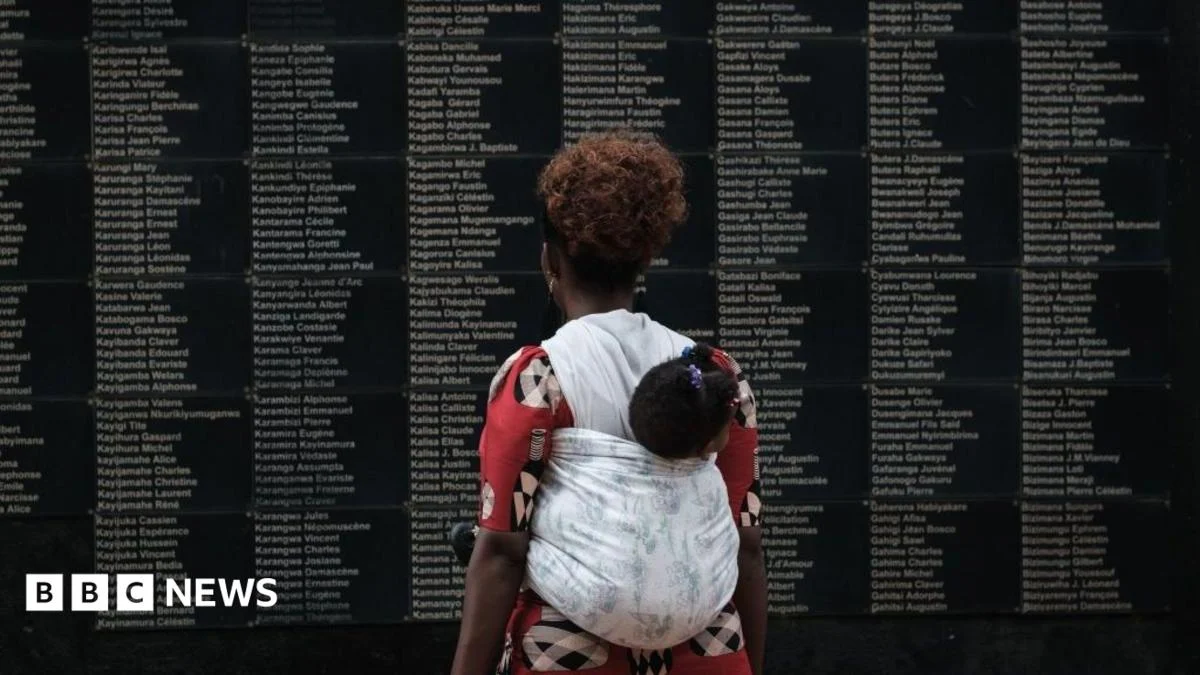
A court in The Hague, Netherlands, has delivered a landmark verdict, sentencing a Dutch-Rwandan national, identified only as Eugene N, to life imprisonment for his direct and authoritative involvement in the 1994 Rwandan genocide. The 66-year-old was found guilty of war crimes and the crime of genocide, with the court specifically highlighting his "genocidal intent" in orchestrating atrocities against the Tutsi population. This conviction underscores the enduring commitment of international and national legal systems to pursuing justice for the victims of one of the 20th century’s most horrific genocides, even decades after the events transpired.
The Verdict and Sentencing: A Lifetime for Atrocity
The District Court of The Hague, in its judgment, detailed the profound gravity of Eugene N’s actions. He was convicted on multiple counts related to the systematic extermination campaign against Tutsis in his capacity as a local administrator in Mbazi, southern Rwanda. Among the most heinous charges for which he was found guilty was the throwing of a hand grenade into a densely packed crowd of Tutsis seeking refuge in a stadium – an act of extreme brutality that contributed to mass casualties. The court emphasized that N held a position of authority, overseeing approximately 1,000 people, and leveraged this influence to facilitate and participate in the killings.
"The suspect was a man who was held in high regard and must have been aware of his role and the influence he had as a local administrator," the court stated in its judgment, adding that he "committed multiple severe crimes." The judicial panel concluded that "only a lifelong prison sentence does justice to the immense suffering that has been inflicted on the victims and the bereaved families," reflecting the irreversible damage and trauma caused by his actions. While N was acquitted of the specific charge of incitement to genocide, the weight of the convictions for war crimes and genocide itself was sufficient to warrant the maximum sentence under Dutch law.
Eugene N: Authority, Accusations, and Denial
Eugene N, who became a Dutch citizen following his arrival in the Netherlands, had been sought by Rwandan authorities for his alleged role in the genocide since 2014. However, rather than extraditing him, Dutch authorities opted to launch their own investigation in 2020, leading to his arrest in 2024. Throughout the extensive legal proceedings, N vehemently denied all charges, asserting that he too was a victim of the "horrific events," having lost family members during the period. His lawyers, as reported by AFP, argued for his acquittal on all accounts, stating that "the case has torn his scars open again. He is a broken man." They have indicated that they will "almost certainly appeal the charges," according to local news agency ANP, signaling a continuation of this complex legal battle.
The court, however, presented compelling evidence to contradict N’s defense. Witnesses testified to his active participation and leadership in the massacres. As a local administrator, he was positioned to either protect the vulnerable or to facilitate their destruction. The court found that he chose the latter, using his influence to direct and enable the slaughter of innocent civilians.
The Horrors of Mbazi: A Microcosm of Genocide
The events in Mbazi, particularly around the local football stadium, represent a chilling microcosm of the broader genocide. The court heard how N instructed Hutu extremists not to allow any Tutsis to escape the stadium, where they had desperately sought shelter. Trapped within the confines of the arena, these vulnerable individuals were subjected to a barrage of violence: pelted with stones, shot at, and targeted with hand grenades, including one thrown by N himself. Those who miraculously survived this initial onslaught were then systematically murdered with clubs and machetes.
Prior to the stadium massacre, N was also implicated in observing and implicitly condoning the looting and burning of Tutsi homes. This pattern of destruction, from property to human life, paints a grim picture of a community systematically dismantled under the watchful eye, and active participation, of local leadership. The detailed accounts from over 30 witnesses interviewed as part of the Dutch investigation were crucial in reconstructing these horrific events and establishing N’s culpability.
A Legacy of Atrocity: The 1994 Rwandan Genocide
The conviction of Eugene N casts a spotlight once more on the Rwandan genocide, an unparalleled tragedy that unfolded over approximately 100 days from April to July 1994. In this brutal period, an estimated 800,000 ethnic Tutsis and politically moderate Hutus were systematically murdered by Hutu extremist militias, including the notorious Interahamwe and Impuzamugambi, supported by elements of the Rwandan armed forces and an interim government steeped in genocidal ideology.
The roots of the conflict are complex, stemming from a history of ethnic division often exacerbated by colonial policies that favored the Tutsi minority, creating resentment among the Hutu majority. Post-independence, political power shifted to the Hutu, leading to cycles of violence and discrimination against Tutsis. The assassination of Rwandan President Juvénal Habyarimana, a Hutu, on April 6, 1994, served as the immediate catalyst, igniting a pre-planned campaign of extermination that quickly spiraled out of control. Roadblocks were set up, lists of Tutsis and moderate Hutus were distributed, and radio stations broadcast propaganda inciting hatred and violence, calling Tutsis "inyenzi" (cockroaches) to be eliminated. The international community’s failure to intervene decisively remains a stain on its conscience, with peacekeeping forces largely withdrawn as the massacres intensified.
The Global Pursuit of Justice: Decades in the Making
The prosecution of Eugene N in the Netherlands is part of a broader, decades-long global effort to bring perpetrators of the Rwandan genocide to justice. Following the genocide, the United Nations established the International Criminal Tribunal for Rwanda (ICTR) in Arusha, Tanzania, which tried and convicted numerous high-ranking officials and architects of the genocide. While the ICTR closed its doors in 2015, its legacy continues through the International Residual Mechanism for Criminal Tribunals (IRMCT), which handles residual functions, including tracking remaining fugitives.
Beyond international tribunals, national courts in Rwanda have processed hundreds of thousands of cases through both conventional courts and traditional Gacaca courts, which focused on community justice and reconciliation. Furthermore, a growing number of countries, leveraging the principle of universal jurisdiction, have prosecuted Rwandan genocide suspects who fled their homeland. Nations like Belgium, France, Canada, Germany, Finland, Sweden, and now the Netherlands have demonstrated a commitment to ensuring that those responsible for such egregious crimes cannot find safe haven. These trials, often relying on extensive investigations and witness testimonies gathered across continents, are vital in providing a measure of justice to survivors and in reaffirming the principle that crimes against humanity will not go unpunished, regardless of where they were committed or the nationality of the perpetrator.
The Dutch Legal Process: A Thorough Investigation
The Dutch investigation into Eugene N’s activities, initiated in 2020, was meticulous and extensive. It involved a dedicated team of investigators from the Dutch National Police’s International Crimes Unit, working in cooperation with Rwandan authorities and international bodies. A crucial component of the investigation was the interviewing of more than 30 witnesses, many of whom were survivors of the Mbazi massacres or individuals who had direct knowledge of N’s actions and influence during the genocide. These testimonies, often harrowing and deeply personal, provided the evidentiary backbone for the prosecution.
The decision by Dutch authorities to conduct their own trial, rather than extradite N to Rwanda, highlights the complexities of international legal cooperation and the application of universal jurisdiction. It also reflects the Dutch legal system’s confidence in its ability to conduct a fair and impartial trial for crimes committed abroad, in accordance with international human rights standards. The trial itself was a lengthy and arduous process, involving numerous hearings, expert testimonies, and careful consideration of all evidence presented by both the prosecution and the defense. The final verdict, delivered after years of investigation and legal proceedings, underscores the thoroughness and dedication of the Dutch judiciary.
Universal Jurisdiction and its Significance
The conviction of Eugene N in the Netherlands is a powerful affirmation of the principle of universal jurisdiction. This legal concept allows national courts to prosecute individuals for certain grave international crimes, such as genocide, war crimes, and crimes against humanity, regardless of where the crimes were committed or the nationality of the perpetrator or victim. It operates on the premise that such crimes are so egregious that they offend the conscience of humanity, and therefore, any state has an interest in bringing the perpetrators to justice.
The case serves as a crucial reminder to individuals who commit such atrocities that there is no safe refuge. Even decades later, and in countries far removed from the original crime scenes, they can be held accountable. This deterrence factor is vital for preventing future atrocities and for upholding the international legal framework designed to protect human rights. It also reinforces the idea that national courts play an indispensable role in complementing international tribunals, extending the reach of justice for crimes that might otherwise go unpunished due to political complexities, lack of extradition treaties, or other obstacles.
Reactions and Appeals: The Path Forward
The verdict has been met with a mix of reactions. For survivors of the Rwandan genocide and victim advocacy groups, such convictions offer a vital sense of closure and affirmation that justice, though delayed, is not denied. While no legal outcome can erase the trauma of the genocide, these sentences contribute to accountability and historical truth. The Rwandan government, which initially sought N’s extradition, will likely view the Dutch court’s decision as a positive step in the ongoing global effort to achieve justice for its citizens.
However, the legal process is not yet concluded. Eugene N’s defense team has stated its intention to appeal, a standard procedure in such high-stakes cases. An appeal would involve a review of the trial court’s proceedings and findings by a higher court, which could either uphold the conviction, overturn it, or order a new trial. This signifies that the legal battle, while a significant milestone has been reached, may continue for some time, further testing the resilience of the justice system and the patience of those seeking finality.
Lingering Scars and the Path to Reconciliation
The 1994 Rwandan genocide left an indelible scar on Rwanda and on the collective human conscience. Beyond the immense loss of life, it inflicted deep societal wounds, shattering communities, tearing families apart, and leaving behind a legacy of trauma that continues to affect generations. The ongoing pursuit of justice for perpetrators like Eugene N is not merely about punishment; it is also a critical component of Rwanda’s long and arduous journey towards healing, reconciliation, and rebuilding.
Each conviction, whether in Rwanda or in a foreign court, reinforces the narrative of truth, challenging denialism and ensuring that the historical record of the genocide is preserved. It sends a powerful message about individual responsibility for mass atrocities, irrespective of political or social context. As Rwanda continues its path of remembrance and unity, these international legal efforts serve as a testament to the enduring human resolve to confront evil, uphold justice, and strive for a world where such horrific events are never again allowed to unfold unchecked. The life sentence for Eugene N in the Netherlands stands as a grim reminder of the past, but also as a beacon of hope for a future where accountability ultimately prevails.