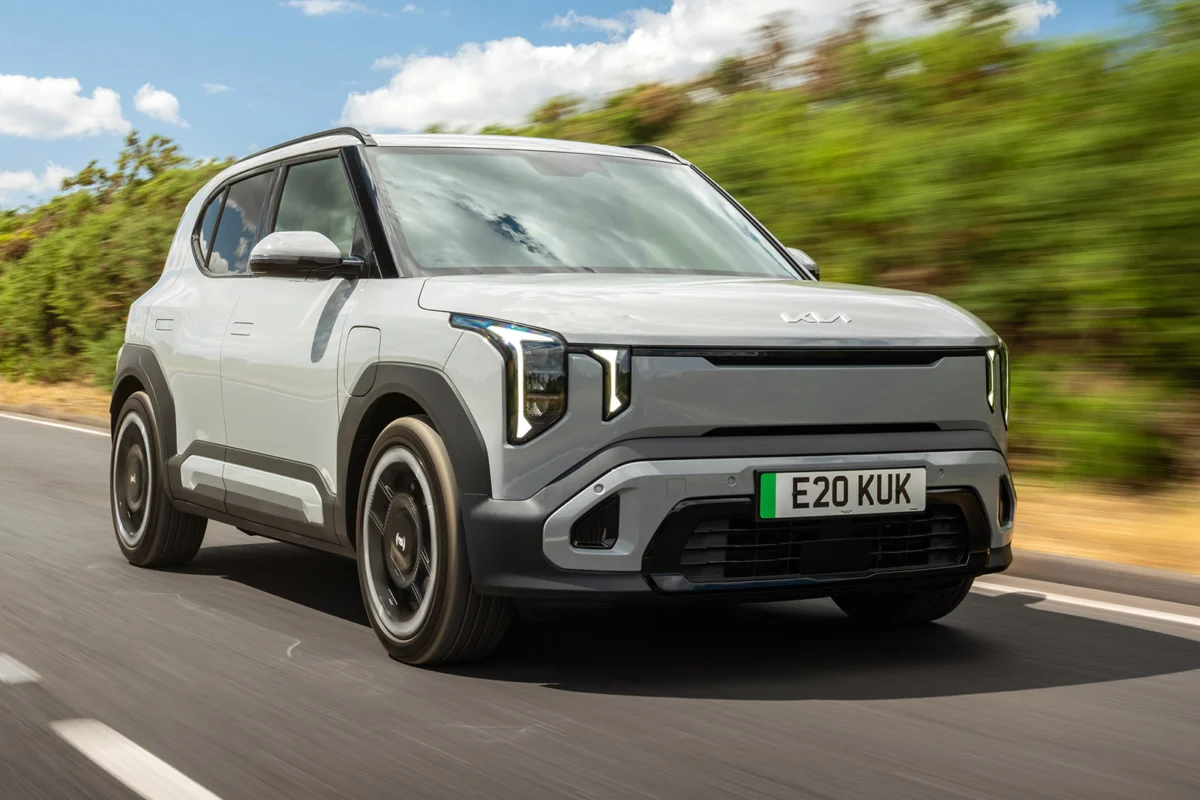
The automotive industry is currently witnessing a significant shift toward the democratization of electric mobility, and Kia Corporation has positioned itself at the forefront of this transition with the formal introduction of the Kia EV2. As the latest addition to the brand’s rapidly expanding "EV" dedicated lineup, the EV2 is designed to bridge the gap between premium electric performance and mass-market accessibility. This compact crossover, characterized by its boxy proportions and advanced electrical architecture, represents a strategic pivot for the South Korean automaker as it seeks to capture a larger share of the European and Asian B-segment markets. By balancing cutting-edge technology with cost-effective engineering, the EV2 aims to provide a viable alternative to traditional combustion-engined subcompacts, such as the Kia Stonic, while competing directly with emerging rivals in the entry-level electric space.
Engineering and Dimensions: A Modern Interpretation of the Compact Crossover
The Kia EV2 is a masterclass in spatial efficiency, utilizing a footprint that is specifically tailored for urban environments without sacrificing the rugged aesthetic that modern consumers demand. Measuring 4,060mm in length, 1,800mm in width, and 1,575mm in height, the vehicle occupies a unique position in the Kia portfolio. When compared to the Kia Stonic—the brand’s established internal combustion engine (ICE) offering in the same segment—the EV2 is notably shorter in length. However, it compensates for this with a wider stance and a lower roofline, resulting in a more planted and aerodynamic silhouette.
The design philosophy behind the EV2 follows the "Opposites United" language that has defined Kia’s recent successes, including the award-winning EV6 and the flagship EV9. Described by many as a "shrunken EV5," the EV2 features a boxy, upright silhouette that maximizes interior volume. The front fascia introduces a revised version of the iconic ‘Tiger Nose,’ now evolved into a ‘Digital Tiger Face’ for the electric era. This design includes vertical headlamp clusters and clean, minimalist surfaces that reduce drag while maintaining a bold, SUV-like presence. The use of short overhangs and a relatively long wheelbase for its class suggests that Kia has leveraged its dedicated electric platform to provide interior legroom that punches well above the vehicle’s external dimensions.
Powertrain Dynamics and the Strategy of Efficiency
Kia has taken a nuanced approach to the EV2’s powertrain configurations, offering two distinct battery and motor combinations to suit different consumer needs. In a move that prioritizes real-world usability over raw performance metrics, the company has introduced a "Standard Range" and a "Long Range" variant, each utilizing different battery chemistries to optimize cost and energy density.
The entry-level Standard Range model is equipped with a 42.2kWh lithium-iron-phosphate (LFP) battery. LFP chemistry is increasingly favored for entry-level EVs due to its lower production cost, enhanced thermal stability, and longer cycle life compared to traditional nickel-based batteries. This version provides a respectable range of 195 miles on a single charge. Interestingly, the Standard Range model features a front-mounted electric motor producing 145bhp, allowing it to accelerate from 0-62mph in 8.7 seconds.
In contrast, the Long Range variant utilizes a larger 61kWh nickel-manganese-cobalt (NMC) battery. This higher energy-density chemistry allows the EV2 to achieve a class-leading range of up to 275 miles. This figure places the EV2 ahead of several key competitors, including the recently announced Renault 4 and the Epiq from Skoda. However, in a surprising engineering decision, the Long Range model produces slightly less power than the entry-level version, with its motor tuned to 134bhp. This results in a 0-62mph sprint time of 9.7 seconds. Kia officials have clarified that this reduction in power is a deliberate calibration intended to maximize the vehicle’s WLTP (Worldwide Harmonised Light Vehicles Test Procedure) efficiency, ensuring that drivers can achieve the maximum possible mileage from the 61kWh pack.
Advanced 400V Architecture and Charging Capabilities
While Kia’s larger and more expensive models, such as the EV6 and EV9, utilize a high-end 800V electrical system for ultra-fast charging, the EV2 adopts a 400V architecture. This decision was likely made to keep the vehicle’s price point competitive while still offering performance that exceeds the industry average for compact cars. Despite the lower voltage, the EV2 is capable of a 10% to 80% charge in less than 30 minutes when connected to a compatible DC fast charger.
Furthermore, the EV2 incorporates sophisticated energy management features usually reserved for premium segments. It includes Vehicle-to-Load (V2L) and Vehicle-to-Grid (V2G) technologies. V2L allows users to power external devices—such as laptops, camping equipment, or even household appliances during a power outage—directly from the car’s battery. V2G technology represents a more forward-looking inclusion, enabling the vehicle to feed electricity back into the local power grid during peak demand periods, potentially lowering the total cost of ownership for the user through grid-balancing incentives.
Mechanical Foundations and Chassis Engineering
To maintain a competitive price point, Kia’s engineers have made strategic choices regarding the EV2’s chassis. Unlike the more complex multi-link rear suspension systems found on the brand’s larger E-GMP (Electric-Global Modular Platform) vehicles, the EV2 utilizes a torsion-beam rear axle. While a torsion beam is generally simpler and more compact, it is highly effective for B-segment vehicles where space and weight are at a premium.
All versions of the EV2 are front-wheel drive, with the electric motor positioned on the front axle. This configuration provides predictable handling characteristics and maximizes regenerative braking efficiency. The suspension has been tuned to balance the inherent weight of the battery packs with the need for a comfortable, compliant ride in urban environments. By opting for a front-motor, torsion-beam setup, Kia has been able to lower the floor of the vehicle, providing more "frunk" (front trunk) space and a flatter interior floor for passengers.
Market Context and Chronology of Development
The arrival of the EV2 is a critical milestone in Kia’s "Plan S" strategy, a multi-billion dollar roadmap aimed at transitioning the company into a leading global provider of sustainable mobility. The development of the EV2 follows the successful launches of the EV6 (2021) and the EV9 (2023), which established Kia as a serious contender in the premium EV space.
Chronology of Kia’s EV Expansion:
- 2021: Launch of the EV6, the first dedicated EV on the E-GMP platform.
- 2023: Introduction of the EV9 flagship SUV, showcasing 800V technology and three-row seating.
- Early 2024: Debut of the EV3 and EV5, targeting the mid-sized and compact SUV segments.
- Late 2024: Announcement of the EV2, specifically engineered for the high-volume B-segment.
The EV2 is expected to enter a highly competitive landscape. In Europe, the B-SUV and subcompact segments remain the most popular vehicle categories. Kia is positioning the EV2 to compete not just against other EVs, but against the entire segment of small cars that are currently transitioning away from diesel and petrol.
Official Responses and Industry Implications
While official pricing has yet to be finalized for all global markets, industry analysts suggest that the EV2 is a direct response to the growing demand for "affordable" electric vehicles priced between €25,000 and €30,000. Kia’s leadership has frequently emphasized the importance of accessibility. During recent investor briefings, Kia executives noted that the "EV" series is designed to offer a "point of entry for every customer," suggesting that the EV2 is the linchpin of their volume-growth strategy.
Industry reactions have been largely positive, particularly regarding the range of the Long Range model. Automotive analysts point out that offering a 275-mile range in a vehicle of this size is a significant achievement that could alleviate "range anxiety" for buyers who might otherwise have hesitated to switch to an electric subcompact. Furthermore, the inclusion of LFP battery technology in the Standard Range model is seen as a savvy move to mitigate the impact of fluctuating raw material costs, such as nickel and cobalt.
Broader Impact on the Automotive Landscape
The introduction of the Kia EV2 has implications that extend beyond the brand itself. It signals a maturation of the electric vehicle market where manufacturers are no longer focusing solely on high-margin luxury models. By bringing V2L, V2G, and competitive ranges to the B-segment, Kia is forcing other manufacturers to elevate the standard specifications of their entry-level offerings.
The EV2 also plays a vital role in Kia’s goal to achieve 1.6 million annual EV sales by 2030. To reach such ambitious targets, the brand must succeed in markets where price sensitivity is high. The EV2’s blend of funky, modern styling and practical, high-tech features makes it a strong candidate for younger demographics and urban dwellers who require the utility of a crossover but the footprint of a city car.
As the automotive world moves closer to the mid-decade mark, the Kia EV2 stands as a testament to how far electric vehicle technology has come. It proves that a "budget" or "entry-level" designation no longer requires a compromise on range, charging speed, or design. With its arrival, the path to mass-market electric adoption becomes significantly clearer, providing a blueprint for how legacy automakers can compete in an increasingly electrified future.