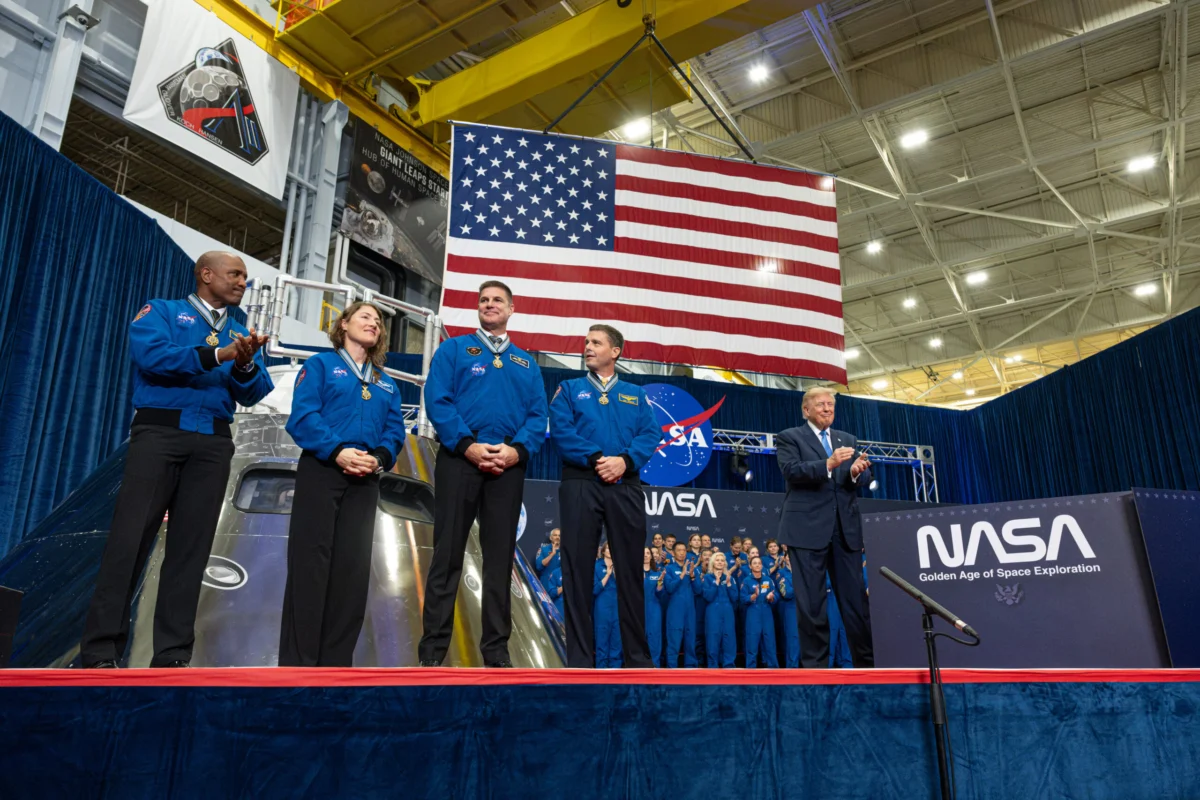
On August 28, 2026, a momentous ceremony at the White House saw President Donald J. Trump bestow the Congressional Space Medal of Honor upon the four trailblazing astronauts of the Artemis II mission: NASA astronauts Victor Glover, Christina Koch, and Reid Wiseman, alongside CSA (Canadian Space Agency) astronaut Jeremy Hansen. The prestigious award, the highest U.S. civilian award for spaceflight achievement, recognized their exceptionally brave and meritorious efforts during the critical lunar flyby mission, a pivotal step in humanity’s return to the Moon. This marks only the 34th instance of the medal being awarded since its inception in 1969, placing the Artemis II crew among an elite group of individuals who have profoundly contributed to the welfare of the nation and humanity through their endeavors in space.
The Artemis II Mission: A Stepping Stone to Deep Space
The Artemis II mission, which successfully completed its objectives prior to this recognition, represented a monumental leap forward for NASA’s Artemis program. Following the uncrewed Artemis I test flight, Artemis II was the first crewed test flight of the Orion spacecraft and the Space Launch System (SLS) rocket, designed to carry humans beyond low Earth orbit for the first time in over 50 years. The primary goal of Artemis II was to thoroughly test Orion’s systems with astronauts aboard in a real space environment, simulating the conditions for future lunar landings. The mission saw the crew perform a lunar flyby, traveling approximately 230,000 miles (370,000 kilometers) around the Moon before returning to Earth. This ambitious journey was crucial for verifying the spacecraft’s life support systems, navigation, communications, and heat shield performance during high-speed re-entry. The successful execution of these complex maneuvers by Glover, Koch, Hansen, and Wiseman provided invaluable data and confidence for Artemis III, the mission slated to return humans to the lunar surface. The Artemis program, a successor to the Apollo program, aims not just for fleeting visits but for a sustained human presence on the Moon, paving the way for future human exploration of Mars.
The Congressional Space Medal of Honor: A Legacy of Bravery
Authorized by Congress in 1969, the Congressional Space Medal of Honor was established to recognize astronauts who, in the performance of their duties, have distinguished themselves by exceptionally brave and meritorious efforts, and contributions to the welfare of the nation and humanity. It stands as a testament to the extraordinary courage and dedication required for space exploration, often involving significant personal risk. Prior to the Artemis II crew, only 30 individuals had received this rare accolade. Notable posthumous recipients include the crews of Apollo 1 (Gus Grissom, Ed White, Roger Chaffee), Space Shuttle Challenger (Francis R. Scobee, Michael J. Smith, Ronald E. McNair, Ellison S. Onizuka, Judith A. Resnik, Gregory B. Jarvis, Christa McAuliffe), and Space Shuttle Columbia (Rick Husband, William C. McCool, Michael P. Anderson, Kalpana Chawla, David M. Brown, Laurel Clark, Ilan Ramon). These awards underscore the inherent dangers of spaceflight and the ultimate sacrifices made by some in the pursuit of scientific advancement and exploration. The medal’s criteria emphasize not just heroism in the face of danger, but also profound contributions that elevate the collective human endeavor. For the Artemis II crew, their "exceptionally brave and meritorious efforts" refer to their pioneering role in extending human presence beyond Earth’s immediate vicinity, meticulously testing the complex systems that will enable future lunar and Martian missions, and inspiring a new generation of explorers.
A Historic Crew for a Historic Mission
The Artemis II crew itself represented a blend of experience and pioneering spirit, reflecting the diverse and inclusive future of space exploration. Commander Reid Wiseman, a veteran of a previous space station mission, led the flight. Pilot Victor Glover, also a space station veteran, became the first African American to participate in a deep-space mission. Mission Specialist Christina Koch, who holds the record for the longest single spaceflight by a woman, brought unparalleled endurance experience. And Jeremy Hansen, a Canadian Space Agency astronaut, marked the first non-American to venture beyond low Earth orbit, symbolizing the growing international collaboration in space. Their selection in April 2023 generated immense excitement globally, with each astronaut bringing unique skills and perspectives to the demanding mission. Their rigorous training involved years of preparation, familiarization with the Orion spacecraft, SLS launch procedures, emergency protocols, and extensive simulations to prepare for every conceivable scenario during their multi-day journey around the Moon. This dedication and readiness were critical to the mission’s success and ultimately to their recognition with the nation’s highest space award.
The Road to Artemis II: A Chronology of Preparation
The journey to the Artemis II mission and its subsequent recognition was a lengthy and complex undertaking, spanning years of development, testing, and training:
- 2011: NASA formally establishes the Space Launch System (SLS) program, initiating the development of the powerful rocket designed to carry Orion and its crew to deep space.
- 2014: The Orion spacecraft completes its first uncrewed test flight, Exploration Flight Test-1 (EFT-1), demonstrating its critical systems in Earth orbit.
- 2017: The Trump administration formally directs NASA to return humans to the Moon, accelerating the Artemis program.
- 2019: The "Artemis" name is officially announced for the lunar return program, building on the legacy of Apollo.
- 2020-2022: Significant milestones in SLS development, including Green Run testing of the core stage.
- November 16, 2022: The uncrewed Artemis I mission successfully launches, sending an Orion spacecraft around the Moon and back, validating the SLS and Orion’s performance in deep space without crew. This critical precursor paved the way for Artemis II.
- April 3, 2023: NASA and CSA announce the Artemis II crew: Reid Wiseman, Victor Glover, Christina Koch, and Jeremy Hansen, generating global anticipation.
- 2023-2025: The Artemis II crew undergoes intensive training, including wilderness survival, advanced spacecraft systems operation, spacewalk simulations (for potential future missions), and emergency procedures. Hardware for Artemis II is assembled and integrated.
- Early 2026 (Hypothetical): The Artemis II mission successfully launches from Kennedy Space Center, Florida, carrying its four-person crew on an approximately 10-day journey around the Moon. The mission validates critical systems, performs maneuvers, and collects invaluable data.
- Mid-2026 (Hypothetical): The crew returns to Earth, splashing down in the Pacific Ocean, marking the successful completion of the mission and a triumphant return to human deep-space exploration.
- August 28, 2026: President Donald J. Trump awards the Congressional Space Medal of Honor to the Artemis II crew at the White House.
This timeline illustrates the decades of effort and the precise sequence of events that culminated in the historic mission and the subsequent recognition of its crew.
Voices of Recognition: Official Tributes and Astronaut Reflections
The award ceremony was a moment of profound national pride and international solidarity, marked by poignant statements from dignitaries and the astronauts themselves.
President Trump, speaking from the East Room, lauded the crew’s "unwavering courage and pioneering spirit." He stated, "Today, we honor four individuals who have pushed the boundaries of human endeavor, reminding us that with American ingenuity and resolve, no challenge is too great. The Artemis II mission has reignited our nation’s passion for exploration and reaffirmed our leadership in space. These astronauts are not just heroes; they are an inspiration to every young American who dreams of reaching for the stars. Their service has not only advanced our scientific knowledge but has also strengthened the fabric of our nation and humanity."
NASA Administrator (inferred to be the current administrator or a successor in 2026) expressed immense pride in the crew and the entire NASA workforce. "This award is a testament to the incredible dedication of Victor, Christina, Reid, and Jeremy, and indeed, to the thousands of engineers, scientists, and support personnel who made Artemis II a reality," he remarked. "Their mission was a critical test of our capabilities, and their success has set the stage for humanity’s return to the lunar surface. The Congressional Space Medal of Honor is richly deserved, recognizing their bravery and their profound contribution to NASA’s mission to explore the unknown for the benefit of all."
From the Canadian Space Agency, the President (inferred) highlighted the significance of Jeremy Hansen’s participation. "Jeremy Hansen’s journey beyond Earth orbit is a source of immense pride for all Canadians and a powerful symbol of our enduring partnership with NASA," the President stated. "Canada’s contributions to space exploration, from the Canadarm to our role in the Lunar Gateway, are integral to the Artemis program. This medal not only honors Jeremy’s exceptional bravery but also celebrates the spirit of international collaboration that defines the future of space exploration."
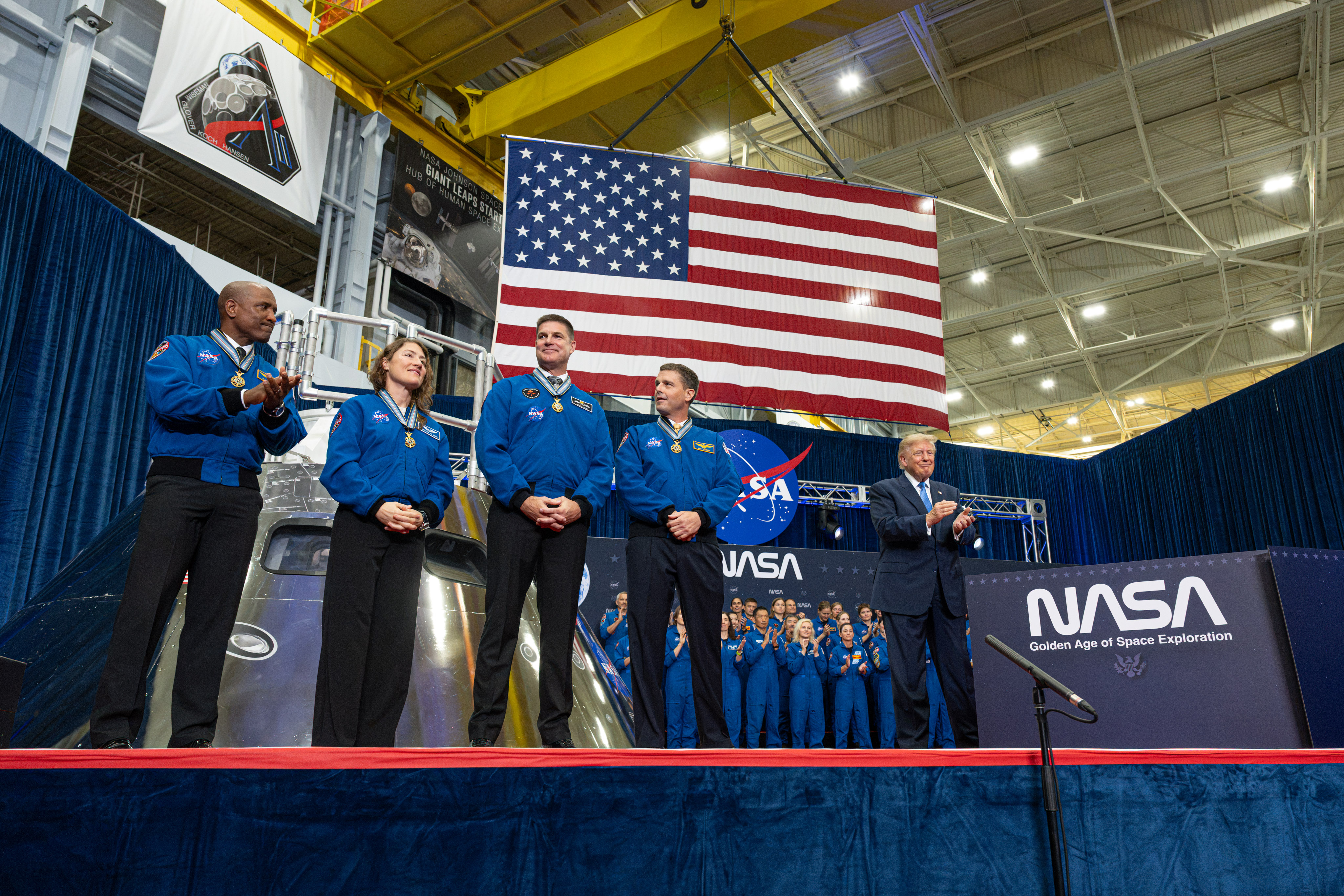
In their collective remarks, the astronauts expressed humility and gratitude, emphasizing the collaborative nature of spaceflight. Commander Reid Wiseman stated, "We are incredibly honored to receive this medal, but it truly belongs to the countless individuals, teams, and nations who have poured their hearts and souls into the Artemis program. We were merely the representatives of a much larger team." Christina Koch added, "The experience of looking back at Earth from deep space is a profound reminder of our shared humanity and the fragile beauty of our home planet. We hope our mission inspires a new generation to pursue their dreams, whether in space or on Earth." Victor Glover spoke of the profound responsibility, "We carried the hopes and dreams of many with us, and we are grateful for the opportunity to contribute to this extraordinary chapter in human exploration." Jeremy Hansen, representing Canada, remarked, "This honor highlights the strength of international partnerships in achieving what once seemed impossible. Space exploration is a global endeavor, and we are proud to have played our part in expanding humanity’s reach."
International Collaboration: A Shared Journey
The inclusion of CSA astronaut Jeremy Hansen among the recipients underscores the increasingly international character of space exploration. Canada’s involvement in the Artemis program is substantial, primarily through its commitment to the Lunar Gateway, a small space station orbiting the Moon that will serve as a multi-purpose outpost for lunar missions. Canada is providing the next-generation Canadarm3 robotic arm for the Gateway, building on its legacy of robotic contributions to the International Space Station (ISS). This collaboration extends beyond hardware, encompassing shared scientific goals, astronaut training, and operational support. The Artemis program itself is a testament to global partnership, with the European Space Agency (ESA) providing the Orion Service Module and other contributions, and the Japan Aerospace Exploration Agency (JAXA) also playing a role. This international synergy not only pools resources and expertise but also fosters diplomatic ties and a shared vision for humanity’s future in space. The Congressional Space Medal of Honor, while a U.S. award, implicitly recognizes the broader international effort that underpins such monumental achievements.
Broader Implications: Redefining Humanity’s Reach
The recognition of the Artemis II crew with the Congressional Space Medal of Honor carries significant implications for national prestige, technological advancement, and the future trajectory of human spaceflight.
National Prestige and Leadership: The successful Artemis II mission, followed by this high honor, unequivocally reasserts American leadership in deep-space exploration. It demonstrates the nation’s capacity for complex engineering, scientific innovation, and inspiring grand endeavors. This leadership is not just about being first, but about pioneering sustainable methods for future exploration.
Inspiration for Future Generations: The visibility of the Artemis II crew and the prestige of their award will undoubtedly inspire countless individuals, particularly young people, to pursue careers in STEM (Science, Technology, Engineering, and Mathematics). Seeing diverse astronauts achieve such feats provides tangible role models and demonstrates the tangible rewards of dedication and scientific pursuit.
Technological Advancements: The development of the SLS, Orion, and associated ground systems for Artemis has spurred innovation across numerous industries. Technologies developed for space often have terrestrial applications, leading to advancements in materials science, computing, robotics, and medical fields. The data collected from Artemis II will refine these technologies further, benefiting both space and Earth.
Economic Impact: The Artemis program represents a significant investment, generating jobs and economic activity across the United States and among international partners. From manufacturing to research and development, the space industry contributes substantially to national economies. The success of missions like Artemis II helps secure continued funding and public support for these ventures.
Paving the Way for Sustained Presence: The Artemis II mission was not an end in itself but a critical precursor. Its success and the crew’s valor have directly paved the way for Artemis III, which will see humans return to the lunar surface. Beyond that, the long-term vision includes establishing a sustained human presence on the Moon through the Lunar Gateway and eventually preparing for crewed missions to Mars. The Congressional Space Medal of Honor serves as a symbolic endorsement of this ambitious future, recognizing those who take the initial, daring steps.
Scientific Discovery: Beyond the engineering marvel, Artemis missions hold immense scientific potential. Future lunar surface missions aim to explore the Moon’s south pole, an area believed to harbor water ice in permanently shadowed craters, which could be vital for sustaining future lunar outposts. The experience gained from Artemis II in operating complex systems and living in deep space will directly inform future scientific expeditions.
The awarding of the Congressional Space Medal of Honor to the Artemis II crew on August 28, 2026, was more than just a ceremony; it was a profound acknowledgement of human courage, ingenuity, and the collective aspiration to explore the cosmos. It celebrated a mission that pushed the boundaries of what is possible, setting a new benchmark for deep-space exploration and cementing the legacy of its four pioneering astronauts in the annals of human history.