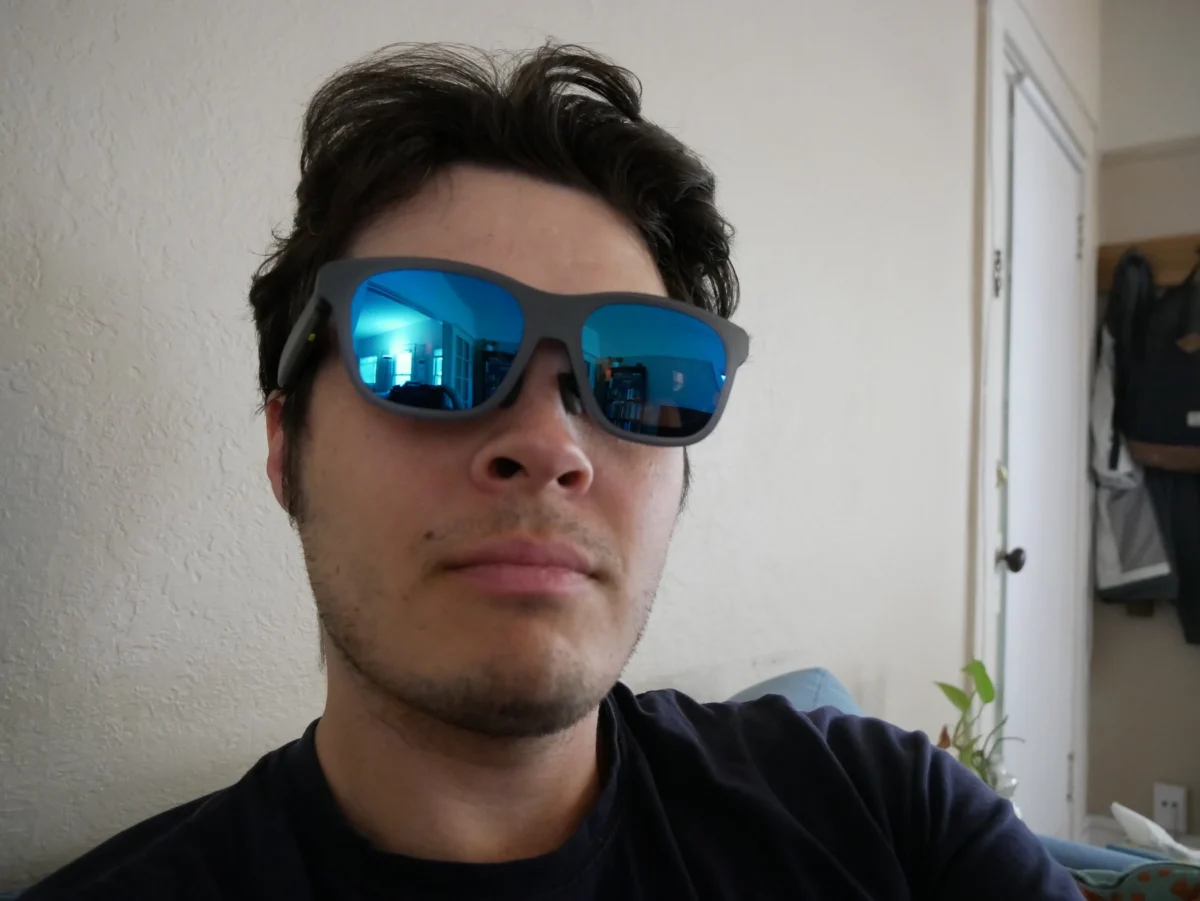
In an increasingly digitized world where personal media consumption continues to evolve at a rapid pace, the quest for novel and immersive viewing experiences drives constant innovation in display technology. Smart glasses, a category that has seen both significant investment and considerable challenges, represent a frontier in this evolution, promising a blend of portability, privacy, and immersive visuals. XREAL, a prominent player in the smart glasses sector, recently released its a01 model in May of this year, positioning it as an accessible entry point for consumers seeking a fresh perspective on their digital content. This analysis delves into the capabilities, limitations, and broader implications of the XREAL a01, examining its place within the dynamic landscape of personal display technology.
The XREAL a01: Design, Functionality, and Market Positioning
The XREAL a01 distinguishes itself from more complex augmented reality (AR) counterparts, such as Meta’s Project Orion or Snap’s advanced Spectacles, by adopting a more streamlined approach. It is primarily designed to function as an external monitor, prioritizing visual output over extensive computational or interactive capabilities. Unlike its more sophisticated brethren, the a01 lacks an internal battery or a self-contained power mechanism. Instead, its operation relies on a simple USB-C connection, drawing power directly from a connected host device, which could be a smartphone, laptop, or dedicated gaming console. This design choice contributes to its accessible price point, hovering around $300, making it one of the more affordable options in the nascent smart glasses market. This strategic positioning aims to attract consumers interested in a dedicated personal display without the higher cost and complexity associated with full-fledged AR or virtual reality (VR) headsets. XREAL’s lineage, originating as Nreal and steadily iterating on its product lines like the Nreal Light and Nreal Air, has consistently focused on this lighter, display-centric form factor, carving out a distinct niche in an industry often preoccupied with expansive mixed reality visions.
Initial Impressions and Media Consumption Testing
While the a01 is technically optimized for gaming, particularly when paired with handheld devices like the Steam Deck, XREAL also actively promotes its utility for watching movies and television. To assess this aspect, the device was connected to a personal laptop, and content from the Criterion Channel was initiated. The chosen viewing material, David Lynch’s Wild at Heart, provided a suitable test for the glasses’ visual fidelity, particularly during a memorable sequence featuring Nicolas Cage in a snakeskin jacket. The visual performance of the a01 was notably impressive. Equipped with dual mini OLED panels, the glasses deliver a sharp 1080p resolution and boast up to 1,600 nits of brightness, resulting in remarkably vibrant colors and crisp images. When directed at a blank wall, the projected image evokes the sensation of viewing content on a high-quality home projector or even a drive-in movie screen. In a darkened environment, the experience moves closer to the immersive quality of a traditional cinema, reinforcing XREAL’s claim that the device’s projections are equivalent to viewing content on a substantial 147-inch screen. This immediate visual appeal represents a significant strength of the a01, offering a compelling personal cinematic experience that is both vivid and detailed.
Unpacking the "Redundancy Paradox": Challenges in Usage Scenarios
Despite the strong visual performance, the practical application of the XREAL a01 in certain scenarios raises pertinent questions regarding its fundamental purpose. A central critique emerges from the redundancy of watching content through the glasses while the host device’s screen, typically a laptop or tablet, remains active and visible merely inches away. This setup leads to an inherent paradox: if the primary source of content is so close, what precisely is the added value of mirroring it onto a wearable display? XREAL suggests that the glasses offer a more immersive experience, a claim that holds true to a degree, especially when considering the perceived 147-inch screen size. However, the constant presence of the original screen undermines this immersion and prompts users to question the efficiency and necessity of wearing the glasses.
Furthermore, XREAL has marketed the a01 as a "second monitor" or "wearable display," hinting at its potential for productivity. Yet, this functionality proves challenging in practice. The design of the glasses significantly limits peripheral vision, making it difficult to simultaneously interact with the host device—typing on a laptop keyboard or navigating a trackpad becomes cumbersome when one’s field of view is dominated by the projected display. This limitation curtails the "second monitor" utility, pushing the device back into a more singular consumption role. Connectivity with smartphones also presents its own set of inconveniences. While the a01 can be linked to a phone, older models, such as certain iPhones, may require an additional adapter due to incompatible port types, adding another layer of friction to the user experience and potentially an extra cost.

Addressing Mobility and Autonomy: The Beam Pro and Persistent Hardware Challenges
The potential for enhanced mobility emerges as a key advantage when the a01 is paired with a smartphone. This configuration liberates the user from the confines of a stationary setup, making it theoretically possible to watch movies or engage with content while commuting on a plane or train. The vision of consuming media discreetly on the go is compelling, though practical considerations, such as walking down a busy street while visually occluded, are generally ill-advised for safety reasons. However, even with smartphone connectivity, the core "redundancy paradox" persists. The glasses function as a screen-mirroring device, necessitating the phone’s screen to remain active. This means the same content is displayed on both the glasses and the phone, potentially draining the phone’s battery faster and raising the question of convenience versus simply holding the phone closer. While placing the phone in a pocket could mitigate the visual distraction, the risk of accidental jostling interrupting playback remains.
To address some of these limitations and enhance autonomy, XREAL offers a separate accessory: the Beam Pro. This mini-tablet acts as an isolated streaming hub, allowing users to download and store content directly onto the device, which then connects to the a01 glasses. This setup significantly reduces the reliance on a primary host device, offering a more self-contained and truly mobile viewing experience. However, the Beam Pro comes at an additional cost of approximately $200, pushing the overall investment for a fully autonomous setup to around $500, which might deter some budget-conscious consumers.
Beyond functionality, a common challenge in the smart glasses industry, and one that the a01 shares, is heat dissipation. Prolonged use of the a01 causes the device to warm up, creating an odd tingling sensation on the bridge of the nose and around the eyes. This phenomenon is a well-documented "defect" in many extended reality (XR) glasses, stemming from the concentrated computational power within a compact form factor. While not unique to XREAL, it is a discomfort that detracts from the overall user experience, particularly for a device designed to be worn on the face for extended periods. Despite this, the a01 generally maintains a lightweight and comfortable profile, distinguishing itself from bulkier, more cumbersome smart glasses, such as Snap’s heavier Spectacles, which the reviewer noted after trying them at CES earlier this year. This balance of comfort and minimal weight is a critical factor in user adoption for wearable technology.
The Broader Landscape of Smart Glasses and XREAL’s Evolution
The XREAL a01 exists within a dynamic and still-nascent smart glasses industry, a market segment that has grappled with consumer adoption since the early days of devices like Google Glass. Early entrants often faced criticism regarding aesthetics, functionality, and privacy concerns. However, the underlying promise of a seamless blend of digital information with the physical world continues to drive innovation. Companies like Meta, Snap, and Apple (with its Vision Pro) are investing heavily in various forms of AR and VR, ranging from simple camera-equipped frames to complex mixed-reality headsets. XREAL, formerly Nreal, has strategically positioned itself by focusing on lightweight, high-quality display-centric glasses rather than attempting to deliver full, complex AR experiences from the outset. Their product timeline, from the Nreal Light to the Nreal Air, and now the a01, reflects a gradual evolution, each iteration aiming to refine the core offering of a personal, immersive screen.
The global market for AR/VR headsets and smart glasses is projected to grow significantly, with analysts from IDC reporting shipments of AR/VR headsets reaching 8.1 million units in 2023, with projections for substantial growth in the coming years as technologies mature and use cases become clearer. XREAL’s a01, with its simpler external monitor function, taps into a specific segment of this market: those seeking a private, portable big-screen experience without the complexities of spatial computing. This approach aims for broader appeal by offering a more focused value proposition, diverging from devices like Meta’s Orion, which targets a more integrated AR experience. The a01 can be seen as a stepping stone, a proof of concept for personalized visual immersion that bridges the gap between traditional screens and the ambitious future of fully interactive spatial computing. Its affordability and straightforward functionality could lower the barrier to entry for many consumers curious about wearable displays, even if its current iteration highlights the ongoing challenges in achieving truly seamless integration.
Cinephile’s Verdict: A Niche Immersion, Not a Home Theater Replacement
From the perspective of a dedicated cinephile, the experience of watching movies on the XREAL a01, while offering a distinct sense of immersion, ultimately falls short of being an ideal solution. Movie enthusiasts generally gravitate towards large screens, with the adage "the bigger, the better" often holding true. In an era dominated by advanced display technologies such as 4K OLED televisions of increasingly gargantuan sizes, consumers are spoilt for choice. A standard 55-inch TCL S-series television, for instance, even if not considered a premium device, delivers a home-viewing experience that is widely perceived as more comfortable and satisfying than what the a01 can currently offer. The comfort of a living room setup, coupled with superior audio systems and expansive visuals, remains the gold standard for at-home cinematic enjoyment. This traditional viewing paradigm is often considered second only to the communal experience of a dedicated movie theater.

Watching a film on tiny screens positioned mere inches from the eyes, despite the claimed 147-inch virtual projection, presents a unique sensory experience but one that many would not deem optimal for long-form narrative consumption. While the distinct sense of immersion is undeniable, it is often accompanied by the physical sensation of wearing a device on one’s face, the potential for eye strain, and the aforementioned heat discomfort. The a01, therefore, occupies a niche where portability and privacy are paramount, such as during travel or in shared living spaces, rather than aspiring to replace the established comfort and quality of a dedicated home theater system. It offers an interesting alternative, but for the discerning film lover, it remains a supplementary device rather than a primary mode of cinematic engagement.
Market Positioning and Future Outlook
The XREAL a01 serves as an interesting artifact within a hardware industry that is in a constant state of flux, continually seeking its definitive footing with mainstream consumers. Its design choices—simplicity, reliance on a host device, and affordability—reflect a pragmatic approach to entering a complex market. It highlights the current capabilities of portable display technology while simultaneously underscoring the significant hurdles that remain, particularly concerning autonomy, ergonomic comfort, and seamless integration into daily life.
XREAL, however, is not static in its development. The company continues to iterate on its product line, with each new device aiming to address the limitations of its predecessors. The upcoming Project Aura, previewed at Google I/O earlier this year, represents a significant leap forward. Powered by Android XR, an extended reality operating system developed in collaboration with Google and Samsung, Project Aura promises a substantially more immersive and convenient experience. Key advancements include native hand tracking (a feature absent in the a01), direct access to the Google Play Store for enhanced interactive capabilities and AR potential, and a tethered "puck" that functions as both a charging source and a compute node. This puck, designed to be easily pocketed, grants users far greater mobility and independence from a separate host device, directly tackling the redundancy and mobility issues present in the a01.
The XREAL a01, while not a revolutionary device in itself, is a crucial evolutionary step. It demonstrates the market’s demand for portable, private big-screen experiences and XREAL’s commitment to meeting that demand, even with the inherent compromises of current technology. Its existence informs the development of future devices like Project Aura, suggesting a clear trajectory towards more integrated, autonomous, and functionally rich smart glasses. The industry is still searching for its "killer app" and its perfect form factor, but products like the a01 provide valuable data points on consumer preferences and technical feasibility. As XREAL and its competitors continue to innovate, the user experience for personal displays is undoubtedly poised for significant shifts, warranting a reevaluation of media consumption preferences as these technologies mature.