In a dramatic display of democratic engagement, Iceland’s closely contested referendum on whether to resume membership talks with the European Union has concluded with results too close to definitively call. The nation of nearly 400,000 people, an island strategically positioned in the North Atlantic, found itself deeply divided on a question that could redefine its future geopolitical and economic trajectory. With the initial count of 153,197 votes—representing a significant portion of the 270,000 eligible voters—the "No" camp held a razor-thin lead, capturing 50.1% against the "Yes" vote’s 49.9%. Public broadcaster RUV reported a mere 435 votes separated the two sides, underscoring the profound ideological split within Icelandic society.
This high-stakes ballot, initiated by Prime Minister Kristrún Frostadóttir’s centre-left government, was brought forward from its initially promised 2027 timeline. The acceleration was largely attributed to a confluence of escalating international tensions, including heightened Russian maritime activity near the island and unsettling remarks from former US President Donald Trump concerning Greenland, which had stirred anxieties about regional security and sovereignty. Despite these geopolitical undercurrents, the domestic debate predominantly fixated on the bedrock of Iceland’s economy: its prolific fishing industry, rather than broader security concerns.
A Decades-Long Deliberation: Chronology of EU Ambitions
Iceland’s relationship with the European Union has been characterized by a nuanced dance between integration and independence, punctuated by moments of crisis and calculation. While already deeply intertwined with the EU through its participation in the European Economic Area (EEA) – granting access to the single market – and the Schengen border-free zone, full EU membership would represent a far more profound commitment, entailing entry into the customs union and eventually, the adoption of the euro.
The nation’s most recent formal overture to Brussels began in 2009, a direct consequence of the catastrophic 2008 global financial crisis. Iceland’s banking system, having pursued aggressive international expansion, imploded dramatically, plunging the country into an unprecedented economic downturn. The crisis led to a staggering depreciation of the Icelandic króna, capital controls, and a significant public debt burden. In the search for stability and a more robust economic framework, joining the EU, with its larger market and perceived institutional safeguards, emerged as a compelling, albeit controversial, option.
Accession negotiations commenced with considerable momentum, covering various chapters of the acquis communautaire (the body of common rights and obligations that is binding on all EU member states). However, this trajectory shifted abruptly in 2013 when a eurosceptic government assumed power. Campaigning on a platform critical of EU integration, particularly regarding the contentious issue of fishing rights, the new administration swiftly moved to put the accession talks on hold, effectively freezing the process. The question of whether to resume these stalled negotiations was precisely what the recent referendum sought to resolve.
The Heart of the Matter: Fishing Rights and Economic Sovereignty
The enduring obstacle to Iceland’s full EU membership, both in 2013 and during the recent referendum campaign, has consistently been its fishing industry. This sector is not merely an economic pillar; it is deeply embedded in Iceland’s national identity and history. Fish and marine products account for a remarkable 40% of Iceland’s total exports, supporting thousands of jobs directly and indirectly, and contributing significantly to the national GDP.
Opponents of EU membership, primarily those aligned with the "No" campaign, articulated profound fears that joining the Union would necessitate ceding substantial control over Iceland’s rich and strategically vital fishing grounds to the EU’s Common Fisheries Policy (CFP). The CFP is a comprehensive system designed to manage fishing fleets and conserve fish stocks for all EU member states. It establishes quotas, regulates fishing methods, and aims for equitable access to fishing grounds. For many Icelanders, particularly those in coastal communities, the CFP represents an unacceptable intrusion on national sovereignty and a potential threat to their livelihoods. They argue that Iceland has successfully managed its own fisheries for decades, implementing sustainable practices that have allowed stocks to recover, and that relinquishing this autonomy would be detrimental. The historical "Cod Wars" with the United Kingdom in the 20th century, fought over fishing limits, serve as a potent reminder of Iceland’s fierce determination to protect its marine resources.
Conversely, proponents of EU membership argue that Iceland, as an EU member, would gain a seat at the table where the CFP is decided, allowing it to influence policy from within rather than being subject to its rules without representation. They also highlight the potential benefits of unrestricted access to the EU’s vast internal market for Icelandic fish products, potentially reducing trade barriers and administrative burdens.
Beyond the Trawl Net: Broader Economic and Geopolitical Calculations
While fishing dominated the discourse, the referendum campaign also delved into a broader array of economic implications. Iceland’s current status within the EEA already grants it access to the EU’s single market for goods, services, capital, and people. However, full membership would integrate Iceland into the customs union, eliminating customs duties and common external tariffs. This could streamline trade with EU members but would also mean Iceland adopting EU trade agreements with third countries, potentially altering its current bilateral trade relationships.
The prospect of eventually adopting the euro currency was another significant point of contention. Proponents argued that joining the eurozone would bring monetary stability, lower transaction costs, and enhance Iceland’s attractiveness for foreign investment, shielding it from the volatility often associated with smaller national currencies like the króna. Critics, however, warned of the loss of independent monetary policy, arguing that surrendering control over interest rates and exchange rates would remove a crucial tool for responding to Iceland’s unique economic cycles and potentially exacerbate future economic crises, echoing the lessons of 2008. The ability to devalue the króna, for instance, proved vital in the post-crisis recovery by boosting exports.
Beyond economics, security concerns played a significant, albeit secondary, role in the referendum. Iceland is a founding member of NATO, the transatlantic military alliance, but famously possesses no standing army, relying instead on its allies for defense. This unique position places it in a delicate geopolitical balance. The ongoing full-scale invasion of Ukraine by Russia has profoundly reshaped the European security landscape, and Iceland has unequivocally backed Ukraine, imposing sanctions and providing humanitarian aid. Officials in Reykjavík have expressed alarm over Russia’s increased military and maritime maneuvers in the high North, a region of growing strategic importance due to melting Arctic ice opening new shipping routes and access to resources.
The aforementioned comments by Donald Trump regarding a potential US acquisition of Greenland, a self-governing territory within the Kingdom of Denmark, further underscored the region’s geopolitical sensitivity and Iceland’s vulnerability. For some, closer ties with the EU, a major geopolitical actor with increasing defense cooperation among its members, represented a way to enhance Iceland’s security posture and ensure a stronger collective voice in international affairs, complementing its NATO membership. Others countered that NATO provided sufficient security and that EU membership offered no additional military guarantees.
Statements, Reactions, and the Path Ahead
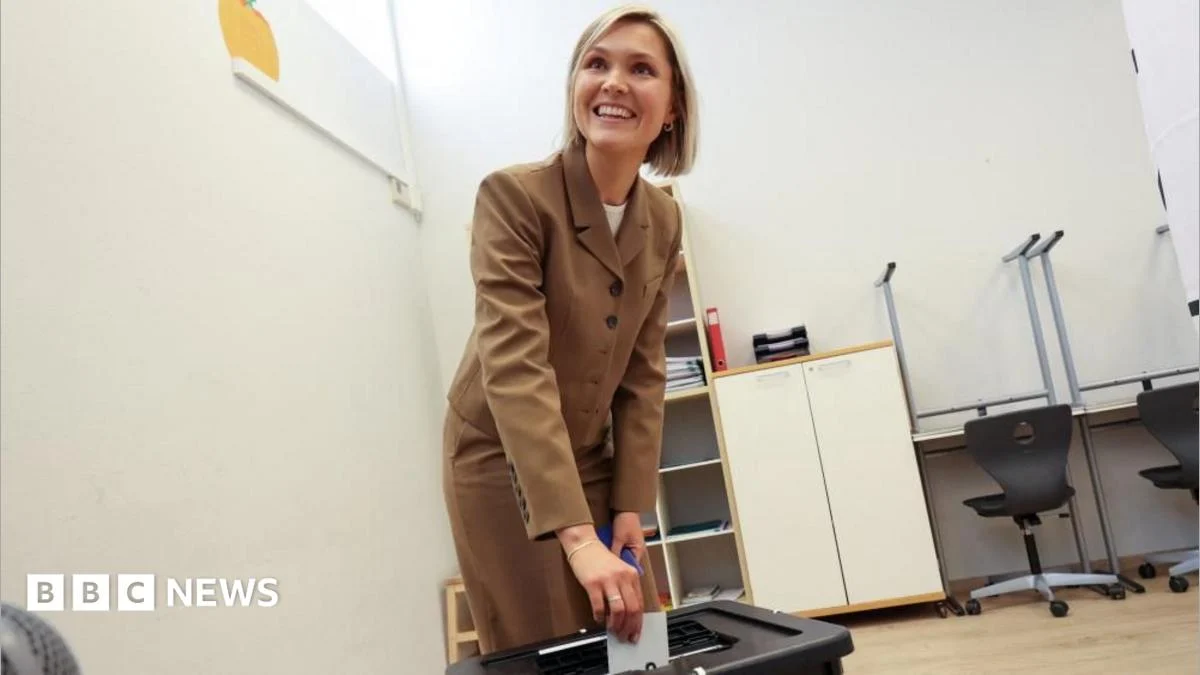
Prime Minister Kristrún Frostadóttir, upon casting her ballot in the capital, Reykjavík, encapsulated the significance of the moment. "This is a great day, we’ve been waiting for this for years to be able to have a vote," she stated, emphasizing the democratic importance of the exercise. She also affirmed her government’s commitment to continue its work regardless of the outcome, signaling a dedication to political stability even in the face of a potentially divisive result.
The referendum question itself was carefully framed: "Should Iceland resume accession negotiations with the European Union?" A "Yes" vote was explicitly not a final decision on joining the EU, but rather an endorsement to restart the complex and lengthy negotiation process. Any subsequent accession agreement would then be subject to a second, binding national referendum for final approval. Conversely, a "No" vote, while halting current talks, would not permanently rule out the possibility of Iceland resuming discussions with the EU at some future point, should political and economic circumstances evolve.
From the perspective of Brussels, the EU has consistently maintained an "open door" policy for European states that meet its criteria. An EU spokesperson, speaking generally on potential enlargement, would likely reiterate the rigorous nature of the accession process, emphasizing that any candidate country must fully adopt and implement the acquis communautaire, including sensitive areas like the Common Fisheries Policy. The EU would also stress the benefits of membership, such as economic integration, political stability, and a stronger collective voice on the global stage.
Within Iceland, the campaign fostered a robust national debate. Proponents of continued talks often highlighted the potential for increased trade and investment, greater influence within a major international bloc, and the opportunity to modernize the Icelandic economy beyond its traditional reliance on fisheries. They pointed to the success of other small European nations within the EU framework. Opponents, meanwhile, frequently voiced concerns about the loss of national identity, the perceived democratic deficit within the EU, the cost of membership contributions, and the erosion of control over crucial national resources. They advocated for maintaining Iceland’s unique position as a sovereign nation with strong bilateral ties.
Implications of a Divided Nation
Regardless of the final outcome, the referendum has underscored a fundamental division within Icelandic society concerning its place in the world.
If the "Yes" vote ultimately prevails, albeit by a narrow margin, it would trigger a complex and potentially protracted period of negotiations. The government would face the challenge of uniting a deeply divided populace behind the accession process, while simultaneously engaging with the EU on sensitive issues. Domestic political stability could be tested, as different factions within the ruling coalition and opposition parties navigate the implications. Economically, it would signal a willingness to adapt to EU regulations and potentially prepare for the euro, with significant adjustments required across various sectors. Geopolitically, it would align Iceland more closely with the EU’s foreign policy and security objectives, potentially offering a new dimension to its strategic partnerships.
Should the "No" vote secure victory, even by the slimmest of margins, it would reaffirm Iceland’s preference for maintaining its current level of independence and its unique economic model. This would likely maintain the status quo in its relationship with the EU, continuing under the framework of the EEA and Schengen agreements. However, the underlying geopolitical and economic pressures that prompted the referendum would not dissipate. Iceland would still need to contend with its strategic position in the Arctic, the evolving security landscape, and the challenges of a small, open economy navigating a globalized world. The debate about Iceland’s long-term trajectory and optimal international alignment would likely persist, perhaps taking different forms of cooperation or intensified bilateral agreements.
The referendum, irrespective of its immediate result, serves as a powerful testament to the complexities facing small, sovereign nations in an interconnected and increasingly turbulent world. Iceland’s decision, painstakingly arrived at, will undoubtedly have lasting implications for its economy, its security, and its very sense of national identity.