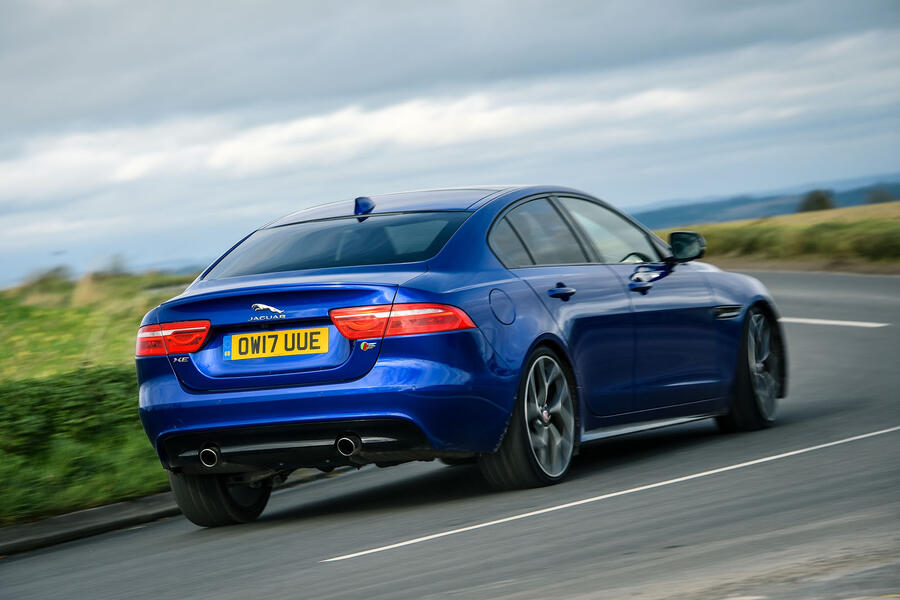
When Jaguar launched the XE in 2015, the British manufacturer was not merely releasing a new car; it was attempting to disrupt a segment dominated for decades by the German triumvirate of the BMW 3 Series, Mercedes-Benz C-Class, and Audi A4. Built upon an advanced, aluminum-intensive architecture, the XE was designed to be the best-handling car in its class, prioritizing driver engagement and steering precision above all else. Nearly a decade since its debut, the XE has transitioned from a showroom contender to a compelling second-hand prospect. For enthusiasts and pragmatic buyers alike, the used market offers a diverse range of XEs, from fuel-sipping diesels to the fire-breathing supercharged V6. However, navigating the complexities of Jaguar Land Rover’s (JLR) engine iterations, reliability records, and various facelifts requires a detailed understanding of the model’s evolution.
The Evolution of the Jaguar XE: A Chronological Overview
The Jaguar XE’s lifecycle is marked by several pivotal updates that fundamentally changed its powertrain lineup and interior quality. Understanding this timeline is essential for any prospective buyer to ensure they are selecting the version that best fits their reliability expectations and performance needs.
2015–2016: The Launch Phase
The XE arrived with a choice of Ford-sourced "GTDI" petrol engines (2.0-liter turbo) and Jaguar’s then-new Ingenium diesel engines. The flagship "S" model featured a 335bhp 3.0-liter supercharged V6, shared with the F-Type sports car. While the driving dynamics were immediately praised as class-leading, early critics noted that the interior materials lacked the premium feel of its German rivals.
2017: The Powertrain Pivot
This was a landmark year for the XE. Jaguar phased out the Ford-sourced petrol units in favor of its own in-house 2.0-liter Ingenium petrol engines. These were badged as P200, P250, and P300, corresponding to their horsepower outputs. Simultaneously, the V6 S model received a power bump to 375bhp, and the infotainment system saw its first major set of hardware improvements.
2019: The Major Facelift
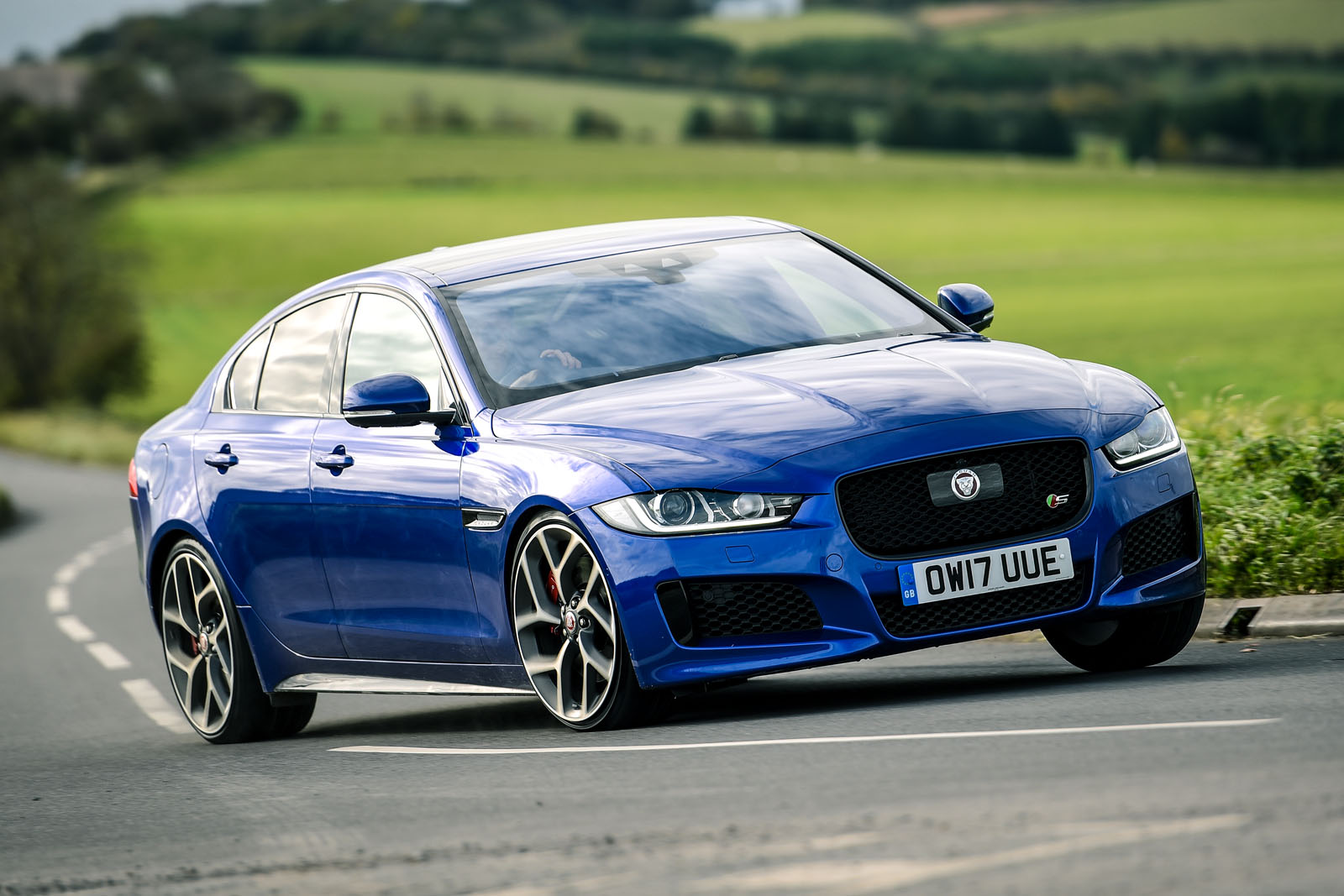
Addressing the primary criticisms of the early cars, the 2019 facelift introduced a significantly higher-quality interior. The rotary gear selector was replaced by a traditional "SportShift" lever, and the "Touch Pro Duo" dual-screen infotainment system became available. On the exterior, slimmer LED headlights and sharper bumpers refreshed the aesthetic. Crucially, the manual gearbox and the V6 engine were discontinued during this update, leaving an all-four-cylinder lineup.
2021–2024: The Final Refinements
In late 2020 (for the 2021 model year), Jaguar introduced the Pivi Pro infotainment system—a much faster, more intuitive interface. The diesel range was also overhauled with the introduction of the D200 mild-hybrid (MHEV), which used a belt-integrated starter generator to improve stop-start smoothness and fuel efficiency. Production of the XE finally concluded in 2024 as Jaguar moved toward an all-electric future.
Analyzing the Powertrain: Performance vs. Reliability
The Jaguar XE’s engine lineup is a study in contrasts, ranging from legendary performance units to engines that require meticulous maintenance to avoid catastrophic failure.
The Supercharged V6: The Enthusiast’s Choice
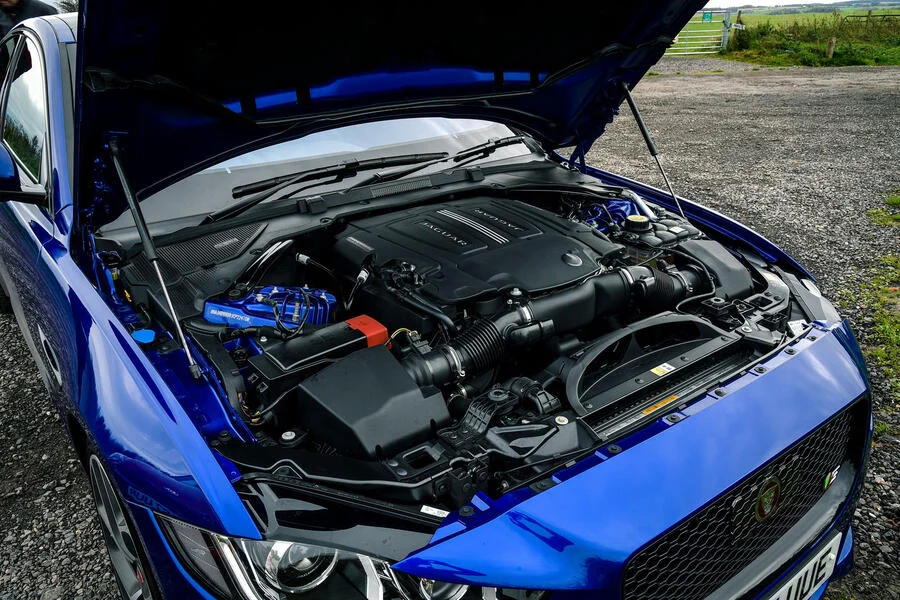
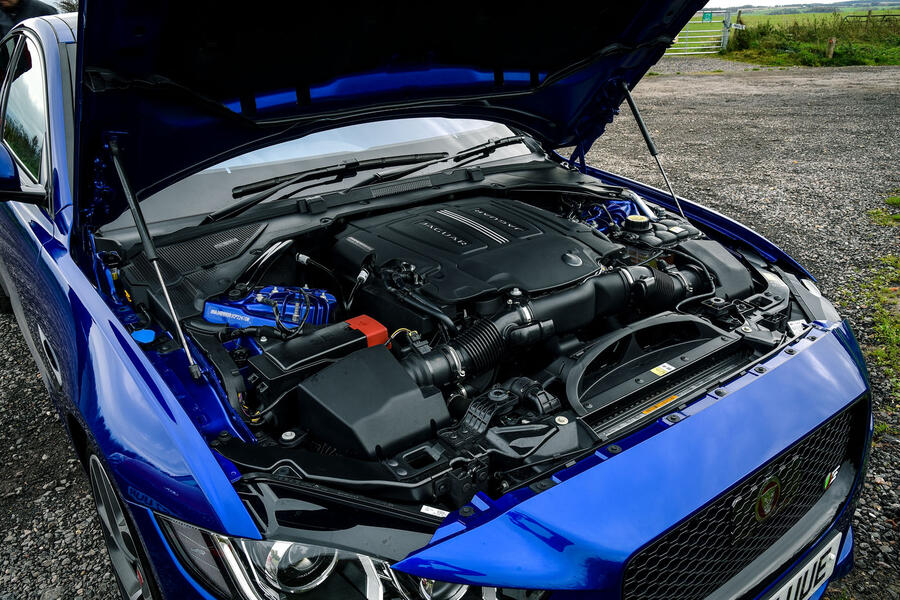
The XE S, powered by the 3.0-liter supercharged V6, remains the "halo" car for the used market. Delivering either 335bhp or 375bhp, this engine provides a linear power delivery and a sonorous exhaust note that four-cylinder rivals cannot match. While thirsty, the V6 has proven to be relatively robust, with its primary issues limited to cooling system components and occasional oxygen sensor faults.
The Ingenium Petrol Range
The 2.0-liter Ingenium petrol engines (P200, P250, P300) are generally considered the safest bet for the average buyer. The P250, producing 247bhp, is often cited as the "sweet spot" of the range, offering a 0-60mph time of 6.2 seconds while maintaining reasonable fuel economy. These engines are largely reliable, though they require strict adherence to oil change intervals to protect the turbochargers and variable valve timing hardware.
The Diesel Dilemma
JLR’s 2.0-liter Ingenium diesel engine has a polarizing reputation. Early 163bhp and 180bhp versions (2015–2018) are known for timing chain issues and oil dilution. The oil dilution is particularly problematic for cars used primarily for short city trips; the Diesel Particulate Filter (DPF) regeneration process can fail, allowing unburnt fuel to enter the oil sump. This thins the oil and can lead to premature engine wear.
However, the later D200 mild-hybrid diesel (post-2021) has seen significant engineering improvements and has garnered a much better reputation for reliability. For high-mileage drivers, the D200 remains a standout, capable of returning over 60mpg on a steady motorway cruise.
Technical Specifications and Market Data
To understand the XE’s value proposition, one must look at the technical specifications across the core models:
| Model | Engine Type | Power (bhp) | Torque (Nm) | 0-60 mph (s) | Top Speed (mph) |
|---|---|---|---|---|---|
| D180 | 2.0L Diesel | 178 | 430 | 7.4 | 140 |
| D200 MHEV | 2.0L Diesel | 201 | 430 | 6.9 | 146 |
| P250 | 2.0L Petrol | 247 | 365 | 6.2 | 155 |
| P300 AWD | 2.0L Petrol | 296 | 400 | 5.4 | 155 |
| 3.0 V6 S | 3.0L S/C V6 | 375 | 450 | 4.8 | 155 |
On the used market, pricing follows a steep depreciation curve, which benefits the second-hand buyer. Early, high-mileage diesels can be found for as little as £3,000, but these carry significant risk. The most desirable "sweet spot" cars—2017–2019 P250 models with moderate mileage—typically trade between £12,000 and £18,000. Late-model 2023 or 2024 "Reims Edition" or HSE models can still command upwards of £28,000.
Maintenance and Ownership: The Reality of Running a Jaguar
Ownership of a Jaguar XE is often a rewarding experience, provided the owner is proactive. Chris Frearson, an XE P250 HSE owner of five years, highlights the importance of preventative maintenance. "I’ve reached 50,000 miles and I can’t imagine wanting to change it for anything else," Frearson noted. He did, however, point out a common XE trait: "I had to replace all the brake pads and discs at around 25,000 miles because of corrosion." Switching to aftermarket EBC discs and Redstuff pads resolved the issue for his subsequent 25,000 miles of driving.
Common Issues and "Buyer Beware" Points
- The Gear Selector: Pre-facelift cars use a rising rotary gear selector. If the car’s battery is weak or the brake light switch is faulty, the selector may fail to rise, leaving the car stuck in Park.
- Infotainment Glitches: The early InControl Touch systems were notorious for lag and freezing. While software updates have mitigated many issues, buyers should ensure the system has been updated to the latest version.
- Build Quality: Early cars (2015–2017) can suffer from interior rattles, particularly around the B-pillars and the parcel shelf.
- Service Intervals: JLR originally suggested two-year or 20,000-mile service intervals. Industry experts and mechanics now widely agree that this is too long, especially for diesel engines. Buyers should look for cars that have had oil changes every 10,000 miles or 12 months.
Tax and Economic Considerations
The UK’s Vehicle Excise Duty (VED) system adds a layer of complexity to XE ownership.
- Pre-April 2017: Diesels are very cheap to tax, with some falling as low as £20 or £35 per year. The V6 petrol, however, can cost over £400.
- Post-April 2017: Most XEs fall into a flat rate of approximately £190–£200 per year.
- The £40,000 Rule: Any car with a list price (including options) of over £40,000 when new incurs an additional "premium car" tax of roughly £440 per year for the first five years of the car’s life. Many high-spec HSE and 300 Sport models fall into this bracket, so buyers should check the original list price to avoid an annual tax bill of over £600.
Broad Implications and Market Verdict
The Jaguar XE occupies a unique space in the automotive landscape. It was a car that excelled in areas where its rivals were merely adequate—specifically steering feel and chassis balance—but struggled in areas where the Germans were masters, such as cabin perceived quality and infotainment reliability.
As Jaguar pivots to become a high-end electric luxury brand, the XE represents the end of an era: the compact, rear-wheel-drive, internal combustion sports saloon. For the used buyer, this means the XE is likely to maintain a dedicated following. While the diesel versions require a cautious approach and a rigorous check of service history, the petrol Ingenium and the supercharged V6 models offer a driving experience that is increasingly rare in a world of numb, electrified crossovers.
In summary, the Jaguar XE is a "driver’s car" first and a "luxury car" second. By selecting a post-2017 model with a documented history of frequent oil changes, a buyer can secure a vehicle that not only looks modern and elegant but provides a level of engagement that justifies the Jaguar badge. As a "baby executive express," the XE remains one of the best value-for-money propositions on the market today, provided one buys with their eyes wide open to the technical nuances of the brand.