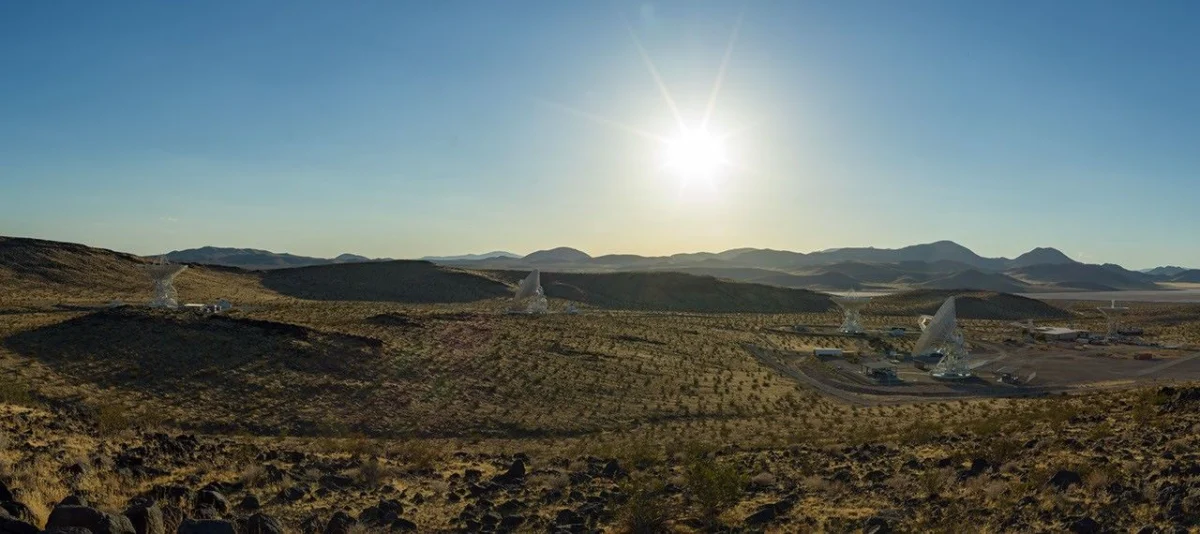
The sun-drenched desert landscape near Barstow, California, became the focal point of a significant milestone in global space communications on August 25, 2026, as NASA formally commissioned Deep Space Station 23 (DSS-23) at its Goldstone complex. This state-of-the-art 34-meter (114-foot) beam-waveguide antenna, the latest addition to the Deep Space Network (DSN), represents a critical enhancement to humanity’s ability to communicate with missions exploring the farthest reaches of our solar system and beyond. The ceremonial ribbon-cutting, attended by NASA leadership, key personnel, and dignitaries, marked a pivotal moment in the ongoing Aperture Enhancement Project (AEP), a strategic initiative launched in 2009 to bolster the DSN’s capacity and technological prowess.
A Strategic Leap in Deep Space Communication
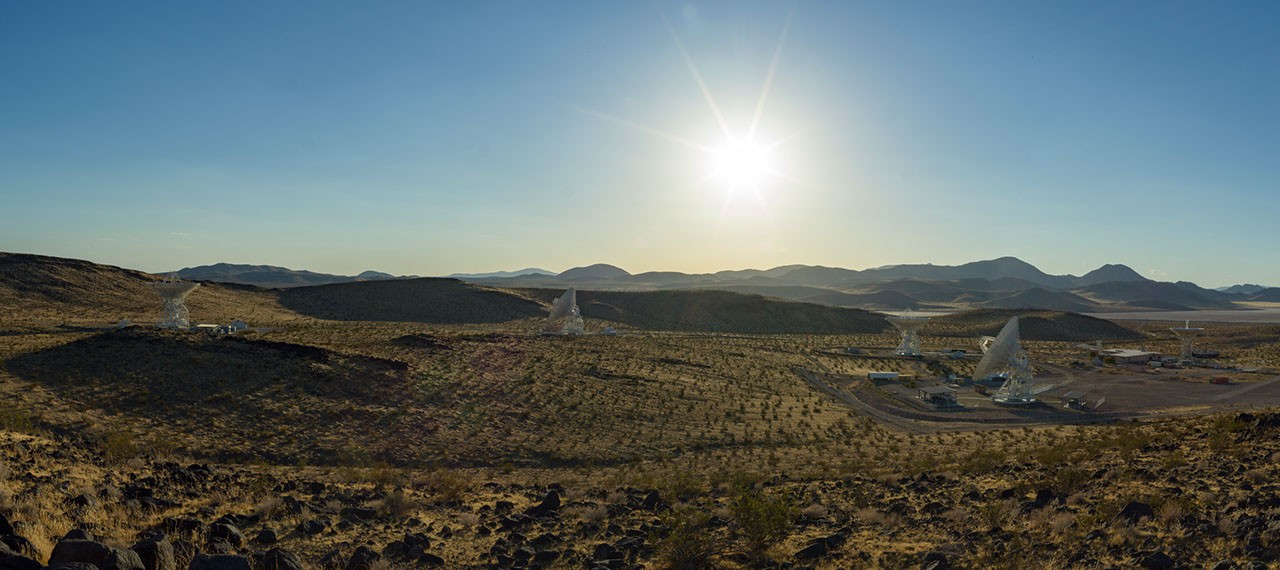
DSS-23, prominently featured in the foreground to the right among its fellow colossal dishes, joins three other 34-meter antennas—DSS-26, DSS-25, and DSS-24—in an array designed for unparalleled cosmic communication. Its beam-waveguide technology allows for sophisticated signal routing and multifrequency capabilities, making it exceptionally versatile in supporting diverse missions operating across various radio frequencies. This technological advancement is crucial for managing the ever-increasing volume of scientific data returned from spacecraft and for maintaining robust command and control links over astronomical distances.
The commissioning of DSS-23 is not merely the addition of another antenna; it is a strategic expansion vital for the future of space exploration. As missions become more complex, journey further, and carry more sophisticated instruments, the demands on the DSN grow exponentially. The ability to receive higher data rates, transmit commands with greater precision, and track multiple spacecraft simultaneously is paramount. DSS-23 directly addresses these needs, enhancing the network’s capacity to support current operational missions while preparing for the ambitious endeavors of the coming decades, including crewed lunar missions under Artemis, advanced robotic explorations of Mars and the outer planets, and groundbreaking astronomical observatories.
The Deep Space Network: An Indispensable Global Infrastructure
The Deep Space Network is an international array of giant radio antennas that serves as the primary communications link between Earth and NASA’s interplanetary spacecraft. Managed by NASA’s Jet Propulsion Laboratory (JPL) in Southern California, a division of Caltech, for the agency’s Space Communications and Navigation (SCaN) Program, the DSN is an indispensable utility for scientific discovery. It comprises three complexes strategically placed approximately 120 degrees apart around the world: Goldstone, California; Madrid, Spain; and Canberra, Australia. This geographical distribution ensures that as Earth rotates, at least one DSN complex always has a spacecraft in its line of sight, enabling continuous communication and tracking.
Since its inception, the DSN has been the silent hero behind nearly every major deep-space mission. From receiving the first images of Mars from Mariner 4 in 1965 to guiding the Voyager probes through the heliosphere and beyond, and more recently, facilitating the intricate landing sequence of the Perseverance rover on Mars and capturing stunning images from the James Webb Space Telescope (JWST), the DSN’s role is foundational. It provides the "ears" and "voice" for humanity’s robotic emissaries, allowing scientists to gather unprecedented data about other planets, moons, asteroids, and the structure of the universe itself. Without the DSN, deep space exploration as we know it would be impossible.
The Aperture Enhancement Project: A Vision for the Future
The Aperture Enhancement Project (AEP) was initiated in 2009 with a clear vision: to upgrade and expand the DSN to meet the escalating demands of future space missions. The project’s primary goal is to add six new 34-meter multifrequency beam-waveguide antennas across the three DSN complexes. DSS-23 is a significant step towards completing this ambitious undertaking. The decision to invest in new antennas stems from several critical factors:
- Increased Mission Load: The number of deep space missions has steadily increased, requiring more dedicated antenna time.
- Higher Data Rates: Modern scientific instruments generate vast amounts of data, necessitating faster download speeds. For example, a Mars rover might generate gigabytes of data daily, and without enhanced reception capabilities, returning this data would be significantly delayed.
- Technological Advancements: Beam-waveguide technology offers superior performance, allowing for more efficient signal transmission and reception, reduced noise, and greater operational flexibility compared to older antenna designs.
- Redundancy and Reliability: Expanding the network enhances redundancy, ensuring that critical communication links can be maintained even if one antenna or complex experiences an outage. This robustness is vital for mission safety and data integrity.
- Support for Future Architectures: As NASA plans for more complex, integrated mission architectures, including human exploration beyond low Earth orbit, the DSN must evolve to provide seamless, high-bandwidth communication.
The AEP is a long-term investment, demonstrating NASA’s commitment to maintaining its leadership in space exploration and scientific discovery. Each new antenna, like DSS-23, contributes to a more resilient, capable, and versatile network, ensuring that the agency can continue to push the boundaries of what is possible in space.
Goldstone: A Historical Nexus of Cosmic Exploration
The Goldstone Deep Space Communications Complex, situated in the Mojave Desert, has been a cornerstone of space exploration since its establishment in 1958. Its remote location was carefully chosen to minimize interference from terrestrial radio signals, providing a "radio quiet" environment ideal for listening to faint signals from distant spacecraft. Goldstone was instrumental in tracking early American satellites and was the site of the first successful radar detection of Venus in 1961.
The complex is home to some of the largest and most powerful antennas in the world, including the iconic 70-meter (230-foot) dish, DSS-14, capable of detecting signals from the most distant human-made objects, such as the Voyager spacecraft, which are now more than 24 billion kilometers (15 billion miles) from Earth. The integration of new antennas like DSS-23 into this historic complex ensures that Goldstone remains at the forefront of space communication technology, continuing its legacy of enabling groundbreaking scientific discoveries. The desert environment, while challenging, provides the stable geological foundation and isolation necessary for such precision instruments.
Echoes of History: The Enduring Legacy of the Apollo Antenna
Amidst the gleaming white dishes of the active DSN antennas at Goldstone, a smaller, yet profoundly significant, 26-meter (85-foot) antenna stands at the farthest right of the frame. This retired structure, affectionately known as the "Apollo Antenna," was built in 1967 as a part of the Manned Space Flight Network. Its nickname is well-earned, as it played a crucial role in providing tracking and communication for the groundbreaking Apollo Program, including the historic Apollo 11 mission that landed humans on the Moon.
The Apollo Antenna symbolizes a pivotal era in space exploration, a testament to the ingenuity and courage that defined humanity’s first steps beyond Earth. While its operational days are over, its presence at Goldstone serves as a powerful reminder of the continuous evolution of space communication technology and the foundational work that paved the way for today’s deep space missions. It bridges the past with the present, illustrating how advancements like DSS-23 build upon decades of experience and dedication. The Manned Space Flight Network eventually merged into what is now the DSN, consolidating resources and expertise to support both human and robotic missions.
Statements on the Significance
While specific quotes from the August 25, 2026, ribbon-cutting event are not provided, it can be logically inferred that remarks would have underscored the profound importance of DSS-23 and the DSN. Leaders from NASA and JPL would likely have emphasized:
- Commitment to Exploration: "The commissioning of DSS-23 reaffirms NASA’s unwavering commitment to pushing the boundaries of scientific discovery and human exploration. This new antenna is not just steel and electronics; it is a gateway to new knowledge, enabling us to hear the whispers from distant worlds and guide our missions further than ever before."
- Technological Prowess: "This antenna represents the cutting edge of deep space communication technology. Its advanced beam-waveguide capabilities will significantly enhance our ability to gather critical data, support complex operations, and ensure the success of our most ambitious endeavors, from returning samples from Mars to exploring the icy moons of the outer solar system."
- Global Collaboration: "The DSN is a testament to international collaboration and shared scientific pursuit. Our global network, with its complexes in California, Spain, and Australia, is a marvel of engineering and a symbol of humanity’s collective aspiration to understand our place in the cosmos."
- Inspiring Future Generations: "Investments like the Aperture Enhancement Project inspire the next generation of scientists, engineers, and explorers. They demonstrate that with dedication and technological innovation, there are no limits to what we can achieve in space."
Broader Impact and Implications for Future Missions
The addition of DSS-23 and the completion of the AEP have far-reaching implications for the future of space exploration:
- Enhanced Support for Artemis Missions: As NASA prepares for sustained human presence on the Moon and eventually Mars, the DSN’s expanded capacity will be crucial for high-bandwidth communication with lunar habitats, surface operations, and crewed spacecraft in transit. Real-time video, telemetry, and command uplinks will be more robust than ever.
- Mars Sample Return: The highly complex Mars Sample Return campaign, involving multiple spacecraft and intricate orbital maneuvers, will heavily rely on the DSN for precise navigation, command sequencing, and the ultimate return of invaluable Martian samples to Earth. Increased antenna availability and data rates will be critical.
- Outer Planets Exploration: Missions to the gas giants and beyond, such as the Europa Clipper, which will investigate the potential habitability of Jupiter’s moon Europa, will benefit from stronger signals and faster data transmission over immense distances. Light-time delays to Jupiter can be over 40 minutes, making robust, efficient communication systems absolutely essential.
- Next-Generation Space Telescopes: Future space observatories, potentially even larger and more powerful than JWST, will generate unprecedented volumes of astronomical data. The DSN’s enhanced receive capabilities will be vital for downlinking this data, enabling groundbreaking discoveries in astrophysics and cosmology.
- Increased Scientific Return: More reliable and higher-bandwidth communication means that spacecraft can send back more scientific data, enabling more detailed analyses, faster hypothesis testing, and a quicker pace of discovery. This directly translates to a greater return on investment for space missions.
- Technological Spin-offs: The advanced technologies developed for the DSN often have terrestrial applications, contributing to advancements in telecommunications, antenna design, and data processing, benefiting society beyond space exploration.
- International Cooperation: The DSN serves as a global resource, supporting missions from international partners as well. Its expansion strengthens these collaborative ties and underscores the shared human endeavor of exploring space.
In conclusion, the commissioning of Deep Space Station 23 at Goldstone is far more than a technical upgrade; it is a profound investment in the future of humanity’s quest to understand the universe. By enhancing the DSN’s capabilities, NASA is ensuring that the lines of communication remain open, clear, and robust, allowing the voices of our robotic explorers to be heard across the vast cosmic ocean, and enabling the next giant leaps in space exploration and scientific discovery.