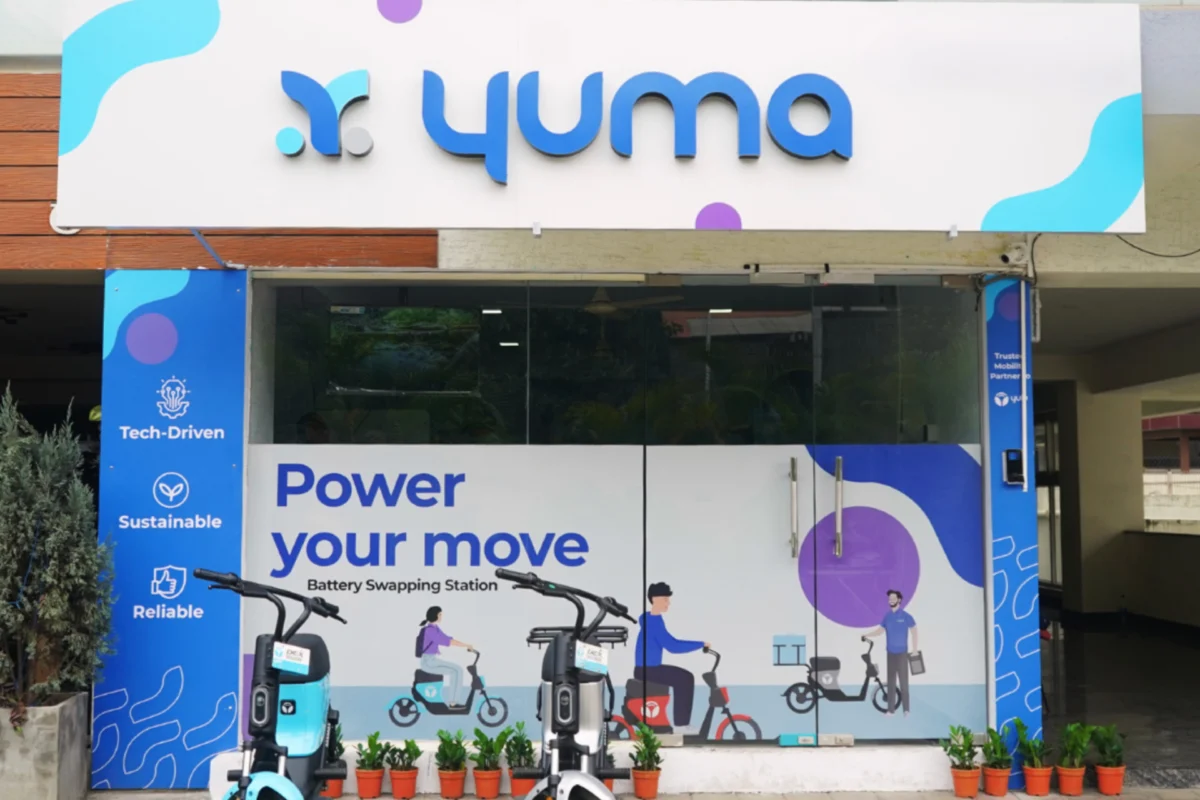
Canadian automotive parts giant Magna International is significantly strengthening its commitment to India’s burgeoning electric vehicle (EV) market, particularly in the rapidly expanding battery swapping sector, by investing an additional $35 million into Bengaluru-based Yuma Energy. This latest capital injection increases Magna’s stake in the firm, which operates a crucial battery-swapping network for electric two- and three-wheelers, underscoring a strategic bet on India’s unique economic landscape where the model is showing considerable promise, in stark contrast to its struggles in many other global markets. The investment highlights Magna’s confidence in India’s fast-growing delivery economy and the immense potential of its two- and three-wheeler segments to drive EV adoption through efficient, quick-swap solutions.
Magna’s Strategic Pivot to India’s Unique Mobility Needs
While battery swapping has faced significant hurdles globally, primarily due to issues such as standardization, high initial capital expenditure, and limited demand from passenger vehicle owners who often prioritize longer range and home charging convenience, India presents a distinctly different set of economic and logistical circumstances. The sheer volume of two- and three-wheelers – the backbone of personal and commercial transportation in India – coupled with a burgeoning gig economy, creates an ideal environment for the widespread adoption of battery swapping. Magna, a global leader in automotive technology and manufacturing, recognized this opportunity early, positioning itself at the forefront of this emerging market.
The company’s initial foray into India’s micromobility and battery swapping market began in 2022 with a combined commitment of $77 million. This included $25 million directed towards Yulu, an Indian mobility startup specializing in electric two-wheelers for shared mobility and last-mile delivery, and $52 million into the joint venture that would later become Yuma Energy. Yuma, which officially spun out of Yulu in early 2023, was conceived to address the critical infrastructure gap for EV users, particularly those relying on their vehicles for daily livelihoods. This latest $35 million investment not only reaffirms Magna’s belief in Yuma’s operational model but also signals a deeper strategic integration into India’s electric mobility ecosystem.
Yuma Energy has quickly established itself as a significant player, having completed an impressive 60 million battery swaps to date and deploying approximately 100,000 batteries across its network. This substantial operational footprint demonstrates the growing demand for convenient and rapid energy solutions for electric two- and three-wheelers. Muthu Subramanian, Yuma’s managing director, confirmed the increased investment and Magna’s enlarged stake, though he declined to disclose the precise new ownership split, noting that Yulu’s previous 49% stake would be diluted as a result. For Magna, Yulu and Yuma represent its exclusive startup investments in India, emphasizing the strategic importance placed on these ventures.
The Economic Imperative: Powering India’s Gig Economy
At the heart of Magna’s amplified investment lies a profound understanding of India’s rapidly expanding gig economy. This sector, characterized by its reliance on flexible, on-demand labor, particularly for delivery services, has become a critical engine of economic growth. According to industry reports, India’s gig workforce is projected to reach approximately 23.5 million by 2029-30, up from 7.7 million in 2020-21, indicating a monumental shift in employment patterns and a corresponding surge in demand for efficient, low-cost transportation solutions.
For the millions of delivery riders and gig workers in India, time is synonymous with income. Traditional EV charging methods, even fast charging, can lead to significant downtime, directly impacting their earning potential. Muthu Subramanian articulated this critical need, stating, "With Indian gig workers’ high runtime on a daily basis, an EV makes absolute sense in terms of cost of ownership. Uptime is important." He estimates that currently, only about 10% to 15% of vehicles used by gig workers in India are electric. This statistic highlights a vast untapped market for operators like Yuma, as more riders are expected to transition from gasoline-powered vehicles to EVs, driven by the compelling economics of lower operational costs and environmental benefits.
Yuma’s model directly addresses the "uptime" challenge. A battery swap can be executed in under two minutes, a stark contrast to the 20- to 30-minute (or longer) wait times associated with even rapid charging. Beyond the time saving, battery swapping also requires less physical space and power infrastructure compared to multiple fast-charging stations, making it a more scalable and efficient solution for high-density urban environments. This efficiency is paramount for gig workers who often complete multiple deliveries daily, with every minute off the road translating into lost revenue.
However, building such a robust and convenient network is inherently capital-intensive. The necessity to pre-deploy a large fleet of batteries and establish extensive swapping infrastructure before peak demand arrives requires substantial upfront investment. "It’s a capital-intensive business, and the unit economics will play out at scale," Subramanian explained, acknowledging the significant financial commitment required to scale operations effectively. While Yuma is not yet profitable across its entire network, Subramanian confirmed that some of its older, more established swapping stations have already achieved EBITDA-positive status, demonstrating the model’s viability once a certain utilization threshold is met. The company reported approximately ₹1 billion (about $10.5 million) in revenue for the financial year ending March 2026 and aims to reach EBITDA break-even within the next two quarters.
Aggressive Expansion and Infrastructure Development
The fresh $35 million investment from Magna is earmarked primarily for accelerating Yuma’s infrastructure expansion and significantly growing its battery fleet. Over the next 12 to 18 months, Yuma plans to double its current fleet of approximately 100,000 batteries, a move essential to keep pace with the rapidly increasing demand from both existing and new customers.
Currently, Yuma operates a network of over 400 swapping stations, equipped with more than 2,500 charging units, spread across 18 Indian cities. This includes major metropolitan hubs like Bengaluru, Hyderabad, Mumbai, and the Delhi National Capital Region, as well as rapidly developing tier-2 cities such as Jaipur, Lucknow, Indore, Coimbatore, Kochi, and Kolkata. With the new capital, Yuma intends to expand its footprint into additional key cities, with Chennai and Pune slated for entry in the coming quarters. Simultaneously, the company will bolster its presence in existing operational cities by adding more stations, enhancing network density and accessibility for riders.
Diversification and Market Penetration Beyond Yulu
While Yulu, with its extensive fleet of electric two-wheelers, has historically accounted for the vast majority of Yuma’s 60 million lifetime swaps, Yuma is actively working to diversify its customer base. This strategy is crucial for long-term sustainability and market leadership. Subramanian noted a positive trend in this direction, with non-Yulu customers contributing approximately 15% to 20% of swaps in the latest quarter. The company has an ambitious target to increase this figure to about 25% within the next two years, indicating a strategic shift towards broader market penetration.
Beyond its foundational partnership with Yulu, Yuma now serves more than five independent fleets and has successfully integrated its battery technology with over 10 different vehicle platforms. This includes partnerships with prominent Indian EV manufacturers such as Kinetic Green, Motovolt, BGauss, and Quantum Energy. This expanding ecosystem of compatible vehicles is vital for Yuma’s growth, as it positions the company as a preferred battery swapping solution provider for a wider array of EV users. The recent announcement of Yulu raising $93 million to expand its own electric two-wheeler fleet further underscores the symbiotic relationship; as Yulu grows, Yuma’s network must expand commensurately to support its largest customer while simultaneously accommodating the needs of its newer fleet partners.
Competitive Landscape and Unique Value Proposition
The battery swapping market in India is attracting significant attention, with several players vying for market share. Companies like Bounce, Sun Mobility, and even traditional automotive giants like Hero MotoCorp (through its Swappable Batteries initiative) are exploring or have already launched battery swapping solutions. However, Yuma Energy distinguishes itself through a unique vertical integration strategy: it designs and manufactures its own battery packs and charging units. The company operates a battery pack manufacturing facility in Chennai and produces charging units in Bengaluru. This in-house capability provides Yuma with critical control over both the hardware and the sophisticated network management systems, allowing for optimized performance, better quality control, and potentially faster innovation cycles compared to competitors who might rely solely on third-party suppliers for components. This integrated approach can lead to greater efficiencies and a more robust, reliable service for its customers.
The Indian government’s proactive stance on promoting electric mobility, including initiatives to standardize battery specifications and encourage charging infrastructure development, further bolsters the market for battery swapping. Policies aimed at reducing EV purchase costs and operational expenses, combined with growing environmental awareness, are expected to drive exponential growth in the EV sector, particularly for two- and three-wheelers, creating a fertile ground for companies like Yuma.
Future Horizons: International Expansion
While India remains Yuma’s exclusive focus for at least the next 12 to 18 months, the company harbors ambitions for international expansion as part of its longer-term strategic roadmap. Muthu Subramanian identified Southeast Asian markets, particularly Vietnam and Thailand, as well as certain parts of Africa, as attractive future targets. These regions share similar characteristics with India, boasting large populations, burgeoning gig economies, and a predominant reliance on two-wheelers for personal and commercial transportation. The lessons learned and the operational efficiencies achieved in the diverse Indian market could provide Yuma with a competitive edge in these potentially lucrative overseas markets. However, Subramanian noted that discussions regarding international market entry are yet to commence, indicating a measured approach to global expansion.
Magna’s latest investment in Yuma Energy is more than just a financial transaction; it represents a significant vote of confidence in India’s distinctive approach to electric mobility and the potential for battery swapping to revolutionize last-mile logistics and personal transport. As the Indian EV market continues its rapid ascent, Yuma, with Magna’s robust backing and its vertically integrated operational model, is well-positioned to be a pivotal enabler of this transition, not only within India but potentially as a blueprint for other emerging economies globally. The journey from capital-intensive startup to a profitable, scalable enterprise is challenging, but Yuma’s progress and Magna’s unwavering support suggest a promising future for efficient, sustainable urban mobility solutions.