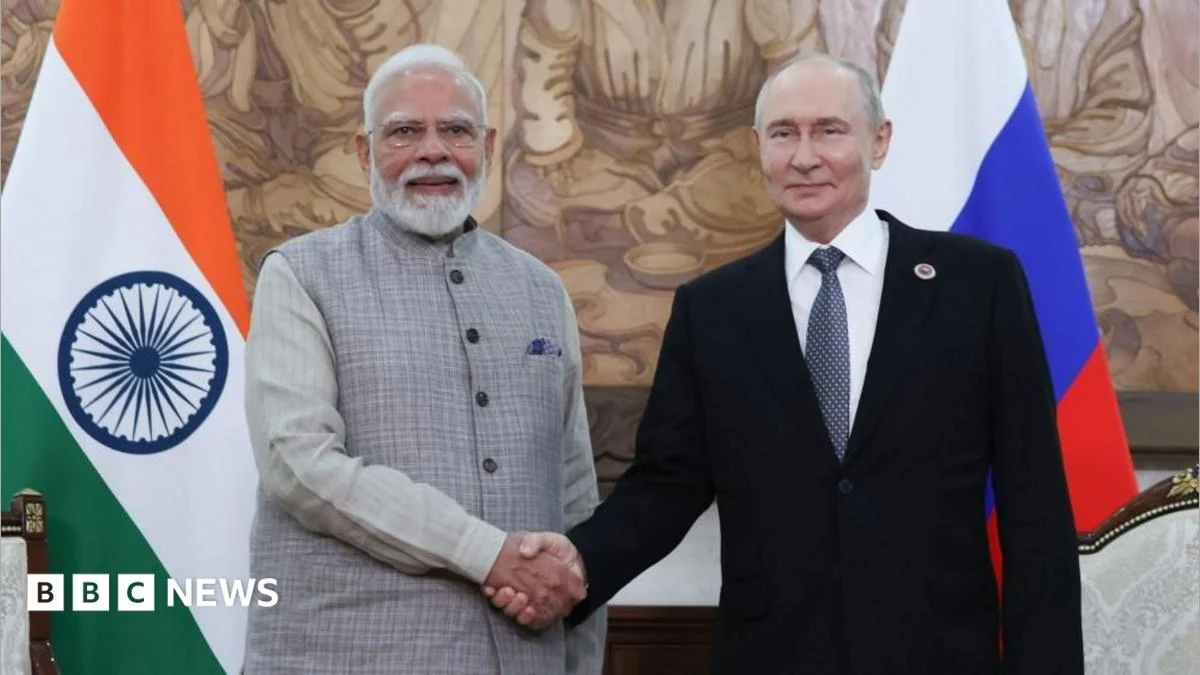
Prime Minister Narendra Modi’s recent public statement urging an end to the conflict in Ukraine, delivered directly to Russian President Vladimir Putin, represents a nuanced yet significant articulation of India’s foreign policy doctrine of strategic autonomy. This high-profile diplomatic exchange, occurring on the sidelines of a major international summit, immediately prompted questions regarding its timing and underlying motivations, especially given India’s historically robust and multifaceted ties with Russia. Far from being a sudden deviation, analysts suggest this move aligns perfectly with New Delhi’s long-standing approach to international relations, which prioritizes national interests while navigating a complex global geopolitical landscape.
Strategic Autonomy: The Cornerstone of Indian Foreign Policy
India’s foreign policy, rooted in the principles of the Non-Aligned Movement (NAM) that emerged during the Cold War, has evolved into a sophisticated doctrine of strategic autonomy. This framework allows India to forge independent relationships with various global powers, refraining from aligning exclusively with any single bloc. Instead, New Delhi seeks to maximize its options, safeguarding its economic, security, and developmental interests through diversified partnerships. This approach has enabled India to maintain close ties with Russia even as it deepens engagements with Western nations like the United States and European Union members, often viewing geopolitics through distinctly different lenses. For India, strategic autonomy is not merely a diplomatic stance but a practical necessity, enabling it to balance competing interests and leverage its growing economic and demographic weight on the global stage. It empowers India to engage with multilateral platforms such as BRICS and the Shanghai Cooperation Organisation (SCO) alongside Russia and China, while simultaneously participating in groupings like the Quad with Australia, Japan, and the United States, which Moscow views with considerable skepticism.
The Enduring Pillar: India-Russia Ties Through Decades
The relationship between India and Russia, and previously the Soviet Union, is characterized by deep historical roots and a comprehensive partnership that has withstood numerous geopolitical shifts. During the Cold War, the Soviet Union emerged as a crucial strategic partner for India, providing extensive military, economic, and technological assistance when Western nations were often hesitant. This legacy fostered a bond of trust and reliability that continues to shape contemporary interactions.
Defence cooperation remains a bedrock of this relationship. Russia has historically been, and continues to be, India’s largest supplier of military hardware. Even amidst India’s efforts to diversify its defence procurement and boost indigenous manufacturing under the ‘Make in India’ initiative, Russian platforms and technologies constitute a substantial portion of the Indian armed forces’ inventory. Approximately 40% of India’s defence imports still originate from Russia, encompassing critical systems such as the S-400 Triumf air defence missile systems, Sukhoi Su-30MKI fighter jets, and various naval vessels and conventional weaponry. Joint ventures, such as the BrahMos supersonic cruise missile program, exemplify the depth of technological collaboration and co-development. This dependency, while slowly being mitigated, underscores the strategic importance of Russia to India’s national security architecture.
Beyond defence, energy has become an increasingly vital component of the bilateral relationship, particularly since the onset of the Ukraine conflict in February 2022. As Western nations imposed sanctions on Russian energy exports, India significantly ramped up its purchases of Russian crude oil, often at discounted prices. This pragmatic decision helped stabilize India’s energy supply and manage inflation, reflecting New Delhi’s commitment to prioritizing its economic stability. While specific figures fluctuate, India’s imports of Russian crude oil have surged dramatically, transforming Russia into one of India’s top oil suppliers, a position it rarely held prior to 2022. Furthermore, cooperation extends to nuclear energy, with Russia assisting in the construction of power plants like the Kudankulam Nuclear Power Project, and discussions around Arctic energy exploration. This robust economic and strategic interdependence provides a strong rationale for India’s cautious diplomatic stance on the Ukraine conflict.
Navigating a Multipolar World: India’s Western Engagements
While maintaining strong ties with Russia, India has simultaneously deepened its strategic engagements with Western powers, most notably the United States, Japan, and Australia. This multi-alignment strategy is a testament to India’s rising global stature and its proactive approach to shaping a favorable regional and international order.
The Quadrilateral Security Dialogue, or Quad, comprising India, the US, Japan, and Australia, is a prime example of this evolving dynamic. Reinvigorated in recent years, the Quad aims to promote a free, open, and inclusive Indo-Pacific, a region vital for global trade and security. While not explicitly an anti-China alliance, its focus on maritime security, infrastructure development, critical technologies, and climate change is widely seen as a counterweight to China’s growing assertiveness in the region. Moscow, for its part, has openly expressed its discomfort with the Quad, viewing it as a Western-led initiative designed to contain its strategic partners, including China. Despite this, India remains a committed member, participating actively in joint exercises like Malabar and cooperating on various non-military initiatives.
The Indo-US strategic partnership has also witnessed remarkable growth over the past two decades. Driven by converging interests in counter-terrorism, defence cooperation, trade, and technology, the relationship has evolved into a Comprehensive Global Strategic Partnership. Bilateral defence trade has expanded significantly, and agreements like the Logistics Exchange Memorandum of Agreement (LEMOA) facilitate closer military interaction. India also engages closely with the European Union on trade, investment, climate change, and security dialogues, further diversifying its external relationships. This complex web of alliances and partnerships underscores India’s meticulous balancing act, where each relationship serves a distinct strategic purpose, even if it creates friction in another.
Modi’s Statement: A Calculated Diplomatic Intervention
Prime Minister Modi’s public call for peace came during a bilateral meeting with President Putin on the sidelines of the Shanghai Cooperation Organisation (SCO) summit in Samarkand, Uzbekistan, in September 2022. The specific phrase, "Today’s era is not an era of war," delivered directly and unequivocally, resonated globally. It marked a subtle yet significant shift in India’s public posture, moving from largely abstaining on UN resolutions condemning Russia to a more direct, albeit carefully worded, appeal for de-escalation.
This statement, while a public declaration, was likely a calculated diplomatic move rather than an impulsive one. Analysts widely agree that such a significant statement would not have been made without prior communication or at least an understanding with Moscow. It is highly improbable that it came as a surprise to President Putin or his diplomatic corps. Instead, it served multiple purposes:
- Reinforcing Strategic Autonomy: It demonstrated India’s capacity to articulate an independent position on a major global conflict, even to its closest partners, without jeopardizing fundamental relationships.
- Responding to International Pressure: While India has resisted overt condemnation, the global consensus against the war, particularly from Western nations and within multilateral forums, has been strong. Modi’s statement offered a diplomatic signal that India, as a responsible global power and an emerging leader of the Global South, acknowledges the humanitarian and economic toll of the conflict and advocates for a peaceful resolution.
- Appealing to a Domestic Audience and Critics: Within India, there have been varying opinions on the government’s stance. While many support strategic autonomy, some critics, particularly those aligned with Western liberal perspectives, have called for stronger condemnation of Russia. Modi’s statement, while not a condemnation, showed a clear stance against the continuation of hostilities.
- Upholding Multilateralism: As a founding member of BRICS and the SCO, and a major player in the G20, India has consistently advocated for diplomatic solutions to international disputes. This public call for peace reinforced its commitment to these principles.
Putin’s Response: Polite Ambiguity and Unwavering Resolve
President Putin’s immediate reply to Prime Minister Modi’s intervention was notably polite but vague and non-committal. He stated, "Thank you very much, prime minister. We are moving forward along this path." This phrase, while acknowledging Modi’s sentiment, offered no concrete commitment to altering Russia’s military strategy or timeline.
The ambiguity of "moving forward along this path" leaves ample room for interpretation. A "path" can be short or protracted, and the pace of "moving forward" can vary significantly. Crucially, the nature of "the path" itself remains undefined from a Russian perspective. All available evidence suggests that Russia’s leadership remains convinced that it is on a path towards military victory in Ukraine, or at least securing its strategic objectives on the battlefield. Therefore, "moving forward" towards peace, from Moscow’s vantage point, is likely framed in terms of achieving its military aims, thereby dictating peace on its own terms. This interpretation aligns with Russia’s consistent public statements regarding the "special military operation" and its objectives. The polite reception of Modi’s statement indicates a respect for India’s position as a key partner, but it does not signal any immediate shift in Moscow’s calculations regarding the conflict.
International Precedents and Broader Reactions
Modi’s call was not an isolated incident among non-Western leaders. Just weeks prior, President Kassym-Jomart Tokayev of Kazakhstan, another close Russian ally and member of the Collective Security Treaty Organization (CSTO), publicly suggested that Putin freeze the conflict and return to the negotiating table. Like Modi’s appeal, Tokayev’s suggestion was acknowledged but did not alter Russia’s course of action. These instances highlight a growing discomfort among some of Russia’s traditional partners regarding the prolonged nature and destabilizing impact of the war, even if they refrain from outright condemnation.
Reactions to Modi’s statement were varied. Western nations and many of Modi’s critics within India expressed a desire for the prime minister to have been even more direct and forceful in his criticism of the war. They viewed India’s stance as still too accommodating towards Russia, failing to align fully with the democratic world’s condemnation of aggression. However, the statement was largely welcomed as a positive step, indicating a subtle shift in tone and an increasing willingness by India to use its diplomatic leverage. It was seen as contributing to the broader international pressure on Moscow, even if it lacked immediate tangible impact on the ground.
The Unfolding Ukraine Conflict: A Stalemate with Shifting Dynamics
As of early 2024, the full-scale conflict in Ukraine, which began in February 2022, continues with no clear end in sight. Despite initial Russian advances, Ukrainian forces, bolstered by extensive Western military and financial aid, have mounted determined resistance and successful counter-offensives, notably reclaiming significant territories in Kharkiv and Kherson regions. The conflict has evolved into a grinding war of attrition, characterized by intense artillery duels, trench warfare, and significant human and material losses on both sides.
Russia’s leadership, despite the protracted nature of the conflict and substantial military casualties, appears to remain convinced of its eventual success. Its objectives, initially perceived as regime change in Kyiv, have seemingly shifted to securing territorial gains in eastern and southern Ukraine and neutralizing perceived NATO expansion. Ukraine, on the other hand, remains resolute in defending its sovereignty and territorial integrity, with President Volodymyr Zelenskyy repeatedly emphasizing that peace can only come with the full withdrawal of Russian forces and the restoration of Ukraine’s pre-2014 borders.
A significant development has been Ukraine’s ability to bring the war "back home" to Russia, particularly through long-range drone strikes. These attacks have targeted strategic facilities deep within Russian territory, including oil refineries and military installations, leading to temporary fuel shortages and disrupting logistical chains. Such actions demonstrate Ukraine’s growing capabilities and its intent to raise the cost of the war for Russia’s civilian population, challenging the Kremlin’s narrative of a distant, contained conflict. Despite these developments, there is no indication that public calls for peace, however prominent, have fundamentally altered Putin’s strategic calculations, which remain rooted in achieving military objectives.
Implications and India’s Global Stature
Modi’s statement, while not a game-changer for the immediate trajectory of the Ukraine war, carries significant implications for India’s foreign policy and its evolving global role.
- Reinforcement of Independent Foreign Policy: The incident underscored India’s commitment to strategic autonomy, demonstrating its ability to engage with all parties while articulating its own positions on critical global issues. This approach enhances India’s credibility as an independent voice in a multipolar world.
- Enhanced Global Standing: As India assumes greater responsibilities on the international stage, including its presidency of the G20, its measured yet firm stance on the Ukraine conflict positions it as a responsible global power. It appeals to a broad spectrum of nations, particularly those in the Global South, who are often wary of aligning with either Western or Russian blocs.
- Stability in India-Russia Relations: The fact that the statement did not cause a rift suggests the robustness and maturity of the India-Russia relationship. Both sides understand the complexities and pressures each faces, allowing for a degree of frankness without undermining core strategic interests.
- Challenges in Balancing Act: The episode also highlights the persistent challenges India faces in balancing its diverse geopolitical interests. While its Western partners appreciate any move towards urging peace, they will continue to press for stronger alignment. India must continue to navigate these pressures meticulously, ensuring its actions consistently serve its long-term national objectives.
Conclusion: A Meticulous Balancing Act Continues
Prime Minister Modi’s public appeal to President Putin to end the war in Ukraine was a carefully orchestrated diplomatic maneuver, firmly rooted in India’s policy of strategic autonomy. It demonstrated India’s willingness to use its growing diplomatic influence to advocate for peace, even while maintaining its vital, long-standing relationship with Russia. While Putin’s response was non-committal, the exchange underscored the unique position India holds in the current global order – a nation capable of engaging with all major powers, often walking a tightrope between competing interests. As the Ukraine conflict continues to unfold with no immediate resolution in sight, India’s meticulous balancing act will remain a defining feature of its foreign policy, shaping its role as a significant voice in an increasingly complex and interconnected world.