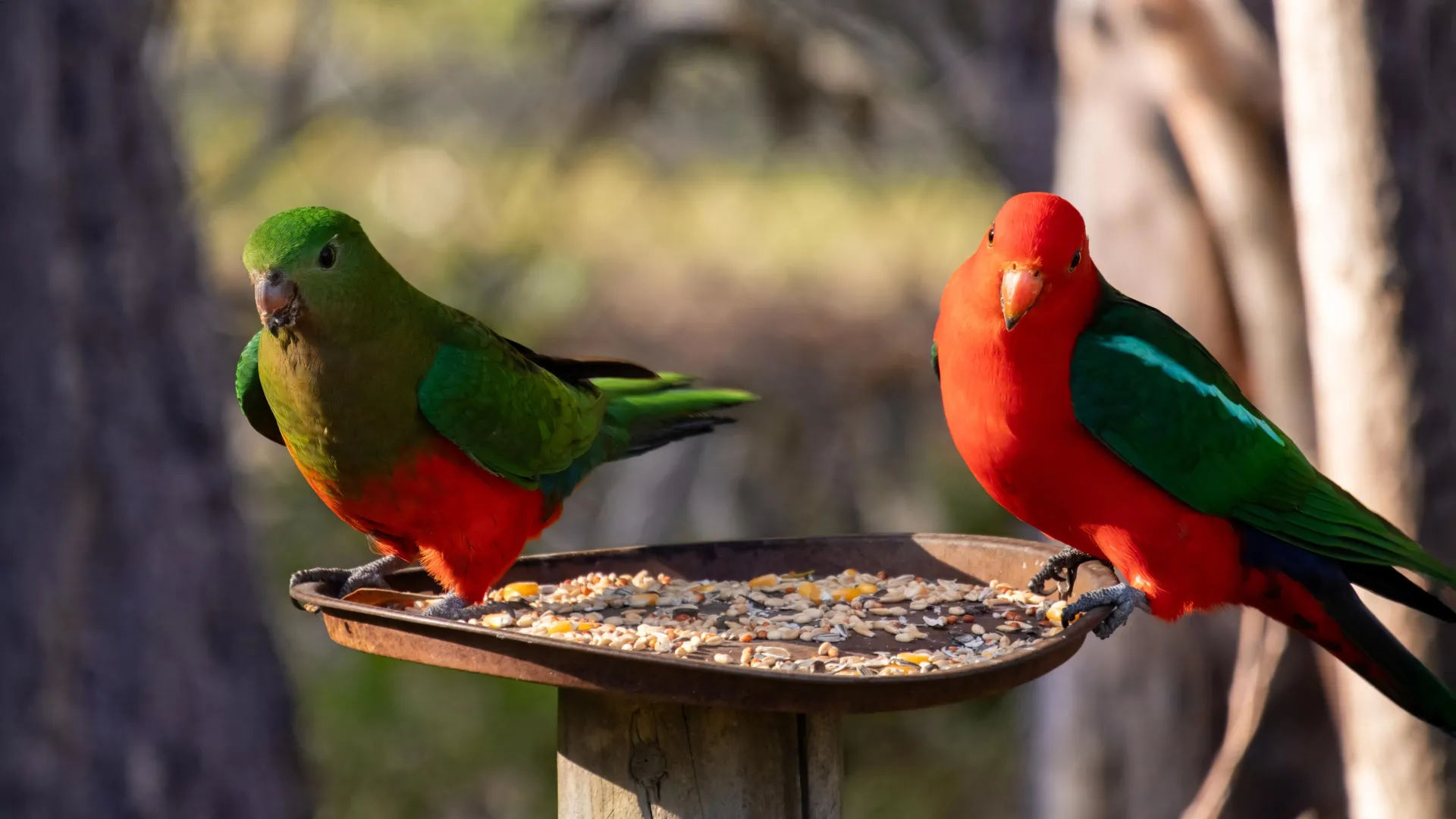
Backyard bird feeding, a cherished pastime for countless Australians, is facing intense scrutiny as the highly pathogenic avian influenza virus, H5N1, spreads across the continent. While approximately half of Australian households actively engage in feeding wild birds, many on a daily basis, this seemingly benevolent practice could inadvertently be transforming into a significant vector for the transmission of this devastating disease. The alarming spread of H5N1 has already led to catastrophic losses in wild bird and mammal populations globally, and its recent emergence in Australia, marked by the deaths of over 1,000 crested terns and a long-nosed fur seal, underscores the urgent need to re-evaluate our interactions with wildlife.
The Double-Edged Sword of Avian Hospitality
The tradition of feeding wild birds in Australia is deeply ingrained, driven by a desire to connect with nature, provide sustenance during challenging periods, and simply enjoy the visual and auditory presence of our feathered neighbours. Many individuals who participate in this practice harbor a genuine affection for birds and believe their actions are beneficial. However, this well-intentioned generosity may be unknowingly contributing to a dangerous biological phenomenon: a superspreader event for H5N1.
Research indicates that when humans provide supplementary food, it can create artificial congregating points for birds. This is because feeders attract a wider array and larger numbers of avian species than would typically occur naturally. This unnatural convergence, fueled by human-provided sustenance, significantly heightens the risk of disease transmission. Birds that may appear healthy can be asymptomatic carriers of deadly viruses like H5N1, and their close proximity at feeding sites allows for rapid and efficient spread of the pathogen to other susceptible individuals and species. This creates what scientists refer to as a "transmission hotspot," a concentrated area where a pathogen can proliferate unchecked.
H5N1: A Growing Global and Australian Threat
The H5N1 strain of avian influenza is not a new adversary, but its current virulent form has demonstrated a devastating capacity to decimate populations. Globally, the virus has caused widespread mortality in both wild bird populations and, increasingly, in mammalian species. The implications of this zoonotic virus extending its reach to mammals are particularly concerning, as it suggests a broadened host range and potentially increased adaptability.
Australia, while previously having limited H5N1 activity, has recently seen a concerning escalation. The mass mortality event involving over 1,000 crested terns serves as a stark indicator of the virus’s potency within avian populations. The subsequent detection of H5N1 in a long-nosed fur seal, the first documented instance in a mainland Australian mammal, is a grim milestone. This event signals a critical juncture, highlighting the virus’s ability to cross the species barrier and potentially impact a wider range of wildlife. Such occurrences raise serious questions about the long-term ecological consequences and the potential for further spillover events.
The Controversial Nature of Bird Feeding
Despite its popularity, backyard bird feeding has long been a subject of contention among wildlife experts and conservationists. Concerns extend beyond disease transmission to include issues such as the provision of unsuitable food items, which can lead to nutritional deficiencies and health problems for birds, and the development of dependency on human handouts. When birds become reliant on feeders, their natural foraging behaviours can be disrupted, potentially impacting their ability to survive if food sources become scarce.
However, the current H5N1 outbreak has amplified these concerns, shifting the focus to the immediate and severe public health and wildlife conservation risks. The potential for backyard feeding to facilitate the spread of a deadly virus like H5N1 adds a critical layer of urgency to this ongoing debate.
Understanding the Transmission Dynamics
The congregation of diverse bird species at feeding stations creates an ideal environment for H5N1 transmission. Birds that carry the virus can shed it through their droppings, saliva, and respiratory secretions. When multiple birds share the same food sources, water dishes, or perching areas, the likelihood of direct or indirect contact with these infectious materials increases exponentially. This is particularly problematic for species that are already facing conservation challenges. For instance, the endangered orange-bellied parrot, already teetering on the brink of extinction, could be pushed towards irreversible decline if it becomes susceptible to H5N1 outbreaks facilitated by human feeding practices.
The implications of H5N1 extend beyond birds. Scavenger animals, such as possums, red foxes, and crows, which often consume carcasses of infected birds, can also become infected. While human transmission of H5N1 is rare and typically results in mild symptoms, close contact with infected wildlife, particularly for individuals like wildlife carers and veterinarians, carries an inherent risk. The increasing prevalence of the virus in the environment necessitates a heightened awareness of biosecurity protocols for those who work closely with animals.
A Chronology of Concern: From Global Threat to Local Reality
The H5N1 virus has been a persistent global concern for decades, with sporadic outbreaks in poultry and wild birds. However, recent years have seen an intensification of its spread and an alarming expansion into mammalian hosts.
- Early 2000s: Initial widespread outbreaks of H5N1 in poultry across Asia raise global alarm due to its high mortality rate in humans.
- Mid-2000s: The virus begins to spread more widely among wild bird populations, demonstrating its capacity for long-distance dissemination through migratory routes.
- Late 2010s – Early 2020s: A new wave of highly pathogenic H5N1 strains emerges, showing increased virulence and a broader host range, impacting a wider array of wild bird species.
- 2022-2023: Significant H5N1 outbreaks are reported in North America, Europe, and South America, with a notable increase in detections in mammalian species, including seals, bears, and foxes.
- 2024 (leading up to current report): H5N1 activity is confirmed in Australia, initially in wild birds, followed by the concerning detection in a mainland mammal. This marks a significant escalation of the threat within the Australian context.
The current situation in Australia, with the documented deaths of crested terns and a fur seal, represents the most recent chapter in this unfolding global health challenge. The rapid progression from initial detections to mass mortalities highlights the urgent need for proactive measures.
Expert Analysis and Implications
Dr. Evelyn Reed, an avian ecologist at the University of Sydney, commented on the situation: "While the intention behind feeding wild birds is often rooted in compassion, the current epidemiological reality demands a critical re-evaluation. The density of birds at feeding sites creates an environment ripe for viral transmission. We’ve seen how quickly H5N1 can spread through susceptible populations, and this is a significant concern for our already vulnerable native species."
The broader implications of H5N1 spreading through Australian wildlife are multifaceted. Ecologically, it could lead to significant population declines in various bird species, disrupting food webs and ecosystem functions. For instance, the loss of key insectivorous bird species could lead to increased insect populations, impacting agriculture and native flora. The potential for H5N1 to become endemic in certain wildlife populations would necessitate ongoing surveillance and management efforts, placing a strain on conservation resources.
Furthermore, the zoonotic potential, however rare, demands continuous vigilance. Public health agencies are closely monitoring the situation, and while the risk to humans remains low, preparedness and public awareness are paramount.
Strategies for Mitigation: Shifting from Hospitality to Caution
The most effective strategy to mitigate the risk of H5N1 transmission through backyard bird feeding is to cease the practice altogether. Previous research has indicated that most birds visiting feeders obtain the majority of their nutritional needs from natural sources, such as insects, seeds, and worms. The supplementary food provided by humans often serves as a "snack" rather than an essential dietary component. By refraining from feeding, individuals can reduce the likelihood of birds congregating in their gardens, thereby minimizing potential transmission pathways.
However, for those who are unwilling or unable to completely stop feeding wild birds, a set of stringent precautions must be adopted to minimize risks:
Reducing Food Availability
The principle of "less is more" applies directly to bird feeding in the context of disease prevention. Abundant food sources attract larger numbers of birds, increasing the probability of close contact and disease spread. By providing significantly smaller quantities of food, the density of birds at feeding sites can be reduced, mirroring the social distancing principles employed during human pandemics. This reduces the opportunities for direct transmission and the contamination of shared resources.
Eliminating Hand-Feeding
The intimate act of hand-feeding a bird, while a deeply rewarding experience for many, poses an unacceptable risk in the current H5N1 climate. Close physical contact with wildlife increases the potential for direct exposure to the virus, even if the risk of human infection is low. This practice should be entirely discontinued to prevent any direct transmission pathways between birds and humans.
Rigorous Hygiene Protocols
For individuals who continue to feed wild birds, maintaining impeccable hygiene is non-negotiable. All feeding surfaces, containers, and equipment must be regularly cleaned and disinfected. A diluted domestic bleach solution is an effective disinfectant for this purpose. Failure to adhere to strict cleaning protocols can render feeding activities counterproductive and dangerous, turning feeders into breeding grounds for pathogens. If one is not prepared to commit to this level of hygiene, then ceasing bird feeding is the responsible course of action.
A Call for Responsible Stewardship
The current H5N1 crisis in Australia underscores the interconnectedness of human activities and wildlife health. While backyard bird feeding is a beloved tradition, its potential to exacerbate the spread of this deadly virus cannot be ignored. The short-term disappointment of avian visitors at receiving fewer treats or no food at all is a small price to pay for protecting both human and animal health from the devastating consequences of H5N1. Responsible stewardship of our shared environment necessitates a shift towards practices that prioritize the well-being of wildlife and the broader ecosystem.
Important Public Health Advisory: In the event of encountering sick or deceased wild birds or marine mammals, it is crucial to refrain from direct contact. Maintain a safe distance, document the location with photographs if possible, keep pets away from the area, and immediately report the sighting to the Emergency Animal Disease Hotline on 1800 675 888 (Australia). This information is vital for surveillance and rapid response efforts to contain the spread of diseases like H5N1.