The United States initiated a renewed series of military strikes against targets in Iran on Tuesday, marking a significant escalation in the already fraught relationship between Washington and Tehran. US Central Command (CENTCOM) confirmed the actions, asserting that the strikes were a direct response to recent "attempted attacks" by Iran’s Islamic Revolutionary Guard Corps (IRGC) on commercial shipping in the strategically vital Strait of Hormuz and against American service members deployed across the region. This aggressive posture was swiftly amplified by former President Donald Trump, who issued a stark warning that any Iranian retaliation would be met with an even more severe response, hitting at "a much harder and higher level." Iran, through its state media and the IRGC, quickly dismissed the US warnings, vowing regret for Washington’s actions and reporting that retaliatory missile and drone attacks on "US bases and interests in the region" had already commenced. The situation immediately heightened concerns about a wider conflict in a region already grappling with profound instability.
Escalation in the Strait of Hormuz: A Strategic Flashpoint
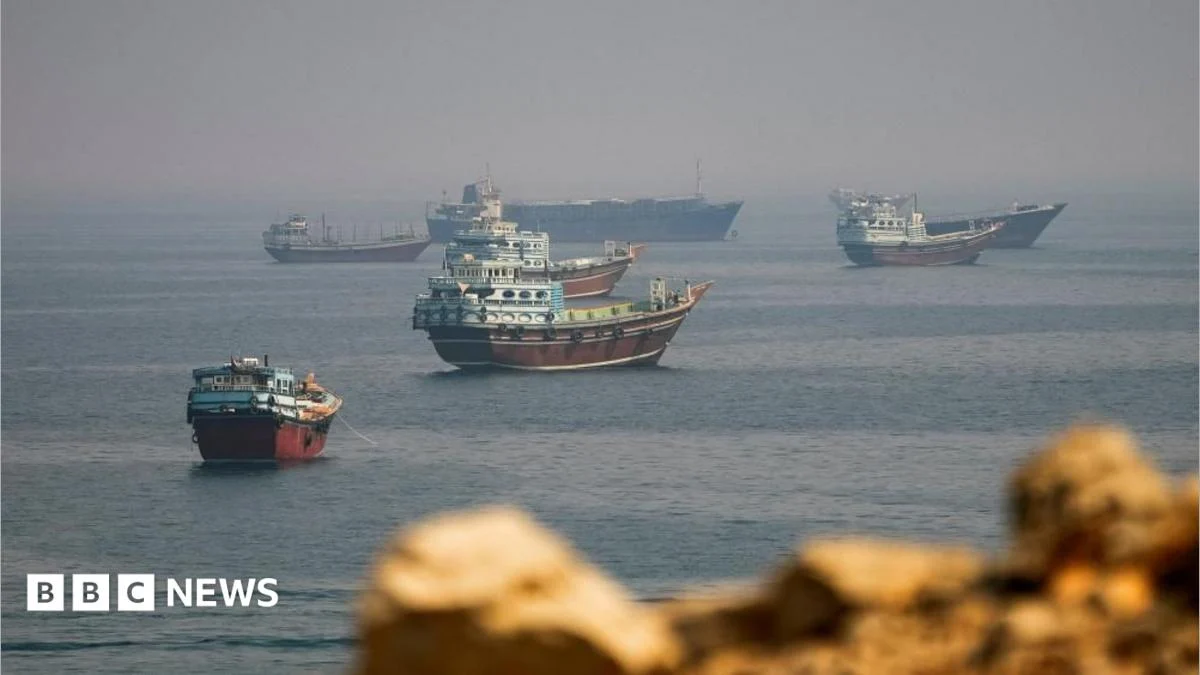
The Strait of Hormuz, a narrow waterway separating Iran from the Arabian Peninsula, serves as the sole maritime passage from the Persian Gulf to the open ocean and is one of the world’s most critical choke points for global oil supply. Approximately one-fifth of the world’s total petroleum liquids consumption, or about 21 million barrels per day, passes through this strait. Its strategic importance makes any disruption or military activity within its confines a matter of international concern, directly impacting global energy markets and international trade. CENTCOM’s statement specifically cited the IRGC’s "recent attempted attacks" on commercial shipping, which analysts interpret as attempts by Tehran to assert control over the waterway, disrupt global commerce, and apply pressure in response to international sanctions and military presence. Such actions frequently involve harassment, seizures, or the planting of sea mines, as alluded to by Trump in his later statements. The protection of this vital shipping lane has long been a primary objective of US naval operations in the Middle East, underpinning the rationale for its robust military deployment in the region.
A Volatile Timeline: From Ceasefire to Renewed Hostilities
The current round of hostilities on Tuesday did not emerge in a vacuum but is the latest chapter in a protracted and increasingly violent cycle of actions and reactions between the two nations.
-
February 28th: A significant precursor to the current situation occurred earlier in the year when the US and Israel reportedly launched wide-ranging strikes on Iranian targets. This coordinated action drew a swift and forceful response from Tehran, which retaliated by attacking Israeli interests, US military bases, and allied states in the Gulf. Critically, Iran also effectively closed the Strait of Hormuz to marine traffic for a period, demonstrating its capacity and willingness to disrupt global shipping as a leverage point. This event marked a peak in direct military confrontation prior to the recent resumption of strikes.
-
June: The Memorandum of Understanding: In an effort to de-escalate the burgeoning conflict, a US-Iran agreement, formally known as the Memorandum of Understanding (MoU), was signed in June. This agreement aimed to establish and extend a ceasefire between the two countries, providing a fragile hope for a diplomatic off-ramp. International observers welcomed the MoU as a potential pathway to stabilize the region, even if temporary.
-
Late July: First US Strikes and Iranian Retaliation: The ceasefire proved short-lived. By late July, the first known US strikes on Iran since the February escalation were reported. These attacks specifically targeted two rocket launchers located on Larak Island, strategically positioned within the Strait of Hormuz. Iran’s response was immediate and multi-pronged, involving missile attacks on air bases in Jordan, a key US ally, and a drone attack targeting the United Arab Emirates, another significant regional partner for Washington. These retaliatory actions underscored Iran’s intent to respond proportionally to perceived aggression and its capability to project power across the region.
-
August 24th: Fresh Sanctions Campaign: On August 24th, Washington unveiled a fresh and comprehensive sanctions campaign aimed at further isolating Tehran economically and expanding secondary sanctions against its allies. This move was widely interpreted as an attempt to cripple Iran’s economy and curtail its ability to fund regional proxies and military operations. Iranian officials and state media largely dismissed the new sanctions as a mere continuation of previous US economic measures, arguing that they were a consequence of Washington’s military failures in the recent conflict and would not deter their strategic objectives.
-
Tuesday, October 10th: Resumption of US Strikes: On Tuesday, US Central Command confirmed that American forces had begun striking IRGC targets at approximately 12:00 ET (16:00 GMT). This marked the definitive end of the ceasefire agreement and a clear resumption of direct military hostilities. The strikes were concentrated in southern Iran, with a regional official telling state TV that a strike near Sirik had tragically killed two people and wounded several at a wedding party, highlighting the devastating human cost of military actions. Other reports indicated that projectiles had hit areas including Chabahar and Konarak, an airport in Jiroft, and that explosions were heard on Qeshm island and in Bandar Abbas, suggesting a broad scope to the US military operation.
Official Statements and Warnings: A Rhetoric of Defiance and Deterrence
The immediate aftermath of Tuesday’s strikes saw a flurry of statements from both Washington and Tehran, underscoring the high stakes and the entrenched positions of both sides.
-
US Central Command (CENTCOM): CENTCOM’s statement was direct, accusing the IRGC of "recent attempted attacks" against commercial shipping and American service members. This framing provided the official justification for the renewed strikes, emphasizing the protection of international navigation and US personnel as primary objectives. The precise nature of these "attempted attacks" was not fully detailed, but the context pointed to maritime threats in the Strait of Hormuz, including potential sea mining operations.
-
Donald Trump’s Assertive Warnings: Former President Donald Trump, in a characteristically forceful statement, warned Iran that any retaliatory actions would be met with an even more severe response. He threatened strikes at "a much harder and higher level," emphasizing the "large and powerful" nature of Tuesday’s actions as a direct response to Iran’s targeting of a US military base in Jordan. Trump also specifically called out Iran’s "failed" attempts to deploy sea mines in the Strait of Hormuz, underscoring the maritime dimension of the conflict. His threat of a "much larger-scale attack… waiting in the wings" indicated a readiness for significant escalation should Iran continue its current trajectory. Trump’s rhetoric consistently frames US military action as a necessary deterrence against Iranian aggression and a protection of US interests and allies.
-
IRGC and Iranian State Media’s Defiance: The Islamic Revolutionary Guard Corps, a powerful and influential branch of Iran’s military, quickly responded with defiance. They stated that the US would "regret" its strikes, a common refrain in Iranian military statements designed to project strength and resolve. Iranian news agencies, acting as conduits for official government narratives, went further, reporting that retaliatory missile and drone attacks on "US bases and interests in the region" had already commenced. While independent verification of these claims was immediately difficult, such reports are intended to demonstrate Iran’s immediate response capability and its unwillingness to absorb attacks without reprisal, thereby upholding its deterrent posture.
-
Iranian President Masoud Pezeshkian’s Conditional Offer: Amidst the aggressive rhetoric, a glimmer of potential de-escalation emerged from Iranian President Masoud Pezeshkian. State media quoted him as saying that if the US were to recommit to the June ceasefire agreement, Iran would reciprocate. This statement, while conditional, offered a potential diplomatic off-ramp, suggesting that despite the ongoing military actions, a return to dialogue and adherence to previous agreements remains a possibility, albeit a distant one given the current climate. It highlights the internal dynamics within Iran, where calls for resistance are often balanced with overtures for negotiation, particularly under the pressure of international sanctions and military threats.
Geopolitical Undercurrents and Regional Dynamics
The renewed US-Iran conflict is deeply embedded in a complex web of geopolitical interests and regional power struggles. The US aims to deter Iranian aggression, protect its regional allies (including Israel and Gulf states like Saudi Arabia, UAE, and Bahrain), ensure the free flow of oil through critical waterways, and counter Iran’s nuclear ambitions and its network of proxy forces (such as Hezbollah in Lebanon, Houthi rebels in Yemen, and various militias in Iraq and Syria). Iran, on the other hand, seeks to resist what it perceives as US hegemony, challenge sanctions that it views as economic warfare, expand its regional influence, and secure its borders against perceived threats. The involvement of Israel, as indicated by the February joint strikes, adds another layer of complexity, given its own long-standing security concerns regarding Iran’s nuclear program and its support for groups hostile to Israel. Regional allies of the US, particularly the Gulf monarchies, are acutely sensitive to any escalation, as they would likely bear the immediate brunt of any broader conflict. Their official responses, while often muted in public, would involve intense diplomatic activity and heightened security alerts, as their economic stability is inextricably linked to regional peace and the secure transit of oil.
The Economic Dimension: Sanctions and Energy Security
The economic dimension remains a critical leverage point in the US-Iran rivalry. The extensive US sanctions regime, repeatedly expanded, is designed to cripple Iran’s economy by targeting its oil exports, financial sector, and key industries. While Iranian officials have downplayed their impact, these sanctions have severely constrained Iran’s ability to finance its government operations and foreign policy objectives. The Strait of Hormuz plays a central role in this economic warfare. Any disruption to shipping, whether through direct military action or the threat of it, immediately sends jitters through global oil markets, potentially driving up prices and impacting economies worldwide. The possibility of Iran closing the Strait, even temporarily, as it did in February, represents a significant threat to global energy security and is a red line for many international powers. This economic pressure is a constant backdrop to the military actions, with both sides understanding the profound implications of financial and energy stability.
Analysis: The Perilous Path of Escalation
The current trajectory points towards a perilous path of escalating military engagement. The tit-for-tat strikes, coupled with aggressive rhetoric, significantly increase the risk of miscalculation. A single unintended incident, such as a civilian casualty from a military strike or the accidental sinking of a commercial vessel, could trigger a cascade of retaliatory actions that spiral beyond either side’s control. The involvement of various actors, including non-state proxies, further complicates the conflict landscape, making it difficult to attribute actions definitively and control responses.
The immediate implications are dire: increased regional instability, heightened risk to international shipping and global trade, and a potential humanitarian crisis should a wider conflict erupt. Diplomatic channels, while ostensibly still open through President Pezeshkian’s conditional offer, appear increasingly strained as military actions take precedence. The international community, including the United Nations and various global shipping associations, will undoubtedly be watching with extreme concern, likely issuing calls for de-escalation and restraint. The absence of a robust international mediation effort further exacerbates the danger, leaving the region on the brink of a potentially devastating confrontation that would have far-reaching global consequences. The coming days will be critical in determining whether the cycle of violence can be broken, or if the region is destined for deeper conflict.