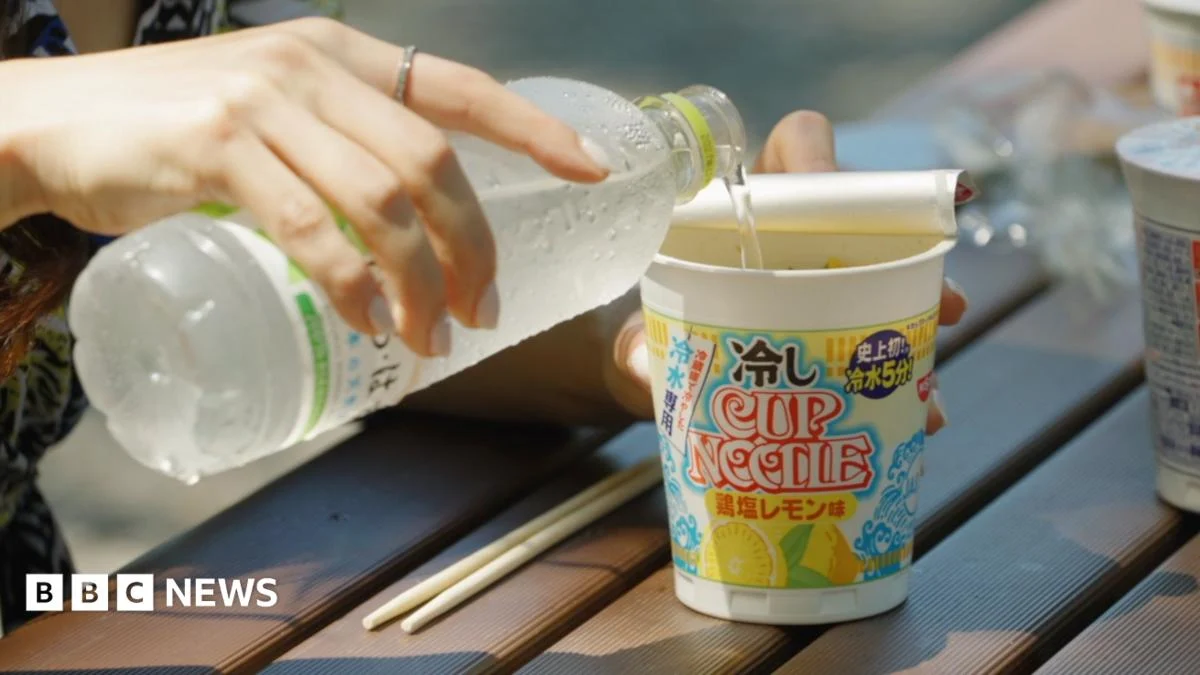
The culinary landscape of Japan, long a global innovator in convenience food, is currently experiencing a significant shift with the unprecedented success of instant noodles specifically designed for cold water preparation. This novel product, recently put to the test by the BBC’s Tokyo correspondent Kurumi Mori, has not only captured national attention but has also rapidly sold out across the country, fueled by its explosive popularity across digital platforms. Unlike their traditional counterparts, which require boiling water and are typically consumed hot, these new noodles are marketed as a refreshing solution to Japan’s increasingly sweltering summers, prompting widespread curiosity about their efficacy as a cooling snack and their potential to redefine a beloved food staple.
Japan’s Warming Summers Drive Culinary Innovation
The emergence of cold-water instant noodles is not merely a fleeting food trend but a direct response to Japan’s escalating climate challenges. In recent decades, the archipelago has witnessed a steady rise in average summer temperatures, with heatwaves becoming more frequent, prolonged, and intense. The Japan Meteorological Agency has repeatedly issued warnings about extreme heat, with temperatures regularly exceeding 35 degrees Celsius in major urban centers like Tokyo and Osaka, and occasionally surpassing 40 degrees Celsius in certain regions. This has led to a significant increase in heatstroke cases, placing immense pressure on public health services and compelling citizens to seek innovative ways to cope with the heat. Traditional Japanese summer fare often includes chilled dishes like somen or hiyashi chuka (chilled ramen), reflecting a cultural inclination towards cooling foods during warmer months. Against this backdrop, the concept of instant noodles that require no hot water, offering a quick, convenient, and cooling meal option, resonates deeply with the immediate needs of a population grappling with discomfort and health risks posed by the heat.
The Genesis of a Cool Concept: A Brief History of Instant Noodles and Their Evolution
The story of instant noodles is indelibly linked to Japan, specifically to Momofuku Ando, who invented "Chikin Ramen" in 1958, founding Nissin Food Products. Ando’s innovation revolutionized global food consumption, providing an affordable, convenient, and durable meal. Over the decades, instant noodles have evolved significantly, with countless flavor profiles, textures, and preparation methods introduced to cater to diverse palates and lifestyles. From cup noodles designed for on-the-go consumption to premium varieties mimicking restaurant-quality ramen, the industry has consistently pushed boundaries.
The idea of cold noodles itself is not entirely new in Japanese cuisine, as evidenced by hiyashi chuka, a popular summer dish of chilled ramen noodles with various toppings and a refreshing sauce. However, adapting the instant noodle format for cold water presents unique challenges and opportunities. Manufacturers have had to re-engineer the noodles themselves, ensuring they rehydrate effectively and achieve a desirable texture without heat. This involves modifications to the starch composition and processing methods, allowing the noodles to soften and become palatable when steeped in cold or room-temperature water for a slightly longer period than their hot-water counterparts. The accompanying soup base or sauce also needs to be formulated to dissolve and deliver flavor optimally in a cold medium, often featuring lighter, more refreshing profiles such as soy-based broths with citrus notes or sesame dressings.
The Product’s Debut and Viral Ascent
While specific launch dates vary among manufacturers, the cold-water instant noodle concept began to gain significant traction in late spring of the current year, just as Japan was bracing for its summer. Leading food manufacturers, recognizing the growing demand for heat-alleviating products, introduced their versions, often emphasizing the "cool" and "refreshing" aspects on their packaging. Initial sales were steady but truly exploded once the product went viral online.
Social media platforms, particularly TikTok, X (formerly Twitter), and Instagram, became hotbeds for user-generated content showcasing the novel preparation method. Influencers and ordinary consumers alike posted videos demonstrating the process – adding cold water, waiting a few minutes, and then enjoying the chilled meal. The novelty factor, combined with the relatable struggle against the heat, created a powerful feedback loop. Hashtags related to "cold noodles," "summer ramen," and "heatwave hacks" trended, amplifying visibility and driving curious consumers to stores. Reports indicate that within weeks of its widespread online exposure, major supermarkets and convenience stores across Japan began reporting stock shortages. Manufacturers were caught off guard by the sheer volume of demand, with some brands selling out their entire initial production runs in record time. Industry analysts estimate that sales surged by over 300% in key metropolitan areas during the peak viral period, far exceeding conservative projections.
The BBC Taste Test: A Critical Evaluation
Amidst the online fervor and retail frenzy, the BBC’s Tokyo correspondent Kurumi Mori undertook the crucial task of putting these innovative noodles to the taste test, offering a professional, objective assessment. Mori’s report aimed to answer the fundamental question: Do these noodles truly deliver on their promise of being a cooling, satisfying summer snack, or are they merely a novelty?
The methodology involved a direct comparison with traditional instant noodles, focusing on several key attributes: ease of preparation, rehydration time in cold water, noodle texture, flavor profile of the cold broth, and the perceived cooling effect. Mori noted that the preparation, while simple, required a slightly longer waiting period than hot-water versions—typically 5 to 7 minutes compared to the usual 3 minutes for hot. This extended steeping time is necessary for the specially formulated noodles to absorb water and soften adequately without the aid of heat.
Regarding texture, Mori reported a distinct difference. While traditional hot noodles are known for their springy, slightly chewy texture, the cold-water variants tended to be softer and perhaps less elastic, though still palatable. The flavor profile of the accompanying broth was consistently described as lighter and brighter, often featuring elements of soy sauce, vinegar, sesame, and occasionally a hint of citrus like yuzu, designed to be refreshing rather than deeply savory or rich. This lighter profile contributed significantly to the overall cooling sensation.
Crucially, Mori confirmed that the noodles did indeed provide a noticeable cooling effect, both physically and psychologically. The chilled broth and noodles offered a welcome respite from the oppressive summer heat, making them a viable option for those seeking a quick, cooling meal. However, the report also subtly highlighted that while effective as a cooling snack, they might not entirely replicate the deeply satisfying, umami-rich experience of a traditional hot ramen, positioning them more as a seasonal alternative rather than a direct replacement. The BBC’s coverage, broadcast to a global audience, further cemented the product’s status as a significant culinary innovation emanating from Japan.
Supporting Data and Market Context
The instant noodle market in Japan is robust, valued at approximately ¥600 billion annually, with per capita consumption among the highest globally. This deeply entrenched market provides a fertile ground for innovation. Beyond the immediate heatwave response, the success of cold-water noodles taps into several broader consumer trends:
- Convenience: Modern lifestyles increasingly demand quick, easy-to-prepare meals. Cold-water noodles offer a new level of convenience by eliminating the need for a kettle or microwave.
- Health and Wellness: While instant noodles are not typically considered health food, the emphasis on a "cooling" effect aligns with public health messaging around staying cool and hydrated during summer. Some manufacturers are also exploring lighter, lower-calorie formulations for these cold versions.
- Novelty and Experimentation: Consumers, especially younger demographics, are constantly seeking new and interesting food experiences, driven by social media trends.
- Environmental Considerations (Minor): Although not a primary selling point, the absence of boiling water could, in theory, offer minor energy savings for households, contributing to a subtle environmental appeal.
Globally, the instant noodle market continues to grow, projected to reach over $70 billion by 2027. Innovations like cold-water noodles from a key market like Japan often serve as precursors for global trends, indicating potential for international expansion in regions facing similar climate challenges.
Statements and Industry Reactions
The overwhelming demand for cold-water instant noodles has elicited varied responses from stakeholders:
- Manufacturers: Spokespersons from leading instant noodle companies, such as Nissin Foods and Toyo Suisan Kaisha, have expressed surprise and delight at the product’s reception. A representative from one major manufacturer, speaking anonymously due to competitive sensitivities, stated, "We anticipated a niche market for a summer-specific product, but the viral explosion of demand was truly unexpected. We are rapidly adjusting our production lines and supply chains to meet the sustained interest, which has far outstripped our initial forecasts." Companies are now strategizing for future summer seasons, considering expanded flavor ranges and improved formulations.
- Retailers: Supermarket and convenience store chains have reported significant increases in foot traffic and sales in the instant noodle aisle. "It’s been one of the fastest-moving items this summer," commented a store manager for a prominent convenience chain in Tokyo. "Customers come in specifically looking for the cold-water noodles, and when we’re out of stock, they often express disappointment." This surge has also had a halo effect, boosting sales of related summer items like bottled teas and chilled desserts.
- Food Industry Analysts: Dr. Kenji Tanaka, a food innovation consultant based in Osaka, remarked, "This trend is a fascinating case study in how cultural context and climate can drive product innovation. It demonstrates the agility of the Japanese food industry to adapt to evolving consumer needs and environmental shifts. The immediate success suggests a lasting category rather than a mere fad, especially as global temperatures continue to rise." He also highlighted the power of social media in accelerating market penetration for novel products.
- Consumers: Online forums and social media comments reflect a mix of enthusiasm and constructive criticism. Many users laud the convenience and refreshing quality, particularly during heatwaves. "It’s been a lifesaver for quick lunches when it’s too hot to cook anything," one user posted on X. Others have offered suggestions for improvement, such as experimenting with different noodle thicknesses or more robust cold broth options. A small segment remains skeptical, preferring the traditional hot variants, but even they acknowledge the innovative spirit behind the product.
Broader Impact and Implications
The rapid success of cold-water instant noodles carries several significant implications for the food industry and consumer behavior:
- Innovation Imperative: It underscores the continuous need for food manufacturers to innovate, even within mature product categories. Reimagining an existing product for a new context (cold vs. hot, summer vs. all-season) can unlock immense market potential.
- Climate-Driven Product Development: As climate change continues to impact daily life, more products are likely to be developed with specific environmental conditions in mind. This could lead to a proliferation of "cooling" foods and beverages, or even "warming" foods for increasingly colder winters in other regions.
- The Power of Digital Virality: The product’s journey from shelves to sell-out highlights the unparalleled influence of social media in modern commerce. User-generated content and influencer endorsements can catapult a product to national prominence almost overnight, requiring manufacturers to be agile in their response to sudden demand surges.
- Redefining Convenience: Cold-water noodles push the boundaries of convenience, offering a meal solution that requires minimal equipment (just cold water) and no energy input for heating. This could inspire similar "no-cook" or "minimal-cook" innovations across other food categories.
- Global Market Potential: While currently a Japanese phenomenon, the concept holds significant promise for other regions experiencing intense summer heat, such as Southeast Asia, parts of Europe, and North America. International food companies will undoubtedly be observing Japan’s experience closely for potential replication or adaptation.
- Supply Chain Challenges and Opportunities: The sudden sell-out exposed potential vulnerabilities in supply chain forecasting and production scalability. However, it also presents an opportunity for manufacturers to invest in more flexible production systems and better demand-sensing mechanisms.
In conclusion, the cold-water instant noodle is more than just a passing trend; it represents a clever fusion of traditional Japanese culinary preferences, modern convenience demands, and an astute response to a changing climate. As Japan continues to navigate its hot summers, this innovative product stands as a testament to the industry’s capacity for reinvention, offering a refreshing glimpse into the future of global food consumption. Whether it evolves into a year-round staple or remains a seasonal sensation, its impact on consumer expectations and manufacturing strategies is undeniable.