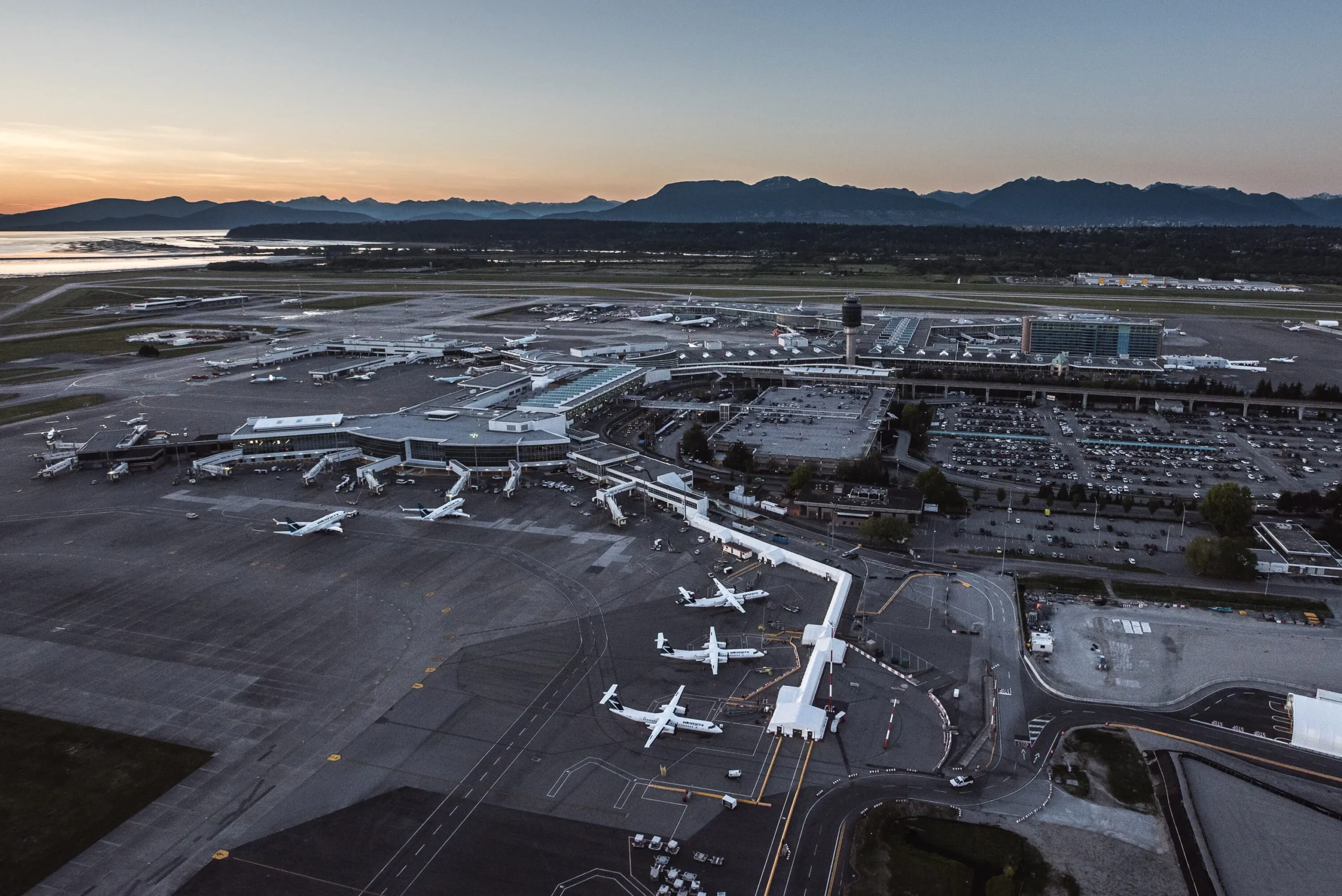
Vancouver International Airport (YVR) is pioneering a shift in aviation management by challenging the long-held assumption that airport growth necessitates massive physical expansion. As the global aviation industry faces mounting pressure to decarbonize, YVR has positioned itself as a leader in "smart growth," aiming to reach net-zero emissions by 2030—two decades ahead of the industry-wide 2050 target. This ambitious goal is being pursued not through traditional construction, but through the sophisticated application of digital twin technology and data analytics to maximize the efficiency of existing infrastructure. The strategy marks a significant departure from the historical "build-first" mentality of major transport hubs, suggesting that the future of aviation capacity lies in bits and bytes rather than bricks and mortar.
The Strategy of Efficiency Over Expansion
At the heart of YVR’s environmental strategy is a counterintuitive concept for a growing transport hub: the most sustainable building is the one that is never built. Wendy Avis, Environment Director at Vancouver International Airport, maintains that the airport’s growth objectives and its climate commitments are inherently linked. By utilizing digital models to streamline operations, the airport authority believes it can accommodate a projected increase in passenger traffic without the carbon-intensive process of pouring new concrete.
Concrete and steel are among the most significant contributors to global carbon emissions, with cement production alone accounting for approximately 8% of the world’s CO2 output. For an airport, "embodied carbon"—the emissions associated with the extraction, manufacturing, and transportation of building materials—can represent a massive environmental debt that takes decades to offset. By prioritizing operational efficiency, YVR aims to bypass this debt entirely. This "no-build" or "low-build" philosophy focuses on "sweating the assets," a term used in asset management to describe the process of extracting maximum utility from existing infrastructure before considering capital expenditure on new facilities.
The Role of Digital Twin Technology in Modern Aviation
To achieve this level of optimization, YVR has invested heavily in a "digital twin"—a precise virtual replica of the airport’s physical environment. This digital model is not a static map but a living, breathing representation powered by real-time data from thousands of Internet of Things (IoT) sensors located throughout the terminal and airfield. The digital twin allows airport operators to visualize and simulate the movement of passengers, baggage, aircraft, and ground support equipment with unprecedented accuracy.
Through advanced analytics, the digital twin identifies bottlenecks in real-time. For example, if data suggests that a particular security checkpoint or baggage carousel is nearing capacity, the system can simulate various interventions to redistribute flow before a physical backlog occurs. This predictive capability allows YVR to handle more flights and more travelers within the same square footage that previously felt "full." Furthermore, the digital twin assists in reducing Scope 1 and Scope 2 emissions—those directly controlled by the airport authority—by optimizing heating, ventilation, and air conditioning (HVAC) systems and lighting based on actual occupancy levels rather than fixed schedules.
Chronology of YVR’s Climate and Innovation Roadmap
The transition to a digital-first, net-zero strategy has been a multi-year journey for the Vancouver Airport Authority. Understanding the timeline of these developments provides context for how the airport arrived at its current 2030 target.
- 2019: YVR announces its commitment to becoming net-zero by 2050, aligning with the goals of the Paris Agreement and the International Air Transport Association (IATA).
- 2020: The COVID-19 pandemic leads to a dramatic drop in passenger traffic. Rather than halting innovation, YVR uses the downtime to accelerate its digital transformation, recognizing that a more efficient, data-driven airport would be more resilient in a post-pandemic world.
- 2021: The airport officially moves its net-zero target forward from 2050 to 2030. This aggressive timeline necessitates a complete overhaul of its Capital Project Plan, shifting focus from terminal expansions to technological integration and fleet electrification.
- 2022: YVR launches its "Innovation Hub," a platform for testing new technologies, including the first iterations of its digital twin. The hub focuses on "situational awareness" to improve aircraft turn-around times and reduce taxiing emissions.
- 2023: The airport begins integrating its digital twin with climate modeling data, allowing it to predict how rising sea levels and extreme weather events might impact operations, further emphasizing the need for resilient, efficient infrastructure.
- 2024: YVR intensifies its focus on the electrification of its ground fleet and the installation of more robust electric vehicle (EV) charging infrastructure for both airside and landside operations, supported by the data insights provided by the virtual model.
Supporting Data: The Scale of the Challenge
The urgency of YVR’s mission is underscored by the broader environmental impact of the aviation sector. According to the Air Transport Action Group (ATAG), global aviation accounted for approximately 2.1% of all human-induced CO2 emissions prior to the pandemic. While the airport authority itself is only responsible for a fraction of these emissions (mostly through building operations and ground vehicles), the infrastructure it provides dictates the efficiency of the airlines that use it.
YVR’s goal of net-zero by 2030 covers its own operations, which include:
- Buildings: Terminals, hangars, and administrative offices.
- Fleets: Security vehicles, shuttle buses, and maintenance trucks.
- Emergency Generators: Critical backup power systems.
- Refrigerants: Cooling systems for the massive terminal complex.
- Electricity: Sourcing renewable power for all onsite needs.
In 2022, YVR reported a 15% reduction in carbon emissions compared to its 2019 baseline, despite a significant rebound in passenger numbers. The airport aims to eliminate approximately 10,000 tonnes of CO2 equivalent annually through its current initiatives. By avoiding a major terminal expansion, which could have added an estimated 50,000 to 100,000 tonnes of embodied carbon to the atmosphere, the "no-build" strategy represents one of the most significant carbon-avoidance measures in the airport’s history.
Stakeholder Reactions and Industry Perspectives
The shift toward technology-driven growth has garnered attention from across the aviation industry. The Airports Council International (ACI) has praised YVR’s proactive approach, noting that the "YVR model" could serve as a blueprint for mid-to-large-sized airports globally.
"The industry is at a crossroads where traditional growth models are no longer socially or environmentally viable," said a representative from a leading aviation consultancy. "What Vancouver is doing—using data to delay or eliminate the need for new concrete—is the smartest way to manage the financial risks of the green transition. It protects the balance sheet while fulfilling the environmental mandate."
Local environmental groups have expressed cautious optimism. While they applaud the 2030 net-zero target for airport operations, many continue to push for greater accountability regarding Scope 3 emissions—the emissions from the aircraft themselves. YVR has responded by becoming a major advocate for Sustainable Aviation Fuel (SAF) and providing the infrastructure necessary for airlines to transition to cleaner propulsion technologies in the future.
Broader Impact and Implications for Global Aviation
The implications of YVR’s strategy extend far beyond the borders of British Columbia. As airports around the world, from London Heathrow to Singapore Changi, face land constraints and intense public scrutiny over expansion plans, the digital twin approach offers a viable alternative.
Economic Resilience
By avoiding massive capital projects, airports can maintain lower debt loads. In an era of fluctuating travel demand and high interest rates, the ability to increase capacity through software updates rather than multi-billion-dollar construction contracts provides a significant competitive advantage.
Decarbonizing the Supply Chain
YVR’s focus on avoiding new construction sends a powerful message to the global construction industry. It incentivizes the development of low-carbon building materials for when construction is absolutely necessary and highlights the value of retrofitting and optimizing old structures.
The Future of Passenger Experience
For travelers, the use of digital twins and real-time analytics translates to a smoother journey. Predictive modeling can reduce wait times at customs, optimize gate assignments to minimize walking distances, and ensure that baggage arrives at the carousel simultaneously with the passenger. Efficiency, in this context, is synonymous with a better user experience.
Conclusion: A New Standard for Infrastructure
Vancouver International Airport’s commitment to reaching net zero by 2030 through the use of digital twins and optimized growth represents a milestone in the evolution of sustainable infrastructure. It demonstrates that "green" and "growth" are not mutually exclusive, provided that growth is managed through intelligence rather than physical footprint. As the 2030 deadline approaches, the global aviation community will be watching YVR closely to see if this digital-first approach can indeed deliver a net-zero future without sacrificing the connectivity that the modern world relies upon. The success of YVR may well determine whether the next generation of global hubs is built out of concrete or out of code.