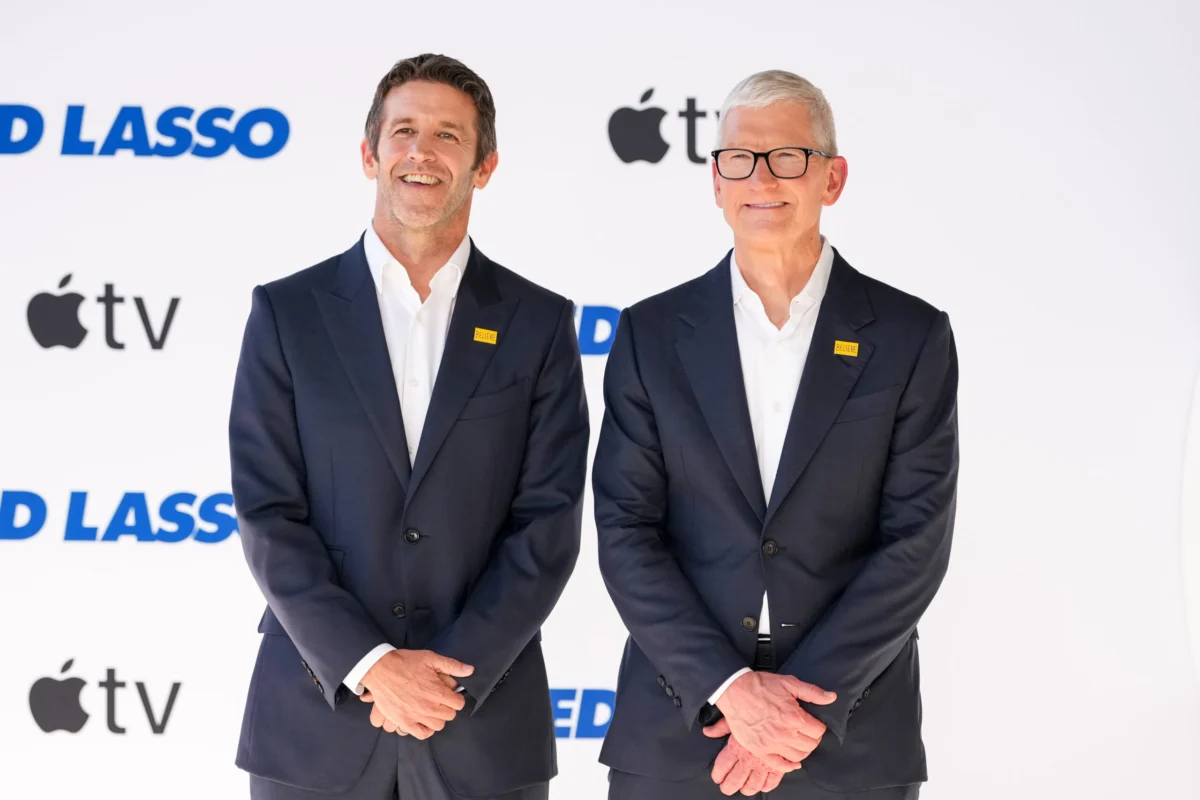
Cupertino, California – A pivotal leadership transition has officially marked the dawn of a new era at Apple Inc., as John Ternus, the company’s former Senior Vice President of Hardware Engineering, assumes the mantle of Chief Executive Officer. The change follows the departure of long-serving CEO Tim Cook, who stepped down this week after a transformative 15-year tenure at the helm. Ternus’s immediate challenge and opportunity arrived simultaneously, with his very first internal memo to employees promising a “huge launch next week” – a timing that places Apple’s highly anticipated annual iPhone event directly under his purview, even before he has fully settled into the top leadership role. While the corporate landscape shifts at Apple Park, Tim Cook will not be departing entirely, transitioning into a newly created position as Executive Chairman, a role expected to leverage his extensive experience in policy relationships and global strategic initiatives. This significant realignment raises immediate questions about the strategic direction of the world’s most valuable company, particularly concerning its innovation trajectory, its approach to the burgeoning artificial intelligence landscape, and how much autonomy shareholders will grant Ternus to define his vision.
The Dawn of the Ternus Era: An Immediate Test of Leadership
John Ternus’s appointment as CEO marks a significant moment in Apple’s history, signaling a potential return to a more pronounced product-centric leadership. His ascension, effective this week, was swiftly followed by an internal communication to Apple employees that set an immediate, high-stakes tone. The memo, first reported by TechCrunch, contained a clear directive and an exciting promise: a “huge launch next week.” Given Apple’s established annual product cycle, this can be logically inferred as the unveiling of the next generation of iPhones, alongside other potential hardware and software updates. This immediate, high-profile event serves as Ternus’s first public test, placing immense pressure on his leadership right from the outset. The seamless execution and reception of this launch will undoubtedly be scrutinized by investors, analysts, and consumers worldwide, offering the first tangible glimpse into the operational style and strategic priorities of the new CEO. Ternus, known internally for his meticulous attention to detail and deep understanding of product development, will need to demonstrate not only his ability to steer the ship but also to infuse a renewed sense of innovation and excitement into Apple’s product announcements.
A Legacy of Growth: Tim Cook’s Transformative Leadership
Tim Cook’s departure from the CEO role concludes a remarkable 15-year chapter characterized by unprecedented financial growth, strategic diversification, and a steadfast commitment to corporate values. Taking over from the iconic Steve Jobs in August 2011, Cook inherited a company on the cusp of global dominance, with the iPhone already a cultural phenomenon. Under his leadership, Apple’s market capitalization surged from approximately $350 billion to over $3 trillion, making it the first company in history to achieve such a valuation. This exponential growth was fueled by several key strategic pillars.
Cook meticulously optimized Apple’s legendary supply chain, enhancing efficiency and profitability to an unparalleled degree. He significantly expanded the company’s global retail footprint and solidified its brand presence in emerging markets. Beyond hardware, Cook orchestrated a monumental shift towards services, transforming what was once a supplementary revenue stream into a multi-billion dollar business. Services, encompassing the App Store, Apple Music, iCloud, Apple Pay, and more, now consistently generate over $80 billion annually, providing a high-margin, recurring revenue base that has diversified Apple’s financial profile beyond its reliance on the iPhone.
Furthermore, Cook oversaw the introduction of significant new product categories, most notably the Apple Watch, which revolutionized the wearables market, and the AirPods, which quickly became the world’s most popular wireless earbuds. While critics often pointed to a perceived lack of "next big thing" akin to the iPhone under Jobs, Cook’s tenure was defined by relentless refinement, ecosystem expansion, and the steady introduction of innovative technologies like the M-series chips, which transformed the Mac lineup. His leadership also saw Apple take increasingly public stances on privacy, environmental sustainability, and human rights, shaping the company’s image as a socially conscious corporate giant.
However, Cook’s tenure was not without its challenges. The company faced intense scrutiny over its manufacturing practices, antitrust investigations globally, and ongoing debates about app store policies. The quest for the "next big thing" remained a recurring theme, with the recently launched Apple Vision Pro representing a significant, albeit nascent, foray into spatial computing. As Cook hands over the reins, he leaves behind a company that is financially robust, strategically diversified, and deeply embedded in the lives of billions, setting a formidable standard for his successor.
John Ternus: The Product Builder Takes the Helm
John Ternus, 51, steps into the CEO position with a deep background in hardware engineering and a reputation as a pragmatic, product-focused leader. Having joined Apple in 2001, Ternus steadily climbed the ranks, serving as Vice President of Hardware Engineering before being promoted to Senior Vice President of Hardware Engineering in 2021, reporting directly to Tim Cook. In this role, he oversaw the engineering of virtually all Apple products, including the iPhone, iPad, Mac, AirPods, and the groundbreaking Apple Vision Pro.
Internally, Ternus is highly regarded for his ability to bridge technical complexity with design aesthetics and user experience. He played a crucial role in the development of the M1, M2, and M3 series of Apple Silicon chips, which have redefined the performance and power efficiency of the Mac lineup. His leadership was also instrumental in the continuous evolution of the iPhone’s hardware, from camera advancements to display technologies. This extensive experience as a "product builder," as referenced in the original report, suggests a potential emphasis on core product innovation and execution under his leadership. Analysts speculate that Ternus’s engineering background could lead to a renewed focus on groundbreaking hardware advancements, potentially driving the kind of "wow" factor that some felt was less frequent in the later stages of Cook’s tenure. His ability to articulate complex technical details in an accessible manner has also made him a frequent presenter at Apple’s keynote events, making him a familiar face to the public and investors alike.
Navigating the AI Frontier: Hardware, Software, and Strategy
The appointment of Ternus comes at a critical juncture for the technology industry, dominated by the rapid advancements and transformative potential of artificial intelligence. The original TechCrunch podcast discussion highlighted a fascinating perspective: Ternus, despite his hardware background, might be "better positioned to make progress on software than hardware in this new AI era." This hypothesis is rooted in the understanding that modern AI, particularly on-device AI, requires seamless integration between specialized hardware (neural engines), optimized software, and robust cloud infrastructure.
Apple has historically taken a more measured, privacy-centric approach to AI compared to competitors like Google and Microsoft, who have aggressively integrated generative AI into their product suites. Under Ternus, Apple faces the imperative to demonstrate its AI prowess without compromising its core values. His deep understanding of Apple’s custom silicon, which includes dedicated neural engines, could be a significant advantage. By pushing the boundaries of on-device AI processing, Apple could offer highly personalized, privacy-preserving AI experiences that differentiate it from cloud-first solutions. This involves not just developing powerful algorithms but ensuring the hardware can efficiently execute them, a domain where Ternus’s expertise is unparalleled.
The challenge for Ternus will be to accelerate Apple’s AI initiatives, potentially through strategic acquisitions or aggressive internal development, and to seamlessly weave these capabilities into iOS, macOS, and its entire product ecosystem. This isn’t merely about incremental updates; it’s about reimagining user interactions, enhancing productivity, and unlocking new forms of creativity through intelligent systems. The pressure to deliver compelling AI features is immense, as rivals are already setting high expectations for what AI can do on personal devices. Ternus’s leadership will be crucial in defining Apple’s unique, privacy-first vision for AI, and ensuring that the integration of these advanced capabilities feels natural and empowering to users, rather than intrusive or experimental.
The Executive Chairman’s Influence: Tim Cook’s Continued Role
The establishment of an Executive Chairman role for Tim Cook is a strategic move designed to ensure continuity and leverage his invaluable experience without directly overseeing day-to-day operations. As Executive Chairman, Cook is expected to focus on high-level strategic initiatives, particularly in areas like policy relationships, government affairs, and global expansion. This includes navigating complex geopolitical landscapes, such as the ongoing trade tensions and regulatory challenges that have significantly impacted Apple’s operations and supply chain, especially in regions like China. The article specifically references Cook’s recent involvement in turning "something as small as a map label into a very public balancing act," illustrating the delicate and high-stakes nature of these policy relationships.
This arrangement offers several advantages. It provides a smooth transition for Ternus, allowing him to benefit from Cook’s counsel and institutional knowledge while establishing his own leadership style. For shareholders, it signals stability, ensuring that a seasoned leader remains engaged in safeguarding Apple’s long-term interests and navigating external pressures. However, it also raises questions about the power dynamics within Apple’s executive structure. Will Cook’s influence be limited to external affairs, or will he continue to exert sway over product strategy and internal decision-making? The success of this dual leadership model will depend heavily on the working relationship between Cook and Ternus, and their ability to clearly define and respect their respective domains. History offers mixed precedents for such arrangements, and the tech world will be watching closely to see how this evolves.
Shareholder Expectations and Market Reaction
The market’s initial reaction to such a significant leadership change is always a barometer of investor confidence. While the specific stock movements immediately following the announcement are not detailed, the underlying sentiment often revolves around stability, growth prospects, and the perceived vision of the new leader. Given Apple’s track record under Cook, which saw its stock price appreciate by over 1,000% during his CEO tenure, the bar for Ternus is exceptionally high.
Shareholders will be looking for clear signals from Ternus regarding his strategic priorities. Will he prioritize further expansion of the services segment, or will he push for revolutionary new hardware products? How will he address the increasing competitive pressure in the smartphone market and the race for AI dominance? The promise of a "huge launch next week" is a powerful initial statement, but sustained confidence will require a long-term vision that assures continued innovation and market leadership. Analysts from firms like Wedbush Securities and Morgan Stanley will be issuing updated price targets and recommendations based on Ternus’s early moves and communications. The challenge for Ternus will be to not only maintain Apple’s current trajectory but to identify and capitalize on the next wave of technological innovation, ensuring the company’s continued growth and profitability in an increasingly dynamic global economy.
Analyst Perspectives and Industry Outlook
Industry analysts have been quick to weigh in on the implications of this leadership transition. Many see Ternus’s appointment as a logical progression, given his deep involvement in product development. Carolina Milanesi, a principal analyst at Creative Strategies, noted, "Ternus represents continuity in Apple’s commitment to product excellence, but his engineering background might usher in an era of more aggressive hardware innovation, particularly given the foundational work laid with Apple Silicon." Others, like Gene Munster of Loup Ventures, suggest that "Cook’s move to Executive Chairman is a masterstroke, allowing him to manage the regulatory headwinds while Ternus focuses on unleashing the next generation of Apple products."
The consensus among many experts is that Apple is well-positioned, but not immune to the demands of the current tech landscape. The shift towards AI is seen as the defining challenge. Analysts are keen to observe how Ternus will balance Apple’s traditionally conservative approach to new technologies with the rapid pace of AI development. Questions linger about Apple’s strategy for generative AI, its potential foray into new categories beyond Vision Pro, and its response to escalating antitrust pressures worldwide. The Equity podcast hosts, Kirsten Korosec and Sean O’Kane, specifically delved into the intricacies of this transition, noting the unique challenges and opportunities Ternus faces. Their discussion underscored the idea that Ternus’s technical acumen might be better suited to integrate software advancements, especially in the AI domain, by leveraging his understanding of the underlying hardware architecture.
The Road Ahead: Innovation and Evolution
As John Ternus assumes leadership, Apple stands at a crossroads, balancing its rich legacy with the imperative for future-defining innovation. The immediate task of overseeing a major iPhone launch will set the tone, but the long-term vision will be critical. Ternus must navigate a complex technological landscape marked by the rise of artificial intelligence, increasing regulatory scrutiny, and evolving consumer expectations. His background as a "product builder" suggests a potential renewed emphasis on groundbreaking hardware and seamless integration with software.
Tim Cook’s continued presence as Executive Chairman offers a unique blend of continuity and fresh leadership, allowing Cook to leverage his policy expertise while Ternus shapes the company’s product future. The success of the "Ternus era" will ultimately hinge on his ability to foster a culture of relentless innovation, deliver compelling new products and services, and articulate a clear vision for Apple’s role in an AI-driven world. The tech industry, investors, and billions of Apple users worldwide will be watching intently as this new chapter unfolds, eager to see what new horizons Apple will explore under its new CEO.