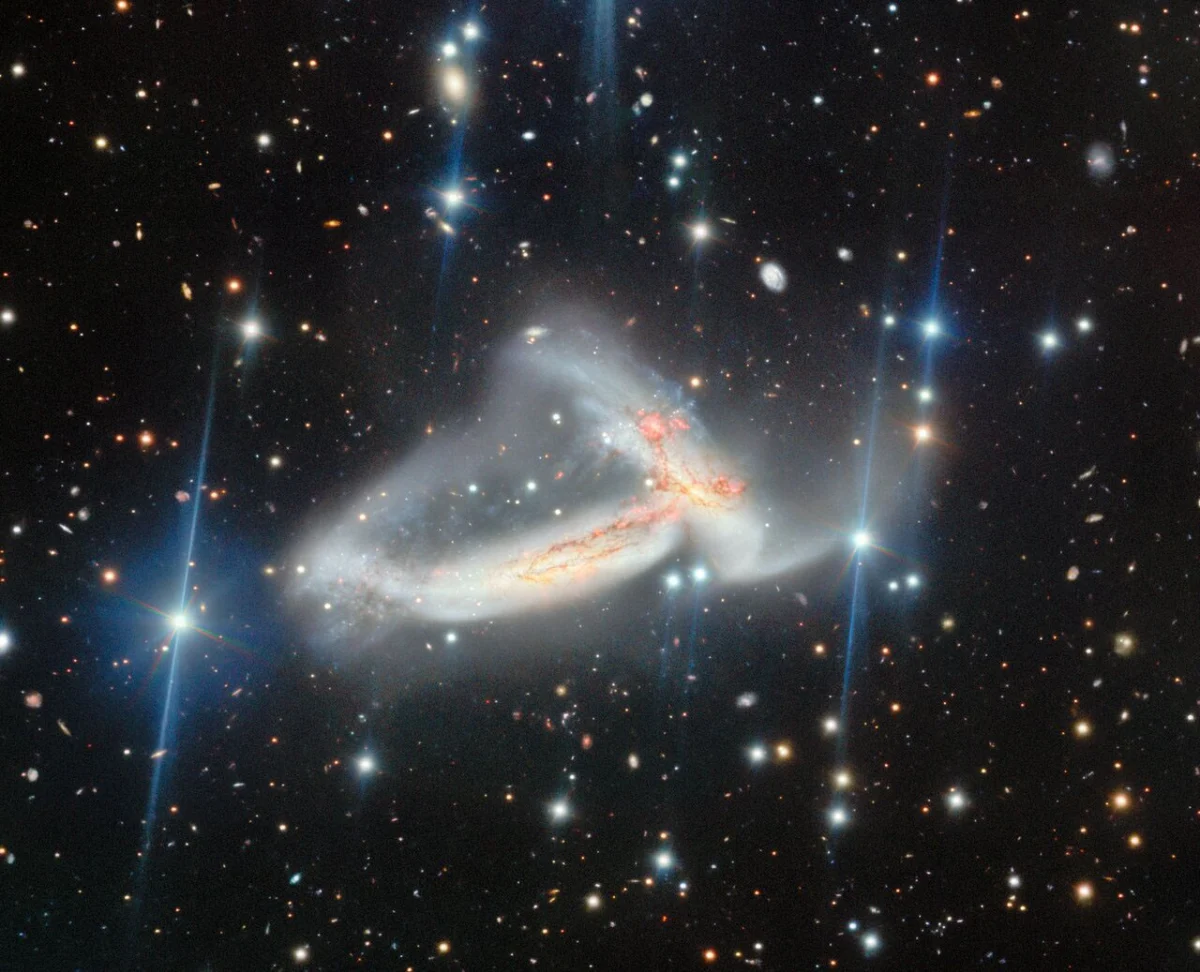
The cosmos has once again unveiled a breathtaking spectacle, captured and presented by NASA’s renowned Astronomy Picture of the Day (APOD) program. Featured prominently is a stunning image of two spiral galaxies locked in a profound gravitational embrace, a cosmic ballet of immense proportions, now known by the evocative Hawaiian name, NÄ â€˜Uhane MÄ hoe Huki PÅ« i ke Ola. This designation, translating to "The Twin Spirits Pulling Together Creating Life," not only encapsulates the profound astronomical processes at play but also highlights a unique intersection of cutting-edge scientific discovery and rich cultural heritage, thanks to the vision of high school students in Hawai‘i.
Unveiling a Galactic Dance of Destiny
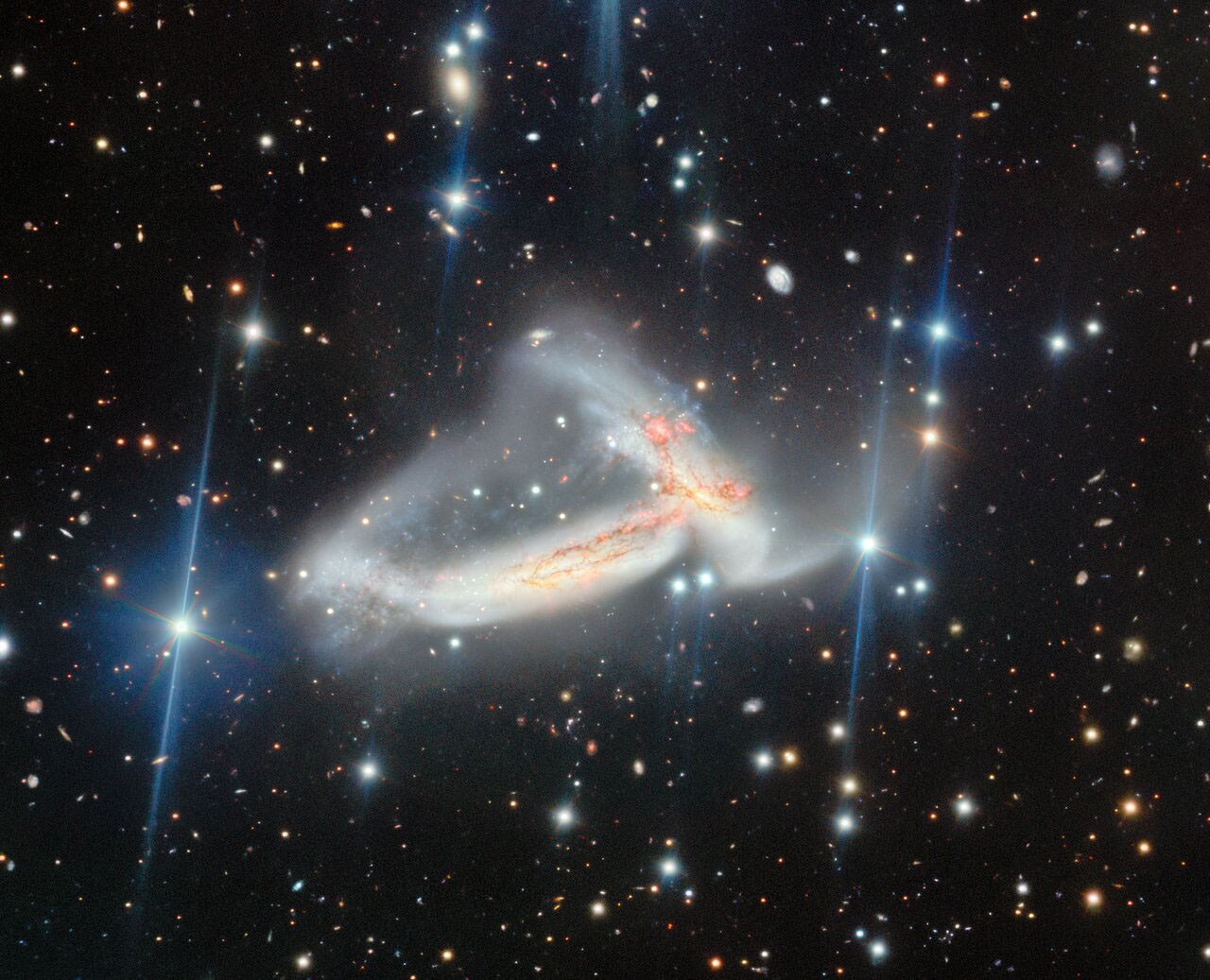
The featured image, a testament to the observational prowess of the 8.1-meter Gemini North telescope situated atop Maunakea, Hawai‘i, reveals the intricate details of this galactic merger. Located approximately 200 million light-years from Earth in the direction of the high-flying constellation Pegasus, the merging pair, scientifically cataloged as NGC 7253 and Arp 278, offers astronomers a crucial window into the violent yet creative forces that shape the universe. Such collisions are not merely destructive; they are fundamental drivers of cosmic evolution, igniting new generations of stars and redistributing the elemental building blocks essential for life.
Galaxy mergers are among the most dramatic events in the universe, playing a pivotal role in the formation and evolution of larger galaxies, including our own Milky Way. While the term "collision" might conjure images of stars smashing into each other, the vast distances between stars mean that direct stellar impacts are exceedingly rare. Instead, the gravitational fields of the two approaching galaxies interact, pulling and stretching each other into distorted shapes. Tidal forces rip apart galactic structures, scattering stars into new orbits and funneling vast quantities of gas and dust towards the galactic centers. This compression of interstellar material often triggers intense bursts of star formation, known as starbursts, as dense clouds collapse under their own gravity to form new stellar nurseries. Over millions to billions of years, these merging spiral galaxies often coalesce to form a single, larger, and typically elliptical galaxy, marking a significant phase in their life cycle. The future collision between the Milky Way and the Andromeda galaxy, predicted to occur in about 4.5 billion years, offers a local preview of such a grand cosmic transformation.
Project HÅkÅ«lani: A Stellar Bridge Between Worlds
What makes the observation of NGC 7253 and Arp 278 particularly noteworthy is not just its scientific merit, but the collaborative and culturally resonant process behind its public presentation. The image target, its research, and its powerful Hawaiian name were all contributions from high school students participating in the joint Gemini Observatory and University of Hawai‘i Project HÅkÅ«lani internship program. This initiative, whose name means "Celestial Star" or "Heavenly Star" in Hawaiian, is designed to engage local students in real-world astronomical research, fostering a deeper connection between the scientific endeavors on Maunakea and the indigenous culture of Hawai‘i.
Project HÅkÅ«lani serves as a beacon for STEM education, particularly for underrepresented communities. It provides a unique opportunity for students to delve into the intricate processes of astronomical observation, data analysis, and scientific communication. Interns are not merely passive learners; they actively participate in selecting astronomical targets, conducting preliminary research, and ultimately contributing to the scientific discourse. The decision to bestow Hawaiian names upon these celestial objects is a deliberate and deeply meaningful aspect of the program. It recognizes and integrates the profound historical knowledge of Hawaiian voyagers and navigators, who for centuries used the stars as their guides across the vast Pacific Ocean. By connecting modern scientific discovery with ancestral wisdom, Project HÅkÅ«lani enriches both fields and offers a powerful model for culturally responsive pedagogy in science. The chosen name, NÄ â€˜Uhane MÄ hoe Huki PÅ« i ke Ola, perfectly encapsulates this synergy, reflecting both the scientific understanding of cosmic star formation and the cultural reverence for the life-giving forces of the universe.
The Gemini North Observatory: A Window from Maunakea
The stunning clarity and detail of the image are a testament to the capabilities of the Gemini North telescope. As one of twin 8.1-meter optical/infrared telescopes (its sibling, Gemini South, is located in Chile), Gemini North represents a cornerstone of international astronomical collaboration. Situated at an altitude of 4,205 meters (13,796 feet) on Maunakea, a dormant volcano on the island of Hawai‘i, the observatory benefits from some of the best atmospheric conditions on Earth for ground-based astronomy. Its adaptive optics systems compensate for atmospheric distortion, allowing it to achieve image quality often comparable to space telescopes.
Maunakea itself holds immense cultural and spiritual significance for Native Hawaiians, revered as a sacred space connecting the earth to the heavens. The presence of astronomical observatories on its summit has long been a subject of discussion and debate, balancing scientific advancement with cultural preservation. Programs like Project HÅkÅ«lani, along with concerted efforts by institutions like the University of Hawai‘i, aim to foster respectful coexistence and collaboration, ensuring that the benefits of scientific discovery are shared with and contribute to the local community. The selection of the Gemini North telescope for this particular observation underscores its role not just as a scientific instrument but as a platform for educational and cultural engagement.
Ka Lupe o Kawelo: Ancient Wisdom Meets Modern Discovery
Further deepening the cultural resonance of this discovery is the fact that these merging galaxies, NGC 7253 and Arp 278, are found within a region of Pegasus identified as the Hawaiian navigational constellation Ka Lupe o Kawelo. "Ka Lupe o Kawelo," meaning "The Kite of Kawelo," refers to a specific asterism within the broader Western constellation Pegasus, historically used by Polynesian navigators for their incredible voyages across the Pacific.
Hawaiian astronomy, or HÅkÅ«lani, is a sophisticated system of celestial observation deeply interwoven with navigation, agriculture, and spiritual practices. For millennia, master navigators, or wa‘a, meticulously charted the stars, developing an intricate understanding of celestial movements to guide their double-hulled canoes across thousands of miles of open ocean. The stars were not merely points of light; they were living entities, guides, and storytellers. Integrating this ancient knowledge with contemporary scientific findings provides a profound perspective, illustrating that the pursuit of understanding the cosmos is a universal human endeavor, transcending cultural and temporal boundaries. It highlights the continuum of human curiosity, from ancestral voyagers charting their course by starlight to modern astronomers probing the depths of intergalactic space.
The APOD Legacy and Its Evolution
The Astronomy Picture of the Day (APOD) has been a daily fixture for space enthusiasts and professional astronomers alike since 1995. Curated by Robert Nemiroff (Michigan Technological University) and Jerry Bonnell (NASA Goddard Space Flight Center), APOD features a different image or photograph of our fascinating universe each day, accompanied by a brief, accessible explanation written by a professional astronomer. Its mission is to educate and inspire, bringing the wonders of the cosmos to a global audience. The program has become an invaluable resource for public outreach, making complex astronomical concepts understandable and showcasing the breathtaking beauty of the universe.
In a significant operational development, APOD’s main NASA site is undergoing a migration, transitioning from its long-standing home at apod.nasa.gov to science.nasa.gov/apod. This move reflects NASA’s ongoing efforts to consolidate and streamline its digital presence, ensuring greater accessibility and integration of its vast scientific resources. While the core mission and daily content will remain unchanged, this transition aims to enhance the user experience and ensure the longevity and robustness of the APOD archive for future generations of cosmic explorers. The consistency of APOD’s daily features, regardless of such technical transitions, underscores its unwavering commitment to public science engagement.
Broader Implications: Inspiring Future Generations and Understanding Cosmic Evolution
The story of NÄ â€˜Uhane MÄ hoe Huki PÅ« i ke Ola is more than just an astronomical observation; it is a powerful narrative with far-reaching implications. Scientifically, it contributes to our understanding of how galaxies evolve, how star formation is triggered on grand scales, and ultimately, how the elemental ingredients for life are forged and distributed across the universe. Galaxy collisions are crucial to the cosmic cycle, recycling matter and energy, and shaping the large-scale structure of the cosmos we observe today. Each new image and analysis, particularly of such dynamic events, refines our cosmological models and deepens our appreciation for the universe’s intricate dance.
Educationally, Project HÅkÅ«lani exemplifies the profound impact of experiential learning and cultural integration in STEM fields. By empowering high school students to contribute meaningfully to scientific discovery, it cultivates a new generation of scientists, critical thinkers, and culturally aware individuals. This program serves as a blueprint for engaging diverse communities in scientific endeavors, demonstrating that science is not a monolithic pursuit but a collaborative tapestry woven with diverse perspectives and traditions. The act of naming celestial objects in Hawaiian also reinforces the importance of linguistic and cultural preservation in an increasingly globalized world.
Ultimately, the image of these "Twin Spirits Pulling Together Creating Life" reminds us of the interconnectedness of all things: the distant cosmic processes that create stars and planets, the sophisticated instruments that allow us to observe them, and the human intellect and cultural heritage that seek to understand and name them. As APOD continues its mission from its new digital home, and as programs like Project HÅkÅ«lani continue to flourish, the journey to discover and appreciate our universe remains an endless source of wonder and inspiration.