Photoreceptor degeneration, a relentless process that erodes the light-sensing cells of the retina, stands as the underlying cause of numerous debilitating visual impairments. Among the most prevalent and impactful of these are age-related macular degeneration (AMD) and retinitis pigmentosa (RP). Collectively, these conditions cast a long shadow over the lives of approximately 200 million individuals globally, marking them as leading contributors to visual impairment and irreversible blindness. The ramifications extend far beyond the individual, imposing a staggering economic burden estimated to exceed US$400 billion annually, a figure derived from escalating healthcare expenditures and significant losses in workforce productivity.
In these devastating diseases, the delicate photoreceptor cells within the retina, responsible for capturing incoming light and initiating the cascade of visual processing, undergo a gradual and irreversible deterioration, ultimately leading to cell death. While this critical first step in vision is lost, a crucial silver lining exists: much of the intricate neural circuitry located deeper within the retina often remains remarkably intact and retains its inherent capacity for function. The fundamental challenge, however, lies in the absence of the initial light signals. Without functional photoreceptors to detect and relay this information, these surviving retinal cells are rendered incapable of transmitting visual data to the brain, effectively silencing the visual pathway.
This preservation of downstream retinal circuitry has ignited a fervent pursuit among scientists dedicated to finding ways to reawaken light sensitivity and restore functional vision. Current therapeutic avenues, while offering glimmers of hope, present their own sets of limitations. Gene therapy, for instance, while promising for specific genetic disorders, is only applicable to a small subset of patients harboring particular mutations. Electronic retinal prostheses, another innovative approach, often involve invasive surgical procedures, incur substantial costs, and necessitate extensive patient training to achieve even rudimentary visual perception. More recently, optogenetics and the development of light-responsive drugs have entered the clinical testing phase. While light-responsive drugs have demonstrated encouraging safety profiles in early trials, the challenge of restoring high-quality vision under typical ambient illumination levels remains a significant hurdle.
A New Dawn: Light-Activated Drugs Emerge as a Promising Therapeutic Strategy
In a significant advancement toward addressing this unmet medical need, a collaborative research consortium, spearheaded by the Institute for Bioengineering of Catalonia (IBEC), has unveiled a groundbreaking class of photoswitchable small-molecule drugs. These novel compounds are meticulously engineered to compensate for the loss of photoreceptor function, demonstrating a remarkable ability to restore critical visual functions in animal models of blindness. The pivotal findings detailing this innovation were recently published in the prestigious Journal of the American Chemical Society (JACS), a testament to the scientific rigor and potential impact of this research.
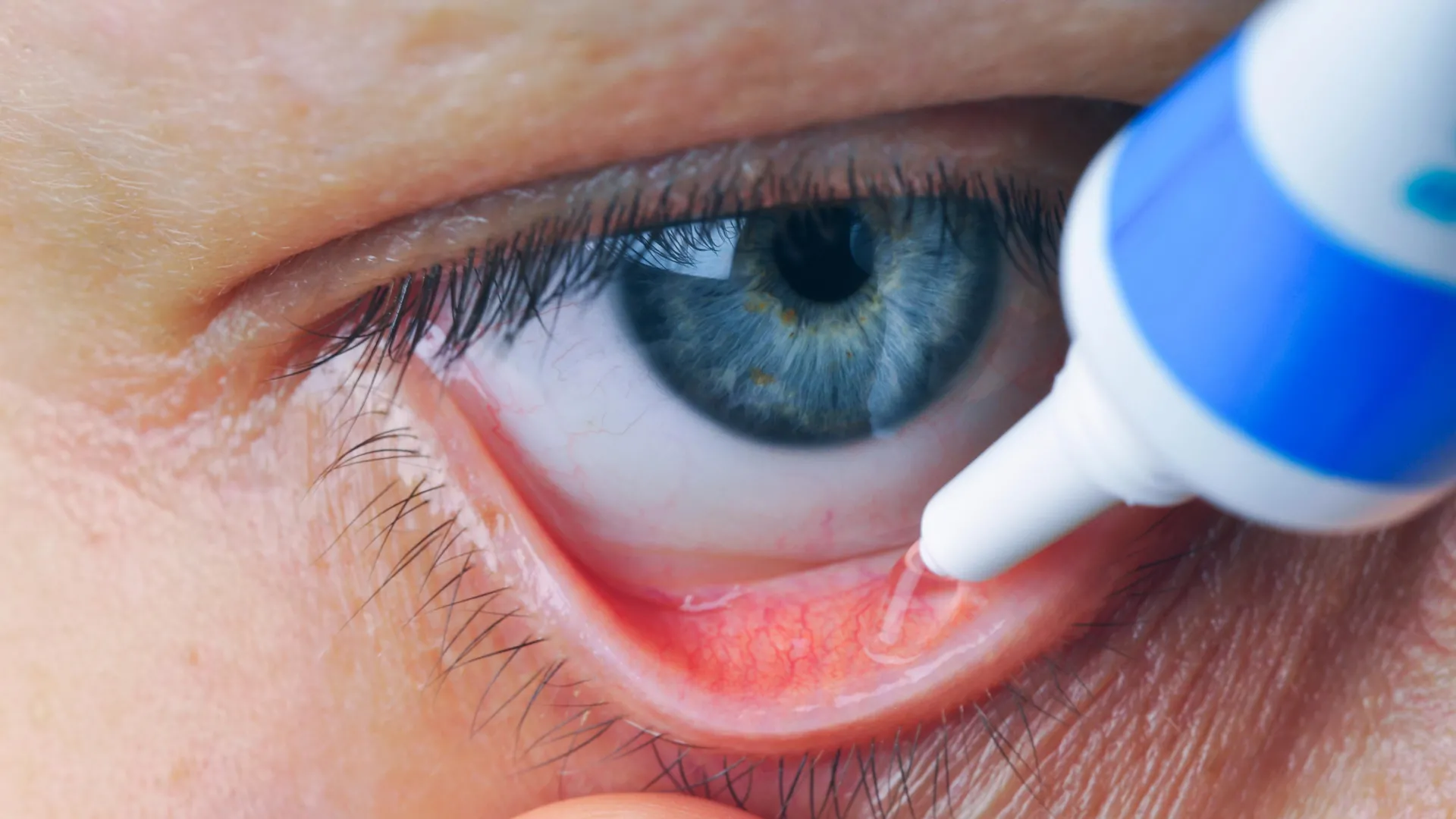
The core innovation lies in the design of these compounds, which are intended to assume a portion of the duties normally performed by the compromised photoreceptor cells. Their administration is designed to be straightforward and patient-friendly, mirroring established ophthalmic drug delivery methods. They can be administered via a simple injection directly into the eye, a common practice for many eye conditions, or even formulated as readily applicable eye drops. Crucially, neither of these delivery methods necessitates genetic modification of the patient’s cells or the implantation of any artificial devices, significantly reducing the complexity and invasiveness associated with existing interventions. Furthermore, preliminary safety assessments have yielded promising results, positioning these compounds as strong candidates for future therapeutic development aimed at vision restoration.
"These molecules do not cure blindness, because they do not address the cause of photoreceptor degeneration," explained Pau Gorostiza, ICREA Research Professor at IBEC and leader of the Nanoprobes and Nanoswitches group, a key figure in this research and a member of CIBER-BBN. "But they are remarkably effective at restoring sight, and they do so using a very simple and potentially patient-friendly approach." This statement underscores the pragmatic yet impactful nature of the discovery: while not a cure for the underlying disease, it offers a tangible pathway to functional vision recovery.
Rosalba Sortino, a former PhD student at the University of Barcelona and now a postdoctoral researcher in Gorostiza’s group at IBEC, shared the driving philosophy behind the project. "Our goal was to restore vision using a molecular mechanism that is as close as possible to how the healthy retina works," she stated. As a co-first author of the study, Sortino elaborated on their strategic approach: "Instead of bypassing retinal processing, we aimed to reactivate it right at the same level of the retinal circuit as the lost photoreceptor cells." This focus on mimicking natural retinal function, rather than circumventing it, represents a significant conceptual leap.
A Decade of Dedication: Tracing the Genesis of Prosthe6
The development of these innovative drugs is not an overnight success but the culmination of over a decade of dedicated research and collaborative effort. The project drew upon the expertise of a multidisciplinary team, including the pivotal contributions of Pedro de la Villa’s team at the University of Alcalá (UAH). The broader scientific ecosystem involved in this groundbreaking work also encompassed researchers from the Institut de Química Avançada de Catalunya (IQAC-CSIC), the University of Barcelona (UB), the Institute Ramón y Cajal of Health Research (IRYCIS), the Autonomous University of Barcelona (UAB), and the Fundació Eduard Soler. This extensive network of institutions and researchers highlights the complex and collaborative nature of modern scientific discovery.
Restoring Visual Acuity: Promising Results in Blind Animal Models
The underlying principle of this novel approach is photopharmacology, a sophisticated field that leverages light to reversibly control the activity of therapeutic agents. At its heart, this technique involves the strategic modification of a drug’s chemical structure by integrating a light-sensitive molecular switch. Upon exposure to specific wavelengths of light, this switch undergoes a conformational change, thereby modulating the drug’s biological activity.
Applying this principle, the research team successfully engineered a family of compounds, collectively designated as "prosthe6." These molecules are specifically designed to interact with and activate ON-bipolar neurons, a critical type of neuron in the retinal circuitry that plays a key role in transmitting visual information related to light detection. The efficacy of these prosthe6 compounds was rigorously tested in preclinical models. In blinded zebrafish larvae, a widely utilized model for studying visual acuity and reflexes, the treatment demonstrably restored the optokinetic reflex, a fundamental eye movement that tracks moving objects and is indicative of visual function.
Further validation of the prosthe6 compounds’ potential came from studies involving mouse models engineered to mimic key aspects of age-related macular degeneration and retinitis pigmentosa. In these models, the treatment proved capable of reinstating innate light-avoidance behavior, a crucial indicator of a functional visual system.
Natural Instincts Rekindled: The Light-Avoidance Behavior Phenomenon
Under normal physiological conditions, healthy mice exhibit a clear preference for darker environments and actively avoid brightly illuminated spaces. This innate behavior is entirely dependent on their ability to perceive and interpret light signals. Consequently, mice afflicted with blindness, due to their inability to differentiate between light and dark, lose this instinctual preference.
However, a remarkable observation emerged from the research: following administration of the prosthe6 compounds, these blind mice began to spontaneously favor darker areas, exhibiting the same preference for dim environments as their sighted counterparts. This behavioral shift strongly suggests that the treatment had effectively restored their ability to detect light and utilize this visual information to guide their actions. Crucially, this restoration of behavior occurred without any form of prior training or conditioning, highlighting the direct and intuitive nature of the restored visual perception.
A particularly encouraging aspect of these findings is the level of illumination at which the restored visual behaviors were observed. The prosthe6 compounds demonstrated efficacy at illumination levels comparable to those encountered in everyday indoor settings or on an overcast day outdoors. This indicates that the treatment has restored light perception with sufficient robustness to enable natural, visually guided behaviors, a significant step beyond therapies requiring highly specialized or amplified light sources.
Among the prosthe6 family, two specific compounds, designated prosthe6-12 and prosthe6-15, exhibited particularly potent and promising results. The restored visual behaviors were observed following both direct injection into the eye and topical application as eye drops, further underscoring the versatility and potential ease of administration.
Bridging the Gap: Prosthe6 as Molecular Prostheses for Lost Photoreceptors
The mechanism by which prosthe6 operates is elegant and directly targets a key component of the surviving retinal circuitry. The compounds are designed to engage ON bipolar cells, the retinal neurons that normally serve as the immediate recipients of signals from the photoreceptor cells.
"In healthy vision, ON bipolar cells play a key role in passing on information about the presence of light to the rest of the visual circuit," explained de la Villa, a co-leader of the study. "In degenerative eye diseases, although the photoreceptors are lost, much of this underlying circuitry remains intact but inactive. This creates a major therapeutic opportunity." This highlights the strategic advantage of targeting this preserved neural network.
The prosthe6 compounds achieve their effect by interacting with a specific protein, known as mGlu6, located within this still-functional retinal circuitry. By binding to and modulating this protein, prosthe6 effectively steps in to substitute for a portion of the visual signaling role normally fulfilled by the missing photoreceptors.
When light strikes the retina, the prosthe6 molecules undergo a light-induced change in their three-dimensional structure. This molecular transformation then initiates a signaling cascade within the retina that closely mimics the natural visual process. The researchers aptly describe these compounds as "molecular prostheses" because they enable the retina to once again respond to light, but without the need for implanted hardware or genetic alterations.
A critical advantage of this technology is its ability to function effectively under ordinary illumination conditions. Unlike some optogenetic approaches that require specialized equipment for light delivery or amplification, the prosthe6 molecules are responsive to common visible and white light, including standard indoor lighting and natural daylight. This independence from overly intense or specialized light sources significantly broadens their potential applicability and ease of use.
Charting a Course Towards Human Therapies: The Road Ahead
The publication of these findings arrives at a propitious moment, closely following the announcement of the first-ever clinical trial of a photopharmacological drug for vision restoration, which targets a different protein. This landmark event signals a significant transition for the field of photopharmacology, marking its progression from the realm of experimental research toward tangible clinical applications.
The prosthe6 technology has been secured through patent protection, a crucial step in enabling its further development. The research team is currently undertaking comprehensive studies to meticulously assess its safety profile and optimize its formulation, with the ultimate goal of extending the duration of restored visual function.
Furthermore, the team is actively collaborating with Eyelumina, a nascent spin-off company, to secure the necessary investments required to propel the translational development of prosthe6 and to facilitate future clinical trials. This strategic partnership underscores the commitment to translating laboratory breakthroughs into real-world therapeutic solutions.
"Turning this into a therapy is a long and laborious process," acknowledged Gorostiza. "But the results show that there is a realistic possibility of restoring high-quality vision with drugs, non-invasively, reversibly and with a mechanism that is independent of the specific retinal disorder or genetic mutation to reach a majority of patients." This forward-looking statement encapsulates the immense potential of prosthe6 to impact a broad spectrum of patients.
Should this approach ultimately prove successful in human trials, it holds the promise of offering a widely accessible and cost-effective alternative to existing vision-restoration technologies. Its impact could be particularly profound for individuals suffering from advanced retinal degeneration, a patient population for whom effective treatment options are currently scarce or nonexistent. This development represents a beacon of hope in the ongoing battle against blindness, offering a glimpse into a future where sight can be restored through innovative, light-activated molecular interventions.
The foundational research for this project received crucial early-stage funding from several key organizations, including the patients’ foundation Fundaluce (2016), CaixaHealth (through the Drug4sight initiative, grant number 100010434), the Government of Catalonia (via the Innovadors, Producte, and Peris programs), and CIBER-BBN (through its valorization program). The groundbreaking work also formed an integral part of Rosalba Sortino’s doctoral thesis, which was recognized with the Extraordinary Doctoral Prize for the 2023-24 academic year by the University of Barcelona, where she successfully defended her thesis at the Faculty of Pharmacy and Food Sciences.