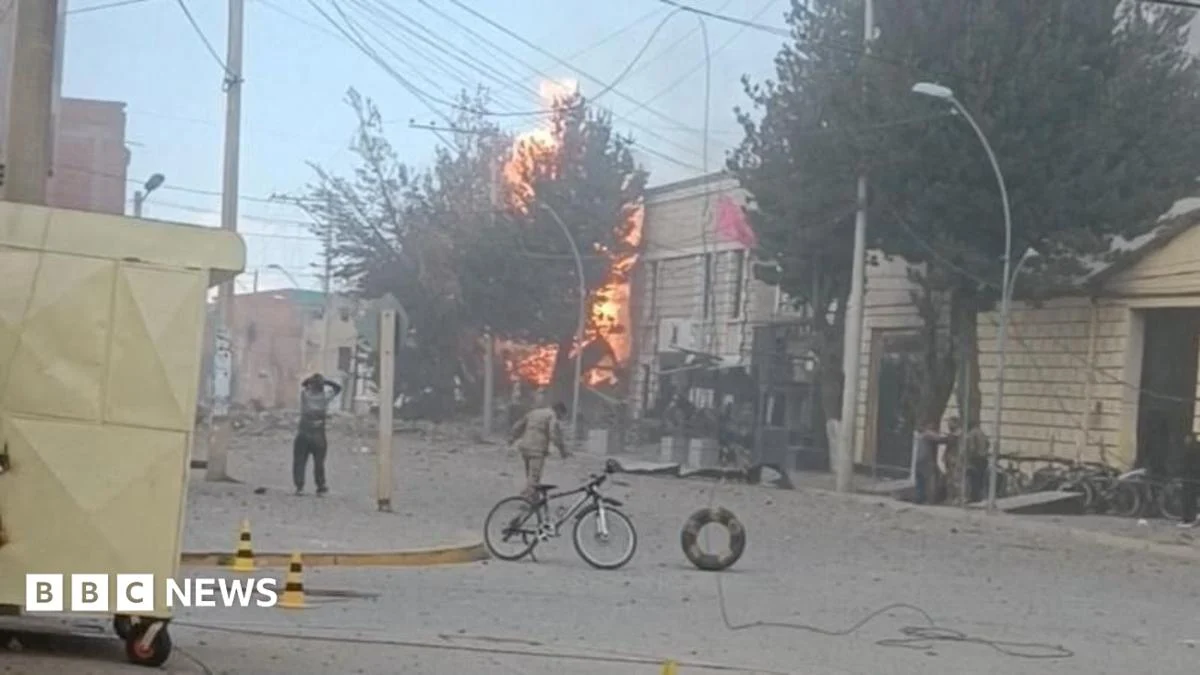
A devastating explosion at a military barracks in Viacha, Bolivia, approximately 30 kilometers (19 miles) west of the capital La Paz, has resulted in a significant loss of life, numerous injuries, and widespread destruction, prompting a national outpouring of grief and a high-level government investigation. While initial reports confirmed at least two fatalities, authorities fear the final death toll could be substantially higher, with some health officials estimating between 10 and 15 people may have perished in the powerful blast that rocked the artillery regiment’s facility on Friday afternoon. The incident, which occurred around 14:30 local time (18:30 GMT), has thrown the community of Viacha into turmoil, with dozens of homes damaged, residents displaced, and emergency services scrambling to manage the ongoing crisis amidst fears of further detonations.
Immediate Aftermath and Escalating Casualty Figures
The initial moments following the explosion were marked by chaos and confusion. Eyewitnesses reported a colossal boom that reverberated across Viacha and beyond, followed by a mushroom cloud of smoke and debris rising from the military installation. The blast’s sheer force was immediately evident, causing structural damage to buildings within the barracks compound and extending into the surrounding civilian areas. Bolivian Defence Minister Ernesto Justiniano confirmed that at least 81 individuals had sustained injuries, ranging from minor lacerations to severe trauma, with many requiring immediate medical attention. Among the most pressing concerns was the fate of seven individuals who remained unaccounted for in the immediate hours post-explosion, fueling anxieties that the death toll would inevitably climb. Health official Rita Nebraska, speaking to local television, underscored these fears, stating that preliminary assessments indicated the number of fatalities could be significantly higher than initially reported, potentially reaching 10 to 15 victims. This disparity in figures highlights the challenging and evolving nature of disaster response, where initial counts often understate the true human cost.
Emergency response teams, including military personnel, national police, firefighters, and civilian volunteers, swiftly converged on the scene. Their efforts were complicated by the precarious conditions, including the instability of damaged structures and the inherent danger posed by the suspected presence of unexploded ordnance or volatile materials. Police spokesman Roger Roca confirmed that emergency workers were meticulously searching through the rubble, an arduous task made more urgent by the possibility of finding survivors amidst the debris. Hospitals in Viacha and neighboring La Paz were quickly overwhelmed, activating emergency protocols to handle the influx of injured civilians and military personnel. Medical staff worked tirelessly to triage patients, providing critical care to those with life-threatening injuries while managing a steady stream of less severe cases. The psychological toll on both victims and first responders was immediate and profound, with scenes of despair and frantic searches for loved ones unfolding against the backdrop of the smoldering barracks.
The Scene in Viacha: A Community in Shock
Viacha, a municipality known for its significant Aymara indigenous population and its role as an industrial hub and railway junction, was plunged into a state of emergency. Located strategically on the altiplano, it serves as an important military garrison town, housing various units, including the artillery regiment affected by the blast. The proximity of the military base to residential areas meant that the impact on civilian life was immediate and severe. Dozens of homes, many of them modest dwellings, suffered extensive damage, with roofs blown off, windows shattered, and walls collapsing. The blast radius extended far beyond the immediate vicinity of the barracks, affecting neighborhoods several hundred meters away.
Local authorities in Viacha acted swiftly, declaring three days of official mourning to honor the victims and provide a period for collective grieving. This declaration underscored the profound impact the tragedy had on the tight-knit community. Beyond the immediate physical destruction, the incident caused widespread fear and displacement. Many residents, particularly those living closest to the barracks, were forced to evacuate their homes, seeking refuge with relatives or in temporary shelters. The warning issued by health official Rita Nebraska, urging people to maintain a distance of at least 150 meters from the military base due to the persistent risk of further explosions, highlighted the ongoing danger and the need for extreme caution. This directive underscored the volatile nature of the materials involved and the potential for a secondary incident, adding another layer of anxiety for an already traumatized population. The local economy, which relies on various small businesses and local markets, also faced disruption as the community grappled with the aftermath.
Official Responses and the Pledge for a Thorough Investigation
Bolivia’s President Rodrigo Paz immediately expressed his "deepest solidarity" with the families of those who had died and been injured. Taking to social media, a common platform for immediate governmental communication in modern crises, President Paz assured the nation that a "thorough, technical, and transparent investigation" would be launched into the incident. This presidential commitment signals the gravity with which the government views the catastrophe and its understanding of the public’s demand for accountability and answers. The Defence Minister, Ernesto Justiniano, while confirming the initial casualty figures and the nature of the materials involved, also emphasized the ministry’s full cooperation with the ongoing inquiry. He highlighted the immediate deployment of military resources to assist in rescue operations and to secure the perimeter.
The primary focus of the investigation, as articulated by Police spokesman Roger Roca, centers on determining the precise cause of the detonation. Initial reports indicated that "pyrotechnic material" was stored at the barracks. Roca further clarified to news agency AFP that fireworks were specifically among the materials present. This detail raises immediate questions about the storage protocols for such volatile substances within a military installation, especially one housing an artillery regiment. Military barracks typically store a range of armaments, ammunition, and explosives, but the presence of large quantities of "pyrotechnic material" or fireworks suggests either a deviation from standard military ordnance storage practices or a specific operational requirement that would necessitate such storage. The investigation is expected to examine inventory records, storage conditions, safety compliance, and any potential human error or external factors that could have triggered the blast. The transparency promised by President Paz will be crucial in restoring public confidence and ensuring that lessons are learned to prevent future tragedies.
Chronology of a Catastrophe
The events leading up to and immediately following the Viacha barracks explosion unfolded rapidly, painting a picture of sudden devastation and a desperate scramble for response.
- Pre-Blast (Morning/Early Afternoon Friday): The artillery regiment at the Viacha barracks would have been conducting its routine operations. This could include training exercises, maintenance of equipment, administrative tasks, and the storage and handling of various military materials, including the "pyrotechnic material" later identified as the source of the blast. The specific conditions under which these materials were stored, including environmental factors like temperature and humidity, or any ongoing activities in the vicinity, will be key areas of the investigation.
- 14:30 Local Time (18:30 GMT) – The Detonation: The explosion occurred with shocking suddenness. Witnesses described a massive concussive force, followed by a deafening roar and a visible plume of smoke. The blast was powerful enough to cause immediate structural collapse within the barracks and significant damage to surrounding civilian infrastructure.
- Immediate Aftermath (14:30 – 15:30): Panic and confusion gripped the area. Residents rushed out of their homes, some injured, others disoriented. The sound of the explosion prompted immediate alerts to emergency services. Military personnel within the barracks, those who survived the initial blast, began initial assessments and attempts to assist their injured comrades.
- Initial Response (15:30 – 18:00): Firefighters, police, and medical teams began arriving at the scene. The immediate priorities were search and rescue for survivors, extinguishing any fires, and providing first aid to the injured. The scale of the disaster quickly became apparent as initial casualty counts began to emerge. Hospitals in Viacha and La Paz were notified to prepare for mass casualties.
- Hours Post-Blast (Friday Evening): Defence Minister Ernesto Justiniano issued the first official statement, confirming the incident and initial casualty figures. President Rodrigo Paz conveyed his condolences and pledged a full investigation. The search and rescue operation intensified, with specialized units deployed. The risk of secondary explosions led to the establishment of a safety perimeter and the evacuation of nearby residents. Health official Rita Nebraska provided critical updates on the medical situation and the potential for a higher death toll.
- Subsequent Days (Saturday onwards): The focus shifted to recovery, comprehensive damage assessment, and the official launch of the investigation. Forensic teams began examining the blast site for clues. The declaration of three days of mourning by Viacha authorities provided a formal period for communal remembrance and support for victims’ families. Humanitarian aid efforts commenced to assist displaced residents.
Background on the Viacha Barracks and Military Context
The military barracks in Viacha, a strategic location due to its proximity to the capital and its position on a major transport route, houses an artillery regiment. Artillery units are integral to modern military operations, specializing in long-range firepower. Their operations inherently involve the handling and storage of various types of ordnance, including shells, fuses, propellants, and sometimes specialized pyrotechnic devices used for signaling, illumination, or training. The presence of "pyrotechnic material" or fireworks, as identified by authorities, raises specific questions about storage protocols. While some military units might use pyrotechnics for training exercises or ceremonial purposes, their storage in large quantities, especially alongside other potentially explosive materials, demands stringent safety measures.
Bolivia’s military, known as the Armed Forces of Bolivia (Fuerzas Armadas de Bolivia), comprises the Army, Air Force, and Navy. It plays a significant role in national defense, internal security, and civic action programs. Incidents involving military installations, particularly those concerning ammunition or explosive materials, are not unheard of globally, and sometimes occur due to improper storage, accidental ignition, or sabotage. In Bolivia’s context, any such incident immediately raises concerns about the adequacy of safety standards, training protocols, and oversight within the military infrastructure. The Viacha barracks, like many military bases, would typically have established procedures for managing hazardous materials, but the devastating outcome of this explosion indicates a critical failure somewhere in that chain of command or execution.
Investigative Focus and Challenges
The "thorough, technical, and transparent investigation" promised by President Paz will be a complex undertaking. The immediate objective is to pinpoint the exact cause of the detonation. This will involve:
- Forensic Analysis: Expert teams will meticulously examine the blast crater, remnants of the "pyrotechnic material," and any surviving structural components to reconstruct the sequence of events.
- Witness Testimonies: Interviews with surviving military personnel, civilians, and first responders will provide crucial firsthand accounts.
- Inventory and Storage Audits: Investigators will scrutinize records pertaining to the type, quantity, and storage location of all materials within the barracks, particularly the pyrotechnics. This will help determine if storage protocols were adhered to or if any unauthorized materials were present.
- Safety Protocol Review: A comprehensive review of the barracks’ safety regulations, emergency response plans, and training procedures for handling explosive materials will be conducted.
- Maintenance Records: The condition of storage facilities, including environmental controls and security measures, will be assessed through maintenance logs and physical inspection.
- Potential External Factors: While accidental ignition is often the primary suspicion in such cases, investigators must also rule out other possibilities, such as sabotage or an external attack, though current reports lean towards an internal incident.
The challenges for the investigation are considerable, including the extent of the destruction, the potential for contamination of the scene, and the need to gather evidence quickly while ensuring the safety of investigators. The findings of this inquiry will be critical not only for assigning responsibility but also for informing future safety policies across all Bolivian military installations.
Community Impact and Humanitarian Concerns
Beyond the immediate casualties, the explosion has created a humanitarian crisis in Viacha. The displacement of dozens of families whose homes were damaged or destroyed presents an urgent need for shelter, food, and basic necessities. Local government and non-governmental organizations will likely mobilize to provide relief. The psychological trauma experienced by residents, particularly children, who witnessed the devastation or lost loved ones, will require long-term support. Schools in the affected areas may face disruption, impacting the education of hundreds of students.
The economic impact on Viacha is also significant. Repairing or rebuilding damaged homes will be a costly and time-consuming endeavor. Small businesses affected by the blast or the subsequent evacuation will suffer financial losses. The local authorities, already operating with limited resources, will face immense pressure to fund recovery efforts and provide adequate support to their citizens. This incident serves as a stark reminder of how military operations, even those seemingly contained within a base, can have far-reaching and devastating consequences for surrounding civilian populations if safety protocols fail.
Broader Implications and Future Actions
The Viacha barracks explosion carries significant broader implications for Bolivia.
- Military Safety Standards: The incident will inevitably lead to a national re-evaluation of safety protocols, storage practices for ammunition and pyrotechnics, and emergency preparedness across all Bolivian military bases. This review could result in stricter regulations, increased oversight, and mandatory retraining programs for personnel handling hazardous materials.
- Civil-Military Relations: Tragedies involving military installations impacting civilians can strain civil-military relations. The government’s transparent handling of the investigation and its commitment to supporting affected communities will be crucial in maintaining public trust in the armed forces.
- Political Accountability: President Paz’s administration will face pressure to ensure accountability for any negligence or systemic failures identified by the investigation. The findings could lead to disciplinary actions against military officials and potentially inform policy changes at the highest levels of government.
- Infrastructure Resilience: The damage to civilian homes highlights the need for better urban planning around military installations, potentially including buffer zones or stricter building codes in adjacent areas to mitigate risks.
- International Assistance: While Bolivia has its own robust emergency services, the scale of the disaster could prompt offers of international assistance, particularly in forensic investigation, trauma support, or reconstruction aid, reflecting global solidarity in times of crisis.
The Viacha explosion is a profound tragedy, underscoring the inherent dangers associated with military operations and the critical importance of rigorous safety protocols. As the nation mourns its dead and tends to its injured, the focus remains firmly on a thorough investigation to uncover the truth and ensure that such a devastating incident is never repeated. The path to recovery for Viacha will be long and arduous, but the collective resilience of its people, supported by a committed national response, will be essential in rebuilding lives and restoring a sense of security.