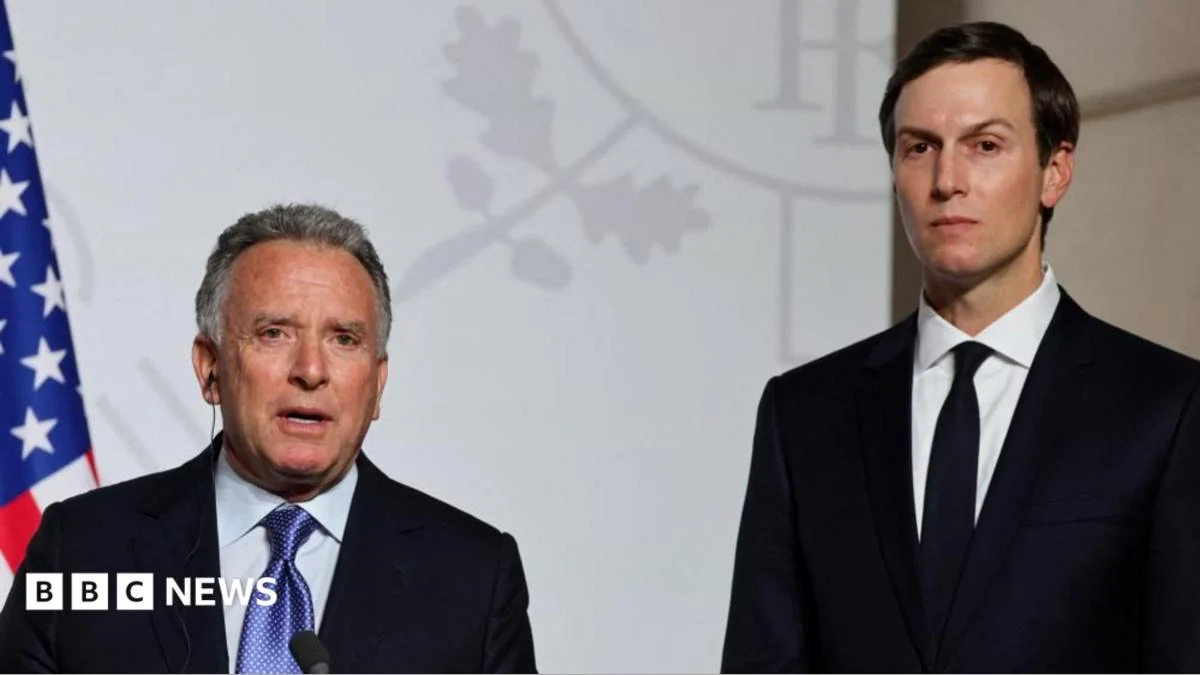
In a significant diplomatic development under the newly returned Trump administration, two prominent US envoys, identified as Witkoff and Kushner, are poised to make their inaugural visit to Kyiv on Sunday. This journey marks a pivotal moment in the ongoing conflict between Ukraine and Russia, following multiple prior trips by the envoys to Moscow since President Trump resumed office. The timing of this visit is particularly charged, coming just as the Kremlin, through Russian state media, reported a three-day moratorium on strikes against Kyiv, an order purportedly issued by President Vladimir Putin himself, commencing at midnight tonight, specifically in deference to the US delegation’s presence.
This diplomatic overture unfolds against a backdrop of intensified aerial attacks from both sides and persistent, unresolved disagreements that have thwarted previous attempts at a peace settlement. The potential for high-level US engagement in the Ukrainian capital represents a new chapter in the complex international efforts to navigate a path towards de-escalation, even as the conflict on the ground continues to exact a heavy toll.
A New Diplomatic Front: Kyiv Visit and Moscow Precedents
The journey of Witkoff and Kushner to Kyiv is not their first foray into the intricate geopolitics of the conflict. Since President Trump’s return to the Oval Office, the two envoys have undertaken multiple visits to Moscow, engaging in what are widely believed to be back-channel discussions with Russian officials. While the specifics of these prior engagements have largely remained undisclosed, their recurrence underscored a consistent, albeit discreet, diplomatic effort by the Trump administration to establish lines of communication with the Kremlin. These earlier visits to the Russian capital were often shrouded in a degree of secrecy, with official comments from Washington or Moscow typically terse or non-existent, leaving observers to speculate on the nature and progress of these high-stakes conversations.
The decision to extend their diplomatic reach to Kyiv signifies a crucial escalation in engagement. For the first time, these key representatives of the Trump administration will be on Ukrainian soil, directly engaging with President Volodymyr Zelenskyy and his government. This direct contact with both warring capitals within a relatively short timeframe suggests a concerted push from Washington to explore all avenues for dialogue, a strategy that could be interpreted as an attempt to leverage its unique position as an intermediary or facilitator. Historically, delegations from Ukraine have journeyed to the United States for talks over the past 18 months, indicating a persistent desire from Kyiv for robust US involvement and support.
Kremlin’s Ceasefire and Ukrainian Reactions
The announcement from Moscow regarding a three-day cessation of strikes on Kyiv is an extraordinary development, injecting an immediate, albeit fragile, layer of security around the diplomatic mission. Russian state media, citing the Kremlin, disseminated the report that President Putin had personally ordered no strikes on Kyiv for three days, commencing at midnight, specifically "due to the US visit." This unilateral, temporary ceasefire gesture by Russia, targeting Ukraine’s capital, is unprecedented in its direct link to a visiting foreign delegation during the ongoing full-scale invasion.
Ukrainian President Volodymyr Zelenskyy’s immediate reaction to the lead-up to the US visit was one of cautious alarm. Earlier on Saturday, Zelenskyy stated that Russia had fired "demonstrative" strikes on airports in Kyiv and Boryspil overnight, ahead of his planned meeting with the US envoys. He explicitly linked these attacks to the preparations for the American delegation’s arrival, noting, "Clearly, these Russian strikes on the airports are a reaction to the discussions and preparations for the possibility of the US side using an aircraft to travel to Ukraine and land at Kyiv Airport or Boryspil Airport." This statement highlights the precariousness of the situation, where even the logistics of a diplomatic visit can become a point of military tension. Ukraine’s airspace has remained closed to civilian air traffic since Russia launched its full-scale invasion in February 2022, making any air travel into the country a complex and high-risk undertaking, typically involving military or specially designated aircraft.
Adding to the immediate humanitarian concerns, Zelenskyy also reported on Friday that an overnight Russian strike on a civilian building in the Dnipro region had resulted in the deaths of four people and injuries to five others. This stark reminder of the conflict’s daily human cost underscores the urgent need for effective diplomatic solutions, even as such efforts are met with continued military actions.
Background Context: A War Entering its Third Year
The full-scale invasion of Ukraine by Russia, which commenced in February 2022, shattered decades of European peace and plunged the continent into its most significant conflict since World War II. The war has resulted in a staggering humanitarian crisis, with millions displaced, thousands of civilian casualties, and widespread destruction of infrastructure. Economically, the conflict has had global repercussions, impacting energy markets, food supplies, and international trade routes.
From a military perspective, the conflict has seen shifting frontlines, intense artillery duels, and a growing reliance on drone warfare. Ukraine, supported by a coalition of Western allies, has demonstrated remarkable resilience, successfully defending Kyiv in the initial phase and launching counter-offensives to reclaim significant territory. However, the conflict has settled into a grinding war of attrition, particularly in the eastern and southern regions. Russia, despite facing international sanctions and military setbacks, continues to occupy substantial portions of Ukrainian territory, including Crimea (annexed in 2014) and parts of the Donbas region.
The international response to the invasion has been characterized by extensive military, financial, and humanitarian aid to Ukraine from the United States, the European Union, and other allies. Billions of dollars in weaponry, including advanced missile systems, tanks, and artillery, have flowed into Ukraine, bolstering its defense capabilities. Simultaneously, unprecedented sanctions have been imposed on Russia, targeting its financial sector, energy industry, and key individuals, aiming to cripple its war economy.
The Envoys and Their Mandate Under a Returned Trump Administration
The roles of Witkoff and Kushner as special envoys under a returned Trump administration are particularly noteworthy. While not formal government positions in the traditional sense, their access to the President and their repeated missions suggest a mandate for sensitive, high-level diplomatic outreach, potentially operating outside conventional State Department channels. This approach aligns with a historical pattern of the Trump administration leveraging personal relationships and less formal diplomatic avenues to pursue foreign policy objectives.
The current diplomatic landscape under a returned Trump presidency likely presents a unique set of dynamics. Trump’s past rhetoric on foreign policy, particularly concerning NATO, Russia, and the war in Ukraine, has often differed from that of previous US administrations and many European allies. His emphasis on direct negotiation and a willingness to engage with leaders like President Putin could be seen as both an opportunity for breakthrough and a source of apprehension for allies concerned about potential concessions or shifts in alliances. The envoys’ dual engagement with both Moscow and Kyiv could be interpreted as an attempt to project an image of neutrality or a balanced approach, aimed at fostering an environment conducive to direct talks between the belligerents.
Precedent of Back-Channel Communications: The CIA Director’s Visit
The current diplomatic flurry is not isolated. Witkoff and Kushner’s visit to Moscow just over a week ago was preceded by a rare visit to the Russian capital by John Ratcliffe, the head of the CIA. Such a high-level visit by the chief of US intelligence is inherently significant, typically signaling either profound concern or the opening of a critical back channel for sensitive discussions that cannot be conducted through overt diplomatic means. As with the envoys’ visits, there was no official comment from Washington or the Kremlin on the substance of Ratcliffe’s discussions. However, speaking last week, President Trump himself described the meeting as "semi-routine," a characterization that, while downplaying its exceptional nature, simultaneously confirmed its occurrence and implied a level of established, albeit discreet, communication with Moscow. These successive, high-level visits by intelligence and informal diplomatic figures underscore a concerted effort by the returned Trump administration to maintain or establish direct lines of communication with Russia, even amidst the ongoing conflict and the backdrop of punitive sanctions.
Challenges to Peace: Sticking Points and Intensified Fighting
Previous attempts at brokering a peace deal have consistently faltered due to entrenched disagreements. Last year, the US, Ukraine, and Russia separately suggested that a deal to end the war was "edging closer" following a flurry of talks, many of which were reportedly brokered by American intermediaries. European allies also held discussions in Paris, but ultimately, these negotiations concluded without a breakthrough. The core impediments to peace remain deeply rooted, centering primarily on issues such as territorial integrity and security guarantees for Ukraine.
- Territory: Ukraine unequivocally demands the full restoration of its internationally recognized borders, including Crimea and all territories occupied since 2014 and 2022. Russia, conversely, has formally annexed several Ukrainian regions and views them as integral parts of the Russian Federation, a stance that is internationally unrecognized. This fundamental disagreement over sovereignty and territorial control forms the bedrock of the stalemate.
- Security Guarantees: Ukraine seeks robust, legally binding security guarantees from Western powers, potentially including NATO membership or a similar collective defense arrangement, to prevent future Russian aggression. Russia, on the other hand, views Ukraine’s potential alignment with Western military blocs as a direct threat to its own security and has historically demanded guarantees that Ukraine will not join NATO. Reconciling these diametrically opposed security demands has proven intractable.
- Reparations and Accountability: Ukraine also insists on reparations for the vast damages inflicted by the war and accountability for alleged war crimes, issues that Russia firmly rejects.
These intractable disagreements mean that any diplomatic breakthrough would require significant concessions from at least one, if not both, sides, or a novel framework for resolution that has yet to emerge.
In recent months, the military situation has grown more volatile, with both Russia and Ukraine intensifying their aerial attacks. Ukraine has reported significant struggles in repelling these attacks, citing a critical lack of interceptor missiles, essential for defending its cities and infrastructure from Russian aerial assaults. This deficiency has been a recurring concern for Kyiv, which has repeatedly appealed to Western allies for increased supplies of air defense systems. In response, Ukraine has focused its own strikes on Russian economic infrastructure targets, including oil refineries, military production facilities, and logistical hubs, aiming to disrupt Russia’s war effort and impose economic costs. This escalation of strikes by both sides highlights a dangerous dynamic where military actions continue unabated even as diplomatic channels are tentatively explored.
Implications and Future Outlook
The envoys’ visit to Kyiv, coupled with Russia’s temporary strike pause, opens a complex and uncertain chapter in the war.
- Symbolic Significance: The direct engagement in Kyiv by high-level US envoys, especially under a Trump administration that has emphasized direct negotiation, carries immense symbolic weight. It signals a strong intent from Washington to be directly involved in shaping the future trajectory of the conflict, potentially positioning the US as a primary mediator.
- Testing Diplomatic Waters: Russia’s three-day ceasefire on Kyiv can be interpreted in multiple ways: a genuine gesture of goodwill to facilitate talks, a strategic move to project a desire for peace while maintaining military pressure elsewhere, or a test of the Trump administration’s willingness to engage meaningfully. It creates a temporary window for de-escalation, however limited.
- Challenges of Trust: Despite these diplomatic overtures, the deep-seated distrust between Kyiv and Moscow remains a formidable barrier. Zelenskyy’s statements regarding "demonstrative" strikes underscore the fragility of any proposed truce and the ongoing perception of Russian aggression, even in the context of a declared pause.
- Impact on Military Aid: The success or failure of these diplomatic efforts could significantly influence the calculus of military aid to Ukraine. Should diplomatic avenues appear promising, there might be pressure to de-escalate military support, while a collapse of talks would likely reinforce calls for continued or even increased military assistance.
- Geopolitical Realignments: The nature of the Trump administration’s engagement could also have broader implications for alliances. European allies, who have largely maintained a united front in supporting Ukraine and sanctioning Russia, will closely watch Washington’s approach, particularly if it signals a departure from previously established strategies.
Ultimately, the visit of Witkoff and Kushner to Kyiv represents a delicate dance between diplomacy and conflict. While the temporary pause in strikes on the capital offers a glimmer of hope for dialogue, the underlying tensions, deep disagreements, and continued military actions on other fronts mean that any path to a lasting peace remains fraught with immense challenges and uncertainties. The world watches to see if these high-stakes diplomatic maneuvers can translate into tangible steps towards ending one of Europe’s most devastating conflicts.