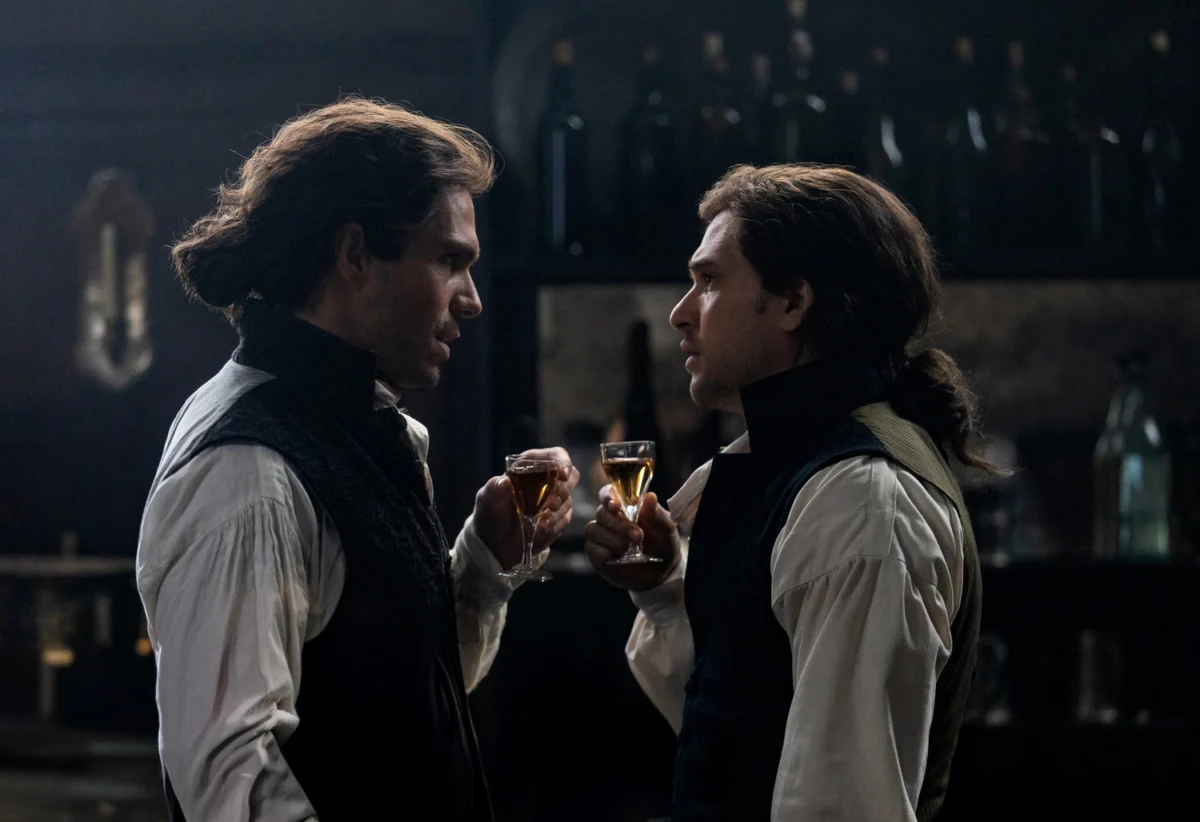
The recent four-part adaptation of Charles Dickens’s enduring novel, A Tale of Two Cities, a co-production between MGM+ and BBC One, has been met with a largely lukewarm reception. While it avoids the pitfalls of direct comparison to prior, often memorable, cinematic interpretations, this iteration, helmed by creator Daniel West, struggles to distinguish itself, ultimately emerging as a disappointingly muted rendition of a story renowned for its dramatic flair and profound social commentary. The series, which premiered on MGM+ on Sunday, September 6, features a cast including Francois Civil as Charles Darnay, Kit Harington as Sydney Carton, and Mirren Mack as Lucie Manette, with Roxane Duran portraying the iconic Madame Defarge.
The Enduring Appeal of Dickens’s Classic
Charles Dickens’s A Tale of Two Cities, first published in serial form in 1859, remains one of his most accessible and compelling works. Set against the tumultuous backdrop of the French Revolution, the novel masterfully weaves together themes of love, sacrifice, social injustice, and redemption. Its famously powerful opening line, "It was the best of times, it was the worst of times," immediately situates the reader in a world of stark contrasts and impending upheaval. The narrative is characterized by its intricate plot, featuring doppelgängers, dramatic reversals of fortune, and a poignant exploration of the human condition amidst political chaos. These elements have cemented its status as a "ripping yarn," a testament to Dickens’s unparalleled ability to craft stories that are both thrilling and deeply resonant.
Despite its literary merit and inherent dramatic potential, A Tale of Two Cities has seen fewer definitive film adaptations compared to some of Dickens’s other works, such as Great Expectations or Oliver Twist. The most notable prior adaptation, a 1935 film starring Ronald Colman, received critical acclaim and an Academy Award nomination for Best Picture. More recent attempts, including a 1989 Masterpiece Theatre production, have generally failed to capture the full essence of the novel. This relative scarcity of widely recognized screen versions might have presented a unique opportunity for the MGM+ and BBC One production to forge its own identity. However, the current adaptation appears to have fallen short of capitalizing on this potential.
A Muted Narrative and Lack of Passion
The core of the critique leveled against Daniel West’s adaptation lies in its perceived lack of emotional depth and dramatic urgency. The story, a complex tapestry of a love triangle and a thrilling political drama, is meant to be propelled by visceral emotions and high stakes. Yet, the series is described as failing to ignite passion between its central characters. The romantic entanglements, particularly the triangle involving Lucie Manette, Charles Darnay, and Sydney Carton, are presented with a notable absence of chemistry. Mirren Mack’s Lucie, while described as bringing some "fire" to the role, struggles to convey believable romantic connection with either Francois Civil’s Charles or Kit Harington’s Sydney. The physical resemblance between Civil and Harington, intended to serve the plot’s doppelgänger motif, paradoxically contributes to a lack of discernible evolution in their characters, as both actors maintain a similarly solemn and earnest demeanor throughout the series.
This deficiency in romantic ardor is compounded by a broader issue of character development and narrative pacing. The adaptation is criticized for being "temporally choppy" and failing to build either emotional or geographical momentum. The visual representation of London and Paris, the titular cities, is described as remarkably similar and uninspired, rendering them interchangeable and diminishing the impact of their distinct historical and political identities. This visual homogeneity further undermines the narrative’s ability to draw viewers into the specific atmospheres of each locale, a crucial element in Dickens’s original work.
Character Ambiguities and Missed Opportunities
A significant point of contention is the handling of Madame Defarge, one of literature’s most formidable antagonists. While Roxane Duran’s portrayal captures Defarge’s palpable rage, the adaptation fails to fully explore the complexities of her character. Her motivations and her connection to the revolutionary cause are presented as mechanical plot devices rather than deeply ingrained convictions. This results in a character who is difficult to empathize with or fully condemn, rendering her less impactful than her literary counterpart. The original novel delves into Defarge’s tragic backstory, which fuels her relentless pursuit of vengeance against the aristocracy. This adaptation, however, appears to sideline these crucial elements, reducing her to a stock figure of Parisian unrest.
Similarly, the supporting cast, crucial for fleshing out the Dickensian world, is largely underdeveloped. Characters like the "Jacques" collective and Mr. Stryver, who provide vital context and dramatic counterpoints in the novel, are either excised or reduced to skeletal outlines, leaving little impression on the audience. This sparse characterization contributes to the overall feeling of a narrative rushed to its conclusion, sacrificing depth for expediency.
The Challenge of Adaptation and Historical Context
The adaptation’s struggles can also be attributed to the inherent challenges of translating a dense, multi-layered novel to a visual medium, especially under the constraints of a limited series format. The series attempts to capture the "ripping yarn" quality of the novel, complete with cliffhangers and social commentary, but the execution falters. The memorable opening and closing passages of the book, which are rendered as voiceovers in the series, lack the powerful impact they possess in their original context. This suggests a fundamental misunderstanding of how to translate Dickens’s narrative voice and thematic weight to the screen.
The story’s thematic relevance, particularly its commentary on the stark divide between the impoverished masses and the heartless elite, remains potent. The French Revolution serves as a dramatic backdrop for exploring timeless issues of inequality and the cyclical nature of oppression. Madame Defarge, in particular, embodies a righteous crusader or a rigid zealot, depending on one’s perspective. Her story, in a historical moment marked by discussions of wealth disparity and the abuse of power, could have resonated powerfully. However, the adaptation’s superficial treatment of her character and the revolutionary fervor fails to harness this potential.
Production and Creative Choices
The creative decisions behind the series, particularly those attributed to creator Daniel West, have come under scrutiny. The introduction of Lucie Manette as a nascent doctor, practicing surgery on a corpse, is cited as a peculiar and largely irrelevant choice that does little to advance the plot or deepen her character. This deviation from the source material, along with other narrative liberties, appears to have been made without a clear thematic justification, contributing to the overall sense of a disjointed and uninspired production.
The direction by Richard Clark, while competent, does little to elevate the material. The pacing issues and the lack of distinct visual identities for London and Paris suggest a directorial approach that prioritized expediency over atmospheric immersion. The series’s haste to reach its conclusion, mirroring the novel’s dramatic arc, paradoxically strips away the time needed for character development and thematic exploration, leading to a rushed and ultimately unsatisfying viewing experience.
Broader Implications for Adaptations
The reception of this A Tale of Two Cities adaptation raises pertinent questions about the future of Dickensian narratives on screen. While the allure of adapting beloved literary classics remains strong, success hinges on a nuanced understanding of the source material and a creative vision that can translate its essence effectively to a new medium. The critical consensus suggests that this particular adaptation prioritized name recognition and a superficial adherence to plot points over the deeper emotional and thematic resonances that have made Dickens’s work endure for generations.
The "meh-est of adaptations" label, while informal, accurately captures the sentiment that the series, despite its respectable cast and production values, ultimately fails to leave a lasting impression. It serves as a cautionary tale for future adaptations, highlighting the importance of capturing the spirit, not just the letter, of the original work. The ultimate implication is that while the story of A Tale of Two Cities possesses the inherent power to engage audiences, this specific retelling lacks the passion, depth, and imaginative execution required to truly bring it to life. The search for a truly definitive screen adaptation of this Dickens masterpiece continues.