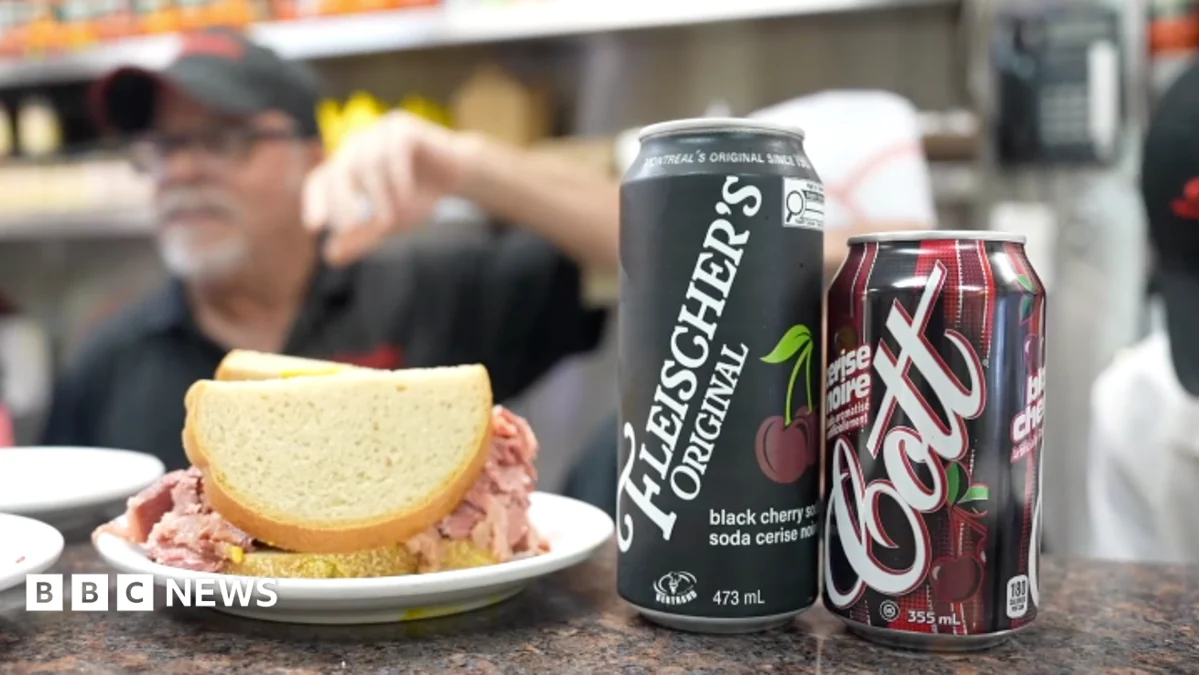
Montreal, Quebec – Schwartz’s, the venerable Montreal institution renowned for its smoked meat sandwiches, has made a significant alteration to its long-standing menu, discontinuing the US-made black cherry soda that has been a quintessential accompaniment for its patrons for decades. The move, necessitated by persistent and ultimately insurmountable supply chain challenges, marks a notable shift for an establishment deeply rooted in tradition, as it transitions to a locally-produced version of the beloved beverage, a change that has been largely well-received by its loyal customer base.
A Fixture’s Fading Presence and the Quest for Continuity
For generations, a visit to Schwartz’s, officially known as Schwartz’s Montreal Hebrew Delicatessen, has been an immersive experience, a culinary pilgrimage often punctuated by the distinctive taste of its black cherry soda. This specific US-made cola was more than just a drink; it was an integral component of the deli’s sensory identity, a nostalgic echo for many regulars, and an authentic pairing for the rich, savoury flavours of its world-famous smoked meat. The recent discontinuation, therefore, represents not merely a product change but a subtle evolution in the nearly century-old establishment’s narrative.
The challenges in maintaining a consistent supply of this particular beverage did not emerge overnight. For approximately eight years, the deli had grappled with increasing difficulties in sourcing the soda. Distributors had progressively scaled back production, citing the escalating costs associated with aluminum, the primary material for beverage cans. This period was characterized by irregular shipments, diminished order quantities, and a growing uncertainty regarding future availability. While the deli adapted to these intermittent shortages, meticulously managing its inventory and at times facing temporary stock-outs, there was an underlying assumption that the product, though embattled, would ultimately endure. The definitive cessation of production, however, arrived unexpectedly, compelling Schwartz’s management to seek a permanent solution.
The Enduring Legacy of Schwartz’s: A Pillar of Montreal’s Culinary Heritage
To fully appreciate the significance of this change, one must understand the profound historical and cultural weight carried by Schwartz’s. Established in 1928 by Reuben Schwartz, a Jewish immigrant, the deli quickly became a cornerstone of Montreal’s St. Laurent Boulevard, an artery that has historically pulsed with diverse immigrant communities. It is officially recognized as the oldest delicatessen in Canada and holds the distinction of being a National Historic Site of Canada. Its enduring appeal lies not just in its culinary offerings—the hand-sliced, slow-smoked beef brisket, the mustard, the rye bread—but in the timeless, unpretentious atmosphere of its diner-style interior, where photos of celebrities and local legends adorn the walls, and the communal tables foster an inimitable sense of camaraderie.
For decades, Schwartz’s has cultivated a reputation built on consistency and adherence to time-honoured methods. Its smoked meat recipe, a closely guarded secret involving a precise curing process, has remained virtually unchanged, drawing locals and tourists alike, including numerous international figures and dignitaries. This commitment to tradition extends to every facet of the dining experience, from the service style to the beverage selection. The black cherry soda, a classic American flavour often associated with traditional diners and soda fountains, perfectly complemented this ethos, embodying a nostalgic link to a bygone era of simple pleasures.
Chronology of a Supply Chain Dilemma
The difficulties surrounding the black cherry soda supply can be traced back to the mid-2010s, roughly eight years prior to its ultimate discontinuation. During this period, global commodity markets began experiencing increased volatility, impacting various sectors, including packaging materials. Aluminum, a lightweight, recyclable, and highly versatile metal, is critical for the beverage industry. Its price is influenced by a complex interplay of factors, including global demand from construction, automotive, and aerospace industries, energy costs (as aluminum production is energy-intensive), and geopolitical events affecting supply chains.
- Mid-2010s: Initial reports from distributors indicated rising production costs for the black cherry soda, primarily attributed to increasing aluminum prices. This led to a gradual reduction in production volume, making the product less consistently available.
- Late 2010s: Supply became more erratic. Schwartz’s, like many other establishments, found itself placing smaller, more frequent orders, and sometimes experiencing periods where the soda was unavailable for days or weeks. This necessitated careful inventory management and communication with customers about temporary shortages.
- Early 2020s: The COVID-19 pandemic further exacerbated global supply chain disruptions. Lockdowns, labour shortages, and increased demand for packaged goods (as consumers shifted from dining out to eating at home) put immense pressure on manufacturers and distributors. Aluminum prices, already on an upward trajectory, saw further spikes. The cost of logistics, including shipping and transportation, also surged.
- Late 2023 / Early 2024: The manufacturer and distributor of the US-made black cherry soda made the final decision to cease production permanently, deeming it no longer economically viable to produce at scale given the sustained high costs of materials and distribution. This final notification prompted Schwartz’s to activate its contingency plans for a replacement.
The Economic Undercurrents: Aluminum Costs and Global Supply Chains
The narrative of Schwartz’s black cherry soda is a micro-example of macro-economic pressures impacting businesses worldwide. Aluminum, a critical material, saw its price fluctuate significantly in the past decade. For instance, the London Metal Exchange (LME) aluminum price, after a period of relative stability, began a sustained upward trend in the mid-2010s, often spiking dramatically due to factors such as sanctions against major producers, trade disputes, and increased global industrial demand. By 2022, aluminum prices reached multi-year highs, making it increasingly challenging for manufacturers of low-margin, high-volume products like soft drinks to maintain profitability.
For a specialized, often artisanal, or niche beverage like a specific black cherry soda from a smaller US producer, these rising costs can be particularly devastating. Larger beverage conglomerates often have the economies of scale, purchasing power, and diversified product portfolios to absorb or mitigate such increases. Smaller operations, however, face tighter margins, making them more vulnerable to commodity price shocks. Furthermore, the complexities of international distribution, including customs, tariffs, and fluctuating fuel costs for transportation, add layers of expense and logistical hurdles. The decision by the distributor to cut back and eventually cease production was a pragmatic, if unfortunate, response to these sustained economic realities.
The Strategic Pivot: Embracing Local and Sustaining Tradition
Faced with the permanent disappearance of its long-standing beverage, Schwartz’s management initiated a careful search for a suitable replacement. The criteria were stringent: the new soda had to capture the essence of the black cherry flavour, offer consistent quality, and, crucially, be reliably supplied. The decision to switch to a locally-made version was a strategic one, aligning with broader consumer trends favouring local sourcing, reducing supply chain vulnerabilities, and supporting regional economies.
While the specific local producer has not been widely publicized, the move underscores a growing movement within the food and beverage industry towards hyper-local procurement. Sourcing from a Montreal-based or Quebec-based artisanal beverage company offers several advantages:
- Supply Reliability: Shorter supply chains are less susceptible to international disruptions, geopolitical events, or large-scale logistical bottlenecks.
- Quality Control: Direct communication and collaboration with a local producer can allow for greater input on formulation and quality assurance.
- Economic Impact: Supporting local businesses contributes directly to the regional economy, fostering job creation and local entrepreneurship.
- Sustainability: Reduced transportation distances often translate to a smaller carbon footprint, appealing to environmentally conscious consumers.
The transition, while initially met with the inevitable trepidation that accompanies any change at an iconic establishment, has been "largely embraced" by customers. This suggests that the local producer has successfully replicated the flavour profile or created a new, appealing version that resonates with the deli’s patrons. For many, the commitment to maintaining a black cherry soda option, even if from a different source, likely outweighs the nostalgia for the specific original brand.
Reactions and Implications: A Blend of Nostalgia and Adaptation
The news of the black cherry soda change, while not as monumental as an alteration to the smoked meat recipe itself, has elicited a range of reactions, reflecting the deep emotional connection many have with Schwartz’s.
- From Schwartz’s Management (Inferred): While no direct quotes were provided in the initial reports, the actions of Schwartz’s management speak volumes. Their long struggle to maintain the original supply, followed by the decisive pivot to a local alternative, demonstrates a commitment to preserving the overall customer experience while adapting to external pressures. The successful integration of the new product suggests a careful selection process aimed at minimizing disruption and maintaining the deli’s high standards.
- From Patrons: Long-time customers, particularly those who have frequented Schwartz’s for decades, might express a fleeting sense of nostalgia or mild disappointment at the loss of the original US-made soda. However, the reported "largely embraced" reception indicates that the quality of the local replacement has been sufficient to satisfy the majority. This highlights the adaptability of consumers, especially when a beloved establishment makes a thoughtful effort to maintain the essence of its offerings. Younger patrons or newer visitors, without the same historical attachment to the specific brand, are likely to judge the new soda purely on its taste and quality, contributing to its positive reception.
- Local Beverage Industry: The decision by Schwartz’s to opt for a local producer is a significant endorsement for Montreal’s burgeoning craft beverage scene. It validates the quality and capability of local manufacturers to meet the demands of even the most iconic establishments. This could potentially open doors for other local producers to partner with established businesses looking to reduce their reliance on complex international supply chains.
- Broader Implications for Heritage Businesses: Schwartz’s experience serves as a case study for other heritage businesses and iconic establishments worldwide. It underscores the challenges of maintaining absolute consistency in an era of globalized yet increasingly volatile supply chains. It demonstrates that adaptation, when handled thoughtfully and with a clear understanding of brand identity, can be a path to resilience rather than a betrayal of tradition. The deli has shown that preserving the spirit of the experience can sometimes necessitate evolving the specific components. This strategic adaptation ensures the longevity of the institution itself, allowing future generations to continue enjoying the essence of Schwartz’s, even if minor elements subtly shift over time.
In essence, the black cherry soda saga at Schwartz’s is more than just a beverage change; it is a narrative of resilience, adaptation, and the delicate balance between honouring a rich past and navigating the realities of a dynamic present. As Montreal continues to evolve, Schwartz’s remains a steadfast symbol of its culinary identity, demonstrating that even beloved traditions must occasionally find new expressions to endure.