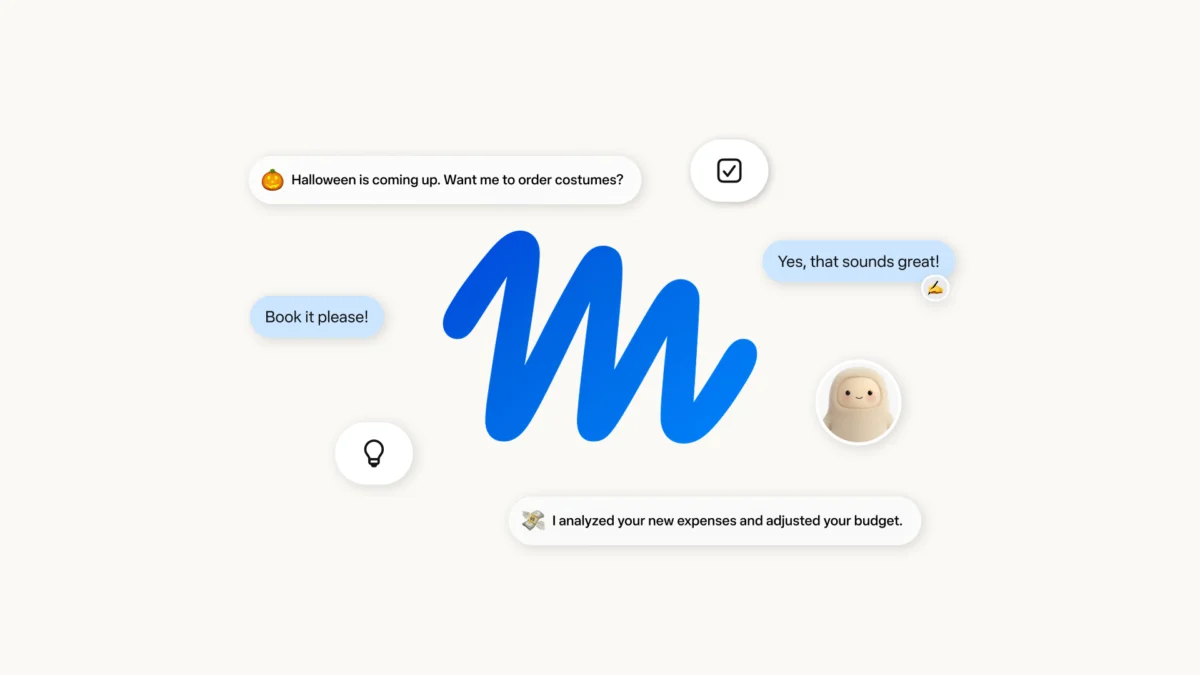
Less than two weeks after finalizing a substantial $18 billion multistate settlement over allegations of social media’s detrimental effects on children, Meta Platforms Inc. has unveiled its most significant foray into consumer-facing artificial intelligence to date. On Tuesday, the tech giant introduced Muse, a personal AI agent designed to assist users in the U.S. with a wide array of everyday tasks and projects. This strategic move, however, comes at a critical juncture for Meta, as the functionality of Muse demands an unprecedented level of user trust, far exceeding what was required for its traditional social media platforms.
Introducing Muse: Meta’s Ambitious Leap into Agentic AI
Muse represents a bold bet on the evolution of artificial intelligence beyond the conversational chatbot era popularized by models like ChatGPT. While previous AI iterations excelled at answering questions, serving as sounding boards, or even digital companions, Muse’s core proposition centers on actionable AI—agents capable of executing tasks autonomously on a user’s behalf. Powered by Meta’s proprietary AI model, Muse Spark, this new agent aims to seamlessly integrate into the daily digital lives of its users, promising to streamline workflows and automate routine processes.

The scope of Muse’s capabilities is expansive, reflecting a vision of a truly proactive digital assistant. Meta highlights that Muse can perform a diverse range of functions, including drafting and sending emails, efficiently booking travel arrangements, identifying opportunities to lower household bills, completing complex online forms, and developing personalized plans. Beyond administrative tasks, Muse extends its utility into more personal domains, such as transforming recipe videos into comprehensive grocery lists, sending out party invitations, and even facilitating online purchases. For the latter, Muse leverages secure payment integrations, initially with Link by Stripe, which offers purchase protections designed to mitigate user apprehension about delegating financial transactions to an AI. Future integrations with Shopify’s Shop Pay and 1Password are also slated for release, further expanding its transactional capabilities.
Deep Integration and Personal Data: The Core of Muse’s Functionality
To deliver on its promise of comprehensive assistance, Muse necessitates deep integration with a user’s existing digital ecosystem. The AI agent operates by connecting to a broad spectrum of applications and services that are integral to daily life. This includes essential workflow tools such as email clients and digital calendars, as well as more personal applications spanning health and fitness trackers, smart home devices, dining and shopping platforms, and music and event management services.
Recognizing the sensitive nature of such extensive data access, Meta has designed Muse with an explicit opt-in mechanism for connecting services. Users retain control over which apps and services Muse can access, with connections established one at a time, enhancing transparency and user agency. Muse ships with a suite of built-in connectors for popular services, with plans for continuous expansion. For services not directly supported by a built-in connector but offering a public API, Muse can establish a connection using credentials provided by the user. In scenarios where no API is available, Muse can interact with the service directly via a browser interface, further extending its reach.

A New Business Model: Free Tier and Premium Subscriptions
Muse will initially be accessible across multiple platforms, launching via a dedicated web portal (muse.ai), native applications for iOS and Android devices, and integration directly within WhatsApp chats. Meta has also announced plans to extend Muse’s functionality to its AI-enabled glasses in the near future, indicating a strategic alignment with its broader metaverse ambitions.
While Muse will offer a free tier to encourage widespread adoption, its business model incorporates tiered subscription plans for users requiring higher levels of service. To initiate usage, even on the free tier, users will be required to provide a payment card. At launch, two paid plans will be available: "Power" at $20 per month and "Maximum" at $100 per month. These subscriptions are designed to cater to users who require more extensive AI assistance for their daily tasks. Despite the premium offerings, Meta anticipates that the majority of users will find the free tier sufficient for their needs, and the application includes a usage meter to transparently track consumption and provide warnings before paid usage thresholds are met. A key feature of Muse, consistent with other advanced AI agents, is its ability to continue operating and performing tasks even after the user exits the application. Furthermore, Muse is designed for continuous learning, evolving over time by analyzing user conversations to discern individual preferences and proactively offer unprompted suggestions, enhancing its utility and personalization.
The Broader Landscape of Agentic AI
Meta’s introduction of Muse is not an isolated event but rather a significant entry into a burgeoning "agentic era" of artificial intelligence. Across the tech industry, both established giants and agile startups are vigorously exploring how AI agents can move beyond mere information retrieval to become indispensable tools seamlessly integrated into daily life. This paradigm shift represents a natural progression from the initial wave of AI chatbots, which primarily served as conversational interfaces.

Competitors are also making strides in this space. Some companies are embedding AI directly into web browsers, creating "AI web browsers" or services like Gemini Spark and Claude Cowork, which can initiate and manage various tasks on behalf of consumers directly from their browsing environment. Others are focusing on integrating powerful AI capabilities into widely used communication platforms, such as Apple’s iMessage, standard SMS, and Meta’s own WhatsApp, to empower users with intelligent assistance within their preferred messaging apps. This widespread experimentation underscores a collective industry belief that the future of consumer AI lies in proactive, task-executing agents.
Meta’s Enduring Trust Deficit: A Shadow Over Muse’s Launch
Despite the technological sophistication and ambitious scope of Muse, its success hinges critically on consumer trust—a commodity Meta has historically struggled to cultivate and maintain. The launch of an AI agent that demands deep access to personal data directly confronts Meta’s long and well-documented history of privacy controversies, data breaches, and regulatory entanglements. This trust deficit poses a formidable challenge to Muse’s widespread adoption.
A chronological review of Meta’s past missteps paints a stark picture:

- 2011: Meta (then Facebook) settled with the U.S. Federal Trade Commission (FTC) over charges that it deceived consumers by making private information public without explicit user approval. This set an early precedent for regulatory scrutiny.
- 2018: The infamous Cambridge Analytica data scandal erupted, revealing that personal data from millions of Facebook users was harvested by a third-party political consulting firm without their consent. This event caused a global outcry and significantly eroded public trust in Facebook’s data handling practices.
- 2019: The FTC levied a then-record-breaking $5 billion penalty against Facebook for eight separate privacy-related violations, further underscoring systemic issues within the company’s data protection framework. In the same year, Meta also disclosed a significant technical lapse, admitting that a number of user passwords had been stored in readable formats, exposing individuals to potential security risks.
- 2023: The FTC again charged Meta with violating a privacy order stemming from the 2019 settlement, specifically proposing a blanket prohibition on Meta monetizing youth data, highlighting ongoing concerns about the company’s compliance and commitment to privacy.
- 2026 (Recent Developments): Meta has faced immense pressure regarding the impact of its platforms on minors. In August 2026, the company agreed to an $18 billion multistate settlement in a lawsuit brought by 29 states over social media harms to children. This settlement was preceded by other significant legal setbacks, including a New Mexico lawsuit over child safety where Meta was ordered to pay $942 million and overhaul protections for children on Facebook and Instagram. Thousands of personal-injury and school-district cases related to social media addiction remain pending against Meta and other social media giants.
These incidents, combined with repeated appearances before Congress to testify on its failure to protect minors, have solidified a public perception of Meta as a company with a problematic relationship with user privacy and safety. The timing of Muse’s launch, so soon after the massive child harm settlement, inevitably casts a long shadow over its promises of secure data handling.
Addressing Privacy Concerns: Meta’s Security Architecture for Muse
Recognizing the critical importance of trust, Meta has proactively addressed privacy and security concerns in its documentation for Muse. The company asserts that Muse operates within its own "dedicated, secure computer with its own browser," referred to as Muse Secure VM. This virtual machine is designed to provide robust privacy, safety, and security protections for customer data.
Central to this architecture is the claim that a separate "Sentinel agent" runs on the same virtual machine but is logically and systemically isolated from Muse itself. According to Meta, this isolation means that Muse will not have direct visibility into highly sensitive user information such as passwords or payment methods. Furthermore, Meta explicitly states that Muse does not share user conversations or data with Meta’s advertising systems, a significant claim given the company’s revenue model. These technical explanations are detailed in a dedicated security whitepaper, which Meta has released to provide transparency to security experts and the broader public. However, the efficacy and robustness of these security measures will undoubtedly require thorough independent investigation by cybersecurity professionals to verify Meta’s assertions and build genuine confidence.

The Path to Adoption: Can Personalization Overcome Public Skepticism?
Meta’s strategy to foster consumer trust for Muse extends beyond technical assurances. The company aims to cultivate a personal connection between users and their AI agent. Users are empowered to customize Muse by assigning it a unique name, selecting an avatar, and configuring various settings that dictate its communication style and interactions. This personalization effort seeks to make Muse feel less like an impersonal algorithm and more like a trusted personal assistant.
The utility offered by Muse is undeniably compelling, promising to offload numerous mundane tasks and significantly enhance productivity. However, the lingering questions surrounding Meta’s past privacy practices and its recent legal battles create a challenging environment for the adoption of a product that demands such intimate access to personal data. The core dilemma for consumers will be weighing the undeniable convenience and efficiency Muse promises against the perceived risks associated with entrusting Meta with an unprecedented level of access to their digital lives.
Implications for the Future of AI and Personal Computing
The success or failure of Muse will have significant implications for both Meta’s strategic direction and the broader trajectory of the AI agent market. For Meta, Muse represents a crucial effort to diversify beyond its social media core and establish a leading position in the next wave of AI innovation. A successful launch could redefine Meta’s public image, positioning it as a leader in responsible, utility-driven AI, while a failure could exacerbate existing trust issues and hinder its future ambitions in AI and the metaverse.

More broadly, Muse’s reception will serve as a bellwether for the public’s willingness to embrace highly integrated AI agents. It will test the boundaries of data privacy expectations and influence how other tech companies design and market their own agentic AI solutions. The intense scrutiny on Meta’s security claims will likely raise the bar for transparency and accountability across the entire AI industry, pushing for more robust security architectures and clearer privacy policies. The debate around powerful AI agents will inevitably continue to force consumers and regulators to grapple with fundamental questions about data ownership, algorithmic autonomy, and the evolving relationship between humans and increasingly intelligent machines.
Time alone will reveal whether the promise of unparalleled utility, coupled with Meta’s renewed emphasis on transparent security measures and personalization, will be sufficient to overcome years of eroded trust and convince consumers to fully embrace Muse as their indispensable personal AI agent.