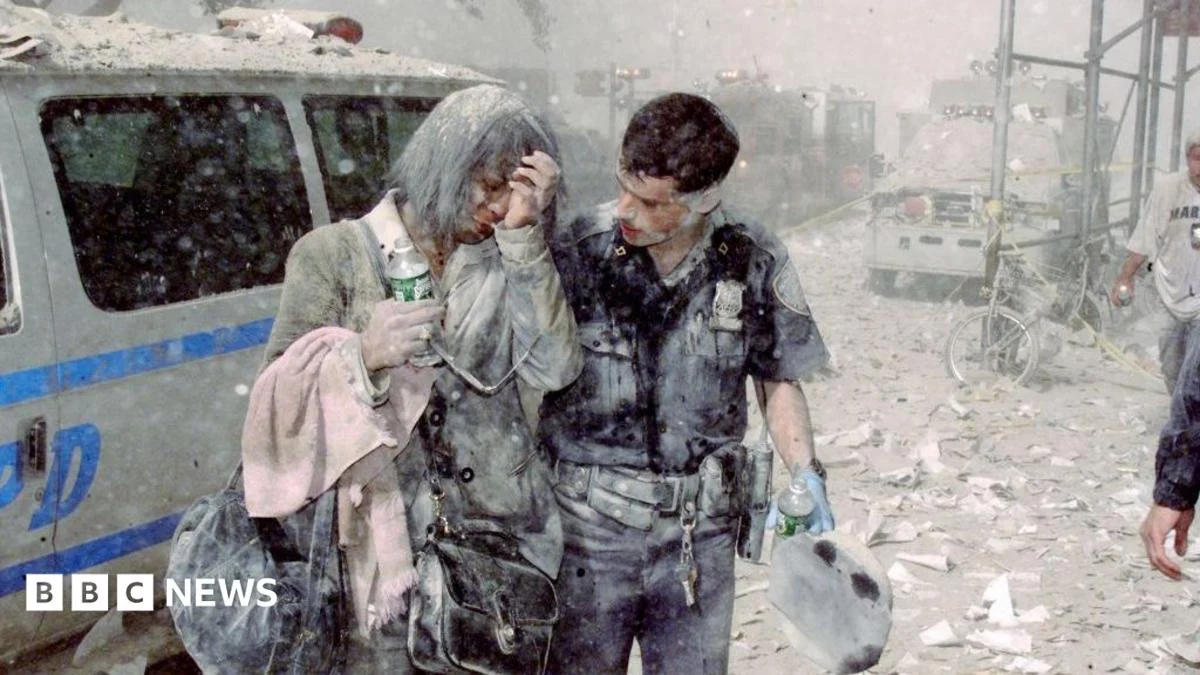
Thousands of individuals have suffered severe health consequences, including debilitating cancers and premature deaths, after inhaling hazardous contaminants following the catastrophic collapse of the Twin Towers on September 11, 2001. Recent revelations, stemming from newly unsealed municipal records, indicate that New York City officials were aware of the widespread toxic nature of the air in lower Manhattan as early as October 2001, merely a month after the devastating terrorist attacks. This critical information, allegedly suppressed for over two decades, stands in stark contrast to public advisories at the time that assured residents and workers of the area’s safety.
The disclosure of these documents has ignited a fresh wave of indignation among 9/11 survivor advocates and affected communities. Speaking at a recent news conference, Jon Stewart, the acclaimed TV host and tireless advocate for 9/11 survivors, underscored the gravity of the findings. With characteristic sarcasm, Stewart remarked, "So to be fair to them, they only buried that information for 25 years," highlighting the profound betrayal felt by those who were misled about the air quality. The records specifically detail the persistent presence of asbestos near Ground Zero for months post-attacks, coinciding precisely with public reassurances that the area was safe for return and recovery efforts.
The "Harding Memo" and Damning Official Correspondence
Among the most damning pieces of evidence within the newly released files is an October 2001 communication known as the "Harding Memo." This internal document, comprising air-quality reports and correspondence among city officials, reveals a stark warning issued by an aide to former Deputy Mayor Robert Harding. The aide cautioned Harding that the city could face an astonishing 35,000 legal claims stemming from its response to the attacks. Crucially, the memo explicitly states that the city could be sued because health advisories had caused individuals "to return to the area too soon (causing toxic exposure or emotional harm)." This direct link between official advice and anticipated legal repercussions suggests a clear awareness of potential harm, even as public pronouncements projected a sense of security.
Further exacerbating the allegations of official negligence, the files expose another egregious directive. City officials reportedly advised citizens to clean up dust and debris using rudimentary "wet mops and rags." This instruction was given despite the documented presence of asbestos, a known carcinogen requiring specialized handling by licensed professionals. A separate memo, detailing concerns raised by then-Congressman Jerry Nadler, underscores the perilous nature of this advice, highlighting the city’s apparent disregard for established safety protocols in the immediate aftermath of the disaster. Such guidance not only put ordinary citizens at risk but also potentially spread the hazardous materials further, compounding the environmental contamination.
The Cataclysm of 9/11 and Its Immediate Aftermath
The events of September 11, 2001, forever altered the landscape of New York City and the nation. The coordinated terrorist attacks involved the hijacking of four commercial airliners, two of which struck the Twin Towers of the World Trade Center in lower Manhattan. The subsequent collapse of the 110-story towers, followed by WTC 7 later that day, unleashed an unprecedented cloud of pulverized building materials, jet fuel, and human remains across a vast swathe of Manhattan. The immediate aftermath was characterized by chaos, heroism, and an overwhelming sense of urgency to search for survivors and begin the recovery process.
In the days and weeks that followed, a narrative of resilience and a push to "reopen" New York quickly took hold. Federal and local officials, including then-Environmental Protection Agency (EPA) Administrator Christie Whitman, issued statements reassuring the public about the safety of the air quality. Whitman notably declared on September 18, 2001, that "the air is safe to breathe," a statement that would later be widely criticized and proven tragically false. These reassurances encouraged first responders, recovery workers, residents, and businesses to return to the affected zones, unwittingly exposing themselves to a cocktail of highly toxic substances. The pressure to restore normalcy, coupled with a lack of comprehensive, transparent information, created a perilous environment for thousands.
The Scientific Reality of a "Toxic Soup"
The collapse of the World Trade Center complex released an estimated 1.2 million tons of debris, pulverizing concrete, steel, glass, and countless other materials into an ultra-fine dust cloud. This cloud, often described by scientists as a "toxic soup," contained an array of hazardous contaminants that posed severe long-term health risks. Key components included:
- Asbestos: Used extensively in the construction of the Twin Towers, its pulverization released millions of fibers, known to cause mesothelioma, asbestosis, and lung cancer decades after exposure.
- Lead: Present in paints and other building materials, lead dust is a potent neurotoxin, particularly dangerous when inhaled.
- Pulverized Concrete (Silica): Crystalline silica dust can cause silicosis, a debilitating lung disease, and increase the risk of lung cancer.
- Benzene: A known carcinogen found in jet fuel, its presence posed risks for leukemia and other blood cancers.
- Dioxins and Furans: Formed from the incomplete combustion of materials, these are highly toxic and persistent organic pollutants linked to cancer and developmental issues.
- Glass Fibers: Microscopic glass particles can irritate and damage respiratory tissues.
- Heavy Metals: Cadmium, mercury, and chromium, among others, were released, each carrying its own set of toxicological effects.
- Volatile Organic Compounds (VOCs): From plastics, solvents, and other materials, these compounds can cause respiratory irritation and long-term health problems.
- Ultrafine Particulate Matter (PM2.5): These microscopic particles, small enough to bypass the body’s natural defenses and enter the bloodstream, were pervasive and are linked to cardiovascular disease, respiratory illnesses, and various cancers.
The unique combination and sheer volume of these contaminants created an unprecedented environmental health crisis. The fine particulate matter remained suspended in the air for weeks and months, infiltrating buildings, homes, and even clothing, ensuring prolonged exposure for anyone in the vicinity.
A Decades-Long Battle: Health Consequences and Advocacy
The immediate health effects post-9/11 were quickly apparent, with thousands reporting the "World Trade Center cough," acute respiratory problems, and severe asthma. However, the true long-term toll began to emerge years later, manifesting as a wide spectrum of chronic and often fatal illnesses.
Early Days (2001-2003): Initial reports focused on acute respiratory symptoms among first responders, recovery workers, and residents. Conditions like severe asthma, sinusitis, and gastroesophageal reflux disease (GERD) became common.
Growing Recognition (Mid-2000s onwards): As the latency periods for various diseases passed, a grim reality set in. Cancers began to appear with alarming frequency among the exposed population. These included leukemias, multiple myeloma, prostate cancer, thyroid cancer, various head and neck cancers, lung cancer, and many others. Mental health issues, including PTSD, depression, and anxiety, also became prevalent.
Advocacy Efforts: The struggle for recognition and aid for 9/11 victims was a protracted battle. Grassroots organizations, unions representing first responders (such as the Uniformed Firefighters Association and the NYPD Detectives’ Endowment Association), and dedicated individuals like Jon Stewart played pivotal roles. They tirelessly lobbied Congress, shared personal stories of suffering, and challenged the government’s initial downplaying of the health risks.
Congressional Action: These advocacy efforts culminated in significant legislative victories. The James Zadroga 9/11 Health and Compensation Act, named after an NYPD officer who died from a 9/11-related respiratory illness, was first passed in 2010. It established the World Trade Center (WTC) Health Program, providing medical monitoring and treatment for certified 9/11-related health conditions, and the September 11th Victim Compensation Fund (VCF), offering financial compensation for economic and non-economic losses. After several temporary reauthorizations, the Zadroga Act was permanently funded in 2015, ensuring continuous care and compensation for those affected.
The Scale of the Enduring Health Crisis
The WTC Health Program, administered by the Centers for Disease Control and Prevention (CDC) and the National Institute for Occupational Safety and Health (NIOSH), provides a stark testament to the ongoing tragedy. As of early 2024, the program enrolls over 120,000 individuals, including first responders, recovery and cleanup workers, and survivors (residents, students, and workers in lower Manhattan).
- Certified Conditions: The program has certified over 60 different types of cancer, along with numerous respiratory diseases, gastrointestinal disorders, and mental health conditions.
- Cancer Statistics: More than 20,000 members of the WTC Health Program have at least one certified 9/11-related cancer.
- Mortality: The number of deaths attributed to 9/11-related illnesses continues to rise, now surpassing the number of individuals killed on the day of the attacks. Each year, hundreds more succumb to their illnesses.
- Demographics Affected: The program serves a diverse population, including members of the FDNY, NYPD, EMS, construction workers, volunteers, utility workers, sanitation workers, as well as residents, office workers, and students who lived or worked in the affected area. The sheer breadth of the affected population underscores the pervasive nature of the environmental contamination.
Official Responses and Legal Implications
Historically, New York City officials have largely maintained that their response to 9/11 was executed under unprecedented circumstances, with evolving information. While acknowledging the immense challenge of the disaster, the new documents paint a picture of deliberate misinformation or, at the very least, a profound lack of transparency regarding known risks.
The legal landscape surrounding 9/11 health claims has been complex. Early class-action lawsuits against the city and various contractors faced significant hurdles. The establishment of the VCF, while offering a vital pathway to compensation, was also a legislative mechanism designed to streamline claims and potentially limit protracted individual litigation against governmental entities. The newly unsealed "Harding Memo" and related documents could potentially reopen avenues for legal scrutiny, challenging previous settlements or igniting new claims based on allegations of deliberate concealment and misrepresentation. The question of accountability—who made the decisions, who suppressed the information, and why—will undoubtedly become a central focus. These revelations could shift public perception from mere governmental incompetence to a more serious charge of negligence or even malfeasance.
Broader Impact and Implications
The unearthing of these documents carries profound implications that extend beyond the immediate legal and health consequences for 9/11 victims:
- Erosion of Public Trust: The revelation that critical health information was potentially suppressed for decades severely erodes public trust in governmental advisories during times of crisis. It fosters cynicism and raises questions about the transparency and integrity of public health communications.
- Precedent for Future Disasters: The 9/11 aftermath has served as a grim case study for disaster response, environmental monitoring, and long-term health follow-up. The new disclosures underscore the critical need for absolute transparency and immediate, comprehensive risk communication in any future large-scale disaster, both natural and man-made. Lessons from 9/11 should have dictated a robust, independent monitoring and reporting system, ensuring that public health is prioritized above all else, including economic recovery or political optics.
- Ongoing Legacy: The health crisis stemming from 9/11 is far from over. Thousands continue to battle chronic illnesses, and new conditions are still being linked to the toxic exposures. The financial and emotional strain on affected families, as well as on the WTC Health Program, is immense and enduring. These new revelations add a layer of anguish, suggesting that much of this suffering could have been mitigated had the public been accurately informed.
- The Role of Advocacy: Jon Stewart’s consistent and passionate advocacy highlights the vital role that independent voices and media figures can play in holding power accountable. His ability to cut through political rhetoric and focus on the human cost has been instrumental in keeping the 9/11 health crisis in the public consciousness.
The newly revealed documents cast a dark shadow over the official narrative of the 9/11 aftermath. They suggest a deliberate effort to downplay risks and suppress critical information, potentially leading to thousands of preventable illnesses and deaths. As calls for renewed investigations and accountability intensify, these files promise to reshape the historical understanding of the period, underscoring the enduring struggle for justice and transparency for the countless victims of the post-9/11 toxic legacy. The battle for truth, much like the fight for health, continues.