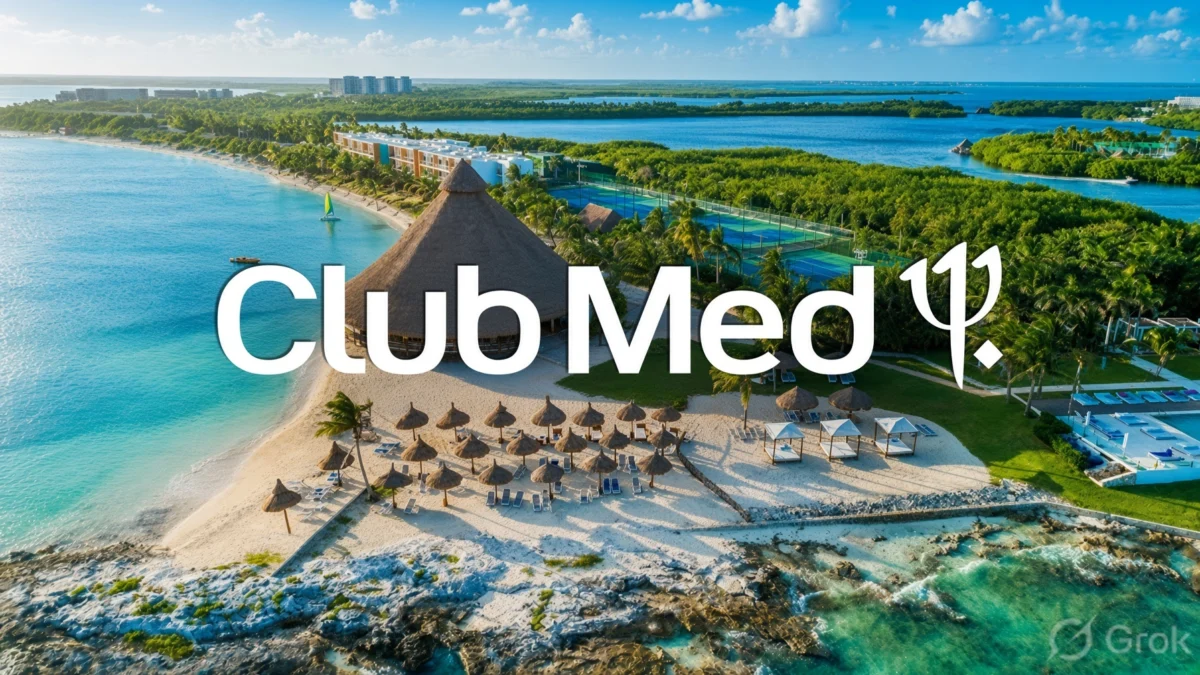
The global hospitality landscape is witnessing a fundamental transformation in how legacy brands manage growth and capital, a shift exemplified by the recent strategic pivot of Club Méditerranée, universally known as Club Med. Founded in 1950 by Gérard Blitz, the company pioneered the all-inclusive resort model, evolving over seven decades into one of the most recognizable names in leisure travel. However, the modern iteration of Club Med, currently under the stewardship of the Hong Kong-listed Fosun Tourism Group, is distancing itself from its historical roots as a property owner. Instead, it is reinventing itself as a high-margin brand and operating system. This transition is underscored by an ambitious growth plan to expand its portfolio from 69 resorts to approximately 85 by the mid-2020s, with a critical caveat: the company intends to own none of the new additions. This move toward an "asset-light" model represents a sophisticated financial restructuring designed to maximize shareholder value while insulating the brand from the volatility of real estate markets.
The Shift to an Asset-Light Operating Model
The transition from an owner-operator to a management-focused entity is not unique to Club Med, but the pace at which the brand is shedding its physical assets is notable. In the hospitality industry, the asset-light strategy involves selling off real estate assets to third-party investors—such as insurance companies, real estate investment trusts (REITs), or private equity firms—while retaining long-term management contracts to operate the properties under the brand’s name. For Club Med, this means the company’s primary product is no longer the "dirt" or the buildings, but rather its proprietary operating system, its global distribution network, and its unique cultural identity, famously characterized by its "G.O" (Gentils Organisateurs) staff.
The financial rationale behind this shift is rooted in the optimization of Return on Capital Employed (ROCE). By offloading the heavy capital expenditures associated with property maintenance, renovations, and new constructions, Club Med can redirect its resources toward digital transformation, marketing, and enhancing the guest experience. The current filing reveals that the roadmap to 85 resorts relies almost exclusively on management contracts and lease agreements, ensuring that the next wave of growth does not burden the balance sheet with massive debt or illiquid assets.
Chronology of Transformation: The Fosun Era
To understand Club Med’s current trajectory, one must look back at the pivotal events of the last decade, specifically the intervention of the Chinese conglomerate Fosun International.
In 2015, after one of the longest-running bidding wars in French corporate history, Fosun, led by billionaire Guo Guangchang, successfully acquired Club Med for approximately €939 million ($1.07 billion). The battle was hard-fought against Italian investor Andrea Bonomi, lasting 18 months and driving the price significantly higher than initial estimates. Fosun’s victory marked the beginning of a "Chinese-backed, globally-focused" era for the brand.
Shortly after the acquisition, the parent company faced internal and external headwinds. In late 2015, Guo Guangchang briefly disappeared from public view while assisting Chinese authorities with an investigation, sparking concerns about the stability of the conglomerate. However, the company remained resilient, and in 2018, Fosun Tourism Group (FTG) was spun off and listed on the Hong Kong Stock Exchange.
The timeline of the last five years has been defined by a series of strategic maneuvers and global crises:
- 2019: The collapse of the UK-based travel giant Thomas Cook presented both a challenge and an opportunity. Fosun, which was already the largest shareholder in Thomas Cook, acquired the brand name and related intellectual property for £11 million after the company entered liquidation.
- 2020-2022: The COVID-19 pandemic severely impacted global tourism. Fosun Tourism Group saw its revenues plummet as resorts worldwide were forced into hibernation. However, this period was used to accelerate the "upscaling" strategy, closing older, lower-tier resorts and focusing on the "Exclusive Collection" (5-Trident) properties.
- 2023-Present: A robust recovery in travel demand has allowed Club Med to report record-breaking business volumes. The focus has now shifted entirely to the 69-to-85 resort expansion plan, leveraging the brand’s renewed financial health.
Supporting Data and Financial Performance
Recent financial filings provide a clear picture of why the asset-light model is being pursued with such vigor. For the fiscal year 2023, Fosun Tourism Group reported that Club Med’s business volume reached approximately RMB 15.12 billion (USD 2.1 billion), representing an increase of 19% compared to 2022 and surpassing pre-pandemic levels from 2019.
Key metrics from the most recent reporting periods include:
- Capacity Increase: Club Med’s capacity increased by 6% year-on-year in 2023, despite the closure of several non-core assets.
- Average Daily Rate (ADR): The shift toward premium offerings resulted in an ADR of approximately €214, an increase of 8% over the previous year and 30% over 2019 levels.
- Occupancy Rates: Global occupancy rates have stabilized at approximately 70%, with significant growth in the Asian and American markets.
- Geographic Diversification: While Europe remains the largest market, the Brazilian and Chinese domestic markets have emerged as the fastest-growing sectors for the brand.
These figures suggest that the brand’s value is increasing even as its direct ownership of property decreases. By focusing on high-end, premium segments, Club Med has managed to increase its margins, providing the cash flow necessary to service the debt of its parent company, Fosun Tourism Group, which has been under pressure to deleverage amid a broader crackdown on corporate debt in China.
Official Responses and Strategic Vision
While official statements from Fosun Tourism Group executives emphasize "synergy" and "ecosystem building," the underlying message to investors is one of stability and capital efficiency. Henri Giscard d’Estaing, the long-time President of Club Med, has frequently highlighted the "global-local" strategy, which involves tailoring the all-inclusive experience to local tastes while maintaining French heritage.
In recent communications, management has indicated that the expansion to 85 resorts will focus on strategic locations in Southeast Asia, the Alps, and North America. Inferred reactions from market analysts suggest that the "operating system" model is a direct response to investor demands for a more predictable and scalable business. By acting as a manager rather than a landlord, Club Med can enter new markets faster, as they only need to find a development partner rather than securing the massive capital required for land acquisition and construction.
Furthermore, the integration of the Thomas Cook brand into the Fosun "Foliday" ecosystem was intended to create a seamless travel experience, though the primary engine of growth remains the Club Med brand. The focus remains on the "Premium" and "Exclusive Collection" tiers, which now account for over 95% of the total capacity, up from roughly 50% a decade ago.
Broader Industry Implications and Analysis
The evolution of Club Med serves as a bellwether for the broader all-inclusive resort industry. For decades, the all-inclusive model was viewed by luxury travelers with a degree of skepticism, often associated with budget buffets and mid-tier accommodations. Club Med’s successful pivot to the high-end market has forced competitors to rethink their strategies.
Major hotel conglomerates such as Marriott International, Hyatt, and Hilton have all recently expanded their presence in the all-inclusive space. Hyatt’s acquisition of Apple Leisure Group and Marriott’s launch of the "All-Inclusive by Marriott Bonvoy" platform indicate that the model pioneered by Club Med is now a mainstream luxury staple.
However, Club Med retains a competitive advantage through its "operating system"—a combination of its unique childcare services, sports programming, and the G.O culture that is difficult for traditional hotel brands to replicate overnight. The challenge for Club Med in an asset-light future will be maintaining this culture when the physical assets are owned by third parties who may have different priorities regarding maintenance and capital investment.
Conclusion: The Path Forward
As Club Med moves toward its target of 85 resorts, the company stands as a testament to the power of brand equity over physical ownership. The transition to an asset-light model under Fosun’s ownership has allowed the brand to survive a decade of geopolitical shifts, a global pandemic, and a volatile Chinese economy.
The upcoming years will be a test of whether a brand can truly thrive when it functions primarily as a management platform. For investors in Hong Kong and beyond, the "new" Club Med offers a more streamlined, higher-margin investment vehicle, albeit one that is now more dependent than ever on the strength of its brand reputation and the efficiency of its global operations. By decoupling the experience from the real estate, Club Med is betting that in the modern travel economy, the "how" of a vacation is infinitely more valuable than the "where."