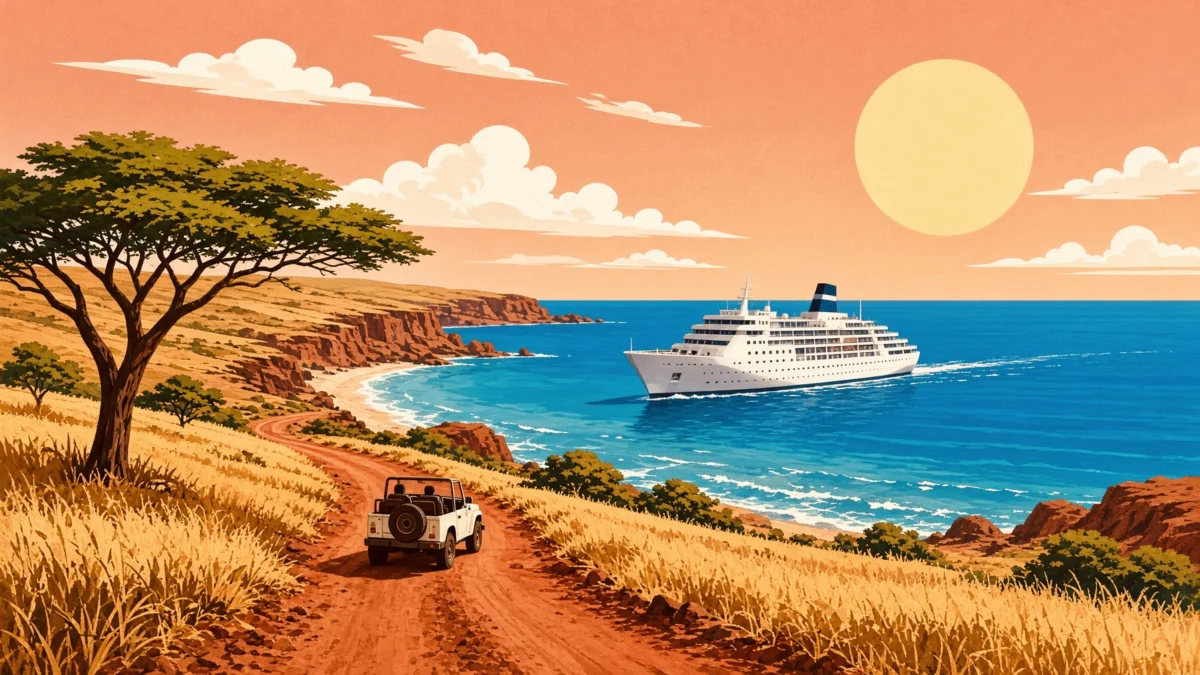
The luxury travel landscape is undergoing a profound structural shift as Abercrombie & Kent (A&K), a brand historically defined by its nimble, asset-light business model, pivots toward a capital-intensive future under the stewardship of the Lefebvre d’Ovidio family. For over six decades, Abercrombie & Kent operated as a premier orchestrator of high-end experiences, leveraging a global network of partners to provide safaris and tours without the burden of maintaining a massive fleet of owned assets. However, following its acquisition by the Heritage Group and the subsequent purchase of the defunct Crystal Cruises, the company is now leveraging its robust balance sheet to finance a multi-billion-dollar expansion into the maritime sector. This transformation represents one of the most significant strategic gambles in modern luxury travel, as the company seeks to harmonize the high-margin, low-risk nature of land-based touring with the high-stakes, capital-heavy requirements of the cruise industry.
The Foundation of an Asset-Light Powerhouse
Founded in 1962 by Geoffrey Kent and his parents, Abercrombie & Kent began as a luxury safari operator in East Africa. For most of its history, the company’s value proposition was built on expertise, logistics, and "boots on the ground" service rather than the ownership of physical infrastructure. By maintaining an asset-light model, A&K was able to scale its operations globally, offering "Private Jet" journeys and tailor-made itineraries in over 100 countries while keeping capital expenditures relatively low. This model allowed the company to generate significant cash flow, which was reinvested into marketing, technology, and a network of over 55 local destination management companies (DMCs).
The strength of this model lay in its flexibility. During periods of economic downturn or regional instability, A&K could pivot its offerings without the financial drain of idling ships or underutilized hotels. By 2019, A&K had cemented its status as the gold standard for luxury touring, attracting the attention of Manfredi Lefebvre d’Ovidio, the billionaire chairman of Heritage Group and the former owner of Silversea Cruises.
The Lefebvre d’Ovidio Acquisition and the Strategic Pivot
In early 2019, the Heritage Group acquired an 85% stake in Abercrombie & Kent for approximately $521.1 million. This acquisition marked the beginning of a new era. Manfredi Lefebvre d’Ovidio, a titan of the cruise industry who had recently sold a majority stake in Silversea to Royal Caribbean for $1 billion, brought a maritime-centric vision to the brand. While Geoffrey Kent remained as a minority shareholder and co-chairman, the operational focus began to shift toward vertical integration.
The strategic rationale was clear: by owning the vessels and the land-based infrastructure, the company could control every touchpoint of the luxury traveler’s journey. This shift, however, required a fundamental change in how the company utilized its capital. The "simple" luxury travel company was about to become a complex industrial player.
The Relaunch of Crystal Cruises: A Chronology of Crisis and Opportunity
The defining moment of this transition occurred in 2022. Crystal Cruises, long considered a leader in the luxury cruise segment, collapsed alongside its parent company, Genting Hong Kong, due to the financial pressures of the COVID-19 pandemic. The liquidation of Crystal’s assets presented a unique opportunity for Lefebvre d’Ovidio to re-enter the cruise market with an established brand.
The chronology of the acquisition and relaunch highlights the speed of the company’s transformation:
- January 2022: Genting Hong Kong files for winding up; Crystal Cruises suspends operations, leaving ships stranded and thousands of travel credits in limbo.
- June 2022: A&K Travel Group, backed by Heritage Group, acquires the Crystal Cruises brand and its two primary ocean vessels, Crystal Serenity and Crystal Symphony, for a combined total of $128 million in a bankruptcy auction.
- Late 2022 – Early 2023: The company embarks on a massive refurbishment project, spending an estimated $150 million to modernize the ships, reduce guest capacity to increase the space-to-guest ratio, and overhaul the culinary offerings.
- July 2023: Crystal Serenity returns to service, followed shortly by Crystal Symphony, marking the official relaunch of the brand under the "Crystal – Exceptional at Sea" moniker.
- June 2024: A&K Travel Group signs a memorandum of understanding (MOU) with Italian shipbuilder Fincantieri to build two new 61,000-ton luxury ships, with an option for a third, signaling a long-term commitment to fleet expansion.
Financial Analysis: Using Touring Cash to Build a Fleet
The integration of Crystal Cruises into the A&K portfolio has created a unique financial dynamic. According to company filings and credit analysis reports, the touring side of A&K continues to be a reliable "cash cow." The high margins associated with luxury land tours provide the liquidity necessary to service the debt incurred by the maritime expansion.
However, the cost of building a cruise line from the ground up is staggering. The order of two new ships from Fincantieri is estimated to cost well over $1 billion. Unlike the asset-light touring model, shipbuilding requires massive upfront capital, often financed through export credit agencies and high-yield bonds. Credit rating agencies have noted that while the A&K brand provides a strong foundation, the transition to an asset-heavy model increases the company’s leverage and subjects it to the cyclical risks of the cruise industry.
The company is currently utilizing the balance sheet of its touring business to support these capital requirements. This "cross-collateralization" of brands allows Crystal to benefit from A&K’s established creditworthiness, but it also means that the touring business is now inextricably linked to the success of the cruise operations.
Operational Synergy and Market Positioning
The ultimate goal of the A&K and Crystal merger is the creation of a seamless "land-to-sea" ecosystem. By leveraging A&K’s global network of DMCs, the company can offer exclusive pre- and post-cruise excursions that other cruise lines cannot easily replicate. For example, a Crystal guest cruising through Southeast Asia can transition into a private A&K land tour of Angkor Wat, managed by the same parent company and adhering to the same service standards.
Cristina Levis, CEO of A&K Travel Group, has emphasized that the integration is about more than just shared ownership. It is about data and loyalty. The "Crystal Society" loyalty program and A&K’s database of high-net-worth individuals provide a powerful engine for cross-promotion. Internal data suggests a significant overlap in the demographics of land-based luxury travelers and luxury cruisers, yet many have historically booked these segments through different providers.
Statements and Reactions from the Industry
The industry reaction to A&K’s transformation has been a mixture of admiration and cautious observation. Travel advisors, who are responsible for a significant portion of luxury bookings, have largely welcomed the return of Crystal.
"The relaunch of Crystal under the A&K umbrella has restored confidence in a brand that many feared was lost," said a leading luxury travel consultant. "The marriage of A&K’s logistics and Crystal’s onboard service is a compelling proposition for our clients."
Manfredi Lefebvre d’Ovidio has been vocal about his long-term commitment, stating in various industry forums that his goal is to build a "multi-generational" luxury powerhouse. He has pushed back against critics who suggest that the debt load is too high, pointing to the inherent value of the ships as collateral and the pent-up demand for high-end travel.
Broader Impact and Implications for the Luxury Sector
The evolution of A&K is a microcosm of a larger trend in the luxury hospitality sector: the move toward "total brand immersion." We are seeing similar moves from other luxury icons. The Ritz-Carlton Yacht Collection and the upcoming Four Seasons Yachts represent a similar attempt by established land-based brands to capture the maritime market.
However, A&K’s approach is unique because it combines a specialized tour operator with a cruise line, rather than a hotel brand with a cruise line. The logistical complexity of A&K’s touring business provides a different kind of synergy. If successful, A&K will have created a vertical monopoly on the luxury experience, capturing a greater share of the traveler’s wallet and reducing its reliance on third-party vendors.
The risks, however, remain significant. The cruise industry is sensitive to fuel price volatility, environmental regulations, and geopolitical shifts that can render entire regions inaccessible. By moving away from its asset-light roots, A&K has traded flexibility for control. The next decade will determine whether the cash flow from African safaris and Himalayan treks is enough to sustain a fleet of world-class cruise ships, or if the weight of those assets will fundamentally alter the DNA of one of travel’s most storied brands.
As the company moves forward with its new builds and further integrates its global operations, the industry will be watching closely. The transformation of Abercrombie & Kent is not just a corporate restructuring; it is a high-stakes test of whether the traditional boundaries between touring and cruising can be permanently erased in the pursuit of the ultimate luxury experience.