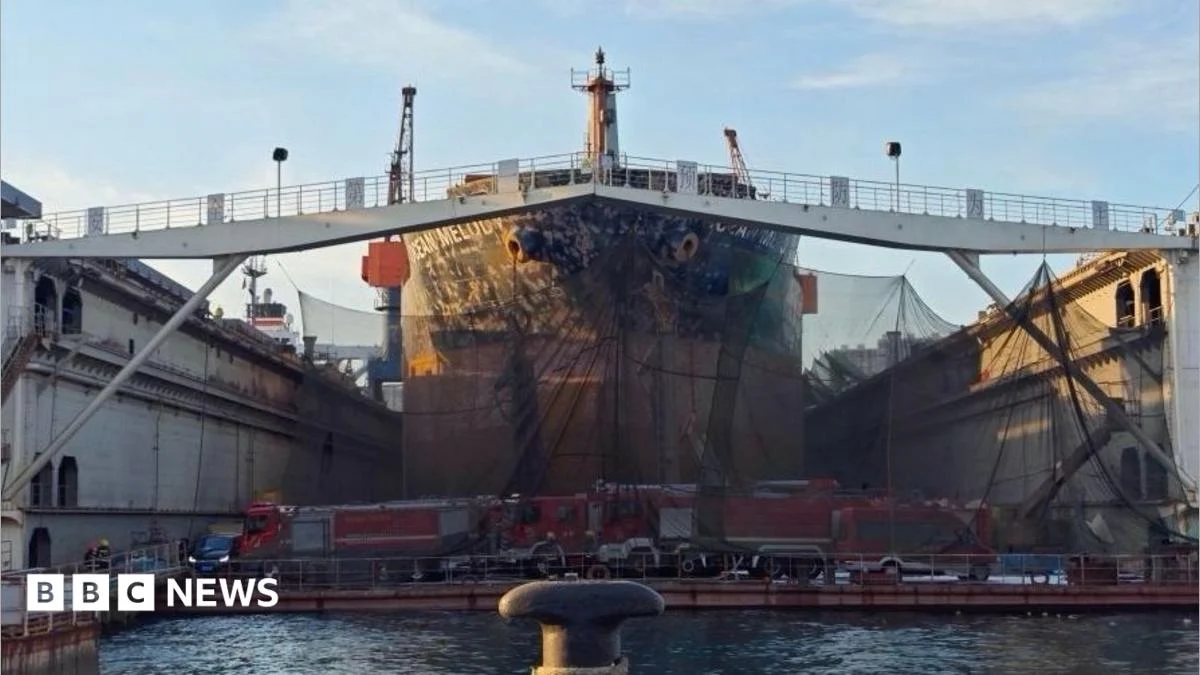
The maritime community is reeling from a devastating incident at a port in eastern China, where a catastrophic fire aboard a foreign-flagged cargo ship has claimed the lives of twenty-five individuals. The blaze, which erupted on the Liberia-flagged vessel "Ocean Melody" while it was undergoing maintenance in the bustling port city of Qingdao, has drawn international attention to the inherent risks of ship repair operations and maritime safety protocols. Chinese state broadcaster CCTV confirmed the grim toll, noting that out of the forty-two people reported to be on board the 190-meter carrier, seventeen were successfully evacuated. Among the survivors, five individuals required hospitalisation and are currently reported to be in stable condition, testament to the rapid, albeit challenging, rescue efforts mounted by local emergency services. The incident, occurring at approximately 11:15 local time (03:15 GMT) on a critical maritime artery, underscores the complex interplay of international shipping, port operations, and the critical need for stringent safety oversight in one of the world’s busiest trade hubs.
The Catastrophic Incident Unfolds
The "Ocean Melody," a substantial vessel stretching 190 meters (623 feet) in length, had arrived in Qingdao on August 31, according to data from the tracking site MarineTraffic, presumably to undergo routine or extensive maintenance procedures at one of the city’s numerous shipyards. Such periods, while essential for a ship’s operational longevity and compliance, are inherently fraught with risk. The work often involves "hot work" such as welding, cutting, and grinding, which can generate sparks and heat in environments potentially containing flammable materials like fuel residues, lubricants, and various chemicals. Confined spaces, complex machinery, and the presence of a multinational crew further complicate safety management during these critical phases.
The alarm was raised shortly after 11:15 local time when the fire began to spread rapidly through the vessel. The precise origin and initial cause of the blaze remain the subject of an intensive ongoing investigation, but early reports suggest a sudden and aggressive escalation, trapping many crew members and shipyard workers aboard. Local fire departments, supported by maritime rescue units, were immediately dispatched to the scene. Eyewitness accounts and state media photographs depicted thick plumes of smoke billowing from the vessel as emergency responders battled the inferno. The inherent challenges of fighting a shipboard fire – including limited access points, the presence of various combustible materials, and the risk of structural compromise – made the operation exceedingly difficult. Despite these obstacles, firefighters worked tirelessly for just over three hours before successfully bringing the conflagration under control, a testament to their dedication and training.
A Grim Search and Rescue Operation
In the immediate aftermath of the fire being extinguished, the focus shifted to search and recovery. Rescue teams meticulously combed through the damaged sections of the "Ocean Melody," facing hazardous conditions including residual heat, smoke, and potentially unstable structures. The grim reality of the situation became clearer as bodies were discovered, tragically confirming the extensive loss of life. The fact that twenty-five individuals perished underscores the ferocity and speed with which the fire consumed parts of the ship, leaving little chance for those trapped.
The seventeen individuals who were successfully evacuated included the five who required hospitalisation for injuries ranging from smoke inhalation to burns. Their stable condition offers a small measure of relief amidst the tragedy, highlighting the critical importance of swift medical intervention. The remaining twelve evacuated individuals, while not requiring immediate hospitalisation, would undoubtedly be undergoing medical assessments and psychological support for the trauma they experienced. The coordination between maritime safety agencies, local health authorities, and emergency services was crucial in managing the immediate crisis, providing care for the injured, and beginning the process of identifying the deceased.
Qingdao: A Global Maritime Hub
Qingdao, situated on China’s eastern coast, is far more than just a port city; it is a major economic powerhouse and a pivotal node in the global shipping network. As one of the busiest ports in the world, it handles an immense volume of cargo, ranging from containers to bulk materials, and serves as a critical gateway for international trade. Beyond its port operations, Qingdao is also renowned for its shipbuilding and ship repair industries, hosting numerous shipyards capable of servicing vessels of all sizes. This industrial capacity makes it a frequent destination for ships like the "Ocean Melody" requiring maintenance, repairs, or upgrades.
The port’s strategic location in the Yellow Sea makes it a vital component of China’s Belt and Road Initiative, facilitating trade routes across Asia and beyond. The incident, therefore, not only has profound human consequences but also raises questions about the operational safety within such a critical maritime infrastructure. While port operations are generally highly regulated, the sheer volume of activity and the constant flow of diverse vessels necessitate unwavering vigilance regarding safety standards, especially during high-risk activities like ship maintenance.
The "Ocean Melody" and the Flag State System
The "Ocean Melody" is identified as a Liberia-flagged carrier. Liberia operates one of the world’s largest ship registries, often referred to as a "flag of convenience." Under this system, a ship’s nationality (its flag state) can be different from the nationality of its owners or operators. Flag states are responsible for enforcing international maritime conventions and regulations, including those pertaining to safety, crew welfare, and environmental protection. While some flag of convenience states have robust regulatory frameworks and inspection regimes, the system can sometimes be criticised for potentially allowing shipowners to choose flags with less stringent oversight or lower operating costs.
The choice of flag state has significant implications for an investigation into a maritime casualty. Liberia, as the flag state, will be expected to cooperate fully with Chinese authorities, who, as the port state, have primary jurisdiction over the incident occurring within their territorial waters. Both the flag state and the port state have a vested interest in a thorough investigation to understand the causes, prevent recurrence, and ensure accountability. The "Ocean Melody" itself, a 190-meter long vessel, likely falls into the category of a bulk carrier or general cargo ship, designed for transporting unpackaged bulk cargo such as grain, coal, or iron ore. These types of vessels, due to the nature of their operations and the often-combustible materials they transport or have residues of, are subject to stringent safety regulations, particularly concerning fire prevention and suppression systems.
Initiating a Comprehensive Investigation
A multi-faceted investigation is now underway to determine the precise cause of the fire and identify any contributing factors. This complex inquiry will involve several key stakeholders:
- Chinese Maritime Safety Administration (MSA): As the primary maritime authority in China, the MSA will lead the investigation, examining all aspects of the incident, including the ship’s condition, the maintenance procedures being undertaken, the emergency response, and adherence to national and international regulations.
- Local Fire and Police Authorities: These agencies will focus on the immediate circumstances of the fire, evidence collection at the scene, and potential criminal aspects if negligence or foul play is suspected.
- Liberian Registry: Representatives from Liberia, as the flag state, will participate in the investigation, providing technical expertise and ensuring that international conventions are considered. They will also review their own oversight of the vessel.
- Classification Society: The "Ocean Melody" would have been surveyed and certified by a classification society (e.g., Lloyd’s Register, DNV, Bureau Veritas) to ensure it met specific structural and engineering standards. Their records and experts will be crucial in understanding the ship’s design, maintenance history, and compliance with safety rules.
- Ship Owner/Operator: The company operating the "Ocean Melody" will conduct its internal investigation and cooperate fully with authorities, providing documentation related to the ship’s operations, crew training, and maintenance logs.
The investigation will likely scrutinise several potential areas:
- Hot Work Safety: Whether proper permits were issued, fire watches were in place, and flammable materials were adequately protected or removed before welding or cutting.
- Electrical Systems: Potential for electrical faults or short circuits, especially during repair work where systems might be powered down or reconfigured.
- Fuel and Lubricant Management: Proper storage and handling of combustible liquids.
- Crew Training and Preparedness: The effectiveness of onboard fire drills, emergency procedures, and the crew’s ability to respond to a rapidly developing fire.
- Shipyard Safety Protocols: Adherence to safety regulations specific to ship repair facilities, including emergency egress and fire suppression infrastructure.
- Structural Integrity: The fire’s impact on the vessel’s structure and potential for future salvage or decommissioning.
Such investigations can be protracted, often taking months or even years to complete, given the technical complexities and the need for detailed analysis and evidence gathering. The ultimate goal is not only to assign responsibility but, more importantly, to learn from the tragedy and implement measures to prevent similar incidents in the future.
Broader Implications for Maritime Safety
The Qingdao "Ocean Melody" fire serves as a stark reminder of the inherent dangers within the global shipping industry and the critical importance of robust safety regulations and their rigorous enforcement. This incident is not an isolated event; ship fires and accidents, particularly during maintenance periods, unfortunately occur with a concerning frequency worldwide.
International Regulations and Enforcement: The tragedy will undoubtedly prompt renewed scrutiny of international maritime conventions such as SOLAS (Safety of Life at Sea), which sets minimum safety standards for the construction, equipment, and operation of ships. The role of the International Maritime Organization (IMO) in developing these standards and encouraging their global adoption is paramount. However, the effectiveness of these regulations hinges on their consistent application by flag states, diligent inspections by port state control authorities, and unwavering commitment from shipowners and operators.
Shipyard Safety: The incident highlights the unique safety challenges of shipyards. These are dynamic environments where multiple complex operations occur simultaneously, often involving heavy machinery, hazardous materials, and large workforces. Effective safety management systems, comprehensive risk assessments, continuous training for workers, and strict adherence to hot work procedures are non-negotiable.
Human Element: The human factor plays a critical role in maritime safety. This includes adequate training for crew members in fire prevention and emergency response, effective communication protocols, and a strong safety culture that encourages reporting of hazards without fear of reprisal. The multinational nature of many crews also presents challenges in terms of language barriers and varying levels of training, which must be proactively addressed.
Economic and Environmental Impact: While the immediate focus is on the tragic loss of life, the incident also carries potential economic and environmental ramifications. The "Ocean Melody" itself represents a significant asset, and its damage will result in substantial insurance claims and potential disruption to shipping schedules. Furthermore, depending on the extent of damage and any spills, there could be localised environmental concerns related to fire suppressants, fuel, or other pollutants entering the port waters.
Support for Victims and Families: Beyond the investigation, there will be a crucial need for support systems for the victims’ families, including compensation, counselling, and assistance with repatriation if necessary. The international nature of shipping means that the deceased may come from various countries, requiring coordinated efforts to provide humanitarian aid.
The Qingdao port fire is a sombre reminder that despite technological advancements and stringent regulations, the sea and the heavy industries associated with it remain unforgiving. As the investigations unfold, the global maritime community will be watching closely, hoping to glean lessons that can prevent future tragedies and further enhance the safety of life at sea and in port.