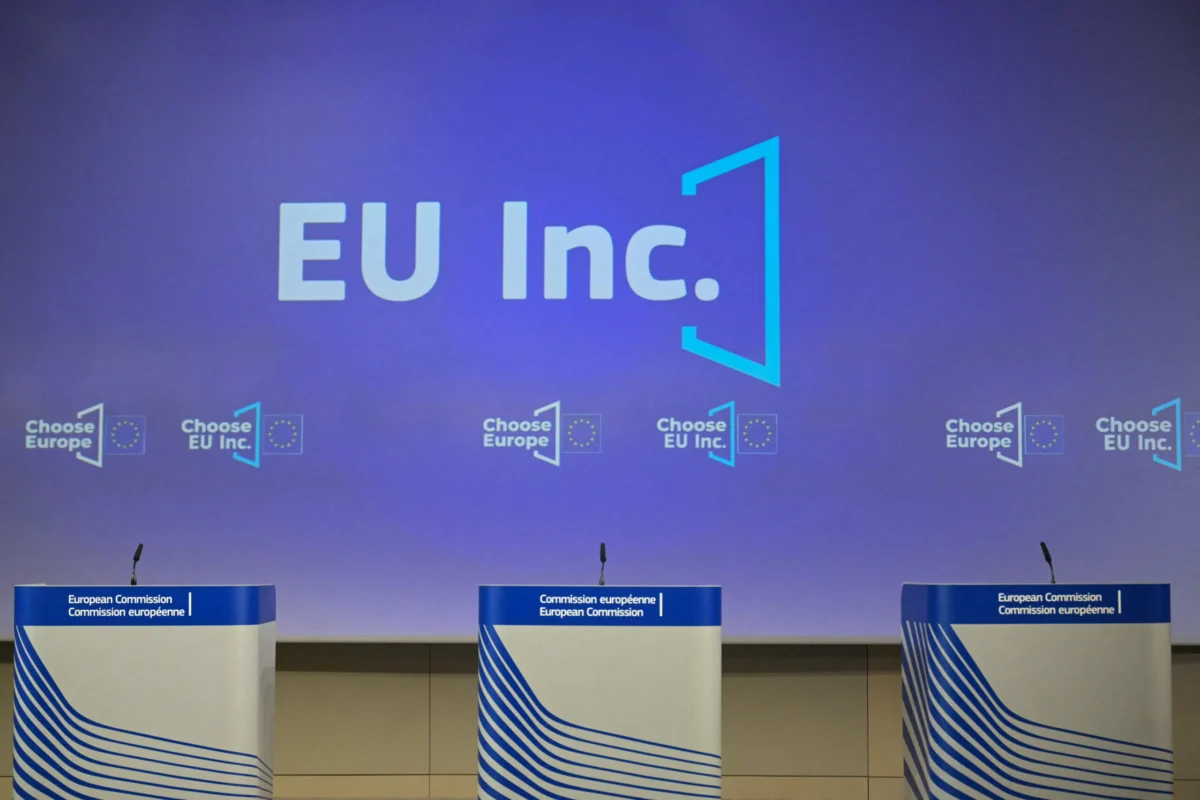
Europe stands on the cusp of a transformative shift in its corporate landscape, potentially introducing a pan-European company statute designed to rival the efficiency and appeal of the United States’ Delaware C Corp. However, a powerful coalition of the continent’s most influential startup founders and venture capitalists is not resting on its laurels. In a potent open letter released this past Thursday, this "who’s who" of the European tech scene delivered a clear and unequivocal message to lawmakers: the proposed new corporate status, dubbed "EU Inc," must not be compromised or "watered down" by national interests if it is to achieve its ambitious goals.
This letter marks a critical escalation in the ongoing "EU Inc" campaign, a movement advocating for a streamlined, EU-wide legal framework that would allow companies to incorporate under a common statute and operate seamlessly across all 27 member states. While the campaign has successfully garnered significant endorsements from leading authorities within the European Union, its promoters are now voicing profound concerns that the final legislative text could be rendered "unusable if its central features are weakened." The urgency stems from the rapidly approaching winter recess, with approximately 100 days remaining for European institutions to finalize this pivotal legislation.
The Genesis of a Pan-European Vision: Addressing Fragmentation
The call for an EU-wide corporate status is not a recent phenomenon but rather the culmination of years of frustration within Europe’s burgeoning startup ecosystem. For decades, companies seeking to scale across the continent have grappled with a labyrinthine patchwork of 27 distinct national legal systems, each with its own incorporation procedures, regulatory requirements, tax regimes, and governance structures. This fragmentation creates significant administrative burdens, escalates legal costs, and introduces substantial uncertainty, making cross-border expansion a daunting and often prohibitive endeavor.
In contrast, the United States’ Delaware C Corp has long served as the gold standard for startups globally, primarily due to its predictable legal framework, robust case law, and business-friendly corporate governance provisions. The vast majority of venture-backed companies in the U.S., and indeed many international firms, choose to incorporate in Delaware, benefiting from a streamlined process that facilitates fundraising, mergers and acquisitions, and talent management. Europe’s ambition with EU Inc is to create a similar, unified environment that fosters innovation and growth without the need for companies to navigate a myriad of national laws or, worse, relocate their legal domicile outside the EU to a more accommodating jurisdiction.
The underlying economic rationale is compelling. A truly integrated European market for capital and companies could unlock substantial investment, stimulate job creation, and significantly enhance the continent’s global competitiveness in the technology sector. The current friction not only stifles existing companies but also discourages new entrepreneurial ventures, often leading to a "brain drain" or "unicorn drain" where promising European startups either incorporate overseas or are acquired by non-European entities. The EU Inc proposal directly addresses this by aiming to remove "much of the friction and fragmentation that continue to throttle European companies, unlock investment and spur a new wave of entrepreneurship."
Chronology of a Campaign: From Concept to Critical Juncture
The idea of a harmonized European company law has been discussed for decades within EU policy circles, reflecting the broader goal of deepening the single market. Early initiatives, such as the European Company Statute (Societas Europaea or SE), introduced in 2001, aimed to provide a single legal form for companies operating across borders. However, the SE proved to be complex, costly, and largely underutilized by startups, which often found it too cumbersome and tailored more for large, established enterprises.
The "EU Inc" campaign represents a renewed, more focused effort, specifically tailored to the needs of modern, fast-growing startups and scale-ups. The movement began to gain significant momentum around 2024, as an original petition outlining the need for a simplified corporate form gathered widespread support from founders, investors, and policymakers. This initial groundswell demonstrated a clear industry demand for a pragmatic solution that directly addressed the pain points experienced by tech companies.
Key milestones in the campaign’s trajectory include:
- Early 2024: The "EU Inc" concept crystallizes, with advocates publishing detailed proposals for a modern, startup-friendly corporate statute. The original petition begins circulating, rapidly accumulating signatures from prominent figures in the European tech ecosystem.
- Mid-2024: The European Commission acknowledges the campaign’s objectives and begins to integrate elements of the proposal into its legislative agenda. Top EU authorities, including key commissioners and members of the European Parliament, express public support for the initiative, recognizing its potential to boost European innovation and competitiveness.
- Late 2024: The European Commission formally publishes its proposal for a new harmonized corporate legal regime, directly influenced by the EU Inc campaign. This marks a significant step, moving the concept from advocacy to official legislative consideration.
- Ongoing Negotiations: The proposal enters the complex legislative "trilogue" process, involving negotiations between the European Parliament, the Council of the European Union (representing member states), and the European Commission. It is during this phase that national interests and various lobbies exert their influence, leading to the current concerns about potential dilution.
- Recent Open Letter (Thursday): The release of the latest open letter signifies a critical juncture. With approximately 100 days remaining before European institutions enter their winter recess – a period that often sees a slowdown in legislative progress – the letter serves as an urgent plea to preserve the integrity of the original proposal. The timing underscores the advocates’ determination to secure a meaningful outcome before the current legislative cycle concludes.
The Devil in the Details: Critical Provisions Under Threat
The proponents of EU Inc understand that the success of any new corporate statute hinges on its practical utility. As Martin Mignot, a partner at Index Ventures and a staunch EU Inc supporter, aptly told TechCrunch in 2024, "the devil is in the details, and that’s going to be where we’re going to be very, very watchful." The recent open letter reiterates this sentiment, emphasizing that seemingly "technical details" are precisely what "separate a company form founders use from one they ignore." Two such critical provisions are at the forefront of the current legislative battle:
-
A Central Registry: Currently, companies operating across Europe must contend with multiple national business registries, each with its own requirements, languages, and administrative processes. This leads to duplication of effort, increased costs, and a lack of transparency for cross-border operations. The EU Inc proposal advocates for a single, centralized registry that would provide a unified point of incorporation and administrative oversight. Such a system would dramatically simplify compliance, enhance legal certainty, and reduce bureaucratic hurdles, making it genuinely easier for companies to scale across the bloc. Without a central registry, much of the administrative burden that EU Inc seeks to alleviate would remain, rendering the new status less attractive.
-
Stock Option Taxation at Disposal: This is perhaps one of the most contentious, yet vital, points for attracting and retaining top talent. In many European countries, employees receiving stock options can be taxed at various stages – at the point of grant, vesting, or exercise – even if they haven’t yet realized any cash value from those options. This "phantom income" taxation creates a significant disincentive for employees, particularly in early-stage startups where liquidity events are often years away. It can force employees to sell shares prematurely or incur substantial tax liabilities on illiquid assets. The EU Inc campaign insists that employees should be taxed only when they actually "dispose of their stock options," meaning at a liquidity event such as an IPO or acquisition. This alignment of taxation with realized gains is standard practice in leading startup ecosystems globally and is crucial for making European startups competitive in the global war for talent. Weakening this provision would undermine Europe’s ability to attract and retain the skilled professionals necessary to build world-class companies.
Other areas susceptible to legislative compromise include corporate governance rules, capital requirements, ease of cross-border conversions or mergers, and the flexibility of company structures. Any deviation from a lean, flexible, and predictable framework risks making EU Inc another underutilized corporate form rather than the game-changer it is envisioned to be.
Voices of Influence: Industry’s Unified Front
To underscore the gravity of their concerns and the breadth of support for the unadulterated EU Inc proposal, the campaign has strategically rallied an impressive roster of signatories. This concerted effort to "name-drop" is a clear signal to lawmakers about the economic weight and influence behind their demands.
On the investor side, the open letter features signatures from some of the most prominent venture capitalists shaping the global tech landscape:
- Sonali De Rycker, Partner at Accel: A leading voice in European VC, known for backing numerous successful startups.
- Michael Moritz, Partner at Sequoia Capital: A legendary Silicon Valley investor whose endorsement lends significant international credibility and highlights the global interest in Europe’s tech future.
- Niklas Zennström, Founder of Atomico: As a co-founder of Skype and a leading European VC, Zennström’s support is particularly impactful, representing both entrepreneurial success and investment prowess. He has also been a vocal proponent, frequently "sporting its cap" and advocating for the campaign on social media.
Beyond these investment giants, the letter also showcases endorsements from founders of some of Europe’s most innovative and rapidly growing "unicorns" – privately held companies valued at over $1 billion. These include the entrepreneurial minds behind:
- Alan: A leading digital health insurance provider.
- ElevenLabs: A pioneer in AI voice technology.
- Lovable: (Assuming a typo for LALAL.AI or similar, or a newer emergent unicorn)
- Mistral AI: A rising star in the generative AI space, often seen as Europe’s answer to OpenAI.
- Synthesia: A leader in AI-generated video.
The inclusion of founders from companies like Mistral AI and Synthesia, which have garnered significant global attention and investment, sends a powerful message. Moreover, the article notes that "some of these have their HQs in the United States." This detail is crucial: it serves as an implicit warning to lawmakers that if Europe fails to create an attractive corporate environment, even its most promising homegrown innovations may continue to seek legal domiciles elsewhere. Conversely, a successful EU Inc could not only retain European talent and companies but also attract international firms looking for a unified gateway to the European market.
National Interests and Legislative Headwinds
As is customary with complex European lawmaking, the path to harmonization is rarely smooth. National lobbies invariably enter the discussion, often seeking to protect existing structures, national prerogatives, or specific professional interests. The EU Inc proposal has faced opposition from various corners, most notably Germany’s powerful notaries’ association.
German notaries, like their counterparts in several other continental European countries, play a deeply entrenched and legally mandated role in corporate formation, property transactions, and other legal processes. Their association has "criticized aspects" of the European Commission’s proposal, likely raising concerns about potential impacts on their profession, the perceived erosion of national legal oversight, or the integrity of legal processes. A simplified, centralized EU-wide system could potentially bypass or significantly reduce the need for national notarial services for certain corporate actions, thus impacting their established business models. Their arguments often center on the need for legal certainty, protection against fraud, and the importance of national legal traditions.
Beyond notaries, other national lobbies and stakeholders may also raise objections:
- National Tax Authorities: Could express concerns about the implications for national tax revenues, the complexity of harmonizing tax bases, or a perceived loss of sovereignty over tax policy.
- National Registries: May fear redundancy or a reduction in their administrative roles and revenue streams if a central EU registry is established.
- Legal Professionals and Law Firms: While many support simplification, some may be concerned about the impact on their existing practices specialized in navigating complex national corporate laws.
- Labor Unions and Employee Representation Bodies: In countries with strong co-determination laws (like Germany), there might be concerns about how a pan-European statute would address employee representation on company boards, ensuring that existing national standards are not undermined.
The ongoing negotiations between the European Parliament and the Council are therefore a delicate balancing act. While the Parliament often champions a more integrated, pro-innovation stance, the Council represents the diverse interests of the member states, making consensus challenging. The promoters of EU Inc are acutely aware of these political dynamics, which is why their current push emphasizes the core principles that must be preserved to ensure the statute’s effectiveness.
Broader Implications and the Path Forward
The successful implementation of EU Inc, in its robust form, holds profound implications for Europe’s economic future.
- Economic Growth and Investment: By reducing friction and costs, EU Inc could significantly lower barriers to entry and expansion for startups, leading to a surge in new company formations, faster scaling of existing businesses, and increased foreign direct investment into the European tech sector. Analysts predict this could unlock billions in capital that is currently deterred by regulatory complexity.
- Enhanced Competitiveness: A unified corporate status would position Europe as a more attractive destination for global talent and capital, directly challenging the dominance of ecosystems like Silicon Valley. It would empower European companies to compete more effectively on the international stage, fostering the creation of more global tech champions originating from Europe.
- Talent Attraction and Retention: The crucial provision on stock option taxation, if maintained, would be a game-changer for talent. It would allow European startups to offer compensation packages that are competitive with those in the US, stemming the "brain drain" and attracting top engineers, researchers, and executives to the continent.
- Deepening the Single Market: Beyond the tech sector, EU Inc represents a significant step towards a more genuinely integrated European single market. It embodies the principle of free movement of capital and services by dismantling legal and administrative barriers that have long hindered cross-border economic activity.
The next 100 days are critical. Policymakers face a choice: either yield to national lobbying efforts and dilute the EU Inc proposal into another underutilized statute, or heed the unified call from Europe’s most dynamic entrepreneurs and investors to enact a truly transformative, future-proof corporate framework. The proponents are making it clear that a half-measure will not suffice; for EU Inc to truly "remove much of the friction and fragmentation," "unlock investment," and "spur a new wave of entrepreneurship," its central features, particularly the central registry and equitable stock option taxation, must be preserved. The future of Europe’s innovation economy hangs in the balance, awaiting a legislative outcome that either embraces its potential or succumbs to the weight of traditional resistance.