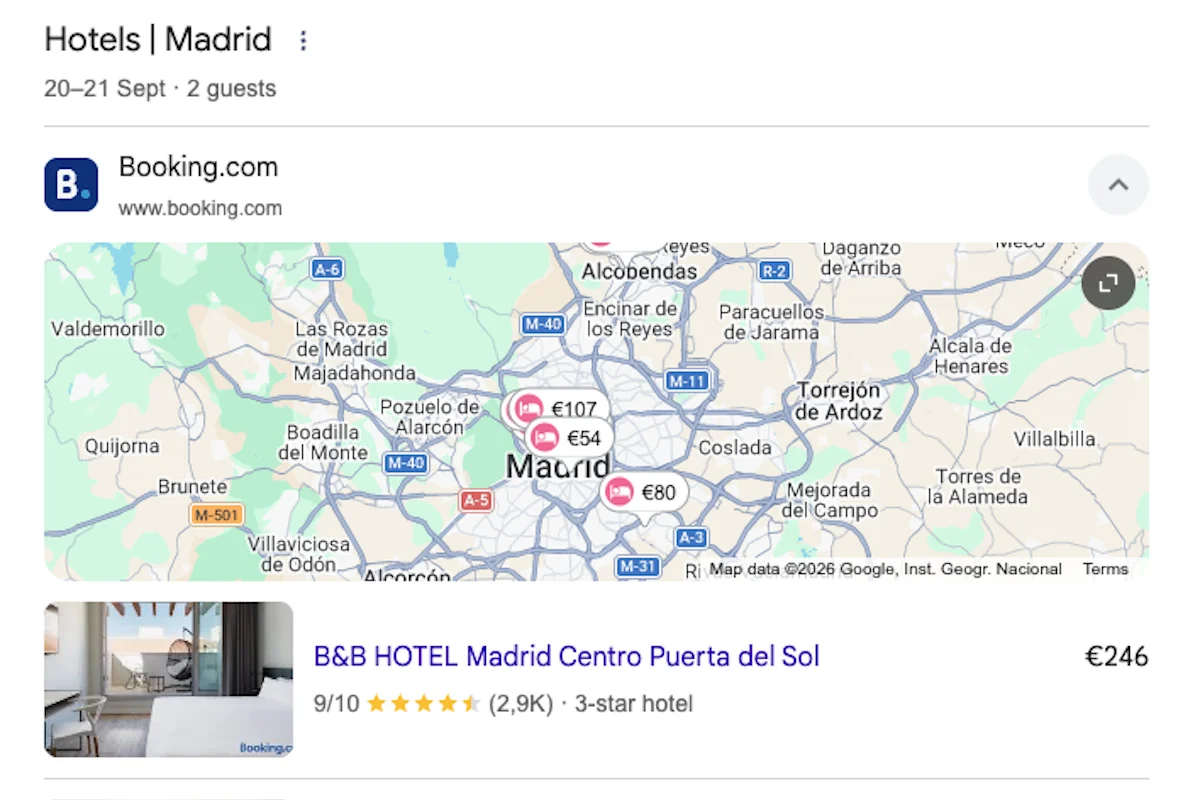
Google has implemented a significant redesign of its travel search results across the European Economic Area (EEA), introducing a dual-tier display system that separates online travel agencies from direct service providers. This structural shift, rolled out this week, represents a direct response to the European Union’s Digital Markets Act (DMA), a landmark piece of legislation aimed at curbing the market dominance of "gatekeeper" technology firms. The update fundamentally alters how millions of European consumers interact with searches for flights, hotels, and restaurants, marking one of the most substantial changes to the Google Search interface in over a decade.
Under the new configuration, users in the EU performing travel-related searches are presented with two distinct modules: an "aggregator unit" and a "supplier unit." The aggregator unit prioritizes third-party platforms such as Booking.com, Expedia, and TripAdvisor, grouping them into a stacked interface where the top-ranked provider’s results are expanded by default. Conversely, the supplier unit features direct listings from individual hotels, airlines, and local businesses. This bifurcation is designed to address long-standing complaints from competitors who argued that Google’s previous "OneBox" results—which often integrated Google’s own comparison tools—unfairly diverted traffic away from independent websites and established aggregators.
The Mechanisms of the Revamped Search Interface
The visual and functional changes are most apparent when searching for specific travel intent, such as "hotels in Madrid" or "flights to Paris." In the previous iteration, Google typically displayed its own integrated booking tools at the top of the page, allowing users to filter dates and prices without leaving the search engine results page (SERP). The new EU-specific layout shifts this dynamic.
In the "aggregator unit," Google now presents a list of links to major comparison sites. For example, a search conducted within Spain for local accommodations will show a vertical stack of options including Agoda, Kayak, and local Spanish travel portals. The interface is designed to facilitate a "click-out" experience, encouraging users to visit the third-party site to complete their transaction rather than remaining within the Google ecosystem.
The "supplier unit" serves as a counterweight, ensuring that individual brands—such as a boutique hotel in Rome or a regional airline—remain visible alongside the multi-billion-dollar aggregators. This unit typically includes information such as the business name, rating, and a direct link to the official website. By separating these two categories, the European Commission aims to ensure that "gatekeepers" do not use their search dominance to pick winners and losers in the digital economy.
Legislative Context and the Digital Markets Act
The impetus for these changes is the Digital Markets Act (DMA), which entered full application in March 2024. The DMA identifies several "gatekeepers"—including Alphabet (Google’s parent company), Amazon, Apple, Meta, and Microsoft—based on their significant impact on the internal market and their role as an essential gateway for business users to reach consumers.
Specifically, Article 6(5) of the DMA prohibits gatekeepers from treating their own services and products more favorably in ranking than similar services or products offered by third parties. For years, the European Commission has scrutinized Google’s practice of "self-preferencing." In 2017, the Commission fined Google €2.42 billion for favoring its own comparison shopping service over rivals. The current overhaul of travel search is a preemptive and reactive measure to avoid similar multi-billion-euro penalties, which under the DMA can reach up to 10% of a company’s total worldwide annual turnover, or 20% for repeated infringements.
A Chronology of Google’s Antitrust Challenges in Europe
The transition to the current search layout is the culmination of a nearly 15-year legal and regulatory battle between Google and European authorities. Understanding this timeline is crucial for contextualizing why the current changes are so drastic.
- November 2010: The European Commission opens its first formal investigation into Google’s search practices following complaints from vertical search providers (specialized search engines for travel and shopping).
- June 2017: The Commission issues a record-breaking €2.42 billion fine against Google for antitrust violations regarding Google Shopping.
- July 2018: A second major fine of €4.34 billion is issued concerning the Android operating system and the pre-installation of Google’s search app and browser.
- March 2019: A third fine of €1.49 billion is levied for "abusive practices" in online advertising via the AdSense platform.
- December 2020: The European Commission proposes the Digital Markets Act to move from ex-post enforcement (punishing behavior after it happens) to ex-ante regulation (setting rules in advance).
- September 2023: The Commission officially designates Alphabet as a gatekeeper under the DMA.
- January–March 2024: Google begins testing and rolling out new SERP features in Europe to comply with the March 7 compliance deadline.
- Current Update (Late 2024): Google continues to refine the "aggregator" and "supplier" units based on ongoing feedback from the Commission and market participants.
Market Data and Potential Economic Impact
The European travel market is one of the most valuable in the world, with digital sales accounting for a massive portion of the industry. According to data from Statista, the European online travel market was valued at approximately €275 billion in 2023 and is projected to grow steadily. Consequently, any change in how Google directs traffic has immediate and profound financial implications.
Industry analysts suggest that the new "aggregator unit" could lead to a concentration of traffic toward the largest OTAs (Online Travel Agencies) like Booking Holdings and Expedia Group, who have the SEO authority and brand recognition to dominate these new units. However, for smaller, niche aggregators, the change is a double-edged sword: while they gain a dedicated space on the SERP, they must now compete directly in a "stack" against giants with much larger marketing budgets.
For direct suppliers—hotels and airlines—the "supplier unit" offers a glimmer of hope for reducing their reliance on high-commission third-party platforms. Currently, OTAs can charge commissions ranging from 15% to 30% per booking. If Google’s new interface successfully drives more direct traffic to supplier websites, it could significantly improve the bottom-line margins for the hospitality sector.
Industry Reactions and Stakeholder Perspectives
The reaction to Google’s search updates has been mixed, reflecting the complex web of interests in the travel sector.
The European Commission: While the Commission has not issued a final "seal of approval" on Google’s changes, officials have noted that the DMA is an ongoing process. A spokesperson for the Commission stated earlier this year that they would "assess the compliance reports" and "not hesitate to take formal enforcement action" if the changes fall short of providing a level playing field.
Online Travel Agencies (OTAs): Organizations representing OTAs have expressed cautious optimism but remain vigilant. Many argue that while the removal of Google’s own "Google Hotels" box is a step forward, the new design still gives Google control over the ranking algorithm within the aggregator unit. They continue to lobby for "neutrality" in how those results are displayed.
Hotels and Airlines: Trade bodies such as HOTREC (the umbrella association of Hotels, Restaurants, and Cafés in Europe) have long advocated for more direct-to-consumer visibility. They have expressed concern that the "aggregator unit" still appears more prominent than the "supplier unit," potentially funneling users back into the commission-heavy OTA ecosystem.
Google’s Position: In a corporate blog post regarding DMA compliance, Google stated: "We have made more than 20 product changes, including the introduction of dedicated units and a range of new direct links. Our goal is to provide a high-quality experience for users while meeting the requirements of the DMA, even though these changes will result in some trade-offs for different types of businesses."
Broader Implications for the Future of Search
The restructuring of travel search in Europe may serve as a blueprint for other regions or other industries. As regulatory pressure on Big Tech grows in the United States, United Kingdom, and Australia, Google may eventually find it more efficient to standardize these "aggregator vs. supplier" models globally rather than maintaining a fragmented search experience.
Furthermore, the change highlights a shift in the philosophy of search. For years, Google moved toward being an "answer engine," providing direct information on the SERP to save users time. The DMA effectively forces Google back toward being a "pointer engine," where its primary role is to direct users to other websites. This shift could impact user behavior, potentially increasing the number of clicks required to complete a booking, which some UX experts argue might lead to a slight decrease in conversion rates in the short term as users adapt to the new flow.
As the European Commission continues its monitoring of gatekeeper behavior, the travel search interface is likely to remain in a state of flux. Google’s recent updates are not merely a UI refresh; they are a high-stakes attempt to balance regulatory compliance with the maintenance of a multi-billion-dollar advertising business. For now, European travelers will have to get used to a more crowded, categorized, and link-heavy search experience—one that prioritizes competition over the seamless, integrated "one-stop-shop" model Google had spent years perfecting.