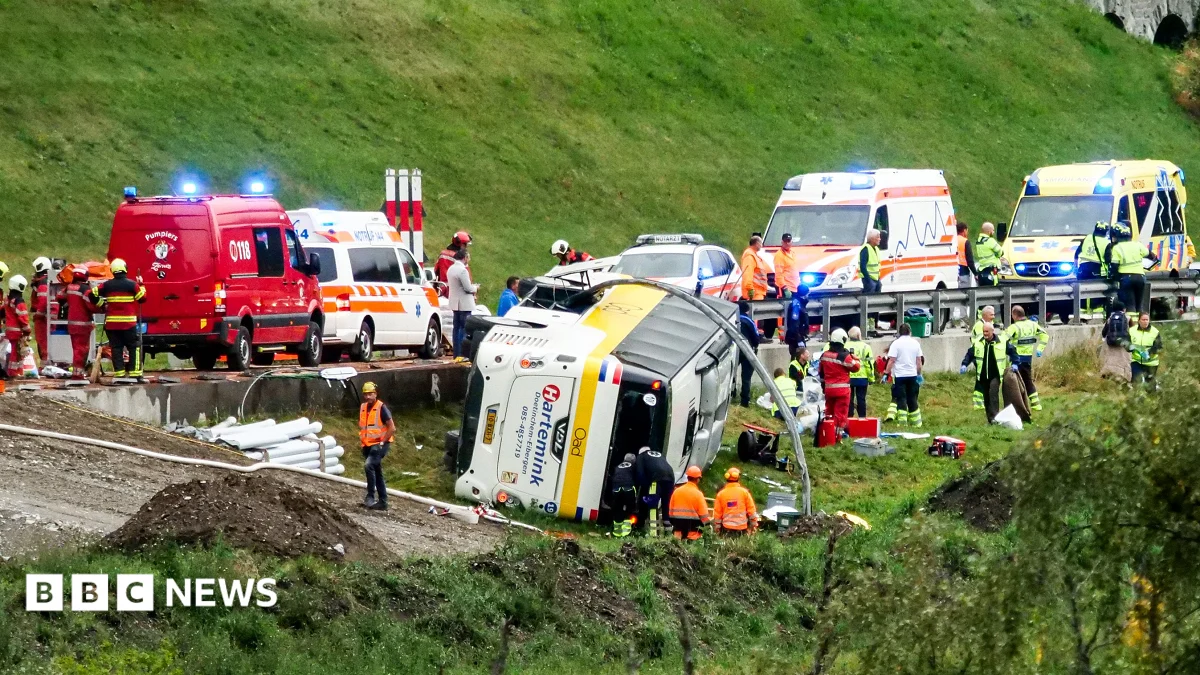
A tourist coach traveling through the picturesque, yet challenging, terrain of the south-eastern Swiss Alps has been involved in a devastating accident, resulting in multiple fatalities and numerous injuries. The incident occurred late on Thursday afternoon between the municipalities of Susch and Zernez in the canton of Graubünden, also known as Grisons, a region renowned for its dramatic mountain landscapes and winding roads. The bus, carrying approximately 48 Dutch passengers, overturned, prompting a massive emergency response that included a large contingent of rescuers, medical personnel, and several helicopters deployed to the remote scene.
The Tragic Incident and Immediate Aftermath
The crash site, characterized by a narrow country road flanked by steep embankments and rugged Alpine scenery, became a hive of intense rescue activity shortly after the alarm was raised. Images circulated by Swiss news outlets depicted the coach lying on its side, a stark testament to the force of the impact, surrounded by a multitude of emergency vehicles and dedicated rescue workers meticulously tending to the injured and recovering victims. The precise circumstances leading to the vehicle overturning remain the subject of an intensive investigation, but early indications suggest a complex interplay of factors could be at play on the challenging mountain route.
The Graubünden Cantonal Police, the primary investigating authority, confirmed the severity of the crash, providing initial reports of several fatalities and a significant number of injured individuals. The exact casualty figures were not immediately released, reflecting the fluid and dynamic nature of the rescue and recovery operation. A spokesperson for the General Dutch Association of Travel Companies, speaking on behalf of the tour operator OAD, confirmed the nationality of the passengers, underscoring the international dimension of the tragedy and the immediate need for coordinated international assistance. The spokesperson, in an interview with Dutch newspaper De Telegraaf, emphasized the difficulty of providing precise numbers of the deceased or wounded at such an early stage, as emergency services were still working tirelessly to extract individuals and assess their conditions.
Chronology of a Journey Interrupted
The ill-fated journey began days earlier, with the coach reportedly departing from the Netherlands on Monday. This type of multi-day coach tour, popular among European tourists seeking to explore the continent’s diverse landscapes, typically involves extensive travel through multiple countries. At the time of the crash, the group was on a day trip to Switzerland, having commenced that particular segment of their itinerary from a base in Austria. This detail paints a picture of a leisure trip, perhaps designed to showcase the majestic beauty of the Swiss National Park, for which Zernez serves as a primary entry point. The park itself is a vast Alpine reserve, stretching over 100 square kilometers (40 square miles) across the magnificent Engadine Valley, a region celebrated for its pristine wilderness and panoramic vistas.
The crash occurred in the late afternoon, a time when daylight might have been waning, potentially adding another layer of complexity to an already demanding driving environment. While specific weather conditions at the moment of the crash were not immediately detailed, Alpine roads can present varying challenges even on clear days, including sudden changes in gradient, tight turns, and potential hazards like loose gravel or unexpected wildlife. The timeline suggests a tour group enjoying what should have been a memorable excursion through one of Europe’s most iconic natural settings, tragically cut short by an unforeseen and devastating event.
The Herculean Task of Rescue and Recovery
The response to the crash was swift and comprehensive, reflecting the well-drilled emergency protocols in place in Switzerland, particularly for incidents in remote or challenging terrain. A "large team of rescuers" was mobilized, comprising local police, fire services, paramedics, specialized mountain rescue units, and civil defense personnel. The deployment of "several helicopters" was critical, not only for rapid medical evacuation of severely injured passengers to regional trauma centers but also for accessing the crash site, which may have been difficult to reach quickly by ground vehicles alone, given the "narrow country road" described.
Helicopters from Swiss Air-Rescue (Rega) and other air services would have played a crucial role, capable of landing in confined spaces and airlifting patients directly to hospitals like the Kantonsspital Graubünden in Chur or other specialized medical facilities equipped to handle mass casualty incidents. Ground ambulances, mobile intensive care units, and even buses were likely dispatched to transport less severely injured individuals and those requiring psychological support. The coordination required for such an extensive operation across multiple agencies and potentially challenging topography highlights the robust emergency infrastructure of the region. Rescuers would have faced the immediate challenges of extricating trapped passengers, providing first aid, triaging victims based on the severity of their injuries, and ensuring the safety of the scene.
Background Context: Navigating the Swiss Alps
The region of Graubünden is a major tourist destination, attracting millions of visitors annually drawn to its ski resorts, hiking trails, and scenic routes. Coach travel is a popular and economical way for large groups, particularly older demographics, to experience the grandeur of the Alps. While Swiss roads are generally well-maintained and traffic regulations strictly enforced, mountainous routes inherently carry higher risks compared to flat highways. Roads like the one between Susch and Zernez are often characterized by numerous curves, steep ascents and descents, and varying widths, requiring drivers to exercise extreme caution and expertise.
Zernez itself is a significant hub, not just as the gateway to the Swiss National Park, but also as a village nestled within the Lower Engadine Valley, a region known for its traditional Rhaeto-Romanic culture and stunning landscapes. The route through this area is a popular choice for tour operators, offering breathtaking views and access to various attractions. The journey from Austria into this part of Switzerland would typically involve traversing mountain passes or tunnels, each presenting its own set of driving conditions and potential challenges.
Official Responses and International Coordination
Following the incident, official statements and actions began to emerge from various parties, highlighting the immediate need for information, support, and investigation.
Graubünden Cantonal Police: The local police force is leading the criminal investigation into the crash. Their immediate priorities include securing the scene, identifying the deceased, notifying next of kin, and gathering evidence to determine the cause. This involves interviewing witnesses, examining the vehicle, analyzing road conditions, and reviewing any available data from the coach’s tachograph, which records speed, driving time, and other critical information. Updates on casualty figures and the progress of the investigation are expected as more concrete details become available.
Swiss Authorities: Beyond the local police, federal agencies such as the Federal Office of Transport (FOT) may become involved, especially if the investigation points to systemic issues regarding vehicle safety, road infrastructure, or regulatory compliance for commercial passenger transport. Local municipal authorities in Susch and Zernez would also be coordinating logistical support, public information, and community assistance.
Dutch Authorities: The Ministry of Foreign Affairs in the Netherlands, through its Embassy in Bern and Consulate General, immediately activated its consular crisis response protocols. This includes providing assistance to Dutch citizens involved in the accident, liaising with Swiss authorities for victim identification and repatriation, and offering support to families traveling to Switzerland. A dedicated helpline or information center would likely be established for concerned relatives.
Tour Operator OAD: As the tour operator responsible for the group, OAD faces the immediate challenge of supporting its passengers and their families. A spokeswoman for the General Dutch Association of Travel Companies, representing OAD, confirmed their cooperation with Swiss authorities. Beyond the initial statement, OAD would be expected to arrange for alternative travel for uninjured passengers, provide psychological support, and assist with practical arrangements for those affected. The company will also likely conduct its own internal review in parallel with the official investigation.
Medical Services: Hospitals receiving the injured would be under immense pressure. Beyond immediate surgical and medical care, they would also be providing psychological support for survivors, many of whom would have experienced severe trauma. Long-term care and rehabilitation plans would need to be established for those with serious injuries.
Safety and Regulatory Framework for Coach Travel
Europe has stringent safety regulations for commercial passenger coaches, covering vehicle maintenance, driver qualifications, driving hours, and safety features. Coaches operating across international borders must comply with both national and EU-wide regulations. These rules are designed to minimize risks, but accidents, particularly in challenging environments, can still occur.
Vehicle Safety: Modern coaches are equipped with numerous safety features, including advanced braking systems (ABS, EBS), electronic stability control (ESC), lane departure warning systems, and reinforced safety cages. Regular technical inspections are mandatory to ensure roadworthiness. Investigators will meticulously examine the coach’s condition prior to and after the crash for any mechanical failures.
Driver Regulations: Professional coach drivers are subject to strict rules regarding driving hours, mandatory rest periods, and continuous professional development. Fatigue is a known factor in road accidents, and the investigation will scrutinize the driver’s logs and rest periods. The driver’s health and experience on mountainous roads will also be relevant areas of inquiry.
Road Infrastructure: While Swiss roads are generally excellent, the unique characteristics of Alpine routes – steep gradients, sharp curves, potential for rockfalls, and varying surface conditions – demand constant vigilance. Road design, signage, and barriers are continually reviewed and improved, but the inherent challenges of the terrain remain.
Previous severe coach accidents, though relatively rare in Switzerland compared to other forms of transport, highlight the devastating potential when they do occur. Each incident typically leads to reviews of safety protocols, driver training, and sometimes even road design in specific locations.
Broader Implications and Long-Term Aftermath
The tragic coach crash will undoubtedly have several broader implications beyond the immediate human cost.
Impact on Tourism: While the Swiss Alps remain a globally popular destination, such a high-profile incident could lead to short-term concerns among potential tourists, particularly those considering coach travel. Tour operators might face increased scrutiny regarding their safety protocols, route planning, and driver selection. However, the resilience of the Swiss tourism industry, coupled with its reputation for safety and efficiency, suggests any long-term impact on overall visitor numbers would likely be minimal.
International Cooperation: The incident necessitates close and sustained cooperation between Swiss and Dutch authorities. This collaboration will extend from the immediate aspects of victim identification and consular assistance to the longer-term processes of criminal investigation, insurance claims, and support for affected families. Such events often strengthen bilateral relations in crisis management.
Psychological Impact: The trauma experienced by survivors, witnesses, and the families of the victims will be profound and long-lasting. Comprehensive psychological support services, extending beyond immediate crisis intervention, will be crucial. First responders, who often witness harrowing scenes, may also require mental health support.
Potential for Policy Review: Depending on the findings of the investigation, there could be calls for reviews of specific road safety measures in mountainous regions, regulations for international coach tours, or even specific operational procedures for tour operators. While it is too early to speculate on specific changes, major incidents often serve as catalysts for re-evaluating existing standards and practices to enhance safety.
As the recovery and investigation efforts continue in the Swiss Alps, the focus remains firmly on supporting the victims and their families, uncovering the precise causes of this tragic event, and learning lessons to prevent similar incidents in the future. The serene beauty of the Engadine Valley has been momentarily overshadowed by a somber reminder of the inherent risks that can accompany travel, even in the most meticulously managed environments.