The solemn occasion of the 25th anniversary of the September 11th terrorist attacks, typically a time for national remembrance and unity, has become unexpectedly embroiled in a contentious political debate in New York City. At the heart of this controversy are calls for Mayor Zohran Mamdani, the city’s first Muslim mayor, to abstain from the official commemorative ceremony. These demands, particularly vocalized by former New York City Mayor Rudy Giuliani, who served during the attacks, have ignited a fierce discussion about the nature of remembrance, political polarization, and the evolving identity of a city profoundly shaped by tragedy.
Mayor Mamdani has unequivocally stated his intention to attend the event, emphasizing that his presence will be dedicated to honoring the victims and supporting the families who endured unimaginable loss. This stance positions him firmly against critics who, through their objections, risk transforming a moment of collective mourning into a platform for divisive rhetoric. The situation underscores the enduring sensitivities surrounding 9/11 and the persistent challenges of navigating identity and belonging in a post-9/11 America.
The Genesis of the Controversy: A Collision of Legacies
Rudy Giuliani, often dubbed "America’s Mayor" for his leadership in the immediate aftermath of the 9/11 attacks, has emerged as a central figure in this contentious debate. His public statements advocating for Mayor Mamdani’s exclusion from the memorial ceremony draw on his historical association with the tragedy, leveraging a legacy that many New Yorkers and Americans associate with resilience and unity in crisis. However, Giuliani’s public image has undergone significant transformation in recent years, marked by various controversies and a perceived shift in political alignment. His current stance is interpreted by some as a continuation of a pattern of divisive commentary, while supporters view it as a principled stand rooted in the emotional scars of the attacks.
Mayor Zohran Mamdani’s election in November 202X marked a significant historical milestone for New York City, a metropolis celebrated for its diversity. His victory as the first Muslim mayor was widely lauded as a testament to the city’s inclusive spirit and its embrace of multicultural leadership. His political platform has generally focused on social justice, economic equity, and community building. For many, the call for his exclusion from the 9/11 memorial is not only an affront to his office but also to the very principles of diversity and inclusion that New York City ostensibly represents. His response, centered on the families of victims, seeks to elevate the human aspect of the tragedy above political posturing.
A Personal Connection Amidst Political Strife: The Hamdani Family’s Story
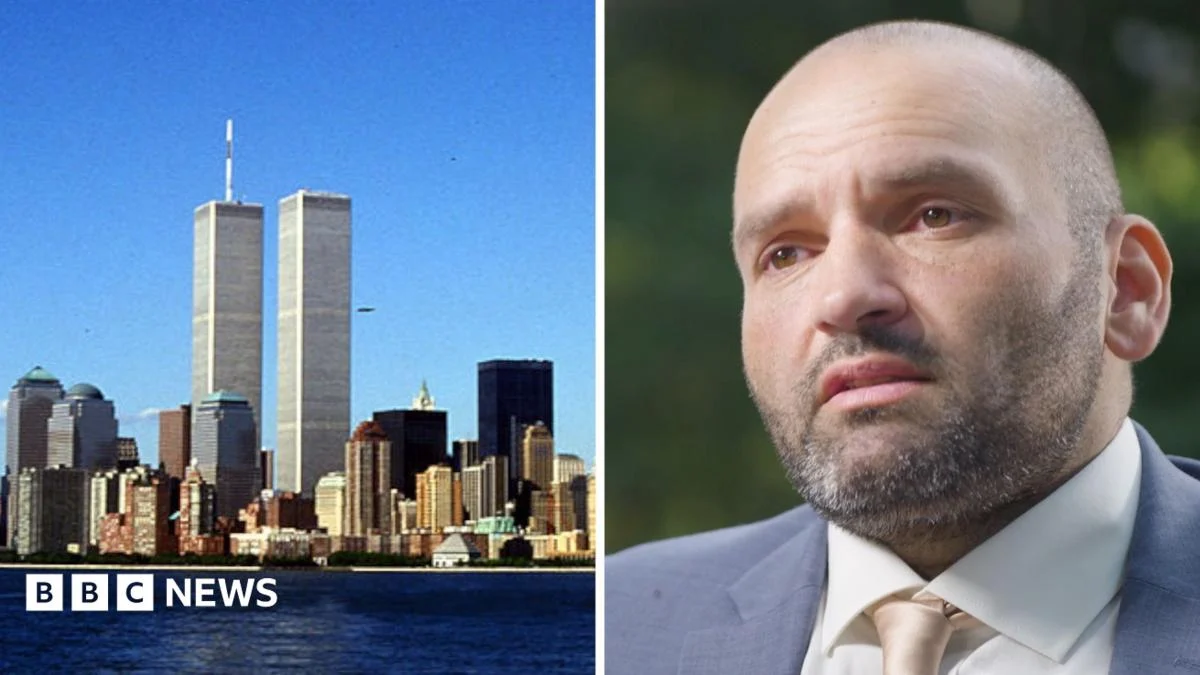
The personal narratives of those directly affected by 9/11 offer a poignant counterpoint to the political machinations. Zeshan Hamdani, whose older brother Salman Hamdani perished in the North Tower of the World Trade Center, provides a critical perspective. Salman Hamdani, a Muslim American New York Police Department cadet, was at the beginning of what promised to be a distinguished career in public service when the attacks occurred. His heroic actions on that day, rushing towards danger to help others, embody the selflessness displayed by countless first responders.
Initially, Salman’s disappearance led to a brief, painful period of suspicion, a reflection of the immediate anti-Muslim sentiment that unfortunately surged in the wake of the attacks. However, his remains were later found near the towers, and his identity confirmed through DNA, alongside his NYPD identification. He was officially recognized as a victim and hero, a stark reminder that the victims of 9/11, and indeed the heroes, came from all walks of life, including the Muslim American community.
Zeshan Hamdani’s voice is crucial because it bridges the gap between the pain of loss and the reality of Muslim American identity in the context of 9/11. His family’s experience highlights the dual burden many Muslim Americans faced: grieving their loved ones while simultaneously contending with baseless prejudice. For Zeshan, the focus of the anniversary must remain on the human cost and the shared grief, transcending the divisive political rhetoric that seeks to exploit the tragedy. He spoke to the BBC’s Nada Tawfik, articulating his thoughts on this anniversary, underscoring the importance of unity over division.
(Video filmed and edited by Andrew Blum; produced by Pratiksha Ghildial)
Background Context: The Enduring Shadow of September 11th
The September 11th attacks on the World Trade Center in New York City, the Pentagon in Arlington, Virginia, and the thwarted attack in Shanksville, Pennsylvania, remain the deadliest terrorist attacks in world history. On that fateful Tuesday morning, 19 al-Qaeda terrorists hijacked four commercial airplanes. Two planes struck the Twin Towers of the World Trade Center, leading to their catastrophic collapse. A third plane crashed into the Pentagon, and a fourth, United Airlines Flight 93, crashed into a field in rural Pennsylvania after passengers and crew fought back against the hijackers.
The attacks claimed the lives of 2,977 victims (excluding the 19 hijackers): 2,753 in New York City, 184 at the Pentagon, and 40 in Pennsylvania. Among the New York City victims were 343 firefighters, 23 NYPD officers, and 37 Port Authority Police Department officers, all rushing into danger. The scale of the loss sent shockwaves globally, forever altering national security paradigms, foreign policy, and the American psyche. The immediate aftermath saw an outpouring of national unity, resilience, and a determination to rebuild, epitomized by New York City’s steadfast recovery.
Chronology of Key Events and Related Controversies
- September 11, 2001: Al-Qaeda terrorists carry out coordinated attacks on the United States. Rudy Giuliani, as Mayor of New York City, gains national prominence for his leadership during the crisis.
- Post-9/11 Era (2001-Present): The Muslim American community in the U.S. experiences a complex period of increased scrutiny, discrimination, and hate crimes, alongside significant efforts towards community building, interfaith dialogue, and contributions to American society.
- 2006-2008: Rudy Giuliani campaigns for the Republican presidential nomination, often highlighting his 9/11 leadership.
- Late 2010s-Early 2020s: Giuliani’s political profile becomes increasingly controversial, marked by his role as a personal attorney for former President Donald Trump and his involvement in various legal and political disputes.
- November 202X: Zohran Mamdani is elected as the first Muslim Mayor of New York City, a historic moment reflecting the city’s diverse electorate.
- Early 202Y: As the 25th anniversary of 9/11 approaches, discussions begin regarding the commemorative events.
- Mid-202Y: Rudy Giuliani publicly calls for Mayor Mamdani to sit out the 9/11 anniversary commemoration, citing unspecified concerns related to Mamdani’s background or political positions. These calls are echoed by some conservative media outlets and commentators.
- Mid-202Y: Mayor Mamdani issues a statement confirming his attendance, reiterating his focus on victim families and the solemnity of the occasion, implicitly rejecting the divisive rhetoric.
- Mid-202Y: Zeshan Hamdani, brother of 9/11 hero Salman Hamdani, speaks out, emphasizing the need for unity and remembrance over political division, highlighting his brother’s sacrifice as a Muslim American first responder.
Supporting Data and Demographic Realities
New York City is one of the most diverse urban centers in the world. The Muslim population in New York City has grown significantly since 2001. Estimates suggest that over 800,000 Muslims reside in the metropolitan area, representing a diverse array of ethnicities, nationalities, and socio-economic backgrounds. This demographic reality makes the calls for Mayor Mamdani’s exclusion particularly striking, as it targets a significant segment of the city’s population through its highest-ranking elected official.
Furthermore, statistics from various civil rights organizations consistently show that anti-Muslim sentiment and hate crimes, while fluctuating, remain a persistent issue in the U.S. The Council on American-Islamic Relations (CAIR) and other advocacy groups frequently document instances of discrimination and bigotry. The calls for the Mayor’s exclusion are seen by many as playing into these existing biases, regardless of the intent behind them.
The 9/11 Memorial & Museum stands as a testament to the victims and a place of education. Its mission includes honoring all who died and exploring the global impact of 9/11. The inclusion of diverse stories, including those of Muslim American victims and first responders like Salman Hamdani, is integral to a comprehensive understanding of the tragedy and its human toll.
Official Responses and Inferred Reactions
Mayor Mamdani’s firm stance on attending the ceremony, articulated with a focus on empathy for the victims’ families, has garnered significant support from various quarters. Many political leaders within New York City and beyond have expressed solidarity with the Mayor, condemning the calls for his exclusion as divisive and antithetical to the spirit of unity that 9/11 should evoke. Civil rights organizations, interfaith groups, and a substantial portion of the city’s diverse population have voiced strong opposition to Giuliani’s comments, viewing them as discriminatory and an attempt to politicize a sacred moment of remembrance. These groups often highlight the irony of a former mayor, who once championed unity, now promoting division.
Conversely, Giuliani’s position has been praised by some conservative commentators and a segment of the population who believe that the city’s leadership should reflect a particular narrative of American identity, or who harbor unresolved grievances related to the attacks. Their support often stems from a perception that Mayor Mamdani, by virtue of his faith or progressive politics, is somehow not sufficiently aligned with the "traditional" memory of 9/11. This viewpoint, though not universally shared, underscores a persistent cultural and political divide within the nation.
Among the 9/11 victim families, reactions are likely to be varied. While many may appreciate Mayor Mamdani’s stated focus on their grief and healing, others, perhaps influenced by the prevailing political climate or personal biases, might align with Giuliani’s sentiment. The immense trauma of 9/11 has left deep scars, and the process of healing and remembrance is deeply personal, sometimes making families susceptible to narratives that simplify complex issues. However, the powerful testimony of families like the Hamdanis often serves to counter these divisive narratives, reminding all that suffering and heroism transcend religious and ethnic lines.
Broader Impact and Implications
The controversy surrounding Mayor Mamdani’s attendance at the 25th-anniversary ceremony carries several significant implications:
- Furthering Political Polarization: The incident serves as another stark example of how deeply rooted national tragedies can be weaponized for political gain, exacerbating existing societal divisions. It highlights the challenge of maintaining respectful civic discourse in an era of heightened political tribalism.
- Impact on Intercommunity Relations: For New York City, a melting pot of cultures and faiths, this debate risks undermining years of effort in fostering interfaith dialogue and community cohesion. It sends a troubling message to the city’s Muslim population, questioning their belonging and full participation in civic life.
- The Future of 9/11 Remembrance: The dispute raises questions about how future generations will remember and interpret 9/11. Will it remain a unifying event, or will it increasingly become a battleground for competing political and cultural narratives? The inclusion of diverse perspectives, including those of Muslim American victims and leaders, is essential for a comprehensive and inclusive historical memory.
- Symbolic Weight of Leadership: Mayor Mamdani’s resolute decision to attend, despite the calls for his absence, is a powerful symbolic act. It asserts the principle that leadership in a diverse city must represent all its constituents, particularly in moments of shared grief and remembrance. His presence will serve as a visible rejection of prejudice and an affirmation of the city’s inclusive values.
- Redefining "American" Identity: The controversy indirectly touches upon the evolving definition of "American" identity in the 21st century. It challenges the notion that certain identities or faiths are inherently less "American" or less entitled to participate in national rituals, especially those born from shared trauma. The Hamdani family’s story, of a Muslim American sacrificing his life for his country, stands as a potent counter-narrative to such exclusionary views.
As New York City prepares to mark a quarter-century since the devastating attacks, the debate over Mayor Mamdani’s attendance serves as a poignant reminder that the healing process from 9/11 is not merely about rebuilding physical structures but also about continuously striving for social cohesion, understanding, and respect for all who call this nation home. The way this controversy is managed, and the ultimate message conveyed by the city’s leadership, will have lasting implications for how New York City, and indeed the nation, remembers its past and shapes its future.